fbpx

October 18, 2018

Report: PA Arrests Palestinian American for Selling Property to Jewish Organization

The Palestinian Authority arrested a Palestinian-American for selling an East Jerusalem house to a Jewish organization, the Jerusalem Post reports.

The Post’s report states that the Palestinian-American is a 55-year-old man who “is being interrogated” by the PA for being a “solicitor” in the sale, receiving $25,000 in commission for doing so.

There is a currently a fatwa in place that prohibits Palestinians from selling property to Israelis; in 2010, a PA court ruled that any such transaction would result in the death penalty.

The State Department told the Post that they are aware of the arrest and are concerned as to how the PA will treat the man. The PA declined to comment to the Post.

Lahav Harkov, an editor for the Post, tweeted:

Report: PA Arrests Palestinian American for Selling Property to Jewish Organization Read More »

He’s Leaving Home, Bye Bye - A poem for Parsha Lech Lecha (Aliyah 1) by Rick Lupert

He’s Leaving Home, Bye Bye – A poem for Parsha Lech Lecha by Rick Lupert

Go forth from your land and from your birthplace and
from your father’s house, to the land that I will show you.

My main question is, if I leave,
will my father repurpose my room?
I’ve given him no indication I’ll be back
and he’s still bitter about all the dust
in his workshop.

Though it was in the making of this dust
that this deal came along. I should
pack all my things as a courtesy.
He’ll need the space when
all the false gods
come to visit.

They grow up so quick I imagine him saying
as I look to see what’s behind the curtain.
I’d wonder if my mother will miss me too
but no-one ever mentions her name –
Like she doesn’t even exist.


And I will make you into a great nation, and I will bless you,

and I will aggrandize your name

I’d like to see my name in lights.
I’m not sure I deserve it, but
just once let the stars spell out my name.


And Abram took Sarai his wife…and all their possessions that

they had acquired, and the souls they had acquired…

How does one acquire a soul
beyond the one we’re lucky enough
to have returned every morning?

Do we even have space for
a second or third? How do we
carry them? What do they eat?

Do souls make small talk?
Do they even talk? Do they
have possessions of their own?

Abram, the soul shepherd,
traveling to a promised land –
His name not holy yet.


[Abram] said to Sarai his wife, “Behold now I know that

you are a woman of fair appearance.

You’d think this would be
the first thing he’d notice
or maybe he did and waited

until this road trip to say anything.
It’s superficial but nice to hear
anyway, sometimes. Even as a

precursor to a warning.
As a safety measure to save
his own life –

To make sure everyone
gets where they’re going.
Sarai, you are of fair appearance.

See how they’ve been
dealing with this since people
started writing things down?


God Wrestler: a poem for every Torah Portion by Rick LupertLos Angeles poet Rick Lupert created the Poetry Super Highway (an online publication and resource for poets), and hosted the Cobalt Cafe weekly poetry reading for almost 21 years. He’s authored 21 collections of poetry, including “God Wrestler: A Poem for Every Torah Portion“, “I’m a Jew, Are You” (Jewish themed poems) and “Feeding Holy Cats” (Poetry written while a staff member on the first Birthright Israel trip), and most recently “Donut Famine” (Rothco Press, December 2016) and edited the anthologies “Ekphrastia Gone Wild”, “A Poet’s Haggadah”, and “The Night Goes on All Night.” He writes the daily web comic “Cat and Banana” with fellow Los Angeles poet Brendan Constantine. He’s widely published and reads his poetry wherever they let him.

He’s Leaving Home, Bye Bye – A poem for Parsha Lech Lecha by Rick Lupert Read More »

Chef Einat Admony, New York, Jewish Journal, Instagram, Balaboosta, Kish-Kash

Boosting the Israeli flavors, Balaboosta is back!

As steam rises from multiple dishes that are being prepped to go out to their waiting diners, it’s apparent that the real-life Balaboosta, Chef Einat Admony, is the embodiment of the name she chose for her recently reopened restaurant. In what just might be the city’s fastest comeback, Balaboosta is now located in the West Village right between Chef Einat’s first restaurant, Taim Falafel, and her latest, Kish-Kash.

https://www.instagram.com/p/Bob91nVnWu5/?taken-by=jews_of_ny

Taim Falafel opened in the Village in 2005 and has since become a chain of four locations in the city that is now expanding out of state with the assistance of new management formerly from mexican fast-food chain Chipotle.

https://www.instagram.com/p/BojsHQNhbGr/?taken-by=chefeinat

“We are extremely excited and ready for our new chapter in TAIM, working on our fifth location in NYC and a new one that is outside of NY. My husband Stéfan and our director of operations Bethany Strong are running the show like wizards.” Admony said.

Most recently, Chef Einat reopened Balaboosta, her take on modern Israeli cuisine. The new menu features all-time favorite dishes such as the cauliflower with lemon, currants, pine nuts, parsley and crushed Bamba (the famous Israeli peanut snack), and Fried Olives with labne cheese and harissa oil.

https://www.instagram.com/p/Bno3DyRBgDz/?taken-by=chefeinat

But new creations like the Short Rib Zabzi with hand-rolled couscous, herbs, and almonds, and a Red Snapper dish with pickled okra tempura and sour Fresno chili in chraime sauce.

https://www.instagram.com/p/BohcdaHhg9A/?taken-by=balaboostanyc

https://www.instagram.com/p/BoH5XgOhaMw/?taken-by=balaboostanyc

And of course you can’t miss their scrumptious desserts of Malabi and Halva Creme Brulee.

https://www.instagram.com/p/Boeh3sRha5A/?taken-by=balaboostanyc

It’s been well over a decade that Chef Einat has been a major part of introducing Israeli, Mediterranean and Middle-Eastern cuisine to New York. For many years now it’s been her dream to create a place that serves homemade, authentic couscous, and she made that dream come true in Kish-Kash, New York’s first ever couscous bar.

Named after the sieve traditionally used to make couscous, the casual dining eatery specializes in hand-rolled, hand-sieved Moroccan couscous and authentic North African Jewish cuisine. You’re invited to the dinner table to enjoy slow cooked dishes such as Mafrum, a Libyan dish of spiced ground meat in a tomato sauce, Chef Einat’s Tbecha B’salk, a short rib, Swiss chard and white bean stew, and there are chicken tagine, lamb, fish and vegetarian options to choose from as well.

https://www.instagram.com/p/BXgWTODhHu8/?taken-by=kishkashnyc

Of the Balaboosta reopening process, Chef Einat said, “It’s been fun to explore fresh ideas too – riffing on homespun Israeli and Middle-Eastern classics while continuing to innovate and play with the ingredients, flavors, and techniques that make my beloved Israeli cuisine among the most exciting in the world. I can’t wait to introduce a few new, interesting and delicious dishes such as Lamb Neck with preserved lemon, dates and sun-choke and more.”

https://www.instagram.com/p/BoosmehFp_y/?taken-by=balaboostanyc

Chef Einat and partner (and husband) Stéfan Nafziger worked with designer Silvia Zofio of SZProjects to design the new Balaboosta in the space that was formerly Bar Bolonat.

“The interior design of the new Balaboosta location is bright, airy, and the Mediterranean feeling is evoked through the color scheme, banquette fabric pattern and Middle Eastern inspired glass pendants.” Zofio said. “The centerpiece of the room is a nostalgic black and white mural designed in a playful way with its narrow blue stripes being repeated as a pattern on the concrete floor.”

https://www.instagram.com/p/BoFPJjWBKiO/?taken-by=balaboostanyc

The new Balaboosta is definitely a cosy, hip and delicious option for those long and cold NYC nights. They are open for dinner form 5:30-10:30pm and will soon be open for brunch and lunch as well. And don’t worry, we got a personal promise from Chef Einat that she will be reintroducing the infamous Balaboosta shakshuka to the brunch menu.

https://www.instagram.com/p/BpC7ADVBESN/?taken-by=chefeinat

Boosting the Israeli flavors, Balaboosta is back! Read More »

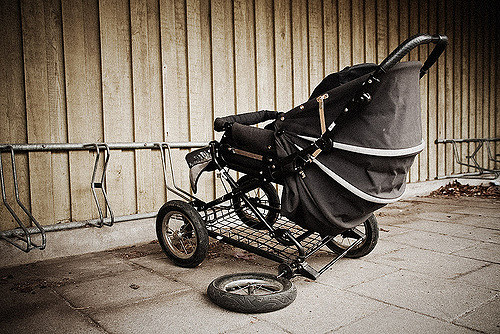
broken stroller of homeless family

Can we Keep one Jewish Family From Becoming Another Homeless Statistic?

We don’t always appreciate how easy it is to go from “everyone’s ok, life is great” to “Oh Gd what are we going to do?!” 

When I first spoke with Debrah over the phone (not her real name), she sounded like someone who had hit a rough time, but had hope that her situation would soon change course and she wouldn’t become homeless. Even though she and the children only had a bag of stale bagels and rice to eat. After a week I realized we have only a short time to keep her from becoming another homeless statistic.

Debrah was raised in Europe by Israeli parents. She completed a college degree in England, and then came to America. She was single, finding her way in the world and had a few good jobs. Her first husband left her – and the country – with two small kids and a determination to turn her life around. She found solace and strength in Judaism. She began attending synagogue, observing Shabbat, and keeping a kosher home. Although she had grown up with almost no observance at home, she felt at home in Jewish life.

She was determined to get remarried and build a bigger Jewish home. And so imagine her joy when she met an Israeli man who promised to be a devoted and loving husband and raise her two children as his own. She moved to Florida and began a new life there. She enrolled her children in Jewish Day School with the help of scholarships, and was soon pregnant with her third child.

Sadly even after two giving birth to two lovely children, he showed her continuous disrespect and abuse. He hit her, yelled at her and insulted her. When she complained it only got worse. She was resolved that maybe this was her future, and she should accept it.

No one plans on becoming homeless, its what happens when everything else falls apart

For Debrah’s husband, America was not turning out to be a great place to make a living. He couldn’t find a good job and was now driving ride-share. He began to spend more and more hours in the car – maybe to earn a living or maybe to escape the growingly difficult situation at home.  

Those who have never been in this situation might think that it’s easy to leave an abusive and neglectful spouse. It’s actually very challenging. Add to a bad marriage having four children, two under the age of 2, and it makes the option of leaving even more difficult. There is a also deep shame, and hope that things will improve. And the once strong Jewish community bonds and connections — which could provide support at this juncture — are not there.

There is also a strong fear about what will happen if they leave. Where will they go? How will she be able to work and raise the kids on her own?

That fear, shame, disconnectedness and the loss of an ability to advocate for herself after being so defeated, creates a powerful prison of the mind. More often than not, women in this situation don’t find or get the help they need before the situation gets even worse. 

Domestic violence is both a cause and symptom of homeless families

Nationwide, there is a strong correlation between domestic violence and abuse to becoming homeless. According to the National Network to End Domestic Violence, the interrelated nature of domestic violence and homelessness is undeniable: 92% of homeless women have experiences severe physical or sexual abuse at some point in their lives, and 63% have been victims of intimate partner violence as adults.

Debrah’s life continued to spiral out of control. Her husband stopped coming home at night and overdrew the bank account. She called his rabbi, but he was unsympathetic blaming the marital strife on her. (Rabbis too are fallible.) She reported that he said, if she would only complain less, maybe he wouldn’t have left the house? 

Debrah started to run out of food, diapers, and wipes. She could not get her kids to the Jewish day school because she had no car, no credit card and no credit left on Lyft. If you live in the vast sprawl of Southern Florida suburbs you cannot get anywhere without a car. They don’t even have sidewalks. 

Nationwide, family homelessness is growing. According to The Bassuk Center on Homeless and Vulnerable Children & Youth the typical homeless family is comprised of a single mother with her two young children. Of these women, a staggering 88% experienced Domestic violence. Deborah is waiting to be another statistic unless we act soon.

We may not be able to fix everything that is broken, but that doesn’t meant that we fix nothing.

Deborah got an eviction notice yesterday. If she doesn’t find the way to fight the eviction, her next stop will be to try to live in a motel. She is afraid of asking some agencies for help because she was told that they will take her children away. In order to access the few resources there are, women have to trust that the system will protect them and their family. Fear and experience push her away from getting the help she needs.

A family lawyer that we arranged for her to speak with pro-bono advised her not to divorce because she could end up having to pay palimony. The lawyer explained that Debrah’s level of education and license to practice real estate mean to the court a higher potential for income. She was advised not to divorce him. Or as she told me, “sleep with the Devil until I get get out on my own.”

This is just one story. A Jewish family that is at the tipping point with no health insurance, not enough income, too few options for financial and emotional support.

When we encounter these tragedies in the making, we cannot harden our hearts and judge them. We must respond with kindness, support and Tzedakah. 

It really can happen to anyone.

If you would like to be part of helping Deborah and her children, I have created a campaign to help her pay rent, electricity, water, buy basic food staples, diapers, and Lyft credits, she needs to buy the children some clothing and a new stroller.

We may not be able to fix everything that is broken, but that doesn’t meant that we fix nothing. 

_______________________

To learn more about family homelessness, this was a helpful resource page.

Can we Keep one Jewish Family From Becoming Another Homeless Statistic? Read More »

Report: 72% of L.A. Religious Hate Crimes Targeted Jews In 2017

The latest report from the Los Angeles County Commission on Human Relations shows that 72 percent of hate crimes against religion in the county were against Jews in 2017.

Following Jews on the list were Muslims, Catholics and Protestants:

The number of hate crimes targeting Jews increased by 4 percent from 2016, from 71 to 68 percent.

Among all targeted groups, Jews were third at 14 percent, behind the LGBT community (21 percent) and blacks (25 percent).

Some examples of hate crimes targeting Jews in the Los Angeles area includes graffiti on a wall in Van Nuys in May 2017 stating “Hitler did nothing wrong” and white supremacist symbols spray-painted on the garage in the Anti-Defamation League’s (ADL) building in West Los Angeles, according to the ADL.

Screenshot from Twitter.

Hate crimes overall rose by 5 percent from 2016 to 2017, according to the commission’s report.

“We feel particularly fortunate to have LA County as a partner in our work to reduce hate crimes and increase public awareness of the impact of these message crimes,” ADL Los Angeles Regional Director Amanda Susskind said in a statement. “The LA County Hate Crime Report is a reminder that the important work of ADL is still needed.”

Read the full report here.

Report: 72% of L.A. Religious Hate Crimes Targeted Jews In 2017 Read More »

10 Ways to Save Money on Fall Decorating

As the temperatures finally drop here in Southern California and it feels a little bit like fall, you may be in the mood to spruce up your home for the season. Autumn is one of my favorite times to decorate because it’s all about being cozy and comfortable. But instead of spending a lot of money buying fall-themed accessories at the store, there are many inexpensive — and free — decorating hacks you can take advantage of.

1. Collect free foliage
Look in your backyard for branches, leaves, pinecones and other natural elements that you can place in vases and bowls around the house. Bringing the outdoors in will give your home that fresh fall feel.

2. Eat your accessories
Some of the best accessories you can display are those you can also eat. Apples, oranges and pomegranates in bowls around the house add cheery color, while walnuts in jars or serving dishes provide autumnal charm. You can also display spices like whole cloves and cinnamon sticks for some irresistible fall aromas.

3. Upcycle those cans and jars
Wash out your used tin cans and glass jars and repurpose them as rustic vases and organizers. Wrap them in ribbon, fabric or string to decorate them.

4. Decorate with books
Create vignettes around the house with old books. If you don’t have vintage-looking books, wrap your current best-sellers in decorative paper or even plain butcher paper, and they’ll become chic accessories.

5. Re-cover your pillows with clothes
Give new life to throw pillows by covering them in old shirts and sweaters. You don’t even need to cut them up in case you want to wear them again. Just wrap them like you would a package and safety pin the excess fabric in the back of the pillow. Talk about cozy.

6. Dig out those old pots
Do you have a cabinet full of old pots and pans you haven’t used in years but don’t have the heart to give them up? (Full disclosure: I do.) Let them see the light of day by using them as display vases and bowls. The more banged up they are, the better. 

7. Frame some leaves
Find colorful leaves in your neighborhood or a nearby park, press them in a book to dry and flatten them, and then put them in a frame. Instant art! 

8. Pick up some potted flowers
Instead of purchasing cut flowers, which will last only about a week, opt for pots of fall-hued flowers such as chrysanthemums. At my local supermarket, a pot of mums costs about the same as a bouquet of flowers, but it will last all season long.

9. Paint it
Metallic copper or gold spray paint is one of my decorating secrets. Spray paint old candlesticks, jars and other tchotchkes with a metallic patina, and they are transformed and expensive-looking. If you’re not into spray paint, try chalk paint. It’s easy to apply and gives your decorative objects a different kind of vintage look that’s just as beautiful.

10. Look in your garage
There are many utilitarian objects in your garage that can be repurposed to give your home that vintage farmhouse feel this season. Rickety ladders, wooden tool boxes, galvanized buckets and other hidden gems in the garage can be the focal point of a gorgeous fall vignette. Even random things such as nuts and bolts or old work boots can find unexpected new life in your decor. 


Jonathan Fong is the author of “Flowers That Wow” and “Parties That Wow,” and host of “Style With a Smile” on YouTube. You can see more of his do-it-yourself projects at jonathanfongstyle.com.

10 Ways to Save Money on Fall Decorating Read More »

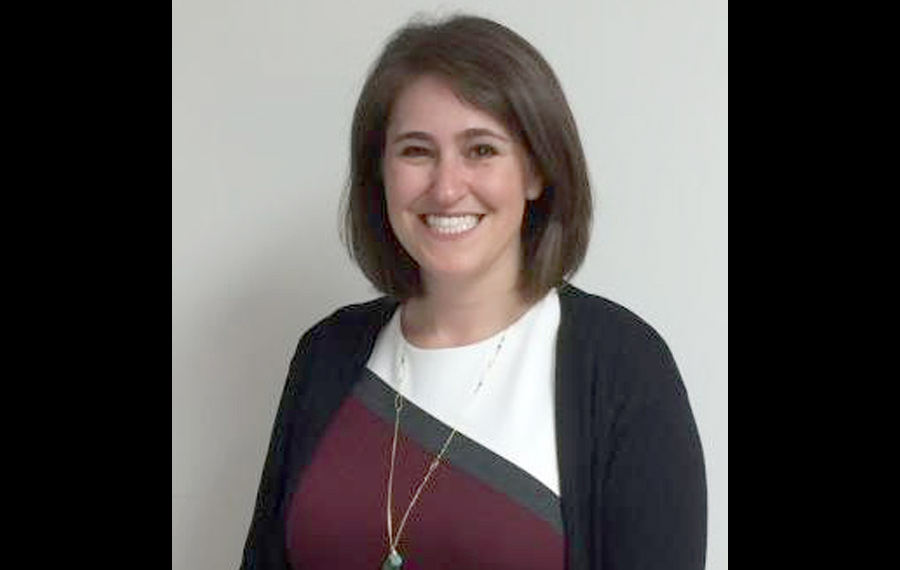
Halie Soifer: Getting Out the Young, Jewish Vote for Democrats

Most people aren’t in the business of swinging presidential elections at the ripe old age of 30 but Halie Soifer isn’t most people. 

During the 2008 presidential campaign, Soifer helped swing Florida in favor of an upstart Illinois senator by playing a key role in securing a crucial electorate: the state’s Jewish vote. After heading Jewish outreach in Florida for the 2008 Barack Obama presidential campaign, Soifer’s journey has included stops in the national security realm and as a behind-the-scenes political operative. 

Soifer, 39, previously served as an adviser to Obama’s United Nations Ambassador Samantha Power, then performed the same role on the staff of Sen. Kamala Harris (D-Calif). Now she heads up the Jewish Democratic Council of America (JDCA), a progressive political organization founded in 2016 that supports Democrats running for office. At the helm of JDCA, she has her sights set on influencing another critical election. 

With November’s midterms fast approaching, Soifer spoke to the Journal about her organization, President Donald Trump, the Democratic Party’s U.S.-Israel stance and why she’s confident Jewish voter turnout can help the Democrats win back the House. 

Jewish Journal: What drew you to a burgeoning organization like JDCA? 

Halie Soifer: Once President Trump took office, I decided it was time to leave government and help change the composition of the Congress and Senate as opposed to working for one member. JDCA was a natural fit. It’s advocacy in terms of issues I care about as a Jew, such as fighting against unjust immigrant policies, the Muslim ban and standing up for a strong U.S.-Israel relationship in a way that feels particularly pressing in this moment in our history. 

JJ: You said previously JDCA was created “to fill a vacuum and in response to this administration.” Can you elaborate? 

HS: In the aftermath of Charlottesville, [Va., violence] I think all Jews throughout the country were shocked to see Nazis marching in the streets and Jewish Democrats, in particular, didn’t have one organization to represent their voice in that moment. It was really out of that sense of urgency that JDCA was born: to serve as the voice of Jewish Democrats, whether it was responding to the rise of anti-Semitism in the country or other troubling trends we’ve seen in regard to the Trump administration. It’s also focusing on advocating in the affirmative agenda, which we’re doing in this upcoming election. That means helping to get Democrats who share our values elected to Congress. 

“We’ve seen no less than nine neo-Nazi, white supremacist, Holocaust deniers running for office in this election cycle. They now feel legitimate in the Trump era to the point of running for Congress.”

JJ: What’s JDCA looking at specifically when figuring out which candidates to support?   

HS: We’re looking at close races where either there’s a strong Democratic challenger to a Republican incumbent, or a vacancy, or a Democratic incumbent who needs our help; but only where the race is predicted to come down to a margin that’s smaller than the Jewish community. Our assessment comes down to this: Can the Jewish community make the difference?  

JJ: You recently wrote an op-ed in The Jerusalem Post titled “Record Number of Jewish Voters Will Reject Trump in November.” What’s fueling your optimism about the midterms? 

HS: It’s the issues superseding politics that are antithetical to Jewish values, such as zero-tolerance immigration, and separating children from their parents at our border. I’ve been traveling to organize events for Jewish Democrats. Last week, we started our midterm volunteer program. We’re readying canvassing for Sean Casten in Chicago, Jennifer Wexton in Virginia. I hear it everywhere I go. And it’s not even a partisan issue. These are deep-seated concerns about the direction of our country, and I’m confident the November results will reflect that. 

JJ: The U.S.-Israel relationship has become an increasingly partisan issue. Are changing views or shifting party lines a threat to Jews continuing to loyally vote Democratic? 

HS: I don’t believe that views on Israel have changed among Democrats. If you look at voting patterns in Congress, there’s no change for support for a two-state solution, no change in U.S. military assistance to Israel and no change in supporting Israel’s right to self-defense. I believe that while some Republicans would like to create a narrative that there’s been a change in the Democratic Party on its Israel stance, the reality is that there has not been a marked shift.  

JJ: What do you say to critics who argue that a different anti-Semitism, one mired in anti-Israel views, that exists in far-right circles, is permeating parts of the Democratic Party, even gaining momentum among younger Democrats? Is that legitimate? 

HS: I certainly would not equate the two. On the right, we’ve seen no less than nine neo-Nazi, white supremacist, Holocaust deniers running for office in this election cycle. That’s astounding. It’s not that these people and these movements didn’t exist previously, but they now feel legitimate in the Trump era to the point of running for Congress. That’s a problem the Republican Party has to grapple with. 

JJ: How does your organization speak out against these people? 

HS: On the left, there have been three candidates for Congress who have expressed views with regard to Israel that we, as an organization, have disagreed with publicly. We’ve not referred to them as anti-Semites, because, again, we don’t equate the two. 

JJ: Who are those candidates? 

HS: Alexandria Ocasio-Cortez of New York, Ilhan Omar of Minnesota and Rashida Tlaib of Michigan. 

JJ: Those three names, especially Ocasio-Cortez, appear to represent the future of the Democratic Party. 

HS: In the case of someone like Ocasio-Cortez, we share her views on many, in fact, most other issues. For those three candidates, we’ve made it clear, while we don’t share that view, we’re interested in engaging. I think when these three candidates arrive in Washington, they’ll soon see that the Democratic Party supports a strong bipartisan relationship between the U.S. and Israel, which includes full military funding for Israel. We don’t expect that to change with these three being elected to Congress.


A correction has been made on Oct. 22. An earlier version of this story mistakenly reported that the volunteer program canvassed for Peter Roskam. It did not.

Halie Soifer: Getting Out the Young, Jewish Vote for Democrats Read More »

What’s Happening: Erwin Chemerinsky, Ben Shapiro, BJE Service

FRI OCT 19


Pride Shabbat Service
The community is invited to a Pride Shabbat service focusing on unity, equality and inclusion for all, regardless of sexual orientation or gender identity. The service is led by Rabbi Jon Hanish, Rabbi Becky Hoffman and Cantor Noa Shaashua. Guest speaker is David Kazdan of JQ International, who will discuss “The Need for LGBTQ Role Models in the Jewish Community.” Coffee and dessert to follow. 6:30–8 p.m. Free. Kol Tikvah, 20400 Ventura Blvd., Woodland Hills. (818) 348-0670.

National Refugee Shabbat
Kehillat Israel Synagogue is one of many temples throughout Southern California participating in a nationwide Shabbat experience dedicated to refugees. Guest speaker is Rabbi Rachel Grant Meyer, director of education at HIAS. 7–8:30 p.m. Free. Kehillat Israel Synagogue, 16019 Sunset Blvd., Pacific Palisades. (310) 459-2328. Visit ourki.org or hias.org.

Boomer’s Dinner with David Suissa
Jewish Journal Publisher and Editor-in-Chief David Suissa participates in a community evening at modern Orthodox congregation B’nai David-Judea. 7–10 p.m. B’nai David-Judea. 8906 Pico Blvd., Los Angeles. $30 members, $35 nonmembers. (310) 276-9269.

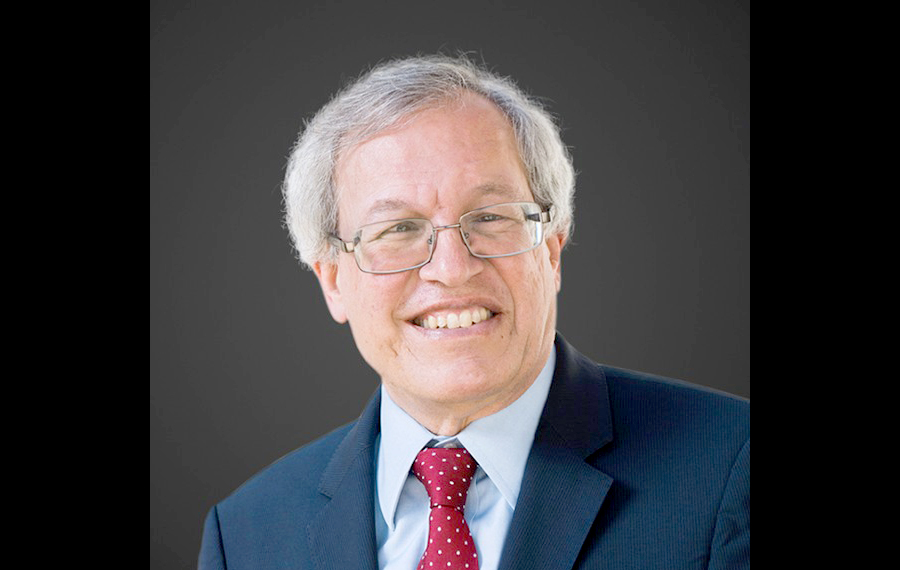
Erwin Chemerinsky

Weekend With Erwin Chemerinsky
Join lawyer and legal scholar Erwin Chemerinsky, the 13th dean of Berkeley Law School and former dean and professor at UC Irvine, Duke University and USC, for the Abner & Roslyn Goldstine Scholar-in-Residence Lecture Series at Sinai Temple. On Friday at 8:30 p.m., Chemerinsky speaks about “Free Speech on Campus.” Free. On Sunday morning, Oct. 21, Chemerinsky and Rabbi David Wolpe engage in a conversation on the topic of “We the People: A Progressive Reading of the Constitution for the 21st Century.” Light breakfast provided, and book sales and signing available for Chemerinsky’s “Free Speech on Campus.”  9:30 a.m. Admission $33 at the door for Sinai Temple members, $40 for nonmembers. Sinai Temple, 10400 Wilshire Blvd., Los Angeles. (310) 474-1518. .

SAT OCT 20

National Refugee Shabbat Havdalah
Join members of IKAR, Temple Emanuel of Beverly Hills, Temple Beth Am and other L.A.-area congregations for a special event at the close of National Refugee Shabbat. Guest speaker, Rabbi Rachel Grant Meyer. Attendees are encouraged to bring diapers or school and art supplies for local refugee families supported by the Tiyya Foundation. 7–9:30 p.m. $15. RSVP required. Temple Beth Am, 1039 S. La Cienega Blvd., Los Angeles. (310) 652-7353. Visit tbala.org or hias.org.

SUN OCT 21

BJE Day of Service Learning
Join Builders of Jewish Education, in partnership with Mountain Restoration Trust, for a family-friendly day of community service and learning at Malibu Creek State Park. Participants plant native plants, including purple needle grass and creeping wild rye. Other activities include mulching, weeding and watering new and young plants. Dress appropriately to work in the outdoors: closed-toe shoes, comfortable clothes, hats and sunscreen. Water and snacks provided. Parking is free. RSVP required to Millie Wexler at Mwexler@bjela.org or (323) 761-8631. 10 a.m.–12:30 p.m. Malibu Creek State Park, 1925 Las Virgenes Road, Calabasas.

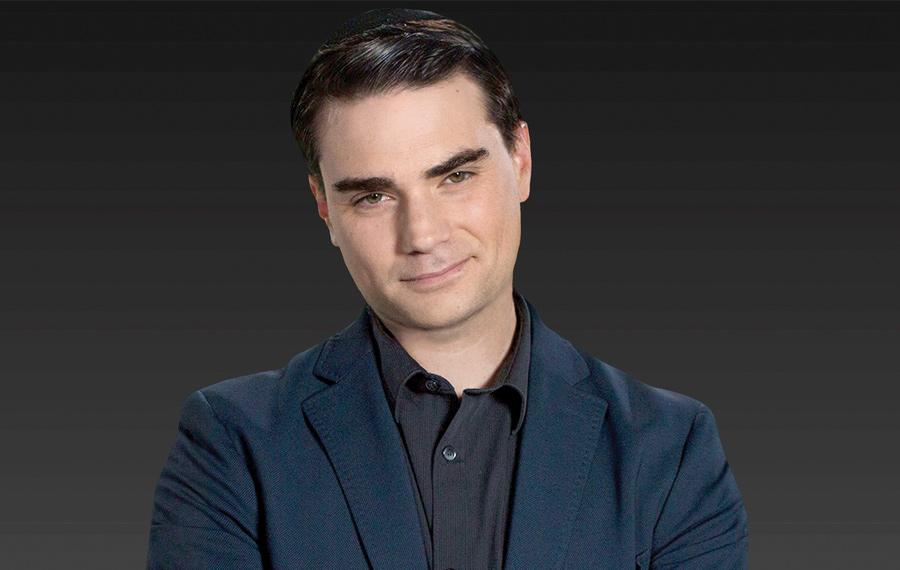
Ben Shapiro

Ben Shapiro at Politicon
Ben Shapiro is the keynote speaker at Politicon, which bills itself as the “Unconventional Political Convention.” The weekend event will feature panels, debates, town-hall discussions, art, podcasts, comedy, Q-and-A’s, book signings and more. Shapiro is editor-in-chief of DailyWire.com, host of “The Ben Shapiro Show” podcast, a New York Times best-selling author, a frequent speaker on college campuses and a Jewish Journal columnist. Speech, noon. $70. Children 12 and younger free with paid adult. Full convention, $70–$400. Los Angeles Convention Center, 1201 S. Figueroa St., Los Angeles. (213) 741-1151.

The annual 2K walk 4 Friendship will take place at Shalhevet High School.

Walk 4 Friendship L.A.
This annual 2K walk raises vital funds and community awareness for the Friendship Circle of Los Angeles, a nonprofit organization that brings joy and comfort to children with special needs and their families. Inflatables, Lego party, puppy party, games and drinks. Free. Food for sale. Registration and T-shirt pickup, 1:30 p.m. Opening ceremony, 2:45 p.m. Walk begins, 3 p.m. Concert, 4 p.m. Visit website to sponsor individuals or teams, and for parking tips. Shalhevet High School, 910 S. Fairfax Ave., Los Angeles. (310) 280-0955.

Klezmer Sounds
Homegrown chamber klezmer band Tribe makes its debut at Hollywood Temple Beth El. Formed by jazz stalwarts Dan Spector and Mike Werner, the sextet presents a mix of traditional klezmer and new klezmer sounds. Refreshments available. Two sets between 5 p.m. and 7 p.m. $15. Hollywood Temple Beth El, 1317 N. Crescent Heights Blvd., West Hollywood. (323) 656-3150.

MON OCT 22

Jenna Fields

“What is Jewish about Breast and Ovarian Cancer?”
Jenna Fields, California regional director of Sharsheret, a nonprofit supporting Jewish women and their families facing breast cancer, gives a detailed presentation that provides tools for recognizing the disease and how to respond. 12:20–1:10 p.m. Free. Academy for Jewish Religion, California, UCLA Hillel building, 574 Hilgard Ave., Third Floor, Los Angeles. (213) 884-4133.

TUE OCT 23

Understanding the Nov. 6 Ballot
The Beach Cities League of Women Voters helps explain 11 statewide propositions in advance of the Nov. 6 election. 10:30 a.m.–12:30 p.m. Free. $5 for lunch following the program. Congregation Tikvat Jacob, 1829 N. Sepulveda Blvd., Manhattan Beach. (310) 546-3667.

“The Presence of Their Absence”
Fred Zaidman, a son of Holocaust survivors, tells his family’s wartime story in this 2018 documentary produced by Donna Kanter. Zaidman’s mother, Renate, spoke often of her lasting pain while his father, Wolf, was silent. In researching his family’s story, Zaidman received help he could not have anticipated, including when a Baptist minister from Atlanta led him to a cemetery in Poland. A post-screening Q-and-A features Zaidman, Kanter and minister Steven Reece. 8 p.m. $12 general admission. $8 students. Skirball Cultural Center, 2701 N. Sepulveda Blvd., Los Angeles. (310) 440-4500.

WED OCT 24

Symposium on Mortality 
“What Mortality Can Teach Us About Living” is the subject of an all-day symposium organized by Neshama: Association of Jewish Chaplains. Presenters include Dr. Ira Byock, a palliative care physician and Rabbanit Alissa Thomas-Newborn of B’nai David-Judea. Group discussion leaders are Rabbi Jason Weiner, director of Cedars-Sinai Medical Center’s Spiritual Care Department; Rabbi Rochelle Robins, vice president and dean of the chaplaincy school at the Academy of Jewish Religion, California; Joel Kushner, director of the Hebrew Union College-Jewish Institute of Religion Kalsman Institute on Judaism and Health; and Rabbi H. Rafael Goldstein, executive director of Neshama. 9 a.m.­–5 p.m. $36, includes kosher lunch. RSVP mandatory. Academy for Jewish Religion, California, 574 Hilgard Ave., Los Angeles. (213) 884-4133.

THU OCT 25

Saskia Keeley

“Love Thy Neighbor”
Four art exhibitions seek to raise awareness and inspire hope in “Love Thy Neighbor, the Refugee Experience.” Photojournalist Saskia Keeley brings together Orthodox Israeli women and Palestinian women for photo workshops in “Roots Non-Violence,” Jean Edelstein blends the sacred with crisis scenes in “Disaster Series,” IsraAID shows on-the-ground photographs of Syria’s civil war in “Stories of Courage and Resilience,” and artist Betty Green’s “Earth Rhythms” examines patterns in nature and the energy connecting all living forms. Exhibition opening 7–9 p.m. Through Dec. 20. Gallery hours 10 a.m.–4 p.m. Monday–Friday. Opening is free. Hillel at UCLA, 574 Hilgard Ave., Los Angeles. (310) 208-3081.

Jews of China 
At a lunch-and-learn program, professor Xu Xin traces Jewish history in China from the 9th century to today’s Chinese Jews. Xin is the Diane and Guilford Glazer chair professor a Nanjing University, director of the Glazer Institute for Jewish and Israel Studies at Nanjing University, and president of the Chinese National Institute of Jewish Studies. American Jewish University President Jeffrey Herbst provides introductory remarks. Noon. $10. American Jewish University Familian Campus, Berg Dining Hall, 15600 Mulholland Drive, Bel Air. (310) 440-1572.  

A Night for Singles
Seeking fresh paths for meeting your bashert? Try your luck at “Game Night & Mixer for Young Jewish Professionals.” Mingle with singles in their 30s and 40s, the evening promises an opportunity to meet new people in a relaxed environment. Tickets sold in advance only. Space is limited. 7:30–9:30 p.m. $20 plus a one-drink minimum. The Phoenix, 8480 W. Third St. (844) 454-7354.

What’s Happening: Erwin Chemerinsky, Ben Shapiro, BJE Service Read More »

Ephron Masterfully Weaves a World of Magic

The belief in magic harks back to Persia and to the pre-Islamic period of the Zoroastrians. Magi, the term for Zoroastrian priests and learned magicians, is the root of magic, which has always played a prominent role in Persian literature. The past two decades have seen a surge in magical-themed stories in the Western world, as well, thanks to the universal appeal of J.K. Rowling’s “Harry Potter” series. And now, Amy Ephron, the best-selling author of “A Cup of Tea,” “Loose Diamonds,” “White Rose” and “One Sunday Morning,” has shifted gears to tap, with brilliant assurance, into the endless wonders of fantasy in “The Castle in the Mist” (Philomel Books, Penguin Random House) and its companion “Carnival Magic” (Philomel Books, Penguin Random House). 

“The Castle in the Mist” introduces us to the brave and spontaneous Tess and her logical brother, Max, who are sent for the summer to Hampshire, England, to visit their Aunt Evie. Their father, Martin Barnes, having taken off from work for a few months to tend to their ill mother, is now reporting on the war in Afghanistan.

On an extraordinary evening when there is the rare occurrence of a blue moon, red moon and super moon, Tess wanders off to find her way into a castle — or is it a museum, shrouded in the mist of magic?

Here, she meets William, who announces that he has been expecting her, warning her to “stay away from the hawthorn trees.” We will soon learn why. Before long, Barnaby, the butler or keeper of the grounds — characters tend to mysteriously appear in different roles at different times and places — announces that on this night “strange things happen.” And they certainly do, as the siblings embark on one adventure after another, replete with a magical key that opens locked gates, and a wooden horse that comes to life, leading them to mysterious worlds, where they’ll face one fantastical obstacle after another, the ever-present voice of their father a powerful guide: “If you get lost … try to get back to where you started if you can …” “In games and in life, take advantage of what you have.” “Calm minds have a better chance of solving things.”

With the same serene and elegant prose that has made her a beloved storyteller, Ephron raises universal questions that children, and most adults, frequently grapple with: “If she’d found the key to someone’s ‘house,’ does it mean she has the right to use it? … If someone doesn’t know the answer to a secret, can you trust them not to try to find out? … If two people think something has happened, did it happen? … If someone knows a secret can you trust them not to tell?” And above all, the importance of doing the right thing, such as asking to return safely home to loved ones, rather than wasting one’s precious wish on a horseback ride on the beach at night.

“Amy Ephron raises universal questions that children, and most adults, frequently grapple with.”

The delightful journey continues in “Carnival Magic” the next summer, when Tess and Max find themselves in England again, this time in South Devon. And, once again, as in “The Castle in the Mist,” magic is in the air. A carnival has come to town and the siblings are swept away into a more dangerous world than they experienced a year before. A hair-raising ride on the Ferris wheel tests the bravery of Tess, who needs “to believe in herself.” There are acrobats and games, a mud swamp teeming with strange creatures, and a scary house of mirrors that reminds the siblings of their father’s advice not to show anyone if they’re scared, which, needless to say, at times becomes difficult to do.

When Tess gets hypnotized and the wagon begins to move to unfamiliar places, readers are propelled toward more than “an excellent adventure,” as both the tea reader and the porter at the airport announce. Lorenzo, a shady character with an eerie laugh, imprisons the siblings and forces Tess to join the acrobatic twins, Alexei and Tatiana, in a dangerous aerial ballet show. Anna, the twins’ sister, has inexplicably disappeared, and the twins solicit the help of Tess and Max in discovering the fate of their sister.

But how will the siblings walk out of the moving carnival, when they have no clue whether they’re still in Devon or another part of the world, have no clue how to find their way back to Aunt Evie, let alone save Anna? Did I mention that the carnival has no gate to walk out of?

But Tess and Max are a resourceful pair, and Ephron’s portrayal of the strengthening of their relationship is heartwarming and realistic — the push and pull, the protectiveness and dependence on each other — so we trust that rather than fall, they will learn to fly. 

Ephron renders this magical world with such assertive beauty that readers of all ages, who are fortunate enough to believe in the power of magic, will enjoy immersing themselves in the roller-coaster fun of these stories, and come to trust, even if for a short time, that in this “alternate universe” it is possible for us to come together and “touch the sky.”

READ MORE: Ephron Stumbles Across Magic in Researching Her Fantasy


Dora Levy Mossanen’s latest book is “Scent of Butterflies.”

Ephron Masterfully Weaves a World of Magic Read More »

Ephron Stumbles Across Magic in Researching Her Fantasy

I called Amy Ephron, expecting the usual type of interview to take place, presenting one by one the questions I had carefully outlined about her newest books, “The Castle in the Mist” and its companion, “Carnival Magic,” and then jotting down her replies.

But I should have known that creative minds possess their own rhyme and rhythm, their own unexpected turns and particular mode of delivery. So, right after the initial “hello and thank you,” I was treated to a generous outpouring of stream of consciousness that practically answered my every question about the books, the prose, the characters, why she shifted to children’s books now, and a lot more. Particularly why, unlike most children’s books today, there’s an absence of violence and death in both books.

Ephron calls “The Castle in the Mist” and “Carnival Magic” a modern-day mash-up of old-fashioned children’s books, in which reality meets magic and the reader doesn’t know whether it’s real or imagined. The beauty of great writers, Ephron said, is their ability to create characters and worlds that readers are convinced exist, stories that draw in readers the same way a film can;  the same way the characters in “The Secret Garden,” one of

Ephron’s favorite books, existed for her, the same way that world was as real to her as the world she lived in as a child. 

The books are infused with an ethical subset, too, such as the way Tess and Max have the capacity for empathy, the capacity to take care of each other, as well as possessing a self-protective veneer. Or how they run tapes in their heads about what their parents had said to them that makes sense to use as tools when they’re on their own. 

Although there’s danger, and certainly more of a proper antagonist in the second book, Ephron assured her readers that there’ll never be any explosions or any threat of violence, even though Tess and Max are being thrust into the unknown. Have they travelled through time? Has time changed? Has time collapsed? Where exactly are they?

Ephron lamented that everyone is dealing with so much these days, particularly kids. When on tour in Florida the week of Valentine’s Day, she was in Parkland at River Glades Elementary on the same campus as Marjory Stoneman Douglas High School, where a gunman shot and killed 17 students and staff. She was privy to students dealing with much uncertainty in this sociopolitical environment, the global political environment, and the danger in their own spaces that are supposed to be safe.

“These kids are amazing,” Ephron said, referring to kids she meets on her speaking tours in schools across the country. “We’re raising a really interesting generation of kids. Many of them have extraordinary values and a belief that they can make a difference.”

Drawing from her experiences with her siblings and her own children, who might fight with each other but, when push comes to shove, have each other’s backs, Ephron created a fearless heroine in Tess, who pinkie swears with her mathematical brother, Max. A sign to each other not to worry, a promise that they’re right here for each other, have each other’s back.

“It was really fun to create worlds where we don’t know where we are and apply the same rules to them.” — Amy Ephron 

“Tess reminds me of me,” Ephron said, letting loose her throaty laughter. “There’s a kind of indomitable spirit that’s incredibly strong and, in its own way, incredibly pure, true and honest. You push us back, and we’ll come back as survivors, keep putting one foot in front of the other, keep our chin up and hope that we don’t hit our knee too hard when we fall. 

“It’s really crazy!” Ephron said with a chuckle, referring to the numerous incidents that have occurred in her life that found their way into the books. “A kind of crazy magical realism,” especially with “Carnival Magic.” Although familiar with Hampshire, where “The Castle in the Mist” takes place, Ephron didn’t know South Devon, where “Carnival Magic” is set. On her way to her rented cottage in Torquay, Devon, when the driver pulled down to the side of the road, Ephron was astonished to see that a carnival had come to town and was putting up stakes.

“Meanwhile I’d already put the carnival in the story! You’re going to start laughing,” Ephron said. Over lunch, she told her friend about the traveler’s wagon in “Carnival Magic” and about the character who plays the violin, and her friend told Ephron that a man does indeed come to town every summer and parks a traveler’s wagon by the side of the road.

“And sure enough there he was!” Ephron said. The day she went to research Paignton Zoo, she learned that three endangered tiger cubs had been born in the zoo. In the meantime, she had invented the three tigers in the story.

But wait, there’s more. She learned from the taxi driver that the entire town of Paignton was once owned by Paris Singer, whose mistress was Isadora Duncan, known as the mother of modern dance. Hence, the inspiration for the aerial ballet sequences in “Carnival Magic.” 

Ephron prefers readers to decide for themselves whether the incidents occurring in the books are magic or imagined. She said her intention was for Tess and Max to try to make sense of the things that happen to them in terms of the contemporary world they live in. “The hawthorn tree for me is an amazing metaphor, and I learned a great number of things about hawthorn trees that I didn’t know about when I’d written them and put them around the castle and had William say,  ‘Beware of the hawthorn trees.’

“After deep research, I learned that hawthorn trees used to be thought to be a cure for a broken heart — if I only knew that when I was in my 20s, I’d have eaten hawthorn berries. Now they’re doing some research on hawthorn trees in terms of heart failure. They actually think there might be some medicinal value to hawthorn and hawthorn berries. Meanwhile the hawthorns are also thought to be, and it’s in the book, a gateway to the land of the fairies, and if you sit beside them, you might get whisked away, and if you bring the flower of the hawthorn tree inside in May, something terrible might happen to the woman of the house, which is a metaphor for the children’s mother. So the hazard of the trees for me is a metaphor for what was going on all around them.” 

I brought up the mysterious character in “Carnival Magic,” who refers to a silver plane named The Flying Lady as “a symbol of an equation … that potentially proves the existence of the possibility of an alternate universe.” I asked whether Ephron, too, believes in an alternate universe that our senses might be incapable of detecting? “That was kind of a weird thing, too.” After she drew the equation on the side of the plane in “Carnival Magic,” Ephron looked it up and learned that a similar physics equation exists that may prove the existence of an alternate universe. That’s “if you believe in physics. But who knows if physics believes in physics!”

Ephron said she had once read “a bunch of books about quasars and black holes and maybe this could be some kind of sense memory of an equation that I remembered because I actually know a little bit more math than I look like I know. It’s just an odd thing about me.”

Ephron does not see her foray from writing adult books into children books as challenging or as shifting gears because a lot of what she has done, including her journalism, has been what she calls period writing. She said that no matter what period a writer is writing about, one has to find the voice and all the other accoutrements that go along with the time — the pace, the food, the slang, the clothes and the emotions. Every single piece has to fold together to create a world.

The sociopolitical backdrop is also what defines a period. “It defines the way you and I politically view the world,” she said. “It defines our actions. It defines the people we revere and want to emulate. It defines our sense of conscience, even though it’s really getting trying to have a big sense of conscience these days. So for me, in terms of being a stretch, it was more an extension of all the writing that I’ve done until then. It was really fun to create worlds where we don’t know where we are and apply the same rules to them. I’m not really someone who goes by rules, but I do know what can be jarring.

“That’s something I’ve been playing with since ‘A Cup of Tea,’ the language that captures the place you evoke. The fun for me about writing these books has been letting them tell their own story to some degree. I always find that if you don’t over outline, a character can make a right turn or left turn that you weren’t expecting.” 

Ephron said that a number of adults who’d read the book had made the same observation as I had: that the books can be enjoyed at any age. She hopes that’s the case, although she made a few concessions, particularly in the first book, where the language is easy enough and understandable enough so as not to lose the third- or fourth-grader.

I wanted to know whether the mother of the siblings will have a stronger presence in “The Other Side of the Wall,” Ephron’s forthcoming book. After another peal of laughter, she replied that she can’t verify whether the mother is going to get there because the parents’ plane is presently delayed because of “incredibly bad weather in Europe. Their mom has somewhat recovered from her illness and decided to join the dad in Berlin because their marriage has been a little stressed by the fact that he took the job in Berlin. I’m still trying to get the mother to the other side of the wall.”

I, for one, am confident that Tess and Max, with the help of magic and their own resourcefulness, will find a way to get their mother to the other side of the wall. 

READ MORE: Ephron Masterfully Weaves a World of Magic


Ephron Stumbles Across Magic in Researching Her Fantasy Read More »