fbpx

September 24, 2018

Iran Blames U.S., Israel for Attack on Military Parade

The Iranian regime is blaming the United States, Israel and Saudi Arabia for an attack on a military parade over the weekend.

On Saturday, four gunmen opened fire on a military parade in Ahvaz, a city in southwest Iran, killing 25 people. At least eight of the deceased were members of the Iranian Revolutionary Guard, others included a disabled war veteran and a 4-year-old girl, according to the BBC.

Iran’s intelligence ministry announced on Monday that 22 people were arrested in connection to Saturday’s attack; Iranian President Hassan Rouhani said on Sunday that the attack was levied by a group supported by a Gulf Arab state that is allied with the United States, Israel and Saudi Arabia.

“The small puppet countries in the region are backed by America, and the U.S. is provoking them and giving them the necessary capabilities,” Rouhani said.

Gen. Hossein Salami, the acting commander of the Iranian Revolutionary Guard, said at the funeral for the deceased that the United States, Israel and Saudi Arabia “will face the repercussions.”

We warn all of those behind the story, we will take revenge,” Salami said.

The United States has denied that they were behind the attack.

He [Rouhani] can blame us all he wants,” United Nations Ambassador Nikki Haley said on CNN. “The thing he’s got to do is look in the mirror.”

Two groups have claimed responsibility for the attack: ISIS and the Ahvaz National Resistance, an anti-government organization that is aiming for Iran’s Khuzestan province to be its own state.

Iran Blames U.S., Israel for Attack on Military Parade Read More »

J.K. Rowling’s New Book to Feature Anti-Semite As Villain

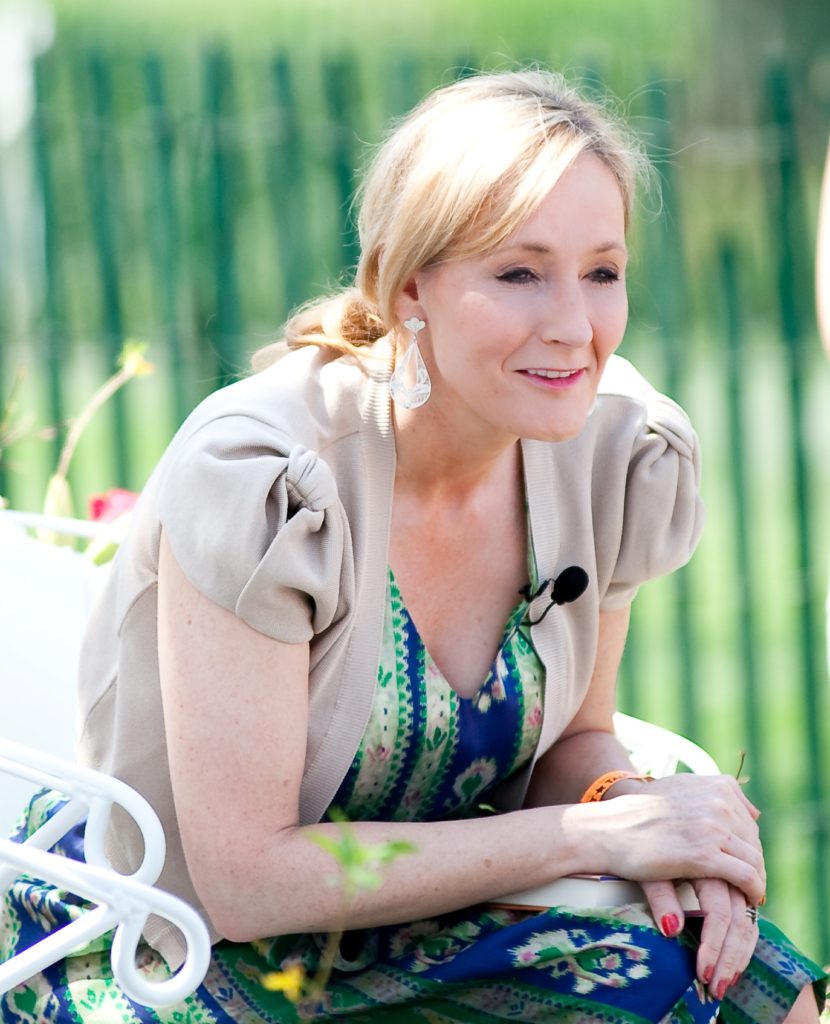
J.K. Rowling, author of the world famous Harry Potter series, will feature an anti-Semite as the villain in her upcoming book.

According to Jewish Telegraphic Agency (JTA), the book, titled “Lethal White,” describes the antagonist, Jimmy Knight, as becoming an anti-Semite due to his hatred for Israel:

“I wouldn’t trust him if it was anything to do with Jews,” Knight’s ex-wife tells a detective. “He doesn’t like them. Israel’s the root of all evil, according to Jimmy. Zionism: I got sick of the bloody sound of the word. You’d think they’d suffered enough,” she says of Jews.

“Lethal White” is the fourth book in the Galbraith mystery series, where Rowling, under the pseudonym Robert Galbraith, writes about the adventures of detectives Cormoran Strike and Robin Ellacott.

Rowling was one of 150 British artists in 2015 to sign a letter protesting the Boycott, Divestment and Sanctions (BDS) movement, the Jerusalem Post notes. Rowling explained in 2015 why she felt that that the BDS movement was unfair even though she is opposed to Israeli Prime Minister Benjamin Netanyahu’s policies:

“I have deplored most of Mr Netanyahu’s actions in office. However, I do not believe that a cultural boycott will force Mr Netanyahu from power, nor have I ever heard of a cultural boycott ending a bloody and prolonged conflict.

“If any effects are felt from the proposed boycott, it will be by ordinary Israelis, many of whom did not vote for Mr Netanyahu. Those Israelis will be right to ask why cultural boycotts are not also being proposed against – to take random examples – North Korea and Zimbabwe, whose leaders are not generally considered paragons by the international community.”

She has also called out anti-Zionists and anti-Semites on Twitter. She has also confirmed that one of the characters in Harry Potter, Anthony Goldstein, is in fact Jewish.

However, Rowling has stated that she views Harry Potter as “a Palestinian child fighting against the hardships and evil around him,” according to the Post.

J.K. Rowling’s New Book to Feature Anti-Semite As Villain Read More »

Pompeo Warns Iran Not to Attack U.S. Through Terror Proxies

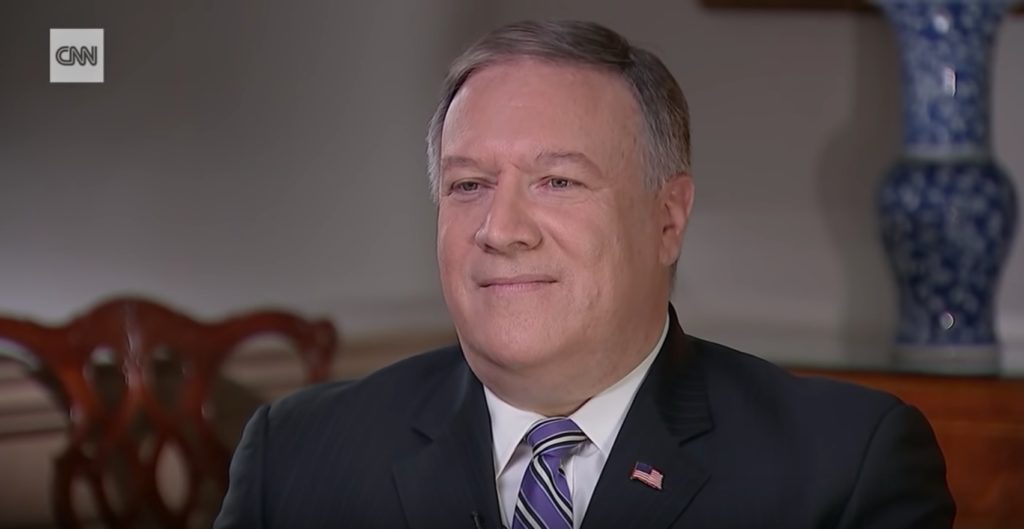
Secretary of State Mike Pompeo warned Iran not to attack the United States through its terror proxies in a Sept. 21 interview with CNN.

When asked about Iran and the recent attack on the U.S. embassy in Iraq, Pompeo said Iran has been “the world’s largest state sponsor of terror for quite some time,” pointing to Hezbollah, the Houthis in Yemen and the Shia militias in Iraq as examples of Iranian proxies.

“We have told the Islamic Republic of Iran that using a proxy force to attack an American interest will not prevent us from responding against the prime actor,” Pompeo said. “That is, we will not let Iran get away with using a proxy force to attack an American interest. Iran will be held accountable for those incidents.”

When Pompeo was asked if that using military action against Iran, Pompeo replied, “If they’re responsible for the arming and training of these militias, we’re gonna go to the source.”

Mortars were fired at the U.S. embassy in Baghdad on Sept. 7 and on Sept. 8 rockets were launched at the U.S. consulate in Basra; no damages or injuries were reported in either case. The United States has blamed the attacks on Iranian-backed Shia militias.

Pompeo Warns Iran Not to Attack U.S. Through Terror Proxies Read More »

Actor Hal Linden on ‘The Samuel Project,’ Bow-Ties and More

Undeniably a legend within the world of entertainment, Hal Linden is a Tony winner, an Emmy winner and a multiple Golden Globe nominee. While he made a big splash as the title character on the classic television show Barney Miller, Linden first found success as a stage actor. He has worked consistently over the past 60-plus years, and his latest high-profile release is the film The Samuel Project.

The Samuel Project is a powerful story about the universal struggle for acceptance and opportunity with direct relevance to today’s headlines. The movie was directed and co-written by award-winning filmmaker Marc Fusco, who got his start in the industry as Steven Spielberg’s assistant. Clio-winning cinematographer, Stephen Sheridan shot the film and Emmy-nominated composer Joey Newman scored The Samuel Project, while working double duty as composer for ABC’s hit primetime show The Middle. The film will be opening in New York on September 28th and going nationwide in October.

I had the pleasure of doing Q&A with Hal Linden himself about his past, present and future as an actor. Beyond his career, Linden has been an advocate for the National Jewish Fund for many years, which we also touched on briefly.

Jewish Journal: You have been nominated for Tony, Emmy and Golden Globe awards beyond working steadily for many decades. Is there a career accomplishment that you are most proud of?

Hal Linden: The truth, longevity (laughs). The fact that I’m still alive and still doing it. The fact of the matter is you put in as much sweat, love, and effort into the losers as you do the winners, so they’re all favorites. Probably the biggest reward is in actually doing it, not the applause after, but the physical and mental work you put in to accomplish it to begin with. That’s what I’m most proud of.

JJ: When did this feel like a career to you and not just a series of one-off bookings and guest appearances?

HL: (laughs) Well, there were no guest appearances when I started. Actually it got to be a career when I did the musical ‘The Bells Are Ringing,’ back in 1958 I believe. That’s when I knew I was going to be an actor, and not go back to being a musician. I specifically put my horns away. I didn’t play the clarinet for 20 years because I didn’t want to get lulled back into the music business. I wanted to concentrate on being an actor. I’ve considered acting to be a career ever since ‘The Bells Are Ringing.’

JJ: The Samuel Project is your latest film. When did you first find out that you were working on the project?

HL: Okay, first of all, ‘The Samuel Project’ is not my latest film (laughs). I happen to have a later film that should be coming out soon, called ‘Granddaddy Day Care’ that I shot this year. But  ‘The Samuel Project’ is one that I stuck a little more effort on—let me put it that way.

I was booked to appear in a play at the Old Globe Theater in San Diego. When I was announced for the play, the producers of  ‘The Samuel Project,’ who are from San Diego, and were going to film in San Diego, contacted my people and said, “Since you’re going to be here, would you like to do this picture?” They sent me a script, we started talking about the film, and I agreed to do it. We starting filming immediately after I completed the play, ‘Picasso at The Lapin Agile’ at the Old Globe. While I was in San Diego doing the play, I was working with the director and producer on what we were going to be doing for  ‘The Samuel Project,’ so I was already preparing for my part in the film.

JJ: How would you describe ‘The Samuel Project’ to someone who has not yet seen the trailer?

HL: You know it’s very interesting, because when you do a picture or a play, you always see it through your own eyes—the eyes of your character—and that’s the way I approached  ‘The Samuel Project’ until the director, Marc Fusco, and I sat down and started talking about it and looking at the script. We realized ‘The Samuel Project’ is really not about Samuel at all—it’s about Eli, his grandson, who is an art student.

First all, the picture is about three generations in a family, with a very common dysfunction of not communicating. I find that not only in that family, but also in my own.

I remember I was sitting at a dinner table. My granddaughter was on the left and she was texting on her telephone, so I took out my phone and I texted her. I said “The gentleman on your right is your grandfather, please say hello.” Unfortunately, generations don’t communicate that well. You know it’s natural—no generations communicate. That’s the whole premise of new generations—you try to distance yourself from the generations before. So you specifically listen to different music, wear different clothes; cut your hair differently just to make sure there is a difference between you and your parents’ generation. That’s the norm.

In  ‘The Samuel Project,’ you have three generations who don’t really communicate. As I say, it’s the story of a boy, named Eli, who wants to be an artist, but unfortunately, his father tells him that he can only afford community college and can’t afford an art school. And the boy, because he has an art project in school, uses that project to try to further his art study and the point that he would, indeed, be able to go to art school.

‘The Samuel Project’ is the telling of the grandfather’s story in an art form, so you come away with not only the grandfather’s story, but also the brilliancy of the boy, the stick-to-itiveness of the boy to get the project done, even though nobody is really helping him, and the fact that maybe art can be more eloquent than words. It’s an intimate story about three generation trying to communication, and are eventually brought together through art, through Eli’s project ‘The Samuel Project.’

JJ: Had you worked with anyone from  ‘The Samuel Project’ before being cast in it?

HL: As a matter of fact, what happened was, because I was doing this play in San Diego, and they were still casting some of the parts for  ‘The Samuel Project,’ I said how about “so-and-so and so-and-so” out of the cast of the play that I was doing. So Philippe [Bowgen] who plays the teacher, Mr. Turner, and Liza [Lapira] who plays Nadia Akiyama, the art philanthropist and presenter toward the end of the movie, were people that I recommended.

I also knew Ken Davitian, who plays Vartan, the butcher. Ken is a poker partner. (laughs) So I knew Ken from socially around the table, but this is the first time we’ve worked together.

JJ:  ‘The Samuel Project’ aside, what is coming up for you career-wise?

HL: Well, um, actually it’s hard to say. I was about to do a play for the Reprise Theater here in L.A. I was to start rehearsals for a staged, concert-version of a musical there, but I’m not too sure that’s going to happen now. I think there was a funding problem. I don’t know exactly what’s going to happen with that. Other than that, I’m available for anybody who has a part for an old person.

JJ: When not busy with work, how do you like to spend your free time?

HL: My life is my work, honestly. When I have any other free time, I’m a very bad golfer, but an avid golfer—I do a lot of that.

I now have a four -year relationship with a lady that I am pursuing, so that’s kind of nice. That’s about it.

JJ: Is there something you wish more people knew about Hal Linden?

HL: You know, I’m pretty much an open book by now, to most people. My activities are public—like with the Jewish National Fund, who I’ve been with for over 20 years now. I’ve also never been quiet about political stances. I’m an open book and ready for new experiences.

Although, I must tell you this: I was once asked that question, a little differently through—an interviewer said to me “Is there something you can do, that nobody knows about?” I said, “I’ll tell you what, there is something I can do that nobody knows about—I can tie a bowtie without a mirror. Perfectly.”

And here’s the catch, it actually came to pass where I had to do it. I was doing a musical in Texas, and the scene was on an ocean liner, and we were getting ready to go to the Captain’s Dinner. I was putting on a full-dress tuxedo with tails and a bowtie. My “wife” was off-stage getting dressed and we were carrying on a conversation. I was on-stage starting in my shorts and garters, putting on my clothing, and then ending up full dress, and at the end of the scene we go off to the Captain’s Dinner. That’s the scene. As we’re rehearsing it, I said to the director “I have to put on the bowtie, where’s the mirror? Is there a mirror?” The director says, “The mirror is on the downstage wall.” Well, that means there is no mirror there, and I would have to pantomime that there’s a mirror—by looking right out over the orchestra, into the “mirror” and making my bowtie.

And I said to him, “What are the odds that you have cast the only actor, probably, in Actors’ Equity, who can actually do that?” I actually had to make a bow tie looking into a pantomime mirror. There you go, I guess there are things that nobody knows about me.

JJ: Finally, Hal, any last words for the kids?

HL: I’ll give the same advice I give when young actors approach me: “The reward is in the doing.” If you can find your rewards in whatever it is that you do, then you’re never bored, you’re never angry, you’re thrilled doing what you do, and you don’t look for outside rewards. This is what I usually tell actors. You can become a great actor totally unknown to anybody, but if you do it right, you’ll have a terrific career, because the reward is in the doing. That’s really my advice to anybody; in whatever area of life they are involved.


More on The Samuel Project can be found online at www.thesamuelprojectmovie.com, while Linden keeps a home at www.hallinden.net.

Actor Hal Linden on ‘The Samuel Project,’ Bow-Ties and More Read More »

Guitarist Marty Friedman Talks New Album, Life in Japan and Israeli Embassy

Marty Friedman is an anomaly within the musical world. He started off in the 1980s as a guitar-centric recording artist for Shrapnel Records, which had also signed his metal band Cacophony. The start of the 1990s brought him into the Megadeth fold, in which Friedman would go on to sell millions of albums. Yet nowadays, he is arguably more famous than ever before, internationally renowned as not only a guitarist but also as a writer, author, television personality and all-around music authority.

Friedman moved to Japan in 2003 and quickly found work as a sideman for several Japanese prominent recording artists. While he still plays with other artists – Friedman’s credits include Momoiro Clover Z and Ayumi Hamasaki — Friedman himself is a prominent solo artist with more than a dozen albums to speak of. In addition, as an in-demand host and actor, he reportedly has over 700 television credits. However, the guitar hero chooses not to rest of the laurels of his stardom within Asia, instead opting to tour the U.S. and elsewhere every year or so for the past few years.

The latest full-length release from Friedman is “ONE BAD M.F. Live!!,” which is set for an October 19 release via Prosthetic Records. “ONE BAD M.F. Live!! is a recording of a show Friedman performed in Mexico in April 2018 with backing from Kiyoshi (bass), Jordan Ziff (guitar), and Chargeeee (drums). Also new and related to Friedman – who performed the Opening Ceremony at the Tokyo Marathon in both 2017 and 2018, in addition to a recent collaboration with the Tokyo Philharmonic Orchestra on the government-sponsored “Japan Heritage Theme Song” – and is a Japan/Israel collaboration sponsored by the Israel Embassy from this month.

I had the pleasure of speaking with Marty Friedman on behalf of the Jewish Journal.

Jewish Journal: I believe you have now been living in Japan for 15 years now. Do you see yourself spending the rest of your life there? 

Marty Friedman: I started out thinking that I was going to live in Japan and in the U.S. half and half, but it didn’t work out that way. I like living in Japan, but I also get to tour the world a lot and do things in the U.S., so it’s not like a complete transplant. My home base is in Tokyo, though.

JJ: Family and friends aside, is there anything you miss about living in the States?

 MF:  By far, it’s family and friends. Those are really the only things I truly miss. That part is hard. Everything else is like, I can enjoy it when I’m in the U.S., but I don’t really pine for it. It’s not like I’m in Japan thinking, “You know, I’d really like to go to a Bed Bath & Beyond today.” I do wish Japan had the selection of breakfast cereal that Americans take for granted though. There are only a few choices and they all suck. Cap’n Crunch is not a staple over here, unfortunately.

JJ: You recently did a project with the Israeli Embassy. How did that come about?

MF: I’m an ambassador to Japan Heritage, so I often do Embassy-related events, anything that promotes good feeling between Japan and other countries. This time I was invited by Yossi Sassi, a wonderful Israeli musician, to play the song “Mayim Mayim” for an Israel-Japan week that a radio station in Japan did do celebrate all things Israeli.

“Mayim Mayim” is an Israeli song that for some odd reason, EVERY person in Japan knows, and most even know its accompanying dance. I grew up in a normal Jewish way in the U.S., and I never heard of that song or the dance. I really have to give Japan credit, they take an interest in many cultures and try to experience little parts of other people’s traditions, out of curiosity and respect.


JJ: Does the Israeli Embassy have much of a presence in Japan?

MF: I suppose if you are in the area where the embassies are, it might, but unless you have visa issues, most embassies are pretty low profile here.

JJ: Your new live album was recorded during a recent South American tour. How many shows from the tour did you record and ultimately listen to for the album?

MF: Marty Friedman: Only one show, in Mexico City. That takes balls, as there is no backup if something goes wrong, but my band and crew are on fire every night, and we had a top class engineer — Chris Rakestraw, who also did my Inferno album — come out to record us so all went well. It’s a very solid representation of what happens at one of our shows.

JJ: Geography aside, is playing live in the States any different for you than it is in Japan?

MF: Japanese people listen while you are playing and make noise after the song is over. That is the biggest difference. It’s sonically quiet while you play, so if you make a mistake, it’s gonna stand out. In other countries, people are going wild all the time so no one will notice if you “take liberties.”

That said, if you are used to playing in the U.S. or Europe, and then you go to Japan to play, it can be a bit unnerving for that reason. There is no “buffer of crowd noise” to hide behind, it’s just you and your music. Luckily, we are used to playing at Japan standards, so when we play in other countries, it’s a breeze and we take more risks.

JJ: Aside from the new live album and the collaboration with the Israeli Embassy, are there other projects of yours that you are allowed to talk about?

MF: I will be touring a lot from November through May, in Japan, the U.S. and Europe. The USA tour will cover the whole country and be from January 14 through February 25.

JJ: Is there anything you haven’t yet accomplished in your career that you are still hoping will happen? 

MF: I’ve never wanted to do anything more than make better music and make more people happy in the small way that I can.

JJ: What do you wish more people knew about Marty Friedman?

MF: I would like more people to discover my music.

JJ: Finally, Marty, any last words for the kids?

Marty Friedman: There are a lot of nice correlations between Israel and Japan, or the Japanese and Jews, I should say. A lot of human traits are similar, and even musical motifs are eerily similar. The taste for the melancholy melodies and sad folk themes in music are very similar, in my opinion. Everyone should visit Japan at least once in his or her lifetime, as it is a wonderful experience that will stay with you always.


More on all things related to the guitar legend can be found online at www.martyfriedman.com.

Guitarist Marty Friedman Talks New Album, Life in Japan and Israeli Embassy Read More »

Speaking Truth to Power — Ours

For much of Rabbi Yosef Kanefsky’s talk last Shabbat afternoon on “Speaking Truth to Power,” I got really pumped up. The leader of Bnai David Judea Congregation was discussing biblical characters who spoke truth to the ultimate power — God — and how God listened and bent and forgave. Using talmudic texts, Kanefsky went through several examples, including three in which Moses challenged God and God responded: You have taught me something.

I could see where the rabbi was going. Jews are people of dissent. We don’t accept even the highest authority blindly. We are urged to question and challenge and argue in the search for justice and truth.

What perfect timing, I thought. We are living in chaotic times when people holding the levers of authority in government and corporations keep failing us. Kanefsky did not say a word about politics or current events, but he didn’t have to. The title of his talk said it all. We must have the courage to rise up and speak out against injustice. That is the power of our voice.

If Moses himself can speak truth to his divine leader, then certainly we can speak truth to our own leaders.

The idea of fighting injustice has been a theme of several Rosh Hashana sermons this year. At Valley Beth Shalom, Rabbi Ed Feinstein gave a rousing sermon decrying the state of our country under President Donald Trump and urging his flock not to stand idly by. Similarly, Rabbi Sharon Brous, spiritual leader of the IKAR community, called for “Building a New America” with a renewed sense of purpose.

“These are trying times,” she said in one of her sermons, “but we must not let exhaustion or cynicism dull our senses. Our history has taught us: either you work to dismantle oppressive systems, or your inaction becomes the mortar that sustains them. Together we must build America anew: fierce, fair and full of promise; equipped to hold us in all our diversity, complexity and beauty.”

“Instead of leaving the synagogue all powered up and ready to march on Washington, I left ready to march on myself. When have I been too dogmatic this past year? When have I failed to listen?” 

That is why I was pumped up by Kanefsky’s talk. I sensed that the rabbi was empowering his flock to take on the leaders who were failing us — to fight injustice during these extraordinary times by speaking truth to the powers that be.

But, I must confess, I was expecting a little more. Kanefsky wasn’t giving a sermon, per se. He was giving what is known as the annual Shabbat Shuva drash, which occurs on the Shabbat afternoon between Rosh Hashanah and Yom Kippur. For many rabbis, it is their most important talk of the year. 

I’m pretty sure I haven’t missed a Shabbat Shuva drash from Rabbi Kanefsky since I moved to the Pico-Robertson area 12 years ago. He always seems to come up with a fresh and provocative insight. My kids tease me because I tell them the same thing every year: “I can’t believe he was even better than last year.”

So, as much as I enjoyed the theme of speaking truth to power and connecting it to God, I didn’t feel I was being challenged enough. It was more of an important reminder than a provocative insight.

Maybe you can see where this is going. When it came time to conclude his talk, Kanefsky took a deep breath and turned the tables on us. Yes, speaking truth to power is important, he said, but the real power is us. If God can be moved, so can we. If God can change his mind, so can we. If God can listen and forgive, so can we. Referencing more talmudic texts, he spoke of God not just as a target for our dissent but as a voice we can emulate.

Instead of leaving the synagogue all powered up and ready to march on Washington, I left ready to march on myself. When have I been too dogmatic this past year? When have I failed to listen? When have I failed to bend and forgive?

“Speaking truth to power is important, [Kanefsky] said, but the real power is us. If God can be moved, so can we. If God can change his mind, so can we. If God can listen and forgive, so can we.”

None of this is a substitute for the important work of fighting the injustice all around us and not standing idly by. Kanefsky has done more than his fair share on that front. Rather, I saw Kanefsky’s message as an opportunity to take a timeout during these Days of Awe to focus on my inner life. The outer and the inner are equally essential.

Maybe because my life this past year as editor-in-chief has been so focused on the outer life, Kanefsky’s message especially resonated with me. And my kids are still teasing me, because you know what I told them.

Speaking Truth to Power — Ours Read More »