fbpx

June 1, 2018

Does Your Child Know What to do When Faced With a Bully? Bullying Prevention Begins at Home 

As children transition from school to summer camp, this is an ideal time to address any bullying your children are experiencing. Children who are bullied do not always want to tell their parents, because they do not want to snitch, and they do not want their parents to feel worried and burdened. Children often prefer to handle problems by themselves without the interference and opinion of their parents. If your child is faced with a bully, it is very important that you empower them to handle the problem with guidance and support from you, the parent.

In my book The Empowered Child: How to Help Children Cope, Communicate and Conquer Bullying, we utilize the Three E’s:  Empathy, Empowerment and Engagement.

The Three E’s can be helpful for all types of bullying: physical, verbal, cyber and relational.

Empathy:

Children need to be empathized with how they are feeling when being bullied. Parents can ask children open-ended questions about how they are feeling to get children to open up about their feelings. It is important to ASK the question and not tell the child how the parent thinks they may be feeling. In making an effort to understand and reflect on your child’s experience and repeating this back, parents are exhibiting empathy. This line of interaction helps begin the deeper conversation about the specific bullying that is occurring.

Empowerment:

Children require your guidance and support to feel empowered to deal with the bully. You can ask your child how they want to respond to being bullied. It is important to empower the child to come up with the plan (with your guidance) that makes them comfortable given the specific dynamics of their situation. Parents can reassure the child that they have control, they are not alone and they can address any struggle.  Consider role-playing responses between the bully and the victim to help your child get comfortable to address the bully. If children opt to ignore the bully, walk away, find a new friend group or engage in different activities, support your child to make this choice easier to take.  By empowering your child to take control, you are ensuring them that you are there to help and support them but will not take over the process.

Engagement:

When children face a bully, it is important to follow-up the plan by engaging with them to discuss what actual steps your child took and if and how your child resolved the bullying. Every few days check in with your child to determine if the bullying has stopped. It may take time before you see a decrease in the bullying. If the bullying continues, then practice more role-playing and fine-tune their tactics. Ask open ended questions to asses if your child truly FEELS better.

If as a parent you choose to approach your camp or school, please proceed with a positive tone of collaboration. Before reaching out, educate yourself on the camp/school bullying policy so you have a conversation starting point. Explain to the principal or camp director that you wish to work together so that your child is not put in a position to be re- victimized by the bully.  Establishing your safety-oriented intention first, positions you to discuss specific proactive steps the camp/school will take to protect and empower your child.

Overall, when your child is being bullied, a parent’s support and guidance make the most crucial difference in how effectively your child addresses the bully. Ensure your child that you are always by their side to put an end to the bullying.  And if you and/or your child need further support, please contact me for a complementary conversation so we can restore well-being for your family!

ABOUT DANIELLE MATTHEW

Danielle Matthew is a local LMFT who treats bully victims and their families with The Empowerment Space Bullying Therapy Program. Author of Amazon Best-Seller, The Empowered Child, Danielle educates and consults about the bullying epidemic.

Featured in Huffington Post and TODAY.com, Danielle has appeared on FOX, ABC and CBS Morning Shows and Mom Talk Radio.

Does Your Child Know What to do When Faced With a Bully? Bullying Prevention Begins at Home  Read More »

True Story Maven Donna Kanter

Writer-producer-director Donna Kanter has 21 films and television series to her name. The daughter of the late writer, producer and director Hal Kanter, she chose not to follow in her father’s comedic footsteps. Instead, she started out in the news industry as an investigative reporter, which led to a career in focusing on true crime stories.

Kanter recently completed the documentary “The Presence of Their Absence,” about a Los Angeles man seeking his roots in the ashes of the Holocaust. However, she also harked back to her father’s comedic chops after making the documentary “Lunch,” about 12 comedy writers who meet for lunch every two weeks. 

Jewish Journal: What was the impetus to become an investigative reporter? 

Donna Kanter: It was propelled in part by reading Meyer Levin’s “Compulsion” when I was 12. It was a reporter who cracked the Leopold and Loeb case, and I was transfixed until I noticed a lone woman reporter some years later giving Richard Nixon a proper grilling, and I thought, where are the women journalists? I decided I had to become one.  

JJ: What lessons did you learn from making “Lunch”? 

DK: The greatest lesson was how unique friendships sustained 12 Jewish comedy legends throughout their careers and lives. It was apparent to me that the Jewish sense of humor created our American sense of humor. The underlying theme I discovered was that of trust among those men lunching together for 40 years. They were vital and wise, appreciative of all that they had endured. We may not see the likes of those legends again for a long time, if ever.

“My Jewish identity was tested in Italy, where I heard vivid anti-Semitic remarks, read the works of Primo Levi and saw the struggle in Florence to rebuild Jewish life.”

JJ: What led you to conduct numerous interviews with Holocaust survivors for the USC Shoah Foundation, and what did you learn from them?  

DK: I wanted to contribute to the great collage of testimonies when survivors were beginning to share their experiences openly. I believe “Schindler’s List” made that possible through the formation of the Shoah Foundation. Our training on how to be a sympathetic interlocutor, allowing a story to unfold without interruption, was the best gift of all. [They are] tools that I continue to try to employ in my interviews today.

JJ: How has your relationship to Judaism changed over the years?

DK: My classmates and I had been together since kindergarten, and there were many bar mitzvahs and confirmations to remind me of our tradition. I attended Sunday school briefly but we were not a particularly observant family, except during the High Holy Days and Passover. I got most of my religious training from my maternal grandparents, Russian immigrants who shared stories and books.  

I think my Jewish identity was tested in Italy, where I heard vivid anti-Semitic remarks, read the works of Primo Levi and saw the struggle in Florence to rebuild Jewish life. When I came home to write about the Italian Resistance and studied with another anti-war activist, artist Corita Kent at Immaculate Heart College, the petite, fiery nun encouraged me to take courses with Rabbi Leonard Beerman at Leo Baeck Temple. And that was when I became more fully identified as a contemporary Jewish woman with respect accorded from the halachah.

JJ: What career advice would you offer to those seeking to work in the industry?  

DK: Find a way to make a short film to set you on your path, test your talents, your gut and ability to form collaboration while backing up your own instincts.  Starting with a good hands-on filmmaking course with a classicist not interested in reconstruction or poor wheel reinventing is the way to go. 

JJ: Do you have a philosophy of life?  

DK: Avoid wasting time and energy on brooding, or permitting boundary invasions that occlude my goals. I trust my instinct to turn down something unpleasant and say a positive yes to what matters, then go for it.

Mark Miller is a humorist and stand-up comic who has written for various sitcoms. His first book is “500 Dates: Dispatches From the Front Lines of the Online Dating Wars.” 

True Story Maven Donna Kanter Read More »

Obituaries: Week of June 1, 2018

Merrill Barr died April 22 at 87. Survived by wife Sharon; daughter Lesley (Gary Loader); son Glenn; stepdaughters Cindy Kamm, Linda (Bart) Pachinos; 2 grandchildren. Mount Sinai

Sarah Bercovitz died April 29 at 99. Survived by daughters Barbara (Charlie) Goodman, Donna (Bill) Farber, Arlene Erickson; sons Raymond (Clara), Freddie (David); 3 grandchildren; 3 great-grandchildren; brother Saul (Carole) Sanders. Hillside

Burton Irving Berke died April 27 at 92. Survived by wife Ruth; daughters Marcia (Harvey) Goldberg, Beverly Arkill; sons David (Teresa), Jeffrey Litt; 7 grandchildren; 4 great-grandchildren. Mount Sinai

Lois Berkowitz died April 11 at 89. Survived by daughters Carole (John) Mumford, Sharron (Michael) Bradley; 2 grandchildren; 5 great-grandchildren; sisters Janet Shriber, Irene Kellert-Lavin. Mount Sinai

Fran Karen Berman died April 23 at 66. Survived by sister Carole (James) Wenger; brother Rob (Fabienne). Mount Sinai

Gene G. Carp died April 23 at 96. Survived by wife Doris; daughter Merry Mulein; son Jeff; 3 grandchildren; sister Joy Levine. Mount Sinai

Albert L. Epstein died April 25 at 78. Survived by wife Donna; daughter Carolyn; son Ron (Elena); 4 grandchildren. Mount Sinai

Virginia Fell died April 23rd at 89. Survived by daughter Bonnie (Craig) Irwin; sons Richard (Janet), Robert (Debbie); 7 grandchildren; 4 great-grandchildren. Hillside

Jani Fellows died April 29 at 89. Survived by husband Hartley; daughter DeDe (Peter) Dryer; son David (Cheryl); 4 grandchildren; 3 great-grandchildren. Hillside

Belle Garrick died April 21 at 96. Survived by sons Leslie (Rita Anne), Robert; 3 great-grandchildren. Mount Sinai

Roberta Gershick died April 26 at 87. Survived by sons Steve, Mark; 7 grandchildren; 4 great-grandchildren. Mount Sinai

Sylvia Goldstein died April 21 at 84. Survived by daughter Jill Herzig; son Lee (Robynn); 4 grandchildren. Mount Sinai

Benjamin Ziggy Hops died April 24 at 91. Survived by wife Sharon; son Jerry; stepdaughters Jill Hurwitz, Andrea (Anne) Alexander; stepson Alan (Irina) Mankovitz; 5 grandchildren. Mount Sinai

Delores Katz died April 29 at 87. Survived by daughters Harlene (Jeffrey) Rosenblum, Gloria Spriggs; son Leonard (Linda); 7 grandchildren; 6 great-grandchildren. Mount Sinai

Alvin R. Lehman died April 24 at 90. Survived by wife Suzanne; daughters Stacy, Debbie Grossman; sons Jeffrey, Adam Judis, Darin Judis; 4 grandchildren. Mount Sinai

Irving Kanes died April 30 at 87. Survived by sister Florence Naturman. Hillside

Robert Kaufman died April 25 at 66. Survived by wife Linda; daughters Ariela (Baruch) HaLevi, Jenny (Craig Lederman) Kelch; son Alan Welles; 5 grandchildren; brother Hal Kaufman. Hillside

Harold Krisman died April 28 at 99. Survived by daughter Esther Krisman Warschaw; son Phillip; 3 grandchildren. Mount Sinai

Marilyn Ortner died April 29 at 69. Survived by sons Andrew (Gennifer), Scott (Lucia); 3 grandchildren; brother Jeff Asch. Hillside

Leon Rochlin died May 2 at 97. Survived by wife Eugenia; 3 grandchildren; 9 great-grandchildren; brother Irvin. Mount Sinai

Lillian Solomon died March 25 at 93. Survived by husband Al; daughter Rita (Sheldon) Silverstein; 3 grandchildren; 5 great-grandchildren. Groman Eden

Chaja Staniecki died April 26 at 92. Survived by daughter Billa (Mordechai) Staniecki Shoham; 1 grandchild. Mount Sinai

Deborah Miriam Stawisky died May 1 at 69. Survived by sister-in-law Robin. Mount Sinai

Jay Steren died April 28 at 78. Survived by wife Naree; daughter Stephanie (T. Dale Sweatt); sons Louis, Michael (Chia “Debbi” Wang); 4 grandchildren; 1 great-grandchild. Hillside

William Sokol died April 25 at 88. Survived by wife Florence; daughter Linda (Howard) Rosen; sons Glenn, Gary (Gayle); 3 grandchildren; 1 great-grandchild. Mount Sinai

Eunice Swedock Swartz died April 18 at 86. Survived by 2 grandchildren; sisters Valerie (Joe) Hasson, Sheila (David) Varshawsky. Mount Sinai

Don Trevor died May 3 at 97. Survived by wife Inge; daughter Deborah Teltscher; son-in-law William Coleman; 2 grandchildren. Hillside

Maurice Leopold White died April 28 at 89. Survived by wife Mae; daughter Marlisse (Gary) Backrach; son Micah (Helene); 4 grandchildren. Mount Sinai

Mae Mazo Wigutow died April 28 at 89. Survived by daughters Jacquelynn Roth, Suzanne (Howard) Berger; 1 grandchild. Mount Sinai

Henry Wise died May 3 at 99. Survived by sons Jerry (Jill), Arne; 4 grandchildren. Hillside n

Obituaries: Week of June 1, 2018 Read More »

Remembering Bernard Lewis

Professor Bernard Lewis, apreeminent scholar of Islam and Middle Eastern history died May 19, 12 days before his 102nd birthday at an assisted living facility in Vorhees, N.J.

A British-born intellectual who served in World War II and became a professor at Princeton University in 1974, Lewis is credited with conceiving the term “clash of civilization” between the Muslim and Western worlds. He understood that “Islam is still the most effective form of consensus in Muslim countries” and predicted that Islamic ambitions eventually would overturn Turkey’s commitment to democracy.

Much has been written — pro and con — about Lewis’ attitude toward Islamic societies and about America’s role in the Middle East. Less has been written about Lewis’ Jewishness and his personal experience as a Jew.

The following excerpt — written by Lewis on July 21, 2003, for the book “I Am Jewish: Personal Reflections Inspired by the Last Words of Daniel Pearl” — sheds light on these questions. It is republished here as a tribute to a fellow Jew and an intellectual powerhouse who shaped our understanding of a conflict whose depth we refused to accept.

* * * * *

It was more than sixty years ago, but I still vividly remember the occasion and the conversation. It was in the middle of the night, and apart from the routine rumble of shells and bombs, things were relatively quiet. I was on night watch. In the branch of His Majesty’s Service in which I served, we took turns to stay awake, two at a time, all night long, to deal with any emergency that might arise. 

“Jewishness (I prefer this word to Judaism, which sounds rather theological) is a shared memory and experience of life. It is a many-faceted culture, distinctive yet compatible and combinable with other cultures.” — Bernard Lewis

My colleague George said, “Forgive me. I don’t want to intrude, but am I right in thinking that you are Jewish?” 

“You are right,” I replied. “I am Jewish, and there is nothing to forgive.”

“Forgive me,” he said again, “but I have the impression that you are not a devout and observant Jew.” 

“You are right again,” I said. 

“Then I don’t understand,” he said. “Why do you bother?” 

“Now I don’t understand,” I said. “What do you mean by that?”

“Let me try to explain,” George said. “You must agree that being Jewish is often difficult and sometimes dangerous.” 

“Yes, indeed,” I said. “One could hardly deny this statement in a branch of the intelligence service in 1942.”

“Then I don’t understand,” George said again. “I can see that you may be ready to face persecution or death for your religious beliefs. But if you don’t hold or live by those beliefs, then why bother?”

I set to work to try and explain to George — and to myself — why being Jewish meant not only belonging to a community defined by religion, though that was obviously a primary part of it. Jewishness (I prefer this word to Judaism, which sounds rather theological) is a shared memory and experience of life. It is a many-faceted culture, distinctive yet compatible and combinable with other cultures. It is an identity — not a whole or exclusive identity — but an important part of the multiple identities that all civilized people bear. Finally, it is a heritage, preserved through millennia by courage, achievement and loyalty, and for all these reasons a source of legitimate pride to be cherished and passed on to those who come after us.

For most, even for those whose religious faith is at best tenuous and whose Jewish identity is overshadowed by other, larger identities, denying that Jewish identity would be an act of falsehood, if not to others, then to oneself. n              

Excerpted, edited and reprinted with permission from “I Am Jewish: Personal Reflections Inspired by the Last Words of Daniel Pearl,” co-edited by Judea and Ruth Pearl (Jewish Light 2004), winner of the National Jewish Book Award.

JUDEA PEARL is Chancellor’s Professor of Computer Science and Statistics at UCLA and president of the Daniel Pearl Foundation.

Remembering Bernard Lewis Read More »

Gems in Israel Found Off the Beaten Path

The Old City of Jerusalem. The Dead Sea. Masada. The Sea of Galilee. We’d never suggest you skip any of Israel’s iconic tourist sites. But if you would like to include some off-the-beaten-path destinations, here are some suggestions.

Kayaking at Rosh Hanikra
If you’re 10 to 70 years old and visiting Israel between April and November, kayaking is a fun and different way to explore the famous grottos of Rosh Hanikra in the far northwest of the country.

To book a 90-minute tour of the grottos from the water, call 972-52-379-8610 for reservations. 

Underground Boat Ride
This unique boat ride takes you through a 500-square-meter, fish-filled reservoir within an eighth-century arched structure in Old Ramla called the Pool of the Arches or the Pool of the Goats. In olden times, residents would water their goats between the arches. Open 8 a.m. to 4 p.m. Sunday through Thursday and Saturday; Friday and holiday eves until 2 p.m.

Gottesman Etching Center
The etching workshop at Kibbutz Cabri, east of Nahariya in the picturesque Western Galilee, was founded in 1993 as a venue for artists from Israel and abroad, and as an experiential museum for those wishing to watch printmaking masters at work.

The workshop contains the largest press in Israel, plus a wide selection of papers, an extensive aquatint box, large etching baths and a hot table. A sculpture garden is next to the workshop of the late sculptor Yechiel Shemi, and the Cabri Gallery for Contemporary Art also is in the kibbutz. Details: 972-4-995-2713. info@cabriprints.com. 

Nisco Museum of Mechanical Music
Nisco is at the edge of Ein Hod, an artists’ colony in the Carmel Mountains south of Haifa. Owner Nisan Cohen, a New York transplant, gathered this awesome collection of antique music boxes, hurdy-gurdies, gramophones, player pianos and other mechanical musical instruments.  The museum is open 10 a.m. to 5 p.m. seven days a week.  niscomuseum@bezeqint.net

Black Canyon and Hexagonal Pools
The Black Canyon and the Hexagonal Pools are among several spectacular pools and waterfalls within the Yehudiya Forest Nature Reserve. 

The volcanic stone and water-filled Black Canyon between the upper and lower Zavitan is a challenge for experienced hikers who also know how to rappel and swim. The Hexagon Pool is at the bottom of another deep canyon.

Bel Ofri Farms
In the village of Kidmat Zvi, Tami and Babi Kabalo established an eco farm that has become a refuge for unadoptable, injured, abandoned animals including lambs, goats, peacocks, pigeons, rabbits, marmots, guinea pigs and tortoises.

Sculpture Road
Between Jerusalem and Tel Aviv, along Route 44 off the Jerusalem-Tel Aviv Highway 1, lies the Sculpture Road, a 10-kilometer (6.2-mile) route through the Presidents Forest. It’s lined with environmentally friendly artworks sculpted by immigrant artists from the former Soviet Union. 

Sidre-Lakiya Negev Weaving
Sidreh, a nonprofit organization established in 1998 in Lakiya to improve the socio-economic status of Arab Bedouin women in the Negev, incorporates the Lakiya Negev Weaving Project. 

The women spin thread from the wool of sheep from local Bedouin shepherds and create carpets, cushions and accessories. 

Ancient Wine Route
Nine Israeli vineyards established along the path of the old wine and spice routes in the Negev Desert highlands have brought back to life the grape-growing terraces from 2,000 years ago. Sample the wines at Carmey Avdat, Kadesh Barnea, Ashba, Rota, Sde Boker, Sdema, Rojum, Derech Eretz and the Wine Cellar at Boker Valley Vineyards Farm. n

A longer version of this story appeared on israel21c.org in 2015.

Gems in Israel Found Off the Beaten Path Read More »

‘Bearing Witness’ to the Holocaust

When he was 6 years old, Tom Bird found his father’s World War II duffle bag in the attic of their Long Island, N.Y., home. Among the contents: a pistol, a Bronze Star medal and a black-and-white photo of naked, skeletal bodies stacked against a wall. “They almost looked like mannequins thrown into piles. It was hard to believe they were real people because it was so grotesque,” Bird told the Journal.

He asked his father, Sam, who served as a U.S. Army medic in the war, what it was. He didn’t get an answer for three more years. The terrible truth would change his life.

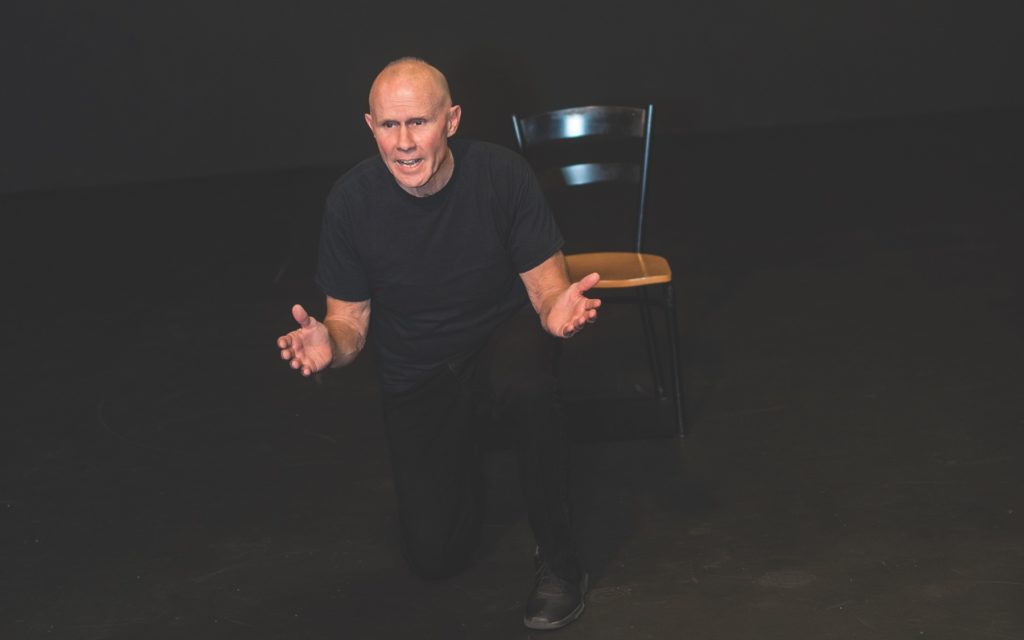
In his riveting staged monologue, “Bearing Witness,” running June 1-17 at the Odyssey Theatre in Los Angeles, the Vietnam War veteran, now 70, tells the story behind that shocking image, as well as the personal journeys of a father and son bound by the traumatizing experiences of war. 

The audience learns at the outset that the photo was taken at Mauthausen concentration camp in Austria, which American forces liberated in May 1945. Sam Bird bore witness to the horror of the Shoah there, caring for thousands of nearly dead survivors. Onstage, Tom interweaves what his father revealed to him and what he saw with his own eyes when he visited Mauthausen in 2006. He juxtaposes this with his own wartime experience in Vietnam in the mid-1960s.

Sitting down for a post-rehearsal interview, Bird recalled watching the trial with his father of war criminal Adolf Eichmann in 1961. “That was when he started to open up about what he’d seen,” Bird said. “He was outraged that the Nazis disguised the gas chambers as shower rooms. He was appalled that Topf & Sons could make ovens to burn innocent people. The senselessness of it flabbergasted him.” 

But it took Sam until July 1985 to reveal that he had given some survivors at Mauthausen milk to help them regain their strength. However, their severely malnourished bodies couldn’t tolerate it. Thirteen of them died. “The deaths were accidental, but he felt responsible,” Bird said. 

Sam Bird died two days after this revelation. “By unburdening his secret, he had the peace of mind to pass,” his son believes.

At a press luncheon four years later, Bird met Nazi hunter Simon Wiesenthal, who had survived Mauthausen. “It was exciting, inspiring,” Bird said of their conversation. “He was so down to earth and real. He talked to me like a son. He was the catalyst for me to go to Mauthausen. He said, ‘Do it for your father.’ ”

“I felt honor-bound and compelled” to go, Bird said, but lacking the funds, he didn’t make the trip until he received an inheritance from his godmother in 2006. “Although the air and the earth had changed so much since 1945, I was walking the same ground and breathing the same air as my father and all the people that were with him in Mauthausen experienced. It’s very palpable.”

“Although the air and the earth had changed so much since 1945, I was walking the same ground and breathing the same air as my father and all the people that were with him in Mauthausen experienced. It’s very palpable.” — Tom Bird

Bird began writing “Bearing Witness” upon his return to New York, honing it over the years until debuting it in 2016 in Orlando, Fla., and at one-off performances. Los Angeles, where Bird now lives, is hosting its first full run. He hopes to perform the play at Mauthausen’s adjacent museum in May 2019 during Liberation Week, and would love to bring it to Yad Vashem — The World Holocaust Remembrance Center in Jerusalem. There are plans for a book version and also talk of a feature film adaptation.

Bird, a producer of the Peabody- and Emmy Award-winning documentary “Dear America, Letters Home From Vietnam,” is writing other scripts about his war experiences. “My second piece is about spiritual healing,” the non-practicing Catholic said. 

He is the founder and artistic director of the Vietnam Veteran’s Ensemble Theater Company and founder of the veterans’ services nonprofit Walking Point Foundation. Bird is committed to veterans’ causes and using the arts as a means to heal.

“After Vietnam, the theater enabled me to express myself and reconnect with the public at a point when I didn’t think I had anything to live for,” he said. “I wanted to share that with others so they could see the potential in themselves. It doesn’t mean the scars go away or the memories die, but it does mean you can gain a modicum of control and peace of mind.”

Bird hopes that theatergoers come away with “a better understanding of ‘the good war,’ ‘the bad war’ and the Holocaust,” he said. “A lot of people react to the father-son dynamic and feel they missed an opportunity to come to peace with their parent, but maybe they can do that through this material and get a sense of completion with their fathers that I got with my father.” 

Noting that he kept the title despite suggestions to change it, Bird said, “[I am] trying to do my little part in bearing witness to all of those people in the pictures on the wall of the crematorium at Mauthausen, the same kind of insanity that destroyed those villages in Vietnam. It’s a drop in the bucket of what needs to be done, but just doing it for them is enough to motivate me.” n

“Bearing Witness” runs June 1-17 at the Odyssey Theatre. Visit odysseytheatre.com for tickets and information.


He asked his father, Sam, who served as a U.S. Army medic in the war, what it was. He didn’t get an answer for three more years. The terrible truth would change his life.

In his riveting staged monologue, “Bearing Witness,” running June 1-17 at the Odyssey Theatre in Los Angeles, the Vietnam War veteran, now 70, tells the story behind that shocking image, as well as the personal journeys of a father and son bound by the traumatizing experiences of war. 

The audience learns at the outset that the photo was taken at Mauthausen concentration camp in Austria, which American forces liberated in May 1945. Sam Bird bore witness to the horror of the Shoah there, caring for thousands of nearly dead survivors. Onstage, Tom interweaves what his father revealed to him and what he saw with his own eyes when he visited Mauthausen in 2006. He juxtaposes this with his own wartime experience in Vietnam in the mid-1960s.

Sitting down for a post-rehearsal interview, Bird recalled watching the trial with his father of war criminal Adolf Eichmann in 1961. “That was when he started to open up about what he’d seen,” Bird said. “He was outraged that the Nazis disguised the gas chambers as shower rooms. He was appalled that Topf & Sons could make ovens to burn innocent people. The senselessness of it flabbergasted him.” 

But it took Sam until July 1985 to reveal that he had given some survivors at Mauthausen milk to help them regain their strength. However, their severely malnourished bodies couldn’t tolerate it. Thirteen of them died. “The deaths were accidental, but he felt responsible,” Bird said. 

Sam Bird died two days after this revelation. “By unburdening his secret, he had the peace of mind to pass,” his son believes.

At a press luncheon four years later, Bird met Nazi hunter Simon Wiesenthal, who had survived Mauthausen. “It was exciting, inspiring,” Bird said of their conversation. “He was so down to earth and real. He talked to me like a son. He was the catalyst for me to go to Mauthausen. He said, ‘Do it for your father.’ ”

“I felt honor-bound and compelled” to go, Bird said, but lacking the funds, he didn’t make the trip until he received an inheritance from his godmother in 2006. “Although the air and the earth had changed so much since 1945, I was walking the same ground and breathing the same air as my father and all the people that were with him in Mauthausen experienced. It’s very palpable.”

Bird began writing “Bearing Witness” upon his return to New York, honing it over the years until debuting it in 2016 in Orlando, Fla., and at one-off performances. Los Angeles, where Bird now lives, is hosting its first full run. He hopes to perform the play at Mauthausen’s adjacent museum in May 2019 during Liberation Week, and would love to bring it to Yad Vashem — The World Holocaust Remembrance Center in Jerusalem. There are plans for a book version and also talk of a feature film adaptation.

Bird, a producer of the Peabody- and Emmy Award-winning documentary “Dear America, Letters Home From Vietnam,” is writing other scripts about his war experiences. “My second piece is about spiritual healing,” the non-practicing Catholic said. 

He is the founder and artistic director of the Vietnam Veteran’s Ensemble Theater Company and founder of the veterans’ services nonprofit Walking Point Foundation. Bird is committed to veterans’ causes and using the arts as a means to heal.

“After Vietnam, the theater enabled me to express myself and reconnect with the public at a point when I didn’t think I had anything to live for,” he said. “I wanted to share that with others so they could see the potential in themselves. It doesn’t mean the scars go away or the memories die, but it does mean you can gain a modicum of control and peace of mind.”

Bird hopes that theatergoers come away with “a better understanding of ‘the good war,’ ‘the bad war’ and the Holocaust,” he said. “A lot of people react to the father-son dynamic and feel they missed an opportunity to come to peace with their parent, but maybe they can do that through this material and get a sense of completion with their fathers that I got with my father.” 

Noting that he kept the title despite suggestions to change it, Bird said, “[I am] trying to do my little part in bearing witness to all of those people in the pictures on the wall of the crematorium at Mauthausen, the same kind of insanity that destroyed those villages in Vietnam. It’s a drop in the bucket of what needs to be done, but just doing it for them is enough to motivate me.” n

“Bearing Witness” runs June 1-17 at the Odyssey Theatre. Visit odysseytheatre.com for tickets and information.

‘Bearing Witness’ to the Holocaust Read More »

Israeli Filmmaker Finds Her Voice

Growing up in Ness Ziona, a small city in central Israel, 33-year-old Dana Lerer dreamed of being a movie star, but struggled to find consistent work as an actress. In addition, the roles she was auditioning for didn’t resemble the fulfilling female parts she desperately wanted to play.  

“So I decided to make my own opportunities,” Lerer, who lives in Tel Aviv with her husband and their young son, said in a recent phone interview. “I enrolled in film school and set about making my own films, casting myself, writing and directing, too.” 

A graduate of the Steve Tisch School of Film and Television at Tel Aviv University, she went on to write, direct and star in two female-driven short films, 2012’s “Screen Test” and 2014’s “Ella’s Wedding Day.”

“But that was pretty much a nightmare,” she said. “I couldn’t be 100 percent invested in either my role as an actress or as a writer-director.”

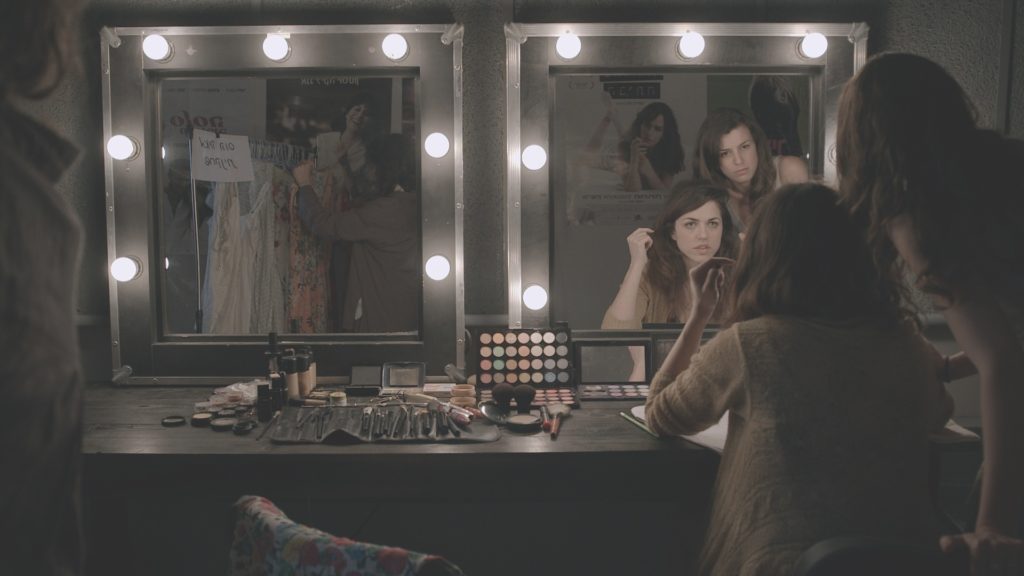
With 2015’s “The Fine Line,” her 27-minute short film, she struck the right balance, finding her voice as a filmmaker by writing and directing but ceding the lead role to another performer. The film, which centers on a young actress shooting her first on-screen sex scene, earned Lerer a coveted Ophir (the Israeli version of the Oscar) nomination and garnered the Best Film Award at the Jerusalem Film Festival.

The film explores the blurred line between acting and reality. The heroine, Maya, faces mounting pressure from her director, Esti, to bare more skin and “make it real.” The film’s final frame is a powerful confluence of symbolism and meta imagery, showing a taxed, stoic Maya sitting on the edge of a bed.

“To make something on screen like a love scene completely believable, the actress is often forced to pay a personal, mental price for that truth,” Lerer said. “The film raises the question of where do you draw the line between pursuing the truth and doing what’s necessary in order to make the scene believable?”

The critical reception of “The Fine Line” boosted Lerer’s career, landing her a directing gig at Keshet Digial Studios in Tel Aviv, where she’s currently developing two feature film projects. However, in light of the #MeToo movement, her 3-year-old short film has been drawing renewed interest. 

The film explores the blurred line between acting and reality. The heroine, Maya, faces mounting pressure from her director, Esti, to bare more skin and “make it real.”

In early May, USC, during its weekly showcase highlighting world cinema, screened “The Fine Line,” citing its relevance in light of #MeToo. 

“I guess I was a bit ahead of my time,” Lerer said. “But this issue has been bothering me ever since, well, forever.” 

The film’s premise emerged from personal experiences Lerer went through as an actress, including “casting couch” episodes where directors and casting agents “crossed lines” in situations that “felt off” with requests like asking her to kiss an actor she had just met. Although she never acted in any love scenes herself, they were always her biggest fear. 

Lerer’s trepidation was flamed by stories like one she read in 2013 in which a French actress described feeling like a “prostitute” during the filming of a love scene, alleging abusive and exploitive directing practices on set. The film was “Blue Is the Warmest Color,” which had been awarded the Palme d’Or — the top prize — at the Cannes Film Festival by a jury headed by Steven Spielberg prior to the allegations. 

“I think it’s really wrong to manipulate actors like that,” she said. “I wanted to prove in my film that you don’t need to do that, and it was a big part of my agenda to show that you can shoot a sex scene and make it totally believable without showing any nudity, without making actors uncomfortable and certainly without having sex for real.” 

On the set of her film, Lerer said her treatment of actress Naomi Levov, who plays Maya, was of the utmost importance. 

“I’m putting her in a delicate situation, so of course it’s hard, but this is the profession,” Lerer said. “We did a lot of rehearsal before. I kept asking her what would be most comfortable for her in this uncomfortable position. At points, she’d come to me and say, ‘This is too much for me. I need a break.’ I just tried to maintain a lot of sensitivity and awareness for the situation.”

Lerer said she will continue to explore “feminist-focused” narratives in her upcoming projects.

“The minute I started studying film, I knew I wanted to say something about the world and not just be a puppet, not just a performer of someone else’s words,” she said. “In a sense, I want to be in control.”

With #MeToo shaking up the industry and removing some of the old guard, Lerer finds encouragement in progress being made by women. Her hope is that more women continue to rise through the ranks of the industry and enact positive change in a working environment that sorely needs it. 

“I feel that the world is getting to understand that if more and more women get to higher positions in the industry, directing and running studios, the situation will be different,” she said. “It’s going in that direction. The revolution is on her way.”

Israeli Filmmaker Finds Her Voice Read More »

Paul Simon: Musical Genius and National Treasure

“One and one-half wandering Jews …” goes the opening line of “Hearts and Bones,” a standout among the songs of Paul Simon. He’s the full Jew, of course, and his ex-wife Carrie Fisher — daughter of Eddie Fisher and Debbie Reynolds — is the half-Jew.

Free to wander wherever they choose
Are traveling together
In the Sangre de Cristo
The Blood of Christ Mountains
Of New Mexico.

That’s the only Paul Simon song I can think of in which he affirms his Jewish identity. Even so, he insists on reminding us that we live in a country with a deep Christian heritage. But the fact is that Simon belongs in the pantheon that includes such fellow Jewish musical luminaries as Irving Berlin, George Gershwin, Leonard Bernstein and Bob Dylan, all of whom have shaped, enriched and ornamented American culture. If Dylan’s songs deserved a Nobel Prize in literature, then the Paul Simon songbook surely deserves at least a Pulitzer.

With the publication of “Paul Simon: The Life” by Robert Hilburn (Simon & Schuster), the time is right for pondering Simon’s place in American popular culture. Hilburn describes Simon as “one of the all-time great American songwriters” whose songs have been performed and recorded by “a treasure chest of vocalists, from Elvis Presley and Frank Sinatra to Barbra Streisand and Ray Charles.

Hilburn himself deserves to be called a legacy critic. Having spent three decades as the Los Angeles Times’ pop music critic, he brings to his book a depth of knowledge and experience that few others can approach. Indeed, Simon has opened his life and work to his biographer in ways we can only glimpse in his music. “Songs are not memoirs,” Simon told Hilburn, who goes on to explain: “Despite melancholy and self-doubt at points in his personal life, he avoided despair or hostility in his songs.” But those moments of melancholy and self-doubt — including his famous on-again, off-again collaboration with Art Garfunkel and a series of troubled family and romantic relationships — are not overlooked in Hilburn’s biography.

Born in New Jersey in 1941 and raised in Queens, Simon asked his father, whose dance band played the Roseland Ballroom in Manhattan every Thursday afternoon, to buy him his first guitar at the age of 13. Starting in the late 1950s, he was “toiling at the lower levels of the music business trying to write teen pop hits largely by copying what was on the radio.” His first recording with childhood friend Art Garfunkel — they styled themselves as “Tom and Jerry” — was an unabashed Everly Brothers knock-off titled “Hey Schoolgirl.” By 1963, Simon was ready to put down his guitar and sign up for Brooklyn Law School. “The Sounds of Silence” was the song that spared him from a career in law. The song impressed Tom Wilson, Bob Dylan’s producer at Columbia Records, and soon Simon and Garfunkel were presented with their first recording contract and a studio date to record their first album. 

For those of us who revere Simon’s songs and the way he performs them, Hilburn’s book only heightens and sharpens our appreciation of the music itself. Everything we think we know about Simon — his meticulous approach to composition and performance, his curiosity about the music of other cultures ranging from the Cajun bayou to the townships of South Africa, and his sometimes prickly relationships with his family and his fellow musicians — is reinforced by the fascinating stories Hilburn tells. For example, we discover that the haunting sound of “The Boxer” was achieved by recording the opening guitar licks in Nashville, Tenn., adding the bass and drums in a New York City studio, and recording the vocals in a cathedral near Columbia University.

“By then, Simon, Garfunkel and [producer Roy Halee] had spent nearly a hundred hours on the track, and they still weren’t through,” Hilburn writes. Says Simon: “We went back to Nashville to record this beautiful instrumental section that blended a high-C trumpet and a pedal steel guitar. It was a beautiful part that Artie wrote, maybe the piece of writing that Artie is most proud of.”

Hilburn uses “The Boxer” as an example of the crucial role Simon and his music have played in American history. Simon was invited to perform on the first broadcast of NBC’s “Saturday Night Live” after the terrorist attacks on 9/11, and the song he sang was “The Boxer.” According to Hilburn, “It was a defining moment for Simon because it underscored what had long been one of his quintessential qualities as a songwriter. Like ‘The Boxer,’ so many of his songs moved past any inherent darkness to express consolation, optimism and even faith.”

Perhaps an even better example of the enduring impact and relevance of Simon’s music is the song titled “American Tune.” “I always think of that as my Nixon-sore-loser song,” Simon told Hilburn. “I was writing about what I felt was the end of sixties beliefs — that idealism.” Ironically, the ever-inventive tunesmith did not write the music, which is based on a chorale from Bach’s St. Matthew Passion. But the words are Simon’s alone, and they capture the weariness and fatalism of a moment in American politics when we were struggling with the betrayal of our democracy by our president.

I don’t know a soul who’s not been
battered
I don’t have a friend who feels at ease
I don’t know a dream that’s not been
shattered
Or driven to its knees
Oh, but it’s all right, it’s all right
For we’ve lived so well so long.
Still, when I think of the road
We’re traveling on
I wonder what’s gone wrong
I can’t help it, I wonder what’s
gone wrong.

Today, at the age of 76, Paul Simon is appearing on stages around the country on what he calls “The Farewell Tour.” “American Tune” was released in 1973 on the album titled “There Goes Rhymin’ Simon,” but it could have been written yesterday.

Jonathan Kirsch, author and publishing attorney, is the book editor of the Jewish Journal.

Paul Simon: Musical Genius and National Treasure Read More »

Table for Five: Parashat Beha’alotcha

“Miriam and Aaron spoke against Moses” […] “and Aaron looked upon Miriam; and, behold, she was leprous” […] And Moses cried unto the Lord, saying: ‘Heal her now, O God, I beseech Thee.’ ” Numbers 12:1-13

Rabbi Tal Sessler
Sephardic Temple Tifereth Israel
If you’ve lived long enough, then you know that some people can be great friends when you’re down and in need of help, but paradoxically, not necessarily such great friends when you’re doing great and thriving. It is even sadder and more painful when this betrayal comes from members of your own family. This is what happens to Moses in our parashah.

Miriam and Aaron were always there for Moses when he was down or in need of help. Miriam saved Moses’ life as an infant, and Aaron served as Moses’ spokesperson when Moses suffered from a speech impediment. But now that Moses is a huge “success story,” suddenly his siblings resent him for his elevated spirituality, and speak ill of him and his wife. 

Many people, when faced with such malicious toxicity, can become enraged. They might even be tempted to “return the compliment” to the aggrieving party. Not so Moses. Rather than become incensed with the aggrieving party, Moses prays for her. 

Moses prays for Miriam because he knows that human toxicity is indicative of an emotional and mental inner deficit. 

I recently started “checking out” the Moses approach to toxic individuals. During the birkat Kohanim part of the service, I try to think of people who caused me anguish, and then I meditate on wishing them healing in body and soul. It feels great. It’s cleansing and it’s liberating. It is a Godly thing to do. Give it a shot. It totally works. Take it from Moses.

David Sacks
Television writer and podcaster at torahonitunes.com
Who do you pray for? And when do you pray?

I never knew you could pray for every person you come into contact with, and that you could pray for them anywhere.

For instance, let’s say you’re walking down the street and you see someone in a wheelchair. You can pray that they should be able to walk. When you see a couple on a date at a restaurant, you can pray that if they’re meant for each other, Hashem should open their eyes and make it easy for them. When you see a pregnant woman, you can pray that she should have a healthy child. When you see two people arguing, you can pray that there should be peace. When you’re driving and see a homeless person, you can pray that they should have food, shelter and a second chance at life. When you hear a siren, any siren, you can pray that Hashem should bring salvation.

Many blessings will come to you if you live this way. Your heart will be open. You’ll have a good eye for everyone. You’ll realize the interconnectedness of all souls. You’ll be in the moment. You’ll realize the wonderfulness of prayer at all times, not just when you’re in a formal setting.

But even deeper, you’ll embody the words King David wrote in the Psalms: Va’ani tefilati, which literally means, “And I am a prayer.”  It’s true. You can become a walking, living, breathing prayer.

And this is the secret to how it begins.

Rabbi Leonard Sharzer
The Finklestein Institute
Excerpted from jts.edu
Our sages have told us that the reason God became so angry at Miriam and Aaron was that they spoke out against Moses behind his back.

Today, online bullying has become a serious problem, especially among adolescents. It is so easy to do. It is so easy to be anonymous. It is so easy to gang up on those who are vulnerable and unable to defend themselves. We must ask how many online bullies would have acted as they did if they had faced their victim directly and seen firsthand the suffering they had caused.

The word “friend” has become a verb and connotes an entirely different kind of relationship than the noun used to. And our thoughts are measured by their number of characters rather than the character they reflect.

Modern communication comes with risks and at a price. We risk inflicting pain, intentionally or unintentionally, and we risk making mistakes that cannot be undone. We pay a price in empathy and intimacy, the kind that comes from truly seeing the tzelem Elohim, the image of God, in our fellow human being.

Our sages found a warning about lashon hara and motzi shem ra (“slander”) in this story. This is not a story about evil people — Miriam and Aaron are heroic figures. But even heroes can give in to this all-too-easy transgression. How much more so for the rest of us?

Rabbi Laura Geller
Temple Emanuel of Beverly Hills
While Eldad and Medad were prophesizing, Miriam and Zipporah were talking. Miriam said, “When the prophetic spirit rested on Eldad and Medad, everyone was happy. Their children are happy. Their wives are happy.” Zipporah responded, “Happy are their children, but woe to their wives.” “Why” Miriam asked, “from the day that your brother received the prophetic spirit, he has not approached me as his wife?”  “And so Miriam went and spoke to Aaron and the two of them complained about Moses.”

Recall that all three, Moses, Aaron and Miriam, are prophets. Miriam said “the prophetic word was upon me but I did not keep away from my husband.” Aaron said, “The word was upon me, but I did not keep away from my wife … but he, because of his presumptuous spirit, kept away from his wife.” In other words, Moses was so busy being an important person, a leader of his community, that he wasn’t able to be there for his wife. 

I love this image. Sisters-in-law sharing the intimate details of their lives and reaching out for support when a marriage is in trouble. A sister-in-law, trying to be helpful, tells one brother that the other was getting his priorities wrong, neglecting his own family for the sake of a higher calling. Miriam seems to be saying that there is no higher calling than being there for your own family. 

Maybe there was a better way for her to say it, but maybe it needed to be said. 

Rabbi Elaine Zecher
Temple Israel of Boston
Excerpted from myjewishlearning.com
Miriam discovers that Moses’ wife, Zipporah, has a fair grievance against her husband and wants to help her sister-in-law. She shares the information with her brother Aaron, and they both express concern about Moses’ behavior.

God hears this conversation and summarizes the divine relationship with Moses, reiterating that God confides solely in Moses. Miriam still gets leprosy. Notice the next course of events: Aaron pleads with Moses, who then beseeches God to heal Miriam. Aaron respects Moses’ divine connection. Their sister has a grave illness, and each brother reacts appropriately.

We will never be able to provide a rational reason for this case of leprosy, but we can try to understand the reactions and the relationships of those involved. The Israelite people waited for their prophetess to be healed. Their reaction speaks of a great respect they must have had for her. As for Miriam’s brothers, they sought to help her through their supplications, first Aaron to Moses, then Moses to God.

Let us remember that it all started when Miriam voiced a concern regarding the relationship between Zipporah and Moses. God may hear what we say, but it is the human interaction in relationships that affects the way in which we understand our world.

Table for Five: Parashat Beha’alotcha Read More »