A Jewish member of the Labour Party announced that he will be leaving the party due to the anti-Semitism plaguing the party under the leadership of Jeremy Corbyn.
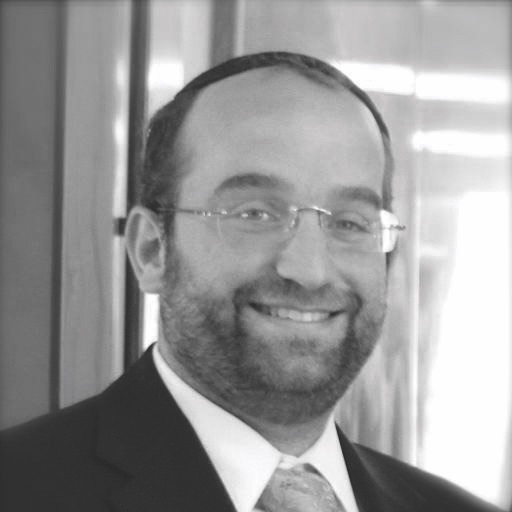
Jamie Susskind, an author, wrote in a letter that he posted to Twitter on April 25 that he had first joined the party as a teenager and served in executive positions at various Labour clubs.
“Being Jewish, being British, and fighting for social justice are therefore all wrapped up together in my identity,” Susskind wrote. “Until recently, Labour was part of that identity too.”
And yet, while Susskind acknowledged that most Labour Party members weren’t anti-Semitic, could no longer remain in the party due to the “insults and indignities” that the Labour Party has subjected Jews to.
“I can no longer belong, in good faith, to an institution that has allowed itself to become the foremost platform for anti-Semitism in British public life,” Susskind wrote. “Holocaust deniers and racists have been emboldened by the silence (and in some cases complicity) of senior figures in the party. In part, therefore, I am leaving Labour for the same reason that I joined: because I am Jewish.”
Susskind added that he didn’t want in any way responsible for any future electoral success the Labour Party may have.
“An institution that turns a blind eye to the injustice festering in its own ranks surrenders it claim to moral leadership of the country,” Susskind wrote. “And ‘comrades’ who tacitly offer a safe space for intolerance, or turn their faces from the suffering caused by racism (or misogyny, or any of the ills that afflict Labour) are not really comrades at all.”
Susskind concluded, “There is life beyond Labour, and I will try to find it.”
Anti-Semitism has become a major problem in the Labour Party under the leadership of Corbyn, who has referred to Hamas and Hezbollah as “friends” and was once part of an anti-Semitic Facebook group.
The full letter can be read below:
After more than 10 years, and with such sadness, I am leaving Labour. I'm doing it for the same reason that I joined: because I'm Jewish. This is my letter resigning – I wrote it over a month ago, but am only sending it today. I'm confident it's the right choice now. pic.twitter.com/mF42d7KJbY
An April 26 flash flood has killed nine teenagers in Israel and left one teenager missing.
The victims were taking part in a hike nearby the Tzafit river as part of their training before they enrolled into Bnei Zion Pre-Military Academy when the flood occurred, which was due to heavy rainfall from the past couple of days.
The nine victims consisted of eight girls and one boy, and there is one girl who is still missing. Two other victims sustained non-life-threatening injuries. The 13 others in the group were not injured.
“This is a very difficult and unfortunate event, and the rescue operation from the field was complex and was carried out in full cooperation between the security forces that arrived at the site, Unit 669 of the Israel Air Force, Magen David Adom, The Police, Fire Brigade and the Rescue Units, in difficult conditions and with personal risk, we share the sorrow of the families and wish a speedy recovery for the young people who were injured,” Magen David Adom Director-General Eli Bin said in a statement.
One of the first responders on the scene, Yehuda, told The Jerusalem Post that what he witnessed at the scene was “one of the hardest things I’ve had to see and deal with.”
“There is no easy way to expand further on this – there is no way I can put this into words at this time,” Yehuda said.
Israeli Prime Minister Benjamin Netanyahu issued his condolences on Twitter.
“Israel today mourns the promising lives that were cut short in the massive tragedy in the Arava,” Netanyahu wrote. “We painfully embrace the grief-stricken families and pray for the speedy recovery of the injured.”
The Jerusalem Post obtained text messages from students on the hike who were astonished that they were still going on the hike despite the weather conditions.
“It’s not logical that we should go to a place that is completely flooded,” one of the victims wrote. “It’s tempting fate. We are going to die. I am serious.”
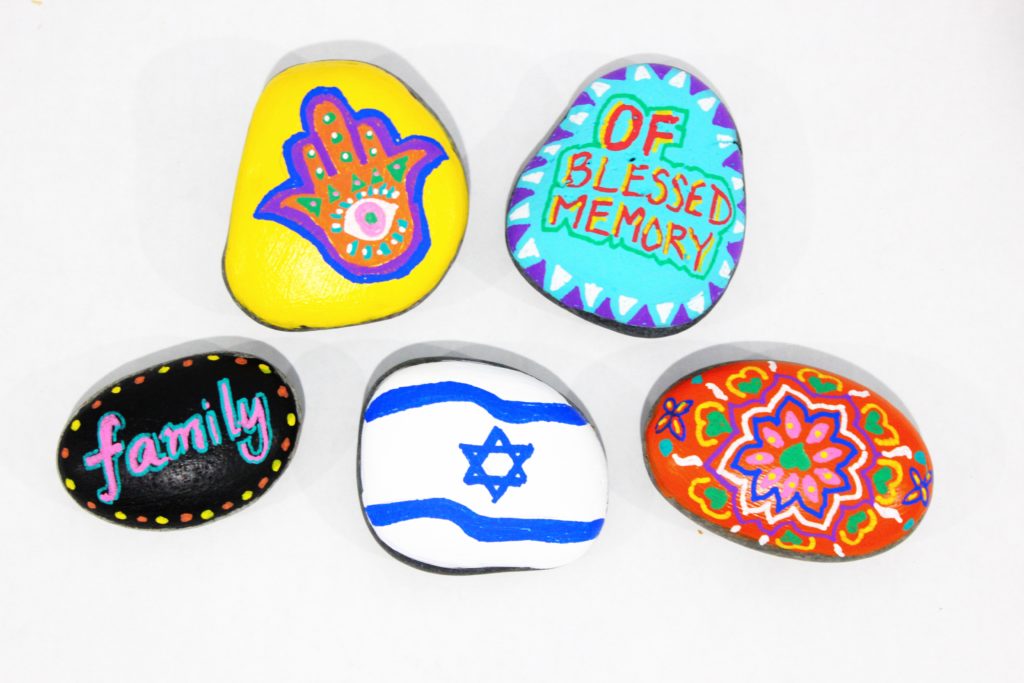
One of the most popular activities in the arts-and-crafts world right now is painting stones. I can see why people love it so much. Stones are an inexpensive and readily available canvas to create with, and anyone can express their inner Picasso regardless of skill level.
The painted stones can grace your home interior or your garden. Some artists leave the stones in random places as gifts for strangers to pick up. And painted stones can be placed on gravesites as a remembrance to loved ones who have passed.
No matter how you paint the stones or what you’ll do with them, you’ve got to admit that this is a craft that rocks.
1. Select stones that have a smooth surface, as they are easier to paint. If you don’t have stones in your garden to use, they can be purchased at home improvement stores or crafts stores. Don’t take stones from parks or beaches — that’s not legal. Before painting, wash them really well with soap and water, and let them dry thoroughly.
2.
2. Using a foam brush, paint the front side of the stone with acrylic paint. If possible, use paint that is specially formulated to weather the elements, especially if the painted stone will be displayed outdoors. I don’t bother painting the back, as I actually like the texture of the stone to be visible.
3.
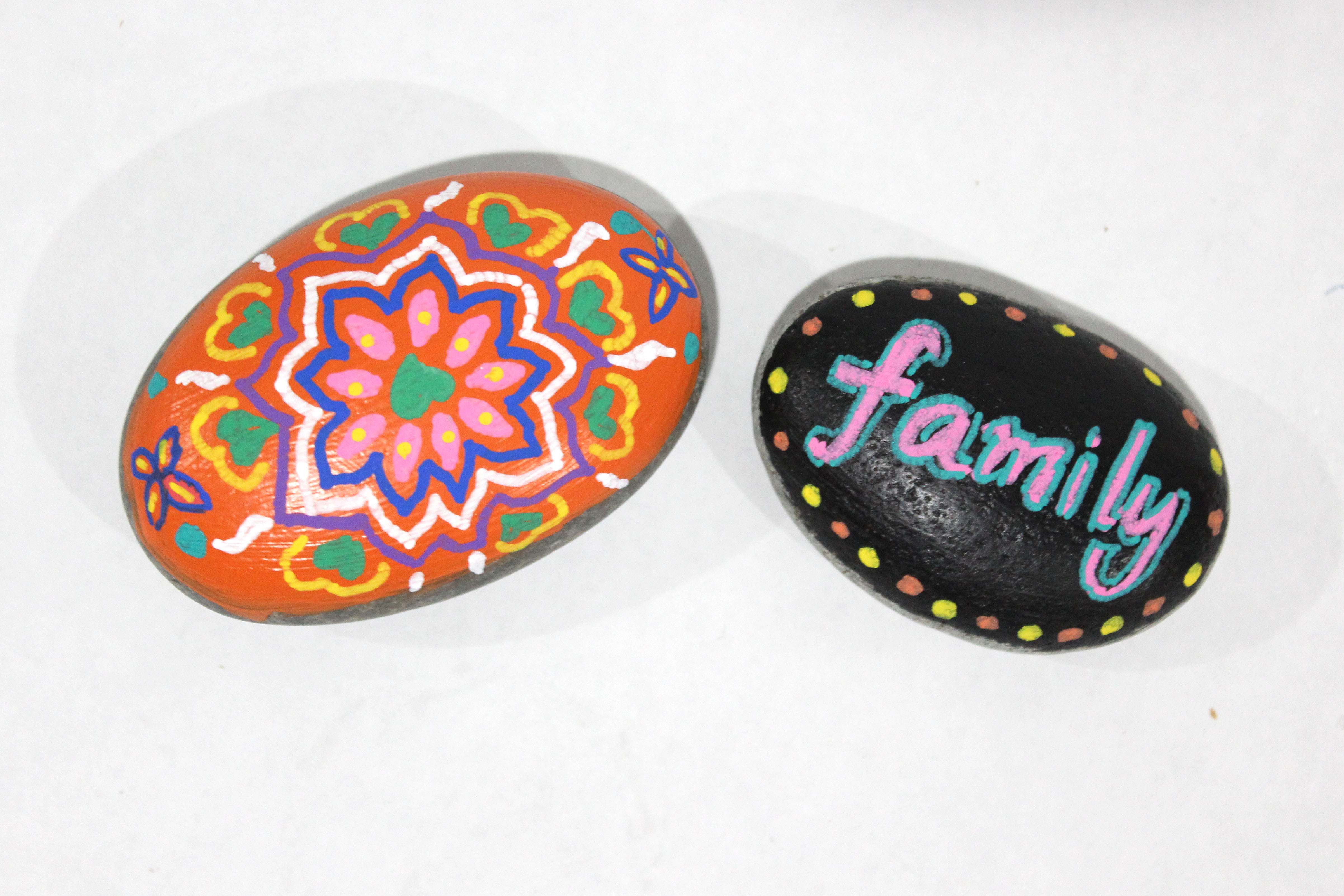
3. To paint detail on the stones, you can use either a thin brush and acrylic paint or paint markers. My hands are too shaky to paint freehand with a brush, so I prefer paint markers. These opaque felt markers are much easier to control. There are various brands to choose from. I like the Uni Posca markers shown here.
4.
4. You can paint illustrations or write words on the stones. If you’re nervous about drawing freehand, sketch on the stone with a pencil first. As you paint, allow the colors to dry before using new ones. And when you’re done, spray the stones with a clear protective coating.
Jonathan Fong is the author of “Flowers That Wow” and “Parties That Wow,” and host of “Style With a Smile” on YouTube. You can see more of his do-it-yourself projects at jonathanfongstyle.com.
And the LORD spoke unto Moses, saying: Speak unto all the congregation of the children of Israel, and say unto them: Ye shall be holy; for I the LORD your God am holy.
Rabbi Shlomo Einhorn Yeshivat Yavneh
These verses reflect a slight deviation from the normal God-to-Moses, Moses-to-the-nation format. Usually it says, “Speak to the children of Israel and say to them ….” Here it says, “Speak to the entire assembly of the children of Israel and say to them….”
The Midrash explains that Torah normally was taught via the hierarchical methodology, from God to Moses to the people, but this Torah portion was transmitted to the entire group as a whole.
This approach seems to create an even bigger problem: If the hierarchy method was generally preferred, why abandon it now? And if the collective method was ideal, why wait until now?
Perhaps the answer is the von Restorff effect — also known as the “isolation effect” — which predicts that when multiple homogeneous stimuli are presented, the stimulus that differs from the rest is more likely to be remembered. The theory was coined by German psychiatrist and pediatrician Hedwig von Restorff (1906-62), who, in her 1933 study, found that when participants were presented with a list of categorically similar items with one distinctive, isolated item on the list, memory for the item was improved.
We can suggest that the hierarchy method was pedagogically most effective. However, in order to make the values of Kedoshim stand out, something uniquely different had to be done. Therefore, the method of instruction changed.
The question I leave for you to think about is why the von Restorff effect was needed for Kedoshim?
Rabbi Lori Shapiro Open Temple
Kodesh. A word we will spend the rest of our lives trying to understand. Ramban quotes the rabbis: “[This] Torah portion was stated in an assembly because most of the fundamentals of the Torah are dependent on it.” Whatever Kodesh means, it connects to living in the midst of others. Ramban explains: “Wherever you find restriction of sexual immorality, you find holiness.”
These “immoralities” are aberrations of the Torah’s essence that we are created B’tzelem Elohim, in the image of God (aka The Creator). There is, ostensibly, an inextricable connection between our sexual expression and our deepest expression of our understanding of the Creator. What is the connection between our sexual self-expression and our spiritual health? In an age of rampant sexual dysfunction and prurient news headlines, is all of this a collective spiritual crisis?
Perhaps the dictum “You shall be holy; for I the Lord your God am holy” is a reminder of the mundane miracle born by our sexual appetites. We are like giants, creating small and wondrous acts of creation: children. Raising them, we approach the essence of God’s mystery and embody the God character in the Bible.
The examined life of parenting is a realm of radical amazement. The child discovers their own small joys and their place on this earth, and we are challenged to our deepest core. Perhaps Kedoshim is a call to reconcile the truth about our sexual appetites — they are portals for our holiness journey. Live them truthfully and (w)hol(l)y, or perish.
Rabbi Aryeh Markman Aish LA
A human being is not a soul trapped in a body, rather a merging of the two. Each needs the other to reach upward toward their Creator. That pursuit creates holiness, which is our reason for being, to transcend this world and encounter God.
Make no mistake, we can never be as holy as God because we are trapped in time and space, which is God’s creation. He is Other, beyond and inconceivable. Since we are made by God, God has an intrinsic interest in us. You love what you make. Be it your song, your business, your child or your idea. God is no different. In fact, God re-creates us (and the universe) every nanosecond, so can you imagine how special we are in His eyes?
God wants us to relate to him, so he gives us three arenas to do so: time, space and ourselves.
Space being the Land of Israel, where his presence is most palpable and no other land compares. It contains the skylight to Heaven. Think Jacob’s ladder. Time being Shabbos and all the holidays. These are opportunities where closeness is at hand just because of the calendar day, which is programmed with spiritual gifts.
And, ultimately, it is us who use the mitzvot of the Torah and exert heroic human effort to transcend time and space in order to connect to the Creator. Holiness is our opportunity and a destination equally available to all of us. Use this world and find your Creator.
Sydni Adler Student, Ziegler School of Rabbinic Studies, American Jewish University
When I hear the word “kadosh” or “holy,” I hear Ziony Zevit reminding my rabbinical school class once again that “sacred,” “holy” and “kadosh” all mean “separate.” To be holy is to be wholly unique.
When God asks the entire people of Israel to be holy, God is first asking us to delve into our particular abilities to do good in the world. In our parsha, God commands us to revere our parents, to keep Shabbat, to judge the other fairly, and a whole host of other moral and ritual commandments. However, God does not provide many details about how to fulfill these commandments. God leaves that to each individual’s own creativity, resources and ability. When God asks us to be holy, God is also asking us to commit to our communal uniqueness. By refraining from worshipping idols, by celebrating Shabbat, and by eating and cutting hair in certain ways, the people of Israel show our dedication to one another and to God.
Perhaps most importantly, taking on holiness brings us into a closer relationship with the Divine. By putting ourselves in spaces of individual and communal creativity, we better appreciate God’s successes and challenges in creating the world. As we simultaneously revel and struggle in our endeavors to keep mitzvot, we conceptualize God’s swinging emotions throughout the Torah. By learning from each other’s unique personalities and problem-solving abilities, the people Israel, God and we as individuals can come closer to a more perfect creation.
Rabbi Erez Sherman Sinai Temple
Are we involved in holy work? Recently, I have had the good fortune of teaching Torah outside the walls of Sinai Temple. Our clergy have dispersed throughout greater Los Angeles, teaching Torah to our congregants in their offices over lunch.
We often think holiness must be confined to a sanctuary or synagogue building. Yet, Rabbi Yishmael and Rabbi Shimon bar Yochai engage in this exact talmudic debate. While Bar Yochai is under the impression that we must be in formal Torah study each moment of every day, Rabbi Yishmael lives in the real world — our worldly endeavors are, in fact, Torah study itself. We have the words of the Torah on our mouth each morning and night as we recite the Shema, a reminder to live a holy life.
As I learned this text first with a group of doctors, and then with a group of lawyers and business people, I was impressed to discover the underlying principle of this parsha as a thread through our sacred community. Well-established doctors, lawyers and business people, when asked if there were holy moments in their days, responded with a resounding “Yes!” The Lubavitcher Rebbe once said, “There is no evil in the world, just the absence of goodness.” One small act of holiness a day … just imagine how good and holy our world can be.
Join Rabbi Becky Hoffman and Cantor Noa Shaashua for Kol Tikvah’s friendly Shabbat Clergy Tisch (“tisch” is Yiddish for table and refers to a gathering of community and clergy around a Shabbat meal). 6–8:30 p.m. 6 p.m., Kabbalat Shabbat service; 6:30 p.m., dinner, stories, teachings and songs. RSVP required. $18 members; $36 guests. Free parking in the rear on Del Moreno Drive. Kol Tikvah, 20400 Ventura Blvd., Woodland Hills. (818) 348-0670. koltikvah.org.
SUN APRIL 29
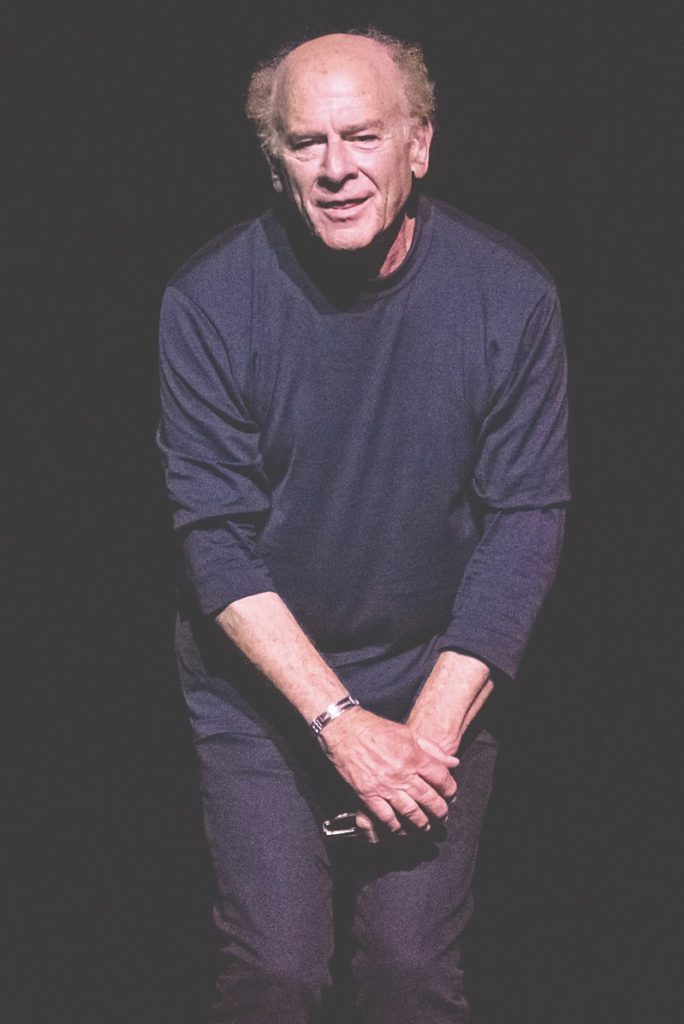
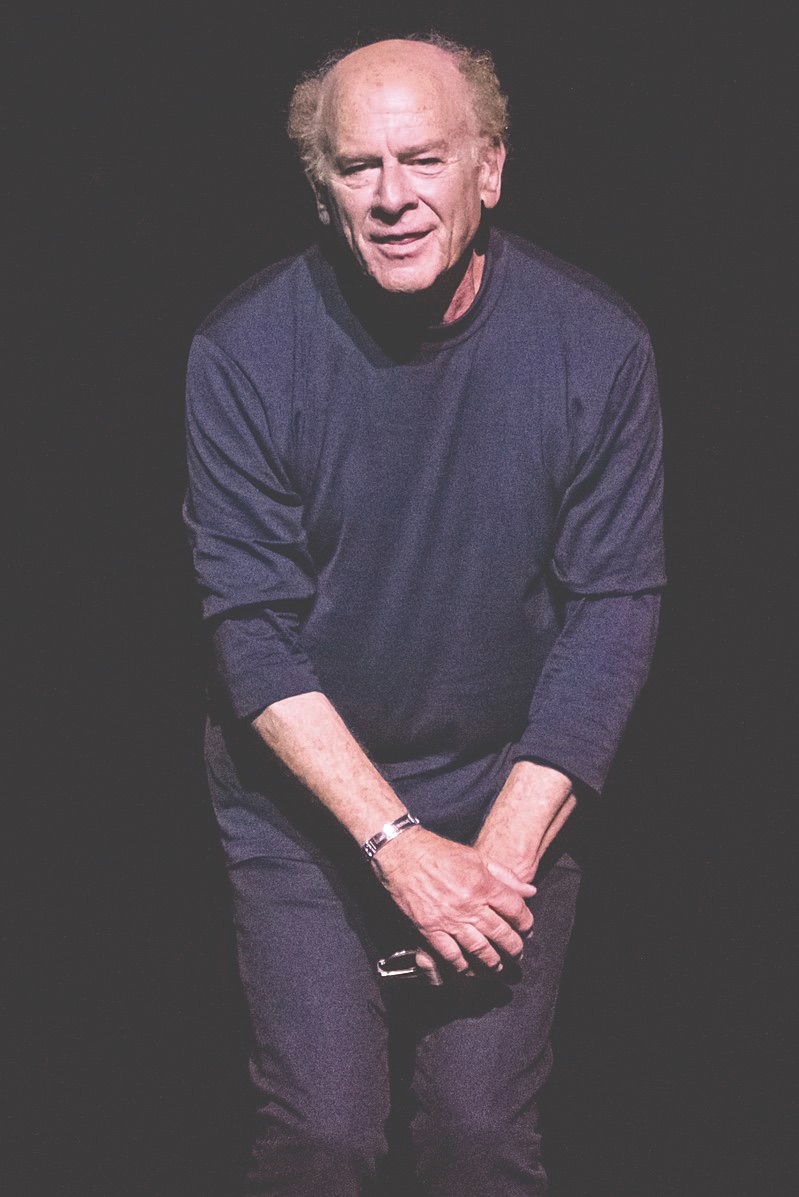
ART GARFUNKEL
Art Garfunkel.
Fifty years after debuting as half of one of pop music’s most popular duos, Art Garfunkel, 76, will perform solo, reviving classics that he and Paul Simon recorded in the 1960s and 1970s. With keyboard and guitar backing, Garfunkel will bring back “The Sound of Silence” and “Bridge Over Troubled Water,” along with his solo hits, “Bright Eyes” and “All I Know.” 7:30 p.m. $99–$270. Walt Disney Concert Hall, 111 S. Grand Ave., Los Angeles. (844) 753-8364. laphil.com.
WALKING TO DEFEAT CANCER
Sharsheret (Hebrew for “Chain”), a national organization supporting Jewish women and families facing breast cancer and ovarian cancer, holds its monthly walk/run that welcomes survivors, family, friends and advocates. Runners and walkers divide into groups based on abilities. 9 a.m. Free. Pan Pacific Park, 7600 Beverly Blvd., Los Angeles. To RSVP, contact Jenna at jfields@sharsheret.org. (310) 409-2330. sharsheret.org.
ACROSS THE GENERATIONS
“Grandparent & Me — Israel” offers a fun morning of singing, crafts and interactive stories for boys and girls ages 2½ to 6 accompanied by a grandparent or other special person in their lives. Everyone is welcome. 10–11:30 a.m. $20 per family. American Jewish University’s Familian Campus, Burton Sperber Jewish Community Library. 15600 Mulholland Drive, Los Angeles. (310) 476-9777. aju.edu.
ART EXHIBITION
Drop by the IVAN Gallery for a reception celebrating an exhibition of works by Freda Nessim. The exhibition features paintings of deeply explored themes ranging from Judaic and biblical through current events, nature and life in Los Angeles. Through May 24. 1–5 p.m. Free and open to the public. IVAN Gallery, 2701 S. Robertson Blvd., Los Angeles. (323) 533-6021. facebook.com/ivanartgallery.
SAHBA MOTALLEBI
Sahba Motallebi.
Internationally renowned Iranian musician and songwriter Sahba Motallebi, a virtuoso on tar and setar, performs music of Persia accompanied by Naghmeh Farahmand. Presented by Adat Ari El and the Rose and Edward Engel Music Commission. Wine, cheese and artist reception, 3 p.m.; concert, 4 p.m. Reception, $15 (RSVP required). Concert, free. Adat Ari El, 12020 Burbank Blvd., Valley Village. (818) 766-9426. wp.adatariel.org.
AJRCA ANNUAL OPEN HOUSE
The Academy for Jewish Religion, California invites everyone interested in its programs to its annual open house. 11:30 a.m.–1:30 p.m., information session and Q-and-A. 1:45 p.m., visitors invited to attend a class. Digital open house, available via video conference, from 2–3 p.m. RSVP necessary for each at rfederman@ajrca.edu or (310) 903-7170. Academy for Jewish Religion, California, 574 Hilgard Ave., Los Angeles. (213) 844-4133. ajrca.edu.
SKIRBALL PUPPET FESTIVAL
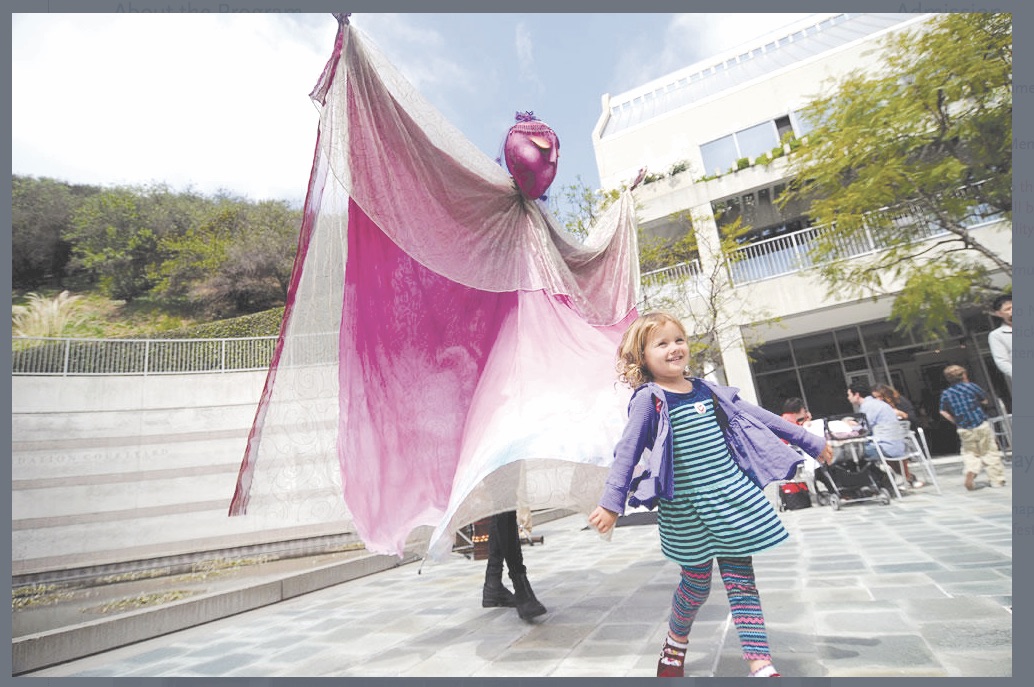
Skirball Puppet Festival.
Celebrate the art of puppetry and the power of imagination at the Skirball’s annual puppet festival. This campuswide, daylong festival features new and classic tales told with a variety of puppets, live music and art making. Appearances by Bob Baker Marionette Theater, Animal Cracker Conspiracy, Leslie K. Gray and other puppeteers from around the country. Design your own puppet and join fellow festivalgoers and puppeteers for the festival finale. 10 a.m.–4 p.m. The event is included with the cost of admission. $12 general; $9 seniors, full-time students and children over 12; $7 children 2–12. Free for children under 2. Only walk-up tickets available. Skirball Cultural Center, 2701 N. Sepulveda Blvd., Los Angeles. (310) 440-4500. skirball.org.
TASTING L.A. JEWISH MUSIC
Demonstrating the uniqueness of local Jewish sounds, musicians Julie Silver, the Nefesh Band, Hillel Tigay and Friends, and Temple Emanuel of Beverly Hills Cantor Lizzie Weiss and Rabbi Jonathan Aaron perform “Shir Joy: A Taste of Los Angeles Jewish Music.” The concert concludes Jewish Wisdom and Wellness, a two-week-long festival of learning examining Jewish traditions and their impact on well-being. 5:30–7:30 p.m. Free. Temple Emanuel of Beverly Hills, 8844 Burton Way, Beverly Hills. (310) 288-3737. jewishwisdomandwellness.org
BERNSTEIN AT 100/ISRAEL AT 70
The Los Angeles Jewish Symphony and its conductor, Noreen Green, perform Jewish-themed compositions by the late Leonard Bernstein in a double birthday celebration: “Bernstein at 100/Israel at 70.” The charismatic Bernstein, remembered for making classical music accessible to the masses, was born in 1918 and died in 1990. In honor of Israel’s upcoming 70th birthday, the program includes the symphonic poem, “Emek,” by Israeli composer Mark Lavry, and the world premiere of composer Maria Newman’s “The Baton of Hope,” featuring mezzo-soprano Diana Tash and narrators Laraine Newman and Fred Melamed. 7 p.m. $25 reserved seating, $40 preferred seating with reception. American Jewish University, 15600 Mulholland Drive, Los Angeles. (310) 440-1238. aju.edu.
MON APRIL 30
SONGS OF MORDECHAI GEBIRTIG
Renowned Los Angeles Yiddish folksinger Cindy Paley and the Golden State Klezmers perform Yiddish folksongs by Mordechai Gebirtig, one of the most influential Yiddish troubadours in pre-World War II Poland. Gebirtig, who was killed by the Nazis during a roundup in the Krakow ghetto, wrote religious-flavored and secular reflections of daily Jewish working-class life. Paley, who has been delighting Jewish communities across the country for more than 30 years, performs along with accordionist Isaac Sadigursky, violinist Miamon Miller and clarinetist Zinovy Gord. 7 p.m. $18. Valley Beth Shalom, 15739 Ventura Blvd., Encino. (818) 621-8954. yiddish.brownpapertickets.com
TIMOTHY SNYDER
Historian Timothy Snyder discusses his latest book, “The Road to Unfreedom,” which examines the rise of populism and nationalism in Western Europe and the United States and argues that the discrediting of journalism, along with cyberwarfare across the globe and other strategies put forth by President Donald Trump and Russia’s Vladimir Putin are threatening democracy in the Western world. He appears in conversation with Jewish Journal book editor Jonathan Kirsch. 7:30 p.m. $20. Temple Emanuel of Beverly Hills, 8844 Burton Way, Beverly Hills. writersblocpresents.com.
TUE MAY 1
HEREDITARY CANCER RISK SYMPOSIUM 2018
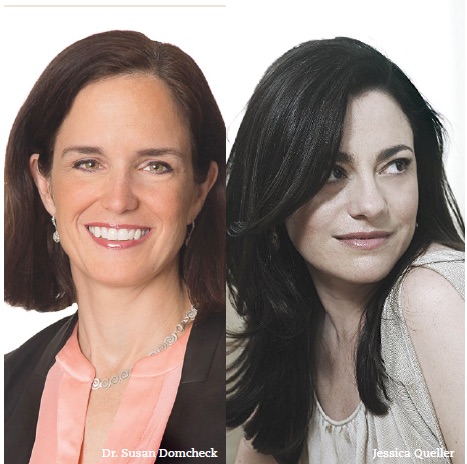
A panel of experts provides powerful new information on medical challenges relating to cancer during “Hereditary Cancer Risk Symposium 2018: Arm Yourself With Knowledge.” Speakers are Dr. Susan Domcheck, director of the Basser Center for BRCA; medical oncologist Dr. Philomena McAndrew; gynecologic oncologist Dr. Beth Karlan; plastic surgeon Dr. Jay Orringer; Jenna Fields, director of Sharsheret; and author Jessica Queller. 6–7 p.m., cocktails and resource fair; 7–9 p.m., panel. Free. Temple Israel of Hollywood, 7300 Hollywood Blvd., Los Angeles. (323) 876-8330. tioh.org.
“HEATHER BOOTH: CHANGING THE WORLD”
Heather Booth.
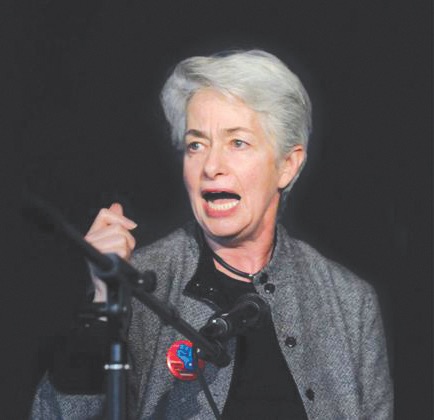
The Los Angeles Jewish Film Festival holds the Los Angeles premiere of the 2017 documentary, “Heather Booth: Changing the World.” Director Lilly Rivlin’s inspiring film focuses on the renowned organizer and activist who began her career at the height of the civil rights movement. Through Booth’s life and work, the film explores pivotal, history-altering moments in progressive movements. Film is followed by a Q-and-A with Vivian Rothstein, a community organizer and founder of the Chicago Women’s Liberation Union, one of the first feminist organizations of the 1970s. 7 p.m. Free. $8 suggested donation. West Hollywood City Council Chambers, 625 San Vicente Blvd., West Hollywood. (213) 368-1661. lajfilmfest.org/film-selection-2018.
“I AM NOT A TRACTOR”
Susan Marquis, dean and distinguished chair of policy analysis of the Pardee RAND Graduate Program and author of “I Am Not a Tractor: How Florida Farmworkers Took on the Fast Food Giants and Won,” appears in conversation with Beit T’Shuvah board member Jon Esformes and Beit T’Shuvah Senior Rabbi Mark Borovitz. They discuss the formation of the Coalition of Immokalee Workers to improve conditions of workers on tomato farms, the historic development of the Fair Food Program, and the connection of both achievements to the teachings of Rabbi Abraham Joshua Heschel. A Q-and-A with the audience follows. 7–8:30 p.m. Free. Beit T’Shuvah, 8831 Venice Blvd., Los Angeles. (310) 204-5200. beittshuvah.org.
More than 200 supporters of ETTA, a provider of social services in Los Angeles for Jewish adults with special needs, gathered for the April 15 grand opening of ETTA’s new headquarters in North Hollywood, at 13034 Saticoy St.
While still retaining a presence in the Pico-Robertson neighborhood with its community-based adult day programs, which help clients feel more confident and independent in their communities, ETTA has consolidated its office operations in the North Hollywood location to better serve its clients and the greater community, said ETTA spokesman Harvey Farr.
The celebratory event, which coincided with ETTA’s 25th anniversary, paid tribute to husband-and-wife George and Irina Schaeffer, longtime ETTA supporters whose financial support made the new headquarters a reality.
Attendees included state Sen. Robert Hertzberg (D-Van Nuys), Los Angeles City Controller Ron Galperin, ETTA President Kambiz Babaoff, ETTA Co-Chairman Jaime Sohacheski and ETTA Executive Director Michael Held.
Founded in 1993, ETTA serves people with intellectual and developmental disabilities and their families by providing residential housing, case management, employment training and placement, educational services and training.
The organization is an affiliate of OHEL Children’s Home and Family Services.
From left: Rabbi Richard Flom and Rabbi/Hazzan Jason Van Leeuwen appeared at the Temple B’nai Hayim in association with Congregation Beth Meir installation ceremony. Courtesy of Temple B’nai Hayim in association with Congregation Beth Meir.
San Fernando Valley congregations Temple B’nai Hayim and Congregation Beth Meir have made their merger official, signaling a new chapter for the two congregations that have struggled financially and experienced declining memberships over the past several years.
The merger, effective Aug. 29, followed the nearly $1 million sale of the Beth Meir campus in Studio City in February 2017. On April 15, the merged temples celebrated the installation of Rabbi Richard Flom and Rabbi/Hazzan Jason Van Leeuwen. The ceremony drew 75 people to the community’s new home, Temple B’nai Hayim in Sherman Oaks.
“We’re off to a great start, with wonderful High Holiday services and continued Shabbat services Friday night and Saturday morning, well-attended,” Lenny Adelson, chair of the transitional board of Temple B’nai Hayim in association with Congregation Beth Meir, said in an email.
“It was hard to move out of our building in Studio City,” said Martin Lee, a longtime Beth Meir member who has been serving on the transitional board during the merger. “The building is iconic and its dome was built to resemble Rachel’s Tomb. It was established in 1957 and we had concerns about who was going to purchase it and what would be done with the place. In the end, once we put the building up for sale, our neighbor, who had a good relationship with our rabbi, offered to purchase it over the asking price because he wanted to extend his shopping mall. So it all worked out well.”
Adelson, originally of Temple B’nai Hayim, said the merger has proven beneficial for both congregations.
“We had known for years that we would need to merge with another temple,” he said. “I think that everyone in both congregations was satisfied. It was clear that neither congregation had the capital to sustain payments and go on. It was either merge or close the doors, and it worked out beautifully.”
With the combined membership, Temple B’nai Hayim in association with Congregation Beth Meir has about 100 members.
— Ayala Or-El, contributing writer
From left: American Friends of Hebrew University honorees Gayle and Edward Roski, Patricia Glaser, Hebrew University President Asher Cohen and Richard Ziman attend the AFHU Scopus Award gala. Photo by Howard Pasamanick Photography.
The American Friends of Hebrew University (AFHU) Scopus Award gala, which honored wife-and-husband Gayle and Edward Roski Jr., was held at the Beverly Wilshire Hotel on April 19.
During the event, Roski, chairman and president of Majestic Realty Co., called Hebrew University a “shining example of the world’s best minds and research.”
With Gayle at his side, the real estate developer and philanthropist described the moving experience he had ascending Masada in Israel. Meanwhile, he expressed his support for the Jewish state.
“With all the changes happening around the world, it is more important than ever to support Israel,” Roski said.
He called the recent decision by President Donald Trump to move the U.S. embassy from Tel Aviv to Jerusalem a “powerful form of recognition.”
The event drew 425 attendees and raised more than $1.6 million for AFHU, a national nonprofit that raises funds and awareness for the Hebrew University of Jerusalem.
“We exist to connect the passions of Americans to the talent at the Hebrew University of Jerusalem, one of the world’s most distinguished academic and research institutions,” the AFHU website says.
The Scopus Award, named for Mount Scopus, where Hebrew University’s first cornerstones were laid in 1918, is the highest honor AFHU bestows — “awarded to individuals who demonstrate humanitarian concerns throughout their careers.”
Speakers included emcee Jonathan Anschell; attorney Patricia Glaser, vice chair of AFHU’s Western region; Richard Ziman, chairman of AFHU’s Western region; Mark Genender, president of AFHU’s Western region; and Hebrew University President Asher Cohen.
The Rev. Gregory Goethals delivered the benediction, and Rabbi Naomi Levy led the invocation.
A marching band from USC — Roski’s alma mater — kicked off the event by performing instrumental versions of songs including “Uptown Funk.”
At the evening’s conclusion, Grammy winner Michael Bolton performed.
From left: Political scientist Fred Balitzer; Sri Sri Ravi Shankar; Holocaust survivor Sol Teichman; and Simon Wiesenthal Center Associate Dean Rabbi Abraham Cooper participate in a dialogue at the Museum of Tolerance. Photo by Bart Bartholomew/Simon Wiesenthal Center.
The Simon Wiesenthal Center (SWC) has honored Sri Sri Ravi Shankar with its International Leadership Award, which it said marked the first time the Indian spiritual leader has been honored by a Jewish organization.
The SWC recognized Shankhar, founder of The Art of Living Foundation, an international nonprofit dedicated to fostering stress-free minds and violence-free societies, on April 16 at the Museum of Tolerance.
Shankar has partnered with SWC’s mission throughout Asia, including bringing “Courage to Remember,” the SWC traveling Holocaust exhibit, to cities including Delhi and Bangalore, India.
“Despite the obvious cultural and religious difference, Sri Sri Ravi Shankar’s global agenda is closely aligned to the goals the Simon Wiesenthal Center and the Museum of Tolerance pursue every day,” said SWC Associate Dean Rabbi Abraham Cooper. “We are honored to have worked with the founder of Art of the Living in Israel, Indonesia, India and the U.S.”
Following the award presentation, Shankar, Cooper, political scientist Fred Balitzer and Holocaust survivor Sol Teichman participated in a discussion about the nexus between religion, terrorism and tolerance.
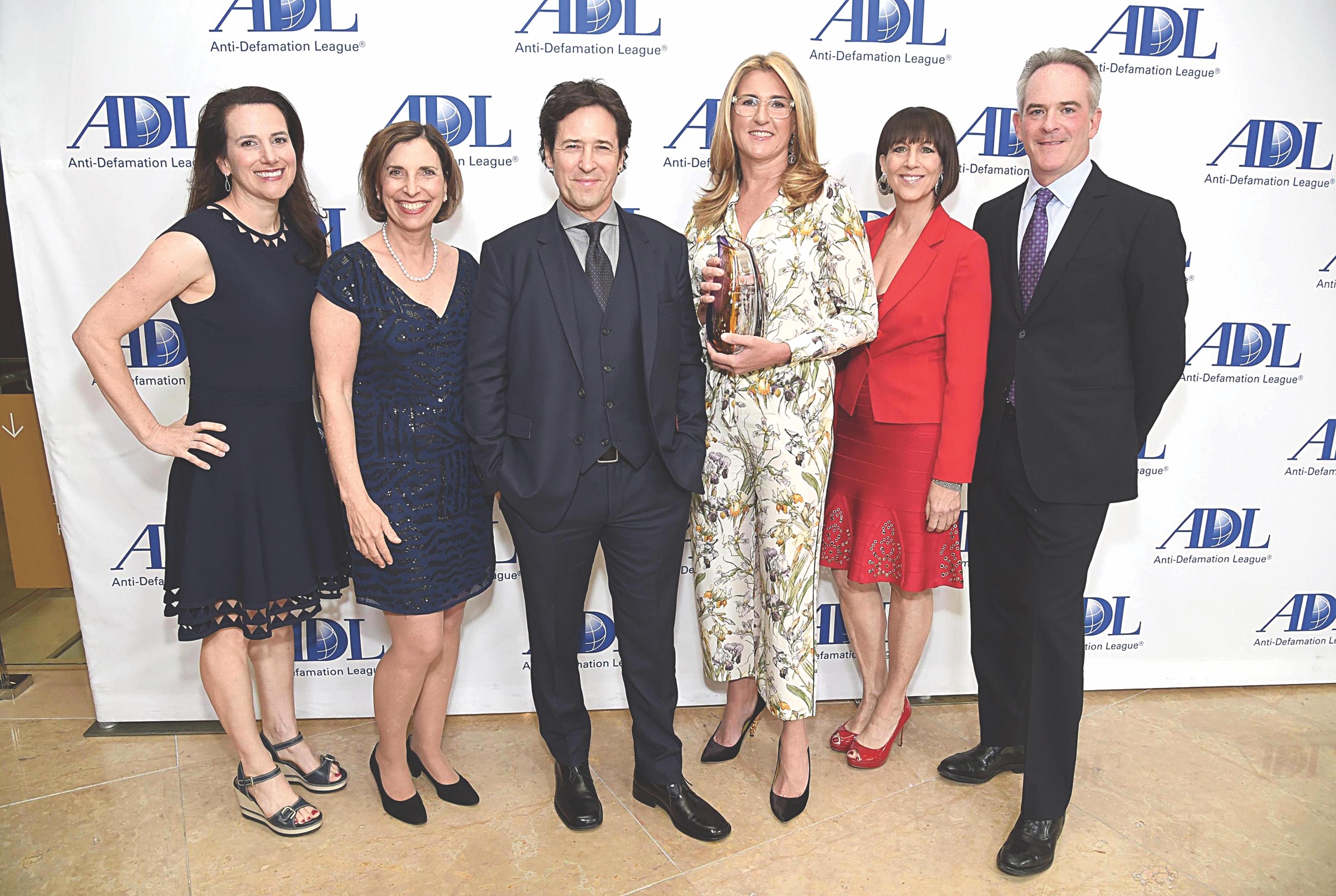
From left: ADL Entertainment Industry Dinner Co-Chair Jill Ratner; ADL Regional Director Amanda Susskind; actor Rob Morrow; ADL honoree Nancy Dubuc; Regional Board Chair Ivy Kagan Bierman; and Entertainment Industry Dinner Co-Chair Michael Garfinkel attend the ADL 2018 Entertainment Industry Dinner. Photo by Michael Kovac.
The Anti-Defamation League (ADL) honored Nancy Dubuc, chief executive officer of Vice Media, at the ADL 2018 Entertainment Industry Dinner on April 17 at the Beverly Hilton Hotel.
Upon accepting her award, Dubuc, who previously was president of A+E Networks and whose hiring at Vice was announced in March, spoke of the importance of entertainment industry leaders using their pulpit to influence positive change.
“Entertainment is an incredibly powerful platform in our country’s culture,” she said, before asking her industry colleagues to use storytelling to “keep educating and elevating our understanding of one another.”
The event raised more than $500,000 for ADL efforts to combat anti-Semitism and bigotry of all kinds.
Event emcee, actor Rob Morrow, said the ADL’s work was more important than ever at a time when anti-Semitism and other forms of hatred are increasing in the United States.
“Never before in my life has truth been under such assault,” Morrow said. “Never before has the venom of defamation had so many means to spread.”
Additional speakers included entertainment committee co-chairs Jill Ratner and Michael Garfinkel;Kern Oduro, assistant superintendent at the Chaffey Joint Union High School District in San Bernardino County; ADL Regional Director Amanda Susskind; entertainment industry attorney and ADL Regional Board Chair Ivy Kagan Bierman; entertainment executive and ADL’s National Entertainment Advisory Council Chair Ben Silverman, and actress and director Shiri Appleby, who presented the honoree with her award.
“Nancy has used the power of media to advocate for some of the most pressing social justice issues of our time,” Appleby said. “She has used her influence, power and platform to bring out the best in us.”
Last week, while the rest of Jewish Los Angeles was memorializing the 6 million Jews murdered in the Holocaust, a group of Jews held a memorial in front of the Jewish Federation building to honor the memory of those with the stated goal of murdering the 6 million Jews of Israel — the Palestinians killed in the recent Gaza protests while trying to break down Israel’s security wall to accomplish their goal.
Thank you, David Suissa, for your column “When Truth Comes Marching In” (April 13) and clearly showing the truth — that contrary to what the Palestinians are promoting, the Gaza protests had the sole purpose of breaking down the border wall, murdering Jews and conquering Israel.
Let us never forget the 6 million, and also that, sadly, there are Jews who see nothing wrong with honoring those who try to wipe Israel’s Jews off the earth.
Jason Kay via email
Bravo, kol ha kvod, David Suissa, for “When Truth Comes Marching In.”
However, most of us, whoever we are, don’t listen to facts. We react to myths and media. We only pay heed to facts when pain hits us in the gut — and even then we don’t believe it. Corruption does that to anyone.
Look at your prime example, Gaza.
Linda Hepner via email
David Suissa is right that Israel’s “better” than her Muslim neighbors (“A ‘Better’ Word for Israel,” April 20). Rising from the ashes of the Holocaust, surrounded by enemies, constantly terrorized and fighting for her life, bullied by the U.N., yet still absorbing millions of desperate European and Ethiopian Jewish refugees, and on top of all that, emerging in just 70 years as a cutting-edge, hydro-agricultural, high-tech wunderkind with 12 Nobel Prizes and a super-hip tourist scene to boot — Israel is an unbelievable miracle. And the icing on the cake is that it drives anti-Semites nuts.
Rueben Gordon, Encino
Laying Out Parameters of Liberalism
I was happy and delighted to read Karen Lehrman Bloch’s column (“I Am a Liberal. Are You?”April 20). It boosts my faith in the integrity and honesty of the Journal.
The only thing I would add to it is the following statement:
You are not a liberal
If you reflexively accuse anyone who dares to disagree with you of being a fascist, a racist and an anti-Semite.
I have witnessed some otherwise very intelligent people making these accusations against people whom they know little or nothing about. This kind of behavior is polarizing and degrades our democracy.
Jeffrey P. Lieb, Cheviot Hills
I have always enjoyed reading Karen Lehrman Bloch’s columns, but “I Am a Liberal. Are You?” really blew me away. It was so spot on and expressed so elegantly what so many of us feel but can’t put into words as succinctly. Thank you.
Also, mazel tov to David Suissa for turning the Journal into a top-tier newspaper that Los Angeles can be proud of.
Miriam Fisher via email
Yom HaAzmaut Coverage in the Journal
Israel’s Independence Day (Yom HaAtzmaut) should have been on your cover, not on page 19 (“Carry a Torch,” April 20)! This was a major failure. Maybe it happened because the editor was in Israel that week. As your columnist Shmuel Rosner put it, “The fifth day of the month of Iyar is your Independence Day. Yes — yours! And by this I mean you, Los Angeles Jews; you, New York Jews; you, Chicago Jews, Sydney Jews, London Jews, Paris Jews.
“Next Year in Jerusalem.”
Bob Kirk, Santa Barbara
Editor’s note: Because HaAzmaut fell on the day the paper came out, April 19, we chose to do a Yom HaAzmaut cover story the week before.
Speaking Truth to U.N.’s Mission
Aaron Bandler’s column is right on target (“We Need a New U.N.,” April 20). He expresses so well what I have thought for many years. And, I am sure, millions of others agree — i.e., the United Nations makes a false pretense to serve the mission for which it was founded.
The U.N. charter called for a commitment to uphold human rights of citizens and outlines a broad set of principles relating to achieving worldwide peace and security. It calls for “higher standards of living,” dealing with “economic, social, health, and related problems,” and calling for “universal respect for, and observance of, human rights and fundamental freedoms for all without distinction as to race, sex, language or religion.
Wonderful! But that was in 1945 when it was created with 51 members. Currently, it has 193 member states.
In this regard, what good has the U.N. accomplished?
By way of example, CNN’s Jake Tapper’s analysis of the pertinent data vividly shows that, from 2012-15, the U.N. General Assembly rebuked and condemned the State of Israel almost 86 percent of the time — compared with all other nations combined. Incredible — considering the turmoil and government-controlled killings all over the world. As far as Israel is concerned: The U.N. is guilty of blatant discrimination. As it is today, it unashamedly violates its own charter and raison d’etre.
Should our country be donating annually almost $8 billion of taxpayers’ money to such an organization? (We could easily solve the homelessness problem and affordable housing crisis with that kind of money.)
The headline for Bandler’s column says it so well: “We Need a New U.N.”
George Epstein via email
Mitzi Shore Will Be Missed
Thank you for the wonderful obituary and tribute regarding Mitzi Shore.
The Comedy Store continues to be a platform for fledgling and professional comedians. I know, because my son is one of them. This is an iconic place that supports and encourages the art of stand-up. It deserves the support of the entertainment community.
Although I never met Shore, one night when my son Josh was performing, the staff let me sit in Mitzi’s booth. It was an honor.
I hope The Comedy Store continues for many years as a legacy to Shore and all the performers past, present and future.
Linda Meyrowitz via email
AND FROM FACEBOOK:
Here in Finland and in Sweden, the newspapers cry over how it could go this wrong — “peaceful” Palestinian demonstrators against “cruel” Israeli soldiers. They love to misunderstand what Palestinians really want, which is to take over the Jewish state. They even pretend not to understand what the “Great March of Return” means.
Since maintaining a healthy and sound body is among the ways of God — for one cannot understand the Creator if he is ill — therefore he must avoid that which harms the body. He must accustom himself to that which helps the body become stronger.
— from the teachings of Maimonides
Contemporary Western medicine has focused on the treatment of diseases rather than prevention.
Judaism’s historic approach is fundamentally different from that of modern medicine. Although treating sick people is certainly a Torah obligation, Judaism puts a priority on the prevention of disease.
The foundation for the Jewish stress on preventive medicine can be found by considering this verse in the Torah:
“And He said: ‘If you will diligently harken to the voice of the Lord, your God, and will do that which is right in His sight, and will give ear to His commandments, and keep all His statutes, I will put none of these diseases upon you which I put on the Egyptians.’ ”
Rashi explains: “It is like a physician who says to a man, ‘Do not eat this thing lest it will bring you into danger from this illness.’ ”
What are the implications for modern medicine? Just as God’s healing role in the above Torah verse is to prevent illness, so, too, a physician must emulate the Divine role by emphasizing the prevention of illness.
It should not be assumed that the Torah places the entire responsibility of maintaining good health on physicians.
The following anecdote about Maimonides is instructive:
During the period when Maimonides served as the royal physician of the sultan of Egypt, the sultan never became ill. One day, the sultan asked Maimonides, “How do I know that you are an expert physician, since during the period that you have been here I never have been ill, and you have not had the opportunity to test your skills?”
Maimonides concluded that “we learn that the ability of a physician to prevent illness is a greater proof of his skill than his ability to cure someone who is already ill.”
The Torah indicates another moral obligation that might demand physicians take a greater interest in preventive medicine: “Do not stand idly by the blood of thy neighbor.”
The Sages indicate that if one sees a person drowning or being attacked by robbers, he or she should do everything possible to rescue the person.
It would seem, therefore, that physicians should put far greater emphasis on preventive medicine, advising their patients about dangers related to high-fat diets and other lifestyle choices.
It should not be assumed that the Torah places the entire responsibility of maintaining good health on physicians.
Our Sages said the major responsibility falls on the individual.
Rabbi Sampson Raphael Hirsch explains the mitzvah of guarding our health: “Limiting our presumption against our own body, God’s word calls to us: ‘Do not commit suicide. Do not injure yourself. Do not ruin yourself. Do not weaken yourself. Preserve yourself.’
“You may not … in any way weaken your health or shorten your life. Only if the body is healthy is it an efficient instrument for the spirit’s activity. … Therefore, you should avoid everything which might possibly injure your health. … And the law asks you to be even more circumspect in avoiding danger to life and limb than in the avoidance of other transgressions.”
Judaism regards life as the highest good. We are obligated to protect it. An important Jewish principle is pikuach nefesh, the duty to preserve a human life.
Jews are to be more particular about matters concerning danger to health and life than about ritual matters. If it could help save a life, one must (not may) violate the Sabbath, eat forbidden foods and even eat on Yom Kippur. The only laws that cannot be violated to preserve a life are those prohibiting murder, idolatry and sexual immorality.
A longer version of this essay originally appeared in the Fall 1999 issue of Emunah Magazine. Author and activist Yosef Ben Shlomo Hakohen died in 2011. Richard H. Schwartz wrote “Judaism and Vegetarianism” (Micah Publications), the case for vegetarianism from a Jewish perspective.
Historian Gil Troy discusses his new book, The Zionist Ideas, which makes the case for Zionism as a multi-dimensional work in progress. He also weighs in on the Natalie Portman controversy.
Rabbi Akiva called the central verse in this week’s Torah portion Kedoshim: “Klal gadol baTorah – a great rule of the Torah.”
This verse is among the most famous in the Hebrew Bible and the most misunderstood – “V’ahavta l’reiacha kamocha… You shall love your fellow/neighbor as yourself….” (Leviticus 19:18)
The verse raises at least three questions.
First – how can we be commanded to feel love or, for that matter, anything else? We can’t, which means that the mitzvah to “love” must involve something other than feelings.
The spiritual teacher David Steindl-Rast writes that there’s one thing that characterizes “love” in all its forms – erotic, romantic, familial, tribal, national, spiritual, religious, and even love we feel for our pets. That one thing is found in our yearning to belong to and be connected with something greater than ourselves.
“Love,” he says “is a wholehearted [and willful] ‘yes’ to belonging” (Essential Writings, p. 73) with all the implications that attachment to, responsibility for and accountability with others bring.
Our yearning to belong inspires greater understanding of who we are and what is our role in the world. That yearning links us heart to heart and soul to soul with others, with creatures large and small, with nature, the universe, the cosmos, and God.
Jewish mystics taught a central truth; that we are physically and spiritually part of a vast Oneness. We share common origins and a common destiny with each other and with every people and nation. Consequently, we’re responsible for one another and accountable for how we behave with family, friend, foe, and stranger.
Too often our idea of “self” (as suggested in “You shall love your fellow as yourself”) is limited to our little egos. If that verse, however, is to mean something then we need to think about “love” differently; not as a feeling but as an attitude of the heart.
V’ahavta understood this way enables us to fulfill the commandment “to love our fellows” because our response to them isn’t based in a feeling but as an act of will when we take responsibility for others because we belong to each other as part of the great Oneness of humankind.
Second – What does it mean to “love” someone as we love ourselves?
Maimonides taught that if it’s ever a toss-up between saving our own lives and saving another, we’re obligated to save our own lives first.
Nachmanides added that what we wish for ourselves we must wish for others whether we know them or not, like them or hate them.
Third – Does this commandment demand that we “love” our enemies in some way?
No. Indeed, there are some people we can’t wish well as we wish for ourselves because their deeds are too heinous to tolerate or forgive.
That being said, I’ll never forget Israeli Prime Minister Menachem Begin’s words on the White House lawn at the signing of the Camp David Peace Accords with Egypt in 1978.
Begin told the world that the Jewish people considers it amongst the greatest of mitzvot to make of a “ra” ( an “evil” person – an enemy) into a “rea” (“a fellow” – a friend).
Though Egypt and Israel are hardly “friends” as we understand friendship between nations, since that day (September 17, 1978) there has not been one day of war between Israel and Egypt.
Though Judaism doesn’t command us to “love” our enemies, tradition requires us to give a penitent person a chance at reconciliation.
As a people we’re required always to act ethically towards everyone, including our enemies. In doing so we leave open the possibility of transformation should circumstances warrant (see Exodus 23:4).
It’s difficult to imagine peace given the hatred and mistrust that animates the current relationship between Israel and the Palestinians, but we ought to remember that once Germany was our people’s greatest enemy. Today Germany is the least anti-Semitic country in Europe.
Germany and Japan were America’s bitter foes seventy-five years ago. Protestants and Catholics in Northern Ireland were once killing each other. Today, these former enemies have laid down their guns and established peace.
The mitzvah of loving one’s fellows requires at the very least that we keep open our hearts to the possibilities of change in our relationships with our enemies for in the end, we are all related and we share a common destiny.