
Report Exposes Anti-Semitism in Wayne State University SJP
A new report issued by Canary Mission exposes various anti-Semitic comments uttered by members of Wayne State University (WSU)’s Students for Justice in Palestine (SJP) as the chapter begins Israel Apartheid Week.
The report highlights how the WSU SJP’s Facebook page issued posts lionizing Palestinian terrorists, most notably Yasser Arafat, who is considered to the “father of modern terrorism”, Rasmea Odeh, who is convicted of being involved in a bombing that murdered two college students and Leila Khaled, who was involved in a couple of hijackings.
WSU’s SJP chapter was co-founded by Summer Baraka in 2014, whose anti-Semitic tweets include a 2013 tweet that states, “Allah yin3an al yahood ou bas”, which translates to “May Allah curse the Jews, and that is all.” Baraka also tweeted in 2012 that she hoped Jews confronted her at school and in 2016 she tweeted for “a revolution that protects our nation and erases Israel.” Baraka served as the president of the chapter from 2015-2017.
The current president of the chapter, Mayssa Masri, has tweeted anti-Semitic conspiracy theories about how “there are more Jewish terrorists in the U.S than Muslims” and that Zionists control the media. Masri has also tweeted the blood libel that “What Israelis are doing to Palis is just as bad as the holocaust. Except it’s lasted for decades against Palis and who knows when it’ll end.” Masri has also re-tweeted a tweet glorifying Marwin Barghouti, who funded the 2001 Sbarro restaurant suicide bombing in Jerusalem and lead the Palestinian terrorist organizations Tanzim and Al-Aqsa Martyrs Brigades.
Other instances of anti-Semitism in the SJP WSU include SJP WSU Officer Sherin Shkoukani tweeting “once a Jew always a Jew aka once a dumb— f— always a dumb— f—“ and that she will “laugh when a real war breaks out and hitler number two comes out.” SJP WSU Activist Dana Abulqalbain called for a Third Intifada on Facebook.
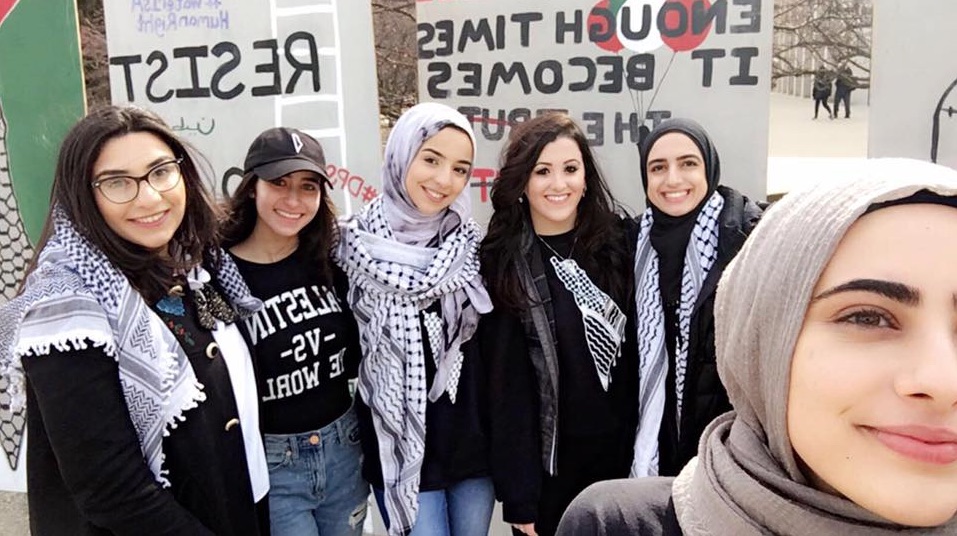
This is what the SJP WSU consists of as they launch their Palestine Awareness Week, which featured a mock Israeli Apartheid Wall on Mar. 26 and will be hosting events until Mar. 29.
“The administration at WSU should treat these leaders the way they would treat any other hate group on campus,” Maccabee Task Force Executive Director David Brog told the Algemeiner. “Racism is racism, no matter whom is targeted.”
However, WSU spokesman Ted Montgomery told the Algemeiner that they wouldn’t take any action against SJP WSU because they haven’t “posed any disruption or danger.”
SJP WSU has yet to respond to the Journal’s request for comment.
Read Canary Mission’s full report here.
Report Exposes Anti-Semitism in Wayne State University SJP Read More »
 When I think about God splitting of the sea I’m reminded of the story of Joey who when asked by his father what he learned in Sunday school explained that Israeli engineers laid pontoons across the sea so that the Israelis could cross over safely, attack the Egyptian army and win the 1973 Yom Kippur War. Then Joey told his father that the same Israelis snuck back and laid charges under the bridges so that as the Egyptians crossed the bridges, they exploded and the Egyptians drowned.