The school resource officer on Majory Stoneman Douglas’ campus has resigned for not doing anything during the Feb. 14 shooting.
The officer, Deputy Scot Peterson, was reportedly seen in video footage staying outside of a campus building for around four to six minutes as gunshots were blaring. Broward County Sheriff Scott Israel told reporters that Peterson “never went in.” Israel stated that Peterson should have entered the building and confronted the shooting.
“Devastated. Sick to my stomach,” Israel said. “There are no words. These families lost their children. We lost coaches. I’ve been to the funerals. I’ve been to the homes where they sit in shiva. I’ve been to the vigils.”
According to a local ABC affiliate, the first police officers who arrived at the shooting were officers from the neighboring city Coral Springs, not the officers from Israel’s office.
Peterson resigned once an investigation was launched into his conduct.
This is the latest instance of a failure by law enforcement in regards to the shooting. The shooter was reportedly able to escape from the scene for 10 minutes because law enforcement spent nearly a half hour watching what they thought was live footage of the shooting; the video feed was on a 20 minute delay.
It was also recently reported that the shooter’s first host family following the death of his mother alerted local police in November of the shooter’s violent behavior, which included putting a “gun to others heads in the past.”
Additionally, local law enforcement visited the shooter’s home 39 times prior to the shooting and the FBI was tipped off about him twice. Nothing was done.
A couple of congressional lawmakers are calling on Attorney General Jeff Sessions to launch an investigation into Al Jazeera for their spy operation against American Jews.
In a letter to Sessions, Reps. Lee Zeldin (R-NY) and Josh Gottheimer (D-NJ) argued that Al Jazeera should register as a foreign agent under the Foreign Agents Registration Act (FARA) given that the news outlet spreads propaganda from the Qatari government throughout the United States.
“We find it troubling that the content produced by this network often directly undermines American interests with favorable coverage of U.S. State Department-designated Foreign Terrorist Organizations, including Hamas, Hezbollah, Palestinian Islamic Jihad, and Jabhat alNusra, al-Qaeda’s branch in Syria,” Zeldin and Gottheimer wrote. “Furthermore, Al Jazeera’s record of radical anti-American, anti-Semitic, and anti-Israel broadcasts warrants scrutiny from regulators to determine whether this network is in violation of U.S. law.”
The lawmakers added, “Such an investigation should cover the full range of activities undertaken by Al Jazeera in the United States, including reports that it infiltrated American 501(c)(3) and (c)(4) nonprofit organizations.”
Al Jazeera’s spy operation reportedly involved the news organization sending a mole to various Jewish and pro-Israel organizations to cover their efforts in combatting the Boycott, Divestment and Sanctions (BDS) movement on behalf the Israeli government. Al Jazeera conducted the operation as part of a documentary that purportedly exposes Jewish control of the U.S. government, a longtime anti-Semitic slur.
If Al Jazeera is required to register under FARA, they would have to “periodically disclose the nature of its financial arrangements with the foreign principal and provide detailed, regular reports about the distribution of “informational materials” on its behalf,” according to the Brookings Institute.
“American citizens deserve to know whether the information and news media they consume is impartial, or if it is deceptive propaganda pushed by foreign nations,” Zeldin and Gottheimer wrote.
According to Discover the Networks, Al Jazeera was first established in 1996 from a $150 million grant by the emir of Qatar, whose government funnels money to Islamists worldwide. Members of Al Jazeera’s staff have ties to Islamic terror groups like Hamas and al-Qaeda; they were also the platform Osama bin Laden used to disseminate his various propaganda videos.
Unsurprisingly, Al Jazeera’s coverage is slanted against the United States and Israel, even going as espousing the anti-Semitic conspiracy theory that Israel warned Jews about the 9/11 terror attacks before the attacks occurred. One of their sources for this was David Duke, and they failed to disclose Duke’s prior connections to the Ku Klux Klan and American Nazi Party.
Special Counsel Robert Mueller handed down a new indictment against President Trump’s former campaign manager Paul Manafort and his business partner Rick Gates on multiple counts of tax and bank fraud.
The indictment alleges that from 2006-2015, Manafort and Gates avoided paying taxes on the money they earned from working on behalf of the Ukrainian government and Ukrainian political parties by concealing it as “loans”; the money was then used to refinance their mortgages, among other uses.
Additionally, the indictment claims that the pair funneled over $75 million from offshore bank accounts to directly purchase various goods without paying taxes on that money. Manafort and Gates also allegedly defrauded banks out of over $20 million in loans by overstating Manafort’s income and concealing debts they owed.
The indictment levies a total of 32 charges against Manafort and Gates; the initial indictments from October consisted of 12 charges.
Manafort is pleading not guilty. On Feb. 18, it was reported that Gates will eventually plead guilty and testify against Manafort.
The significance of all this is that the batch of charges could coerce Manafort into a plea deal where he testifies against members of the Trump campaign on any possible Russian collusion. The indictment itself does not mention anything related to any possible collusion between the Trump campaign and Russia, which is what Mueller was appointed to investigate.
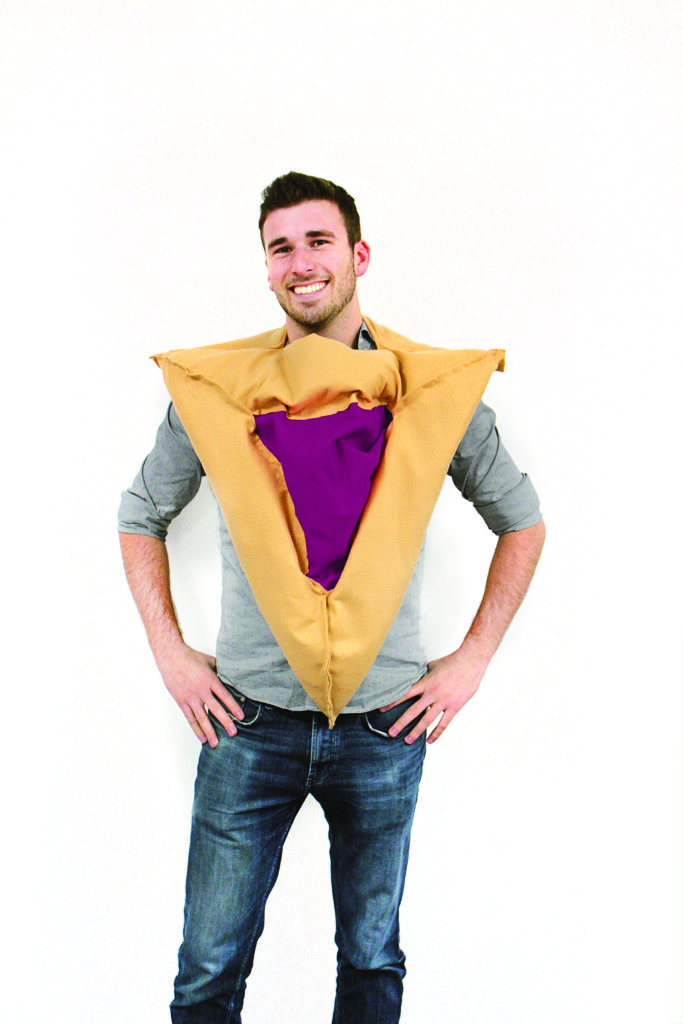
Ready for Purim? Celebrate in style by dressing up as a giant hamantashen. Besides being a fun costume that will make anyone the star of the festivities, it also can be a starting point to teach kids — and anyone unfamiliar with the customs of Purim — about the history, meaning and significance of this three-cornered cookie.
Creating your own hamantashen costume is easy with a few yards of felt. Also, because it’s put together with a glue gun, there’s no sewing involved. And that’s another reason to celebrate.
What you’ll need:
2 yards light brown felt
1 yard felt for filling
(your choice of color)
Scissors
Hot glue gun
1.
1. Cut out a large circular piece of light brown felt that is between 30 and 36 inches. I traced a circle with a 32-inch diameter hula hoop and then cut the circle with scissors. You can purchase felt by the yard at your local fabric store.
2.
2. Cut out another large circular piece of felt that is the same size as the first, but in a color to represent your filling. It can be red, purple, brown, etc. — your choice. Then scrunch it into a mound and hot glue the “filling” to the middle of the light brown felt.
3.
3. Fold in three sides of the outer circle of felt to form a triangle. Fill the folds with felt scraps to make the hamantashen three-dimensional, and hot glue the folds in place.
4.
4. Hot glue the seams where the folds meet at the three corners. You may want to fill in these sections with more felt scraps to plump up the “cookie.”
5.
5. Trace a triangle onto another piece of light brown felt with your finished hamantashen and cut it out. Hot glue one side of the triangle to one side of the hamantashen, but leave a 12-inch section in the middle open so you can stick your head through.
When Purim is over, this costume can be repurposed as a hamantashen-shaped dog bed. The three sides of the cookie even act as bolsters for the dog’s head for cushioned comfort. Bonus points if your dog happens to be named Esther.
Jonathan Fong is the author of “Walls That Wow,” “Flowers That Wow” and “Parties That Wow,” and host of “Style With a Smile” on YouTube. You can see more of his do-it-yourself projects at jonathanfongstyle.com.
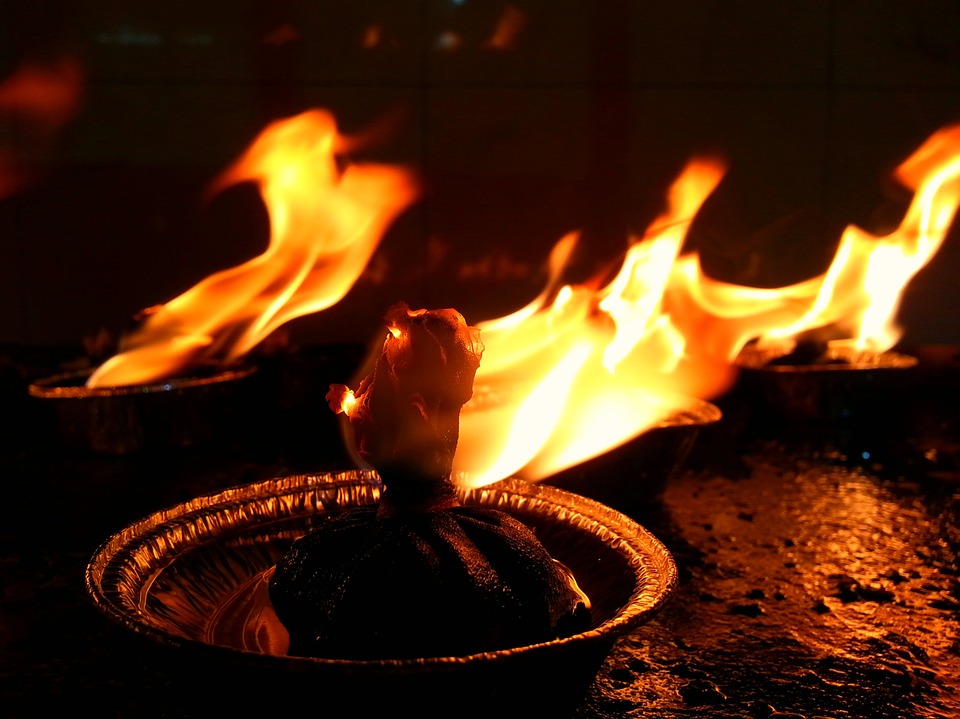
“You shall further instruct the Israelites to bring you clear oil of beaten olives for lighting, for kindling lamps regularly. Aaron and his sons shall set them up in the Tent of Meeting, outside the curtain which is over [the Ark of] the Pact, [to burn] from evening to morning before the Lord. It shall be a due from the Israelites for all time, throughout the ages.”
Rabbi Marc D. Angel Director, Institute for Jewish Ideas and Ideals
The Ner Tamid (eternal light) was a basic feature of the Mishkan as well as the first and second Temples. Symbolizing the Almighty’s constant presence, it has been a component of synagogues throughout the generations.
In many communities, the lighting of oil lamps is a sign of respect for the beauty and holiness of the synagogue. In Sephardic congregations, those who receive an aliyah to the Torah often make a memorial contribution toward shemen lamaor, oil for illuminating the synagogue.
Rabbi David Ibn Zimra, of 16th-century Egypt, known as Radbaz, handled the case of a man who had the longtime practice of donating a large quantity of oil to light the synagogue lamps. Unfortunately, his financial condition worsened, so he could send only a small amount of oil. The synagogue officers then transferred the honor to a rich person who could donate more. The question: Did the first man, now in poor straits, lose his ongoing privilege of providing lights for the synagogue? Or did this right belong to him, since he had performed the mitzvah for so many years?
Radbaz replied: “The offering of a poor person is as important to the Almighty as an offering of a wealthy person. … If the congregation saw that the oil [he provided] was insufficient, they should have used communal funds [to meet the need] and avoid embarrassing the donor.”
Radbaz underscored the importance of all heartfelt contributions, whether large or small. Concern for human feelings takes priority over financial considerations.
Rabbi Miriyam Glazer American Jewish University
In a fracked world where nature is being pillaged for so-called human welfare, our Torah nevertheless insists on the profound interrelationship of our spiritual lives and the natural world.
In Parashat Terumah, the Torah describes the menorah in a manner precisely evoking the moriah, the fragrant Palestinian sage from which it may well be derived, a plant known to indigenous people around the world as a source of healing. Now, in Tetzaveh, the Torah relates that the source of the ner tamid, the light to burn before the ark, is the olive, “a light unto the world” (Yalkut Shimoni 1, 378).
Just as the olive’s oil gives light, so do its leaves: As they blow in the wind, their silvery underside creates “silver clouds of light,” as Dr. Ephraim HaReuveni teaches. No wonder our rabbis imagine the olive leaf in the mouth of Noah’s dove bringing “light to the world” and see Sarah’s face shining “like the olive tree” when she hears she will bear a child. Jeremiah calls Israel “an olive tree, leafy and fair.” The rabbis say, “They shed light on all.”
Most moving of all is the vision of Zechariah. He sees an olive tree on either side of the golden menorah. When he asks the angel what they mean, the angel explains, “Not by might, nor by power, but by my spirit, says the Lord” (Zechariah 4:2-6). May we, too, be sources of spiritual light bringing healing and peace into the world.
Rabbi Tsafi Lev de Toledo High School and Rabbis Without Borders
The advice one generation passes to the next is one part deep caring and an equal part naive hubris. We often ignore the constantly changing contexts of our lives. So, I wonder about a verse that says, “It shall be a hukat olam l’dorotam, a due for all time, throughout the ages.”
Today, there is no Tabernacle and there is no Temple, and yet, God has expectations, as do we, when we pass things down to the next generation: “Do it, because it’s good, because it’s right.” The ner tamid described is not the one we see in our sanctuaries today. In effect, we have not done as we were told or commanded, but live with what we can do, and what works for us.
Change necessitates choice. The 21st century is largely shaped by accelerated change and the power of individual choice as a driver of identity more than by the influence of community. So what are we are saying to our children when we say, “This is how to be. Pass it down forever”? We are saying, “This is meaningful to me, and I want you to have it because I love you.” Only that and little more, but it’s honest and important.
We should be honest with ourselves about the changes the next generation will certainly make and be explicit with them about our love for them when we express our hope for their tomorrow.
Rabbi Denise L. Eger Congregation Kol Ami, West Hollywood
Aaron and his sons are given instructions for kindling the menorah in the ancient Tabernacle. Hidden in the details yet in plain view is an important concept: Bring your best for God. All the minutiae detailing the preparation of the priests for their eternal duties points to this idea. When they are told to bring clear, pressed olive oil to light the menorah, we understand that only the best and highest grade will do for lighting the Eternal’s light. Olive oil was a commodity in the ancient world. But we are taught here to bring the finest.
We, too, ought to ask ourselves, “Do we bring our best and finest to God and God’s house?” Or do we seek to cut corners? Do we see how little we can do or give and get away with it?
Today, the synagogue is the heir to the Tabernacle of old. It is the place where we Jews try to encounter God’s Divine light through prayer, study and community. Perhaps it is time to stop bemoaning what is wrong with our synagogues and invest once again in bringing the best to God’s house — the best offerings we have and the best of ourselves, to ensure that the light of God emanates eternally from the Tent of Meeting of our day and time. The golden menorah was carried off by the Romans, never to be seen again, but God’s light still shines through our acts of holiness and dedication to our people and our God.
If you think about it, it’s kind of funny that God commands us to light the menorah in the Holy Temple. Why? Because God doesn’t need that light in order to see! So, then, why light it at all?
To answer that, we have to go back to before the world was created. Most people think the world started with darkness, and then God said, “Let there be light.” Nothing could be further from the truth. God existed before the world did, and one of the names of God in kabbalistic texts is Ohr Ayn Sof, or Light Without End.
In other words, the starting point of the world is tremendous light — not darkness at all.
The light of the menorah was so holy. The Kotzker Rebbe teaches that it channeled that original light of creation back into the world. Which brings us back to our question. Who was the light for? Us!
This explains the windows in the Holy Temple. Normally, windows are meant to bring in as much light as possible. And yet the windows in the Holy Temple were funnel-shaped — large on the outside but small on the inside. The rabbis teach that this was for the light of the menorah to shine out to the entire world.
As a Light unto the Nations, we have a responsibility to shine this teaching that the beginning of everything is not darkness, but light, hope and the goodness of God.
Writer and actor Gili Getz performs his one-man, one-act play that explores the American-Jewish community’s difficulty with discussing Israel in an honest way. A former Israeli military photographer, Getz stages his performance as part of Avi Shabbat, a Shabbat dinner held on college campuses that honors the life of Avi Schaefer, who served in the Israeli army and was struck and killed by a drunken driver in 2010. A Shabbat dinner and discussion will follow the performance. 6 p.m. Free. Loyola Marymount University, St. Roberts Auditorium. (310) 568-6131. For additional information, email zachary.zysman@lmu.edu.
“MIRACLE SHABBAT”
The Miracle Project and Valley Beth Shalom/Temple Aliyah’s OurSpace Kolot Tikva Choir, under the direction of Chazzan Mike Stein and choir leader Shahar Weiner, present a musical collaboration of prayer and spirit in observance of Jewish Disability Awareness and Inclusion Month and Autism Awareness Month. Complimentary parking. Community dinner follows. 6:30-8:30 p.m. Free. Elaine Breslow Institute at Beit T’Shuvah, 8847 Venice Blvd., Los Angeles. (310) 204-5200. beittshuvah.org.
“HIP-HOP SHABBAT”
Temple Isaiah puts a contemporary spin on Shabbat with a service featuring hip-hop, R&B, electronic dance music, electric guitar and samples of music by Dr. Dre, the Fugees, Usher, P. Diddy and Sia. Temple Isaiah Rabbi Joel Nickerson, Cantor Tifani Coyot and songleader Danny Rubenstein lead the eclectic, high-energy and mind-expanding service. 6:45 p.m. Free. Temple Isaiah, 10345 W. Pico Blvd., Los Angeles. (310) 277-2772. templeisaiah.com.
SUN FEB 25
AN EVENING WITH EVA SCHLOSS
Eva Schloss
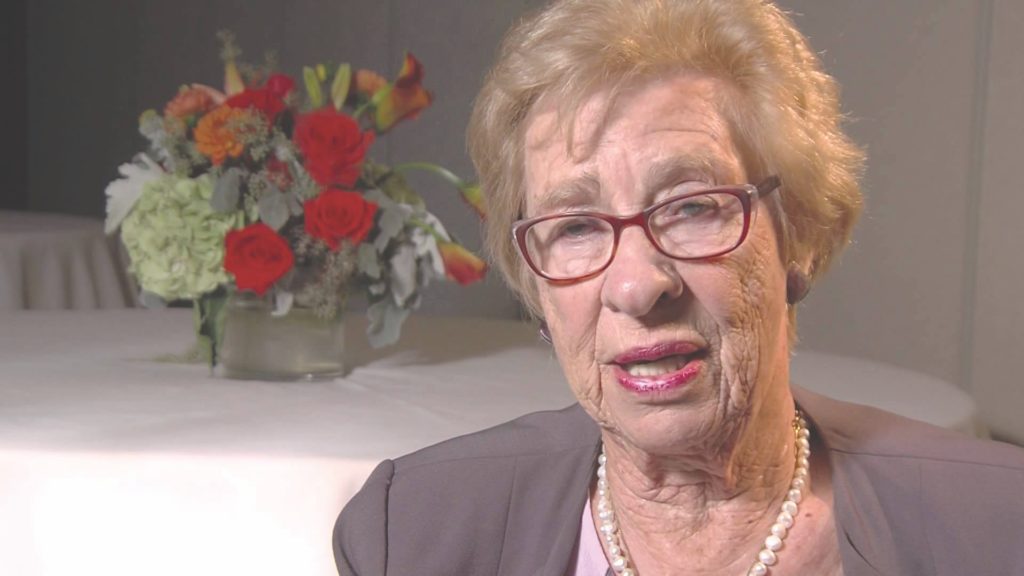
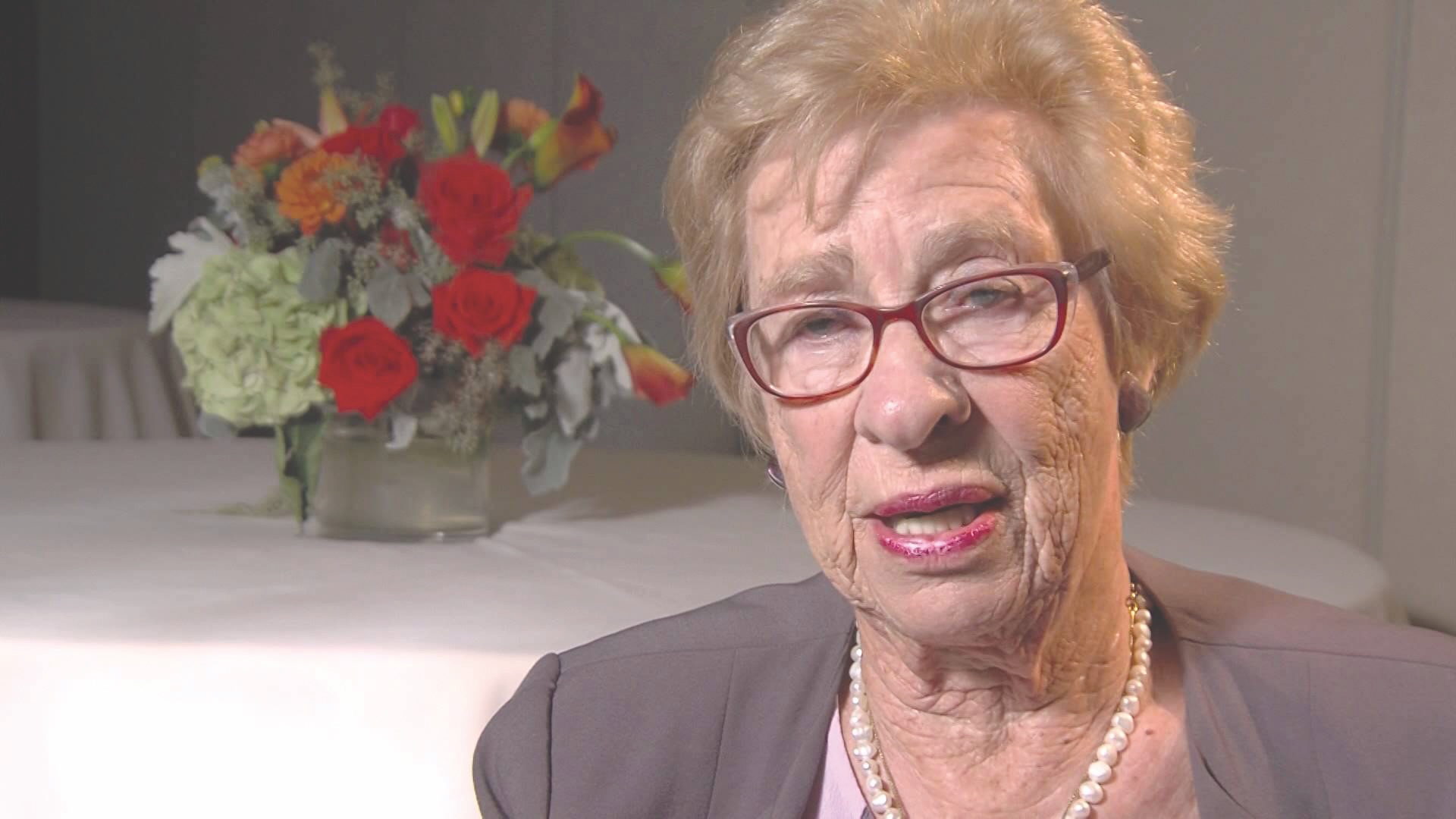
Eva Schloss, a Holocaust survivor and stepsister of Anne Frank, discusses her wartime experiences and what we can learn from the past. Erin Gruwell, an educator focused on tolerance who inspired the film “Freedom Writers,” interviews Schloss. David Suissa, editor-in-chief of the Jewish Journal, emcees. Presented by the Jewish Journal, Jewish Community Center and Chabad of Downtown L.A. VIP reception 5 p.m., doors open 6 p.m., program 7 p.m. Students $10, general admission starts at $40. RSVP to nathan@miller-ink.com or meira@miller-ink.com or (310) 571-8264. Los Angeles Theater, 615 S. Broadway, Los Angeles. evaschloss.com.
RABBI AARON LERNER LECTURE
Rabbi Aaron Lerner discusses “The Present and Future of Jewish Life, Learning and Israel on Campus.” For the past five years, Lerner has helped expand Hillel UCLA’s leadership training program to include about 150 student leaders, who reach nearly 1,700 Jewish students annually at UCLA. Brunch 10 a.m., lecture 11 a.m., Q-and-A to follow. Free. RSVP at Kehillat Ma’arav office. Kehillat Ma’arav, 1715 21st St., Santa Monica. (310) 829-0566. km-synagogue.org.
“WHY HARRY MET SALLY”
Author Joshua Louis Moss discusses his 2017 book, “Why Harry Met Sally: Subversive Jewishness, Anglo-Christian Power and the Rhetoric of Modern Love,” with USC Cinema and Media Studies professor Michael Renov. The event is part of Casden Conversations, a scholarly initiative of the USC Casden Institute that brings together students, faculty and the greater Los Angeles community for discussions about Jewish life. Co-organized by IKAR. 4-5:30 p.m. Free. USC, Doheny Memorial Library, Room 240, 3550 Trousdale Parkway, Los Angeles. (213) 740-1744. dornsife.usc.edu/casden-institute/events.
MON FEB 26
AN EVENING WITH LARRY ELDER
Larry Elder
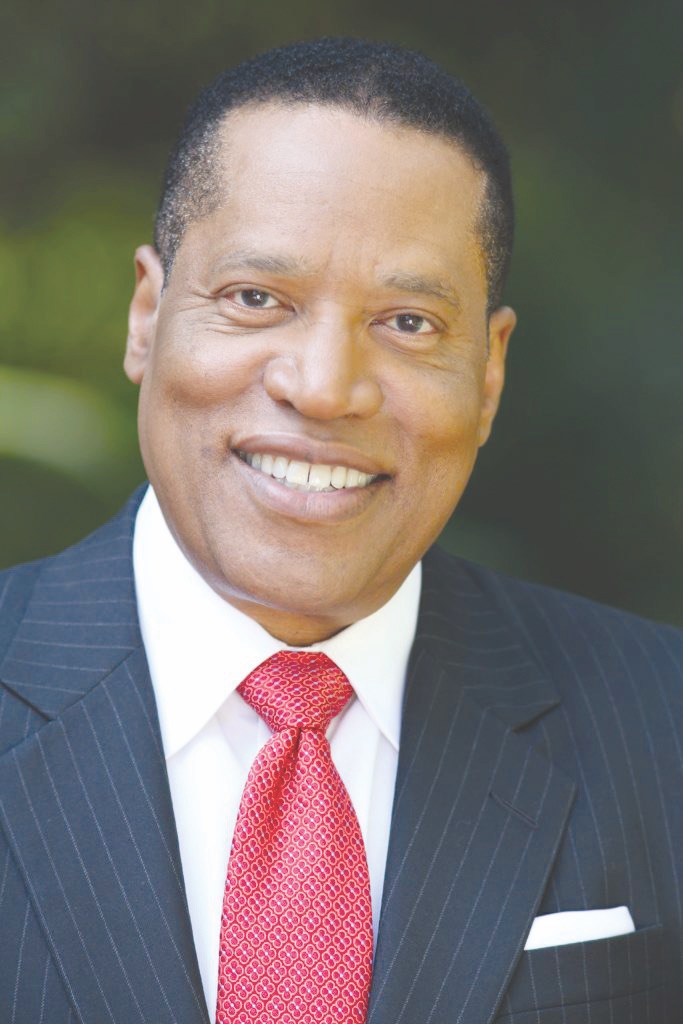
Author, radio talk show host and “The Sage From South Central” Larry Elder discusses “America in the Era of Trump” during a Jewish Republican Alliance event. Expect Elder’s take-no-prisoners style. 7:30–9:30 p.m. Advance tickets $18, tickets at the door $20. Valley Beth Shalom, 15739 Ventura Blvd., Encino. (805) 380-7721, ext. 701. jewishrepublicanalliance.org.
TUE FEB 27
“FACES OF AMERICA”
The Anti-Defamation League’s (ADL) Asian Jewish Initiative convenes “Faces of America: Immigrant Stories From the Diverse Asian Continent.” Panelists are Tabby Davoodi, co-founder of 30 Years After and a child refugee from post-revolutionary Iran; Halim Dhanidina, a Los Angeles County Superior Court judge and the first Muslim judge in California; Karen Korematsu, daughter of civil rights activist Fred Korematsu and founding executive director of the Fred T. Korematsu Institute; and Angela Oh, a mediator of civil rights cases and a second-generation Korean-American community advocate. ADL Regional Director Amanda Susskind moderates. A light dessert reception follows. Advance registration required. Registration 6:30 p.m., program 7 p.m. Free. Democracy Center at the Japanese American National Museum, 100 N. Central Ave., Los Angeles. (310) 446-4228. la.adl.org/event/faces-of-america.
Purim Events
SAT FEB 24
KOL AMI’S BEATLES PURIM
Rabbi Denise Eger and Congregation Kol Ami host a Beatles-themed Purim celebration, “Sgt. Esther’s Shushan Hearts Club Band.” The night begins with Havdalah and a free Persian dinner. Then, Kol Ami members and the house band retell the story of Purim through the music of the Beatles. All ages welcome. 7-10 p.m. Free. RSVP required for dinner. Email reception@kol-ami.org or call (323) 606-0996. Congregation Kol Ami, 1200 N. La Brea Ave., West Hollywood. kol-ami.org.
SUN FEB 25
STEPHEN WISE TEMPLE PURIM
A Stephen Wise Temple carnival for all ages features games, prizes, food, rides and costumes. Admission includes all rides and games. Food not included. 10:30 a.m.-3:30 p.m. Early bird tickets for kids 4–18 are $38; on Feb. 25, $50. Parents and kids 3 and younger admitted free. On Feb. 28, the synagogue holds an evening of music, dancing, food and schmoozing for grown-ups, featuring cocktails, appetizers and hors d’oeuvresataschen. 21-and-older only. RSVP required. 7 p.m. Free. Stephen Wise Temple, 500 Stephen S. Wise Drive, Los Angeles. (310) 476-8561. wisela.org/purim.
WED FEB 28
“THE ROCKY HORA PURIM SCHPIEL”
An interactive Megillah experience transports the Kehillat Ma’arav sanctuary into Mordechai’s Shushan. Attendees dress in their finest traditional Purim garb and costumes. A raffle fundraiser and dairy meal top off the festivities. 5:30 pm. $10. Kehillat Ma’arav Synagogue, 1715 21st St., Santa Monica. (310) 829-0566. km-synagogue.org.
“STRANGER PURIM”
IKAR invites you to its Justice Carnival and Purim celebration. Enjoy food, fellowship, a drink and a spiel. Costumes encouraged. Megillah reading 6:30 p.m., party 8:15 p.m. $15 in advance, $20 at the door (tickets not required for Megillah and spiel). Food and drink tickets separate, $5 to $15. Busby’s East, 5364 Wilshire Blvd., Los Angeles. (323) 634-1870. ikar-la.org.
“SHE WILL ROCK YOU”
A 1970s rock-inspired musical mashup of the story of Esther and the songs of Queen lights up Temple Emanuel of Beverly Hills (TEBH). Rock out like a champion with fine wine and premier beer. TEBH and Temple Isaiah clergy participate in the spiel and Megillah reading. Cocktail hour and appetizers 7 p.m., spiel 8 p.m. Cocktail event $36. Temple Emanuel of Beverly Hills, 8844 Burton Way, Beverly Hills. (310) 288-3737. tebh.org.
PURIM AT PICO SHUL
Pico-Robertson congregation Pico Shul holds “Bluegrass, Moonshine, Mitzot and Megillah,” a Purim celebration featuring a speedy and fun Megillah reading. Yee-haw! Evening service 6:30 p.m., megillah and moonshine 7 p.m. Free. Pico Shul, 9116 Pico Blvd., Los Angeles. On March 1, after 10 a.m. services and an 11 a.m. Megillah reading, a Purim feast will be served at 5 p.m. Dinner $36. Pico Shul, 9116 Pico Blvd., Los Angeles. picoshul.org.
MISHKON TEPHILO PURIM
A Megillah reading at Mishkon Tephilo is followed by dinner and dancing. Comedian Jackie Tohn (“Glow,” “A Futile and Stupid Gesture”), poet Rachel Kann and DJ Jeremy participate. Bring your own beer. Doors and drinks 7:30 p.m. $10. Mishkon Tephilo, 206 Main St., Venice. (310) 392-3029. mishkon.org/purim.
THU MARCH 1
PURIM COMEDY AND SCREENING
Comedian and impersonator Michael Sherman tells the story of Al Jolson, a Jewish jazz singer who hid behind his identity by portraying an Old South minstrel masquerading in blackface. As with Purim, a true identity is hidden behind the persona. A screening of “The Jazz Singer,” the 1927 film starring Jolson, follows. 7-10 p.m. $8. Hollywood Temple Beth El, Sapper Hall, 1317 N. Crescent Heights Blvd., West Hollywood. (323) 656-3150. facebook.com/htbel.
Jewish Big Brothers Big Sisters of Los Angeles’ (JBBBSLA) annual Big Event 2018 on Feb. 7 at the UCLA Luskin Conference Center drew about 350 attendees and raised more than $400,000 for the organization.
The event honored Braden Pollock as Big Brother of the Year, Lauren Kurzweil as Big Sister of the Year and Marc Mostman with the Inspiration Award.
JBBBSLA staff member Alba Arzu received the inaugural Gail Silver Award for Exceptional Achievement.
“The honorees have collectively spent over 75 years supporting the agency in unique and transformative capacities,” a JBBBSLA statement said.
KTLA-TV entertainment reporter Sam Rubin emceed the event, which kicked off with dinner and cocktails and concluded with a dessert reception.
“Each year, we serve over 1,800 kids from different backgrounds, races, religions and socio-economic status,” said JBBBSLA CEO Randy Schwab. “They each face unique struggles but have one thing in common: They come to us to help give them hope. From age 6 to college and beyond, we help shape them to be thriving adults by providing dependable mentors, college scholarships, teen empowerment workshops, social justice camps and other life-changing experiences. This year, we want to do even more. We want to help more kids in Los Angeles get the chance at a different, better future.”
JBBBSLA runs a one-to-one mentoring program, offers scholarships, and owns and operates Camp Bob Waldorf on the Max Straus Campus.
Rabbi Michael Schwartz. Photo by Jennifer Herrguth
The Malibu Jewish Center and Synagogue (MJCS), a Reconstructionist community, has hired Rabbi Michael Schwartz as its new senior rabbi.
Schwartz, whose hiring became effective Feb. 9, succeeds MJCS Rabbi Emerita Judith HaLevy, who retired in 2017 and now lives in Santa Fe, N.M.
Schwartz previously served at Congregation Kol Emeth in Palo Alto, Calif., and the following international Jewish communities: United Jewish Congregation of Hong Kong, the International Jewish Center in Brussels and the Hod Ve Hadar community in Kfar Saba, Israel.
“He is an interesting guy and lovely man,” MJCS President Steven Weinberg said.
Schwartz made aliyah in 1997. He and his wife, Tamar Forman, have four children.
He was ordained at the Schechter Institute for Jewish Studies, a Masorti institution, in 2001. According to a synagogue statement, Schwartz is “a strong believer in interreligious peacebuilding and social justice” and an educator who “guided high school and college Jewish groups through Israel for over a decade.”
With his hiring at MJCS, Schwartz joins a clergy team that includes long-serving Cantor Marcelo Gindlin.
With a membership that includes more than 170 families, MJCS promotes a modern and inclusive approach to Judaism and holds alternative programs that include Shabbat-on-the-beach summer services.
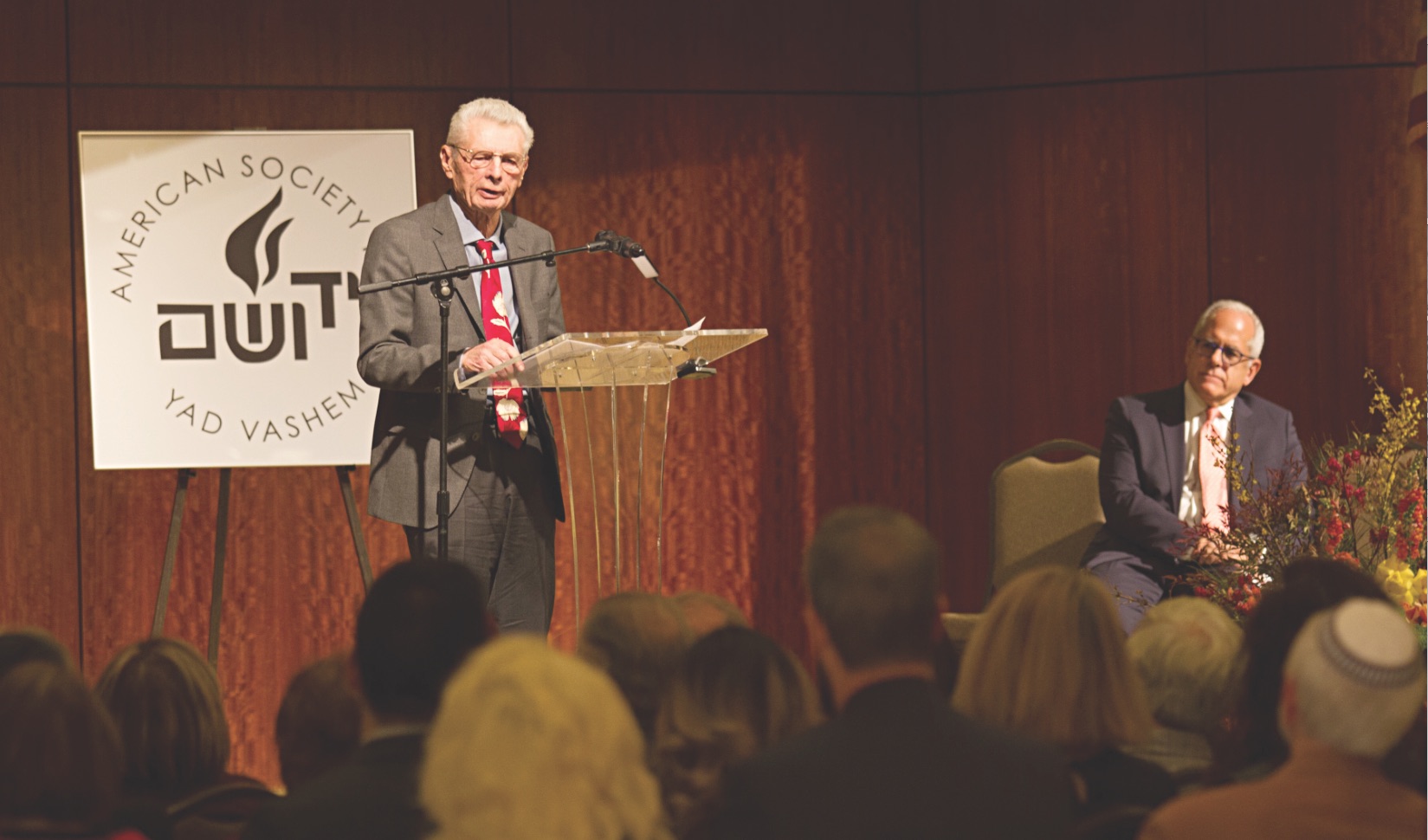
Holocaust survivor and American Society for Yad Vashem (ASYV) Board Member Meyer Gottlieb appeared at the inaugural West Coast exhibition titled “SHOAH: How Was It Humanly Possible?” Photo courtesy of American Society for Yad Vashem.
The American Society for Yad Vashem (ASYV) Western Region and Sinai Temple held their inaugural West Coast exhibition titled “SHOAH: How Was It Humanly Possible?” on Jan. 27, International Holocaust Remembrance Day.
The VIP reception and exhibition, held at Sinai Temple, included several sections, each recounting a major historical aspect of the Holocaust.
Guest speakers included Sinai Temple Rabbi Nicole Guzik, ASYV Executive Director Ron Meier, ASYV Director of Education Marlene Yahalom and former president of Samuel Goldwyn Films and ASYV advisory board member Meyer Gottlieb, a Holocaust survivor.
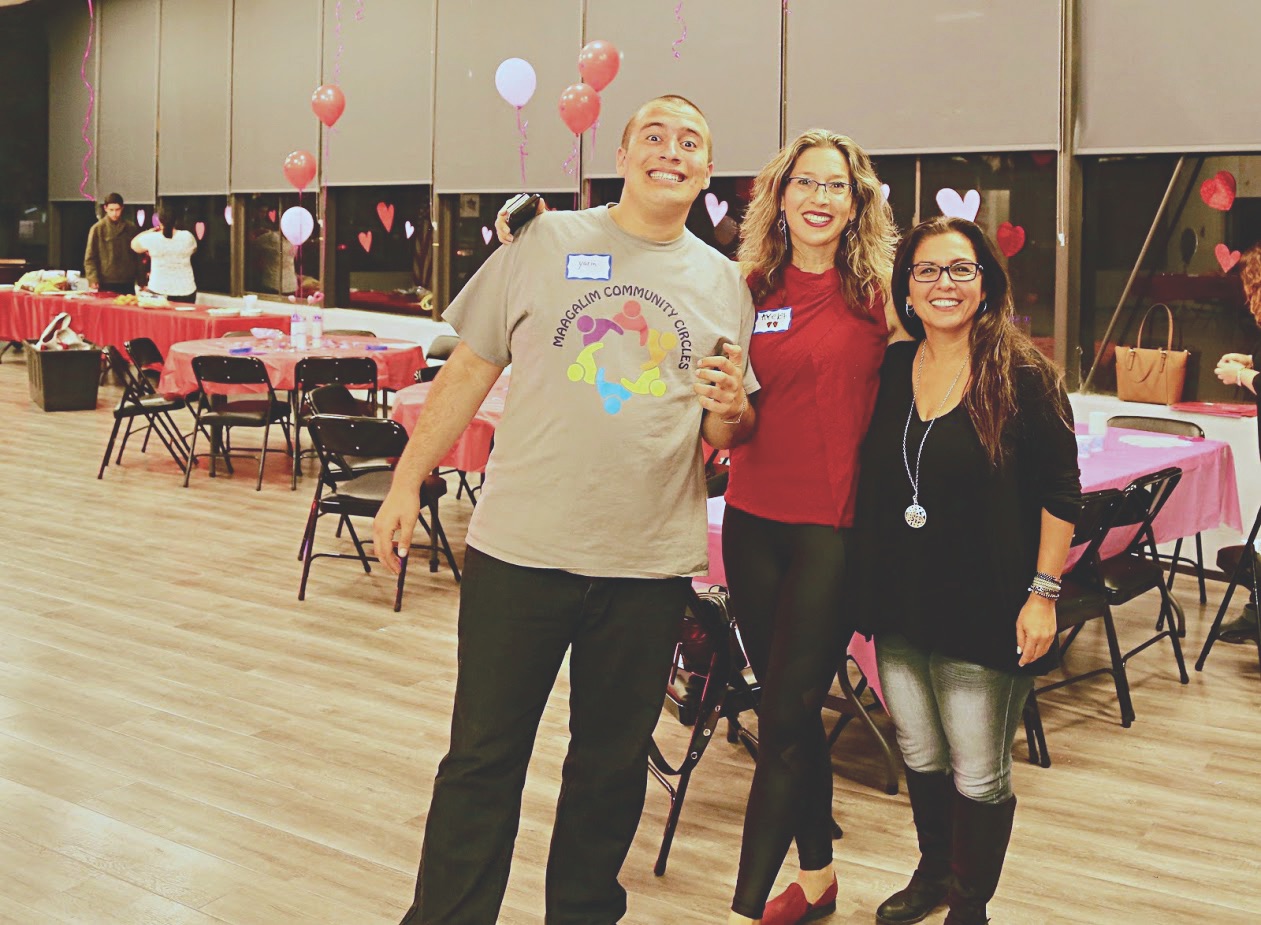
Ayelet Sason (center) and her autistic son, Yarin, were among the attendees of Maagalim Valentine’s Day dance party. Photo courtesy of Ma’agalim.
Maagalim Community Circles held a Feb. 3 Valentine’s Day dance party at the IAC Shepher Community Center in Woodland Hills for teenagers and young adults with autism and other special needs.
Nearly 200 people attended, including Rachel Weizman, who helped launch the organization, and families of special-needs children, caregivers and volunteers who enjoyed dancing, a photo booth, creating heart-shaped cookies and more.
“Somehow the word spread through social media and we saw many non-Jews who came to celebrate with us,” organization creator Ayelet Sason said.
Sason is the mother of four children, including a 21-year-old son, Yarin, who has autism. Raising Yarin, she said, has taught her that there is a need for social and inclusive opportunities for young people with special needs.
“Those young adults have no social lives, nobody pays attention to them,” Sason said. “People think that they lack social skills because it’s harder for them to communicate, but it’s not true.”
Sason said her events also help teach compassion and understanding to teenage volunteers who are interacting with special-needs people for the first time.
“The amount of phone calls I received after the event from volunteers — and the impact it had on them — was overwhelming,” Sason said. “Those barriers people often have when it comes to special people fell down. [The event] opened the hearts of our volunteers and it was beautiful to witness. That’s why I encourage teens to come and volunteer and interact with them. It makes them more compassionate to others in need.”
Sason said she has seen friendships develop between the event’s special-needs participants and their families.
“Often their parents find themselves isolated. They can’t take their children anywhere, either because they are not invited with them to social events, friends cut them off, or because of the constant need to watch over them,” Sason said. “Here, they can truly enjoy themselves and put their guard down. For the first time in a long time, they didn’t feel like outsiders.”
— Ayala Or-El, Contributing Writer
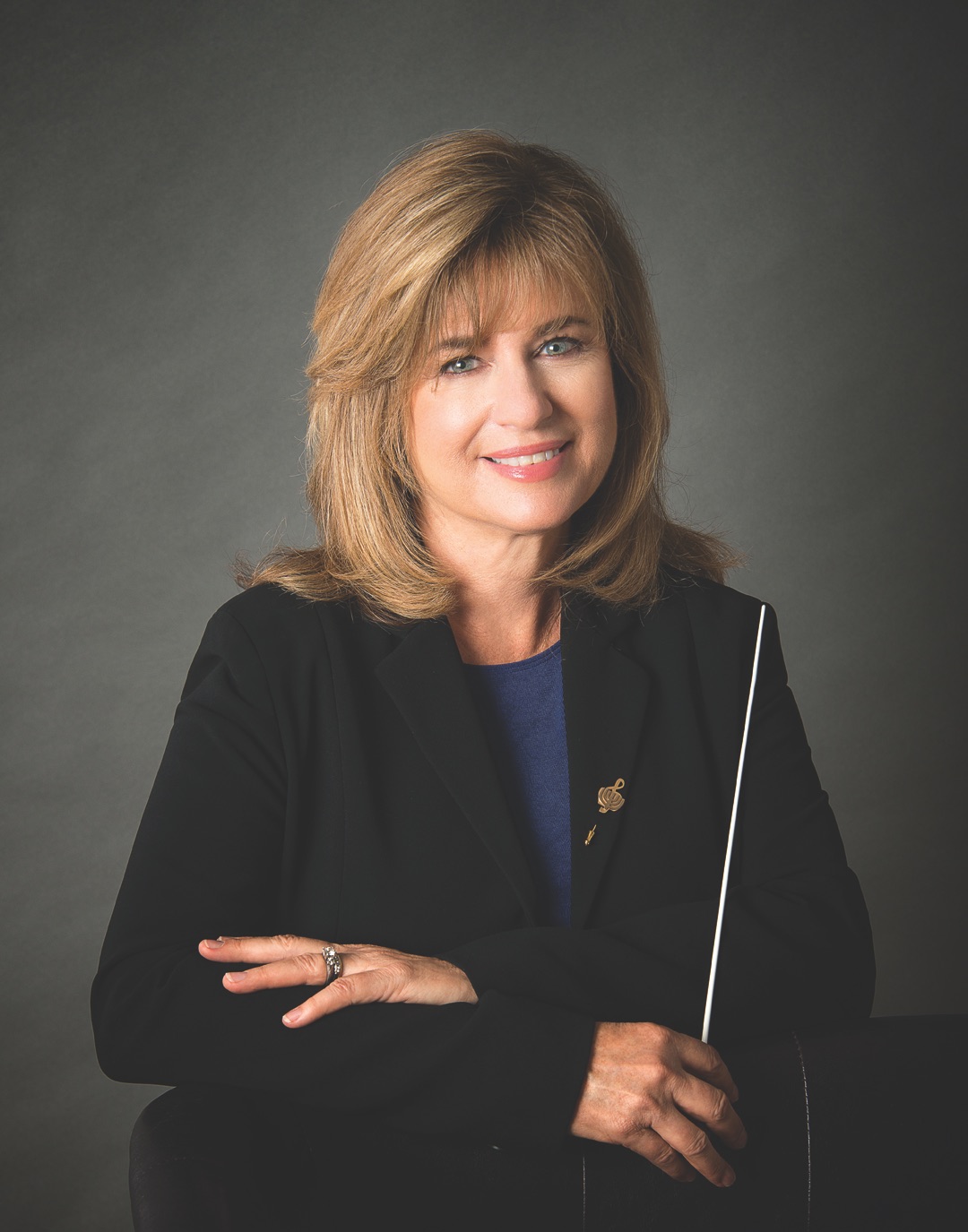
Noreen Green, artistic director of the Los Angeles Jewish Symphony, was named a Top 30 Musical America Professional of the Year. Photo courtesy of L.A. Jewish Symphony
Musical America Worldwide, a magazine of classical music, has named two Jewish directors of Los Angeles organizations to its Top 30 Musical America Professionals of the Year awards for 2017.
The two are Noreen Green, artistic director for the Los Angeles Jewish Symphony, which celebrates both well-known and obscure Jewish orchestral works, and Yuval Sharon, founder and artistic director of the experimental opera company The Industry.
The publication announced the honorees in its December issue.
“Noreen Green has been the most energetic advocate for Jewish music and music-making in the Los Angeles area for more than a couple of decades now,” wrote Musical America’s Richard Ginell.
Under Green’s leadership, the L.A. Jewish Symphony has played host to such performers as Leonard Nimoy, Billy Crystal, Marvin Hamlisch and Theodore Bikel; performed music exploring Sephardic-Latino connections; and reached young listeners in Jewish day schools and low-income elementary schools, Ginell wrote.
Sharon, a recipient of a 2017 MacArthur Fellowship “genius” grant, has been shaking up the conventional wisdom of what opera is and where it can be performed since founding The Industry in 2012, Ginell wrote. Sharon’s innovative productions led to him being affectionately called a “disrupter in residence” by former Los Angeles Philharmonic President Deborah Borda, who hired him as an “artist-collaborator” for the orchestra in 2016.
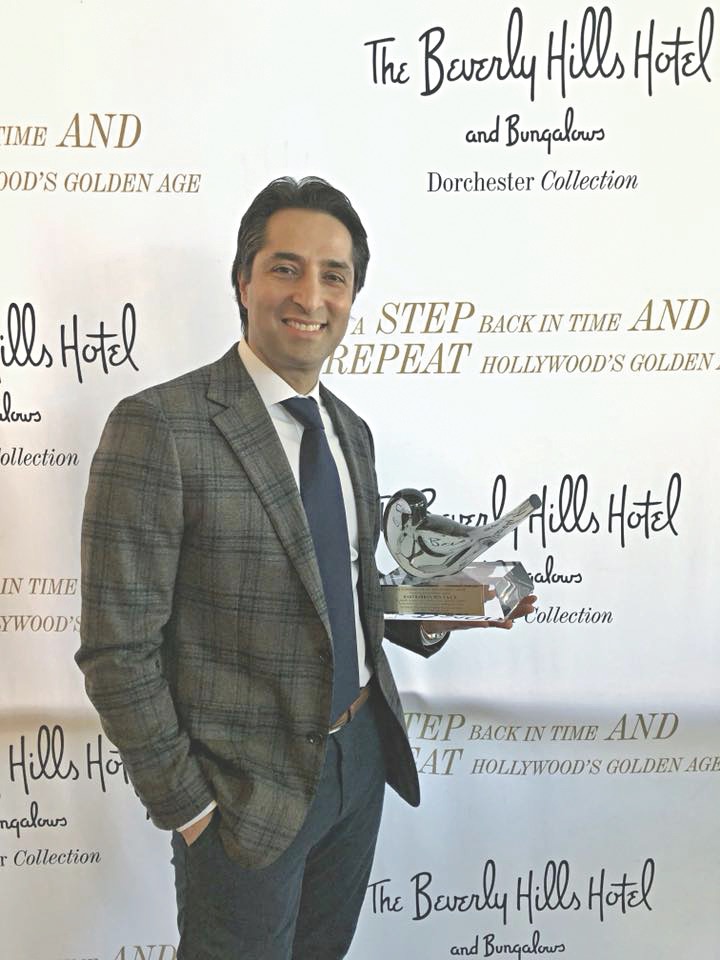
Hadassah of Southern California presented Beverly Hills plastic surgeon Dr. Rady Rahban with the Katherine Merage Humanitarian Award. Photo courtesy of Hadassah of Southern California.
The Haifa and Malka Boards of Hadassah of Southern California honored Beverly Hills plastic surgeon Dr. Rady Rahban with the Katherine Merage Humanitarian Award during a luncheon on Feb. 7 at the Beverly Hills Hotel.
Rahban was presented with the award in recognition of his charitable efforts on behalf of the Jewish community and the Hadassah Medical Organization in Jerusalem.
“Despite having a thriving practice, Dr. Rahban makes time for tikkun olam,” Hadassah of Southern California said in a statement. “He dedicates his talents to helping those less fortunate both here and abroad.”
About 450 people attended the event, which featured guest speaker Farhang Holakouee and raised $100,000 for Hadassah Medical Organization in Jerusalem, event spokeswoman Arlene Howard said.
Two days after receiving the award, Rahban, a member of Ohr HaTorah Synagogue, traveled with Mercy Missions to Guatemala to perform cleft-lip and cleft-palate surgeries on children in need.
Poland’s new law rewriting its World War II history about not having any involvement in creating concentration camps in their country is a lie. Three million Polish Jews died in their Polish camps, and Polish people were involved in helping the Germans. They pointed out Jewish homes, where the Germans took whatever they wanted, and they helped with building and running the concentration camps. And when 40 Jewish survivors came back in Kielce to claim their homes and businesses after the war, the Polish people killed them. This was going on in most cities in Poland if you dared to come home after being liberated.
This is an unfair law to pass in a country that was deeply involved in killing so many Jews. I know because I was there. I am a witness and I am a survivor.
Ella Mandel via email
No Solutions to Preventing Gun Violence
I find little reason to think that the CIA, FBI, state and local police, psychologists and psychiatrists, family, friends, neighbors or schoolmates will ever be able to identify all among us who may, someday, perpetrate a mass shooting, and it’s clear that we’ll never have the resources to track and monitor even those who are deemed suspicious.
The semi-automatic rifles debate and failed regulations won’t change until our politicians climb out of the pocket of the National Rifle Association, and there’s scant likelihood of this happening anytime soon.
The 300 million-plus guns in which we’re awash won’t be collected and will continue to be easy to obtain, and the gun manufacturers aren’t planning to go out of business.
Hunters, marksmen, hobbyists and those who own guns for self-protection shouldn’t have to fear that the government wants them.
The only solution I see for those who want to protect their loved ones and others is to move to another country, preferably one that isn’t rife with terrorists.
Hal Rothberg via email
A Dangerous Escalation Among Nations
One is cordially reminded of that ol’ shibboleth: “The more things change, the more they stay the same (“Down Payment,” Feb. 16).
It’s all very complicated, but is that still not true?
Walter Uhrman, Encino
Seeing the Light of Southern California
As a native Angeleno from Boyle Heights, it was an absolute joy to read Karen Lehrman Bloch’s piece “Seduced by the Light of Los Angeles” (Feb. 16). Especially when all one needs to do to encounter the opposite sentiment is to visit or live some 500 miles to the north of us in San Francisco, as I did to attend college in the late ’60s and early ’70s. In “The City,” as many San Franciscans like to call it, you dare not mention you are from L.A. for fear of having them look down their collective noses at you, after which you’ll invariably be the recipient of some snide remark about our great city.
Thank you, Ms. Lehrman Bloch.
Marc Yablonka via email
Can Truth Survive?
Thanks so much, Shmuel Rosner, for the excellent analysis of the Rand Corp. study about truth decay and the great conclusion at the end of your article (“Truth Decay,” Feb. 9). I would like to just add a couple of things: From my observation, I think more and more people look for the truth in the wrong place — outside of themselves — and so become addicted to collecting more and more information. And second: It doesn’t matter how much information or knowledge or richness one has. What truly matters is what he or she does with them. But both my remarks only reinforce your great conclusion “that we no longer know what’s true and what’s not.”
Svetlozar Garmidolov, Los Angeles
For the people who endure blood libels, “The Protocols of the Elders of Zion,” the Boycott, Divestment and Sanctions movement and college campus apartheid walls, do we really need the Journal to explore the “modern” decay of truth?
While I agree with Shmuel Rosner about “leaving [President Donald] Trump [and his hyperbole] aside,” why trace the beginning of the end of the era of truth to 2014 when former Vice President Al Gore provides such a better example? In 2007, British High Court Judge Michael Burton ruled that Gore’s global warming film, “An Inconvenient Truth,” while “broadly accurate,” contained nine significant errors in “the context of alarmism and exaggeration.” Burton found that the film was a partisan political view and that its “apocalyptic vision” was not an impartial analysis of climate change. Happily, we have your Journal as a beacon of truth.
Warren Scheinin, Redondo Beach
American Presidents and Jewish Values
Gil Troy, in his story about presidents (“Why Jews Love Presidents [Most of the Time],” Feb. 16) reflects the message and mindset of the mainstream fake news, liberal left media in trying to provide some confirmation to support the bias of Jewish Democrats toward the Democratic Party, notwithstanding the fact that only 27 percent of Democrats support Israel and 79 percent of Republicans support Israel. He refers to Republican support for Israel as giving it a toxic embrace. If that weren’t enough, he then bashed Prime Minister Benjamin Netanyahu for alienating American Jewry.
He tries to give some emotional support to Democratic Jews who dislike President Donald Trump by consoling them as not being one-issue voters. The underlying premise of his story is that Jews can be patriotic Americans and hate Trump. He is oblivious to the fact that Trump is the best president for Israel and American Jews with the possible exception of Harry Truman, who recognized Israel 12 minutes after the formation of the state.
The events of this past week have proven that Gil Troy and the mainstream media are acting in conspiracy with the liberal left, mostly Jew-hating Democratic establishment.
Marshall Lerner, Beverly Hills
Obama and #IranianWomenToo
Kudos to David Suissa for his column “Obama and #IranianWomenToo” (Feb. 16). I continue to be unable to wrap my Jewish, pro-Israel mind around the fact that liberal American Jewish Democrats don’t get it that Barack Obama, through the Iranian deal and more, was Israel and American Jewry’s worst nightmare in decades. The only fault that I found in Suissa’s column was the omission of two words: John Kerry.
Marc Yablonka via email
A Conversion With Eyes Wide Open
In last week’s letters to the editor, Peter Robinson wrote that he knowingly chose to convert to non-Orthodox Judaism, and now rails at the unfairness that his heterodoxic theology and practice of Judaism is denied legitimacy by the Orthodox branch he consciously avoided. Ironically, he appeals to a rabbi whose branch of Judaism is likewise not recognized by Orthodoxy. You can’t join one club and expect reciprocity from a club with much stricter membership requirements.
Zev Newman, Los Angeles
The Problems of a Missile Defense
Regarding Larry Greenfield’s column, “Blessings of Missile Defense” (Feb. 16):
1. Even if the systems deployed by Israel are of limited utility, Greenfield expands his argument to include missile defense against intercontinental missiles (ICBMs), which is actually destabilizing rather than protective. If an adversary believes that an anti-missile system deployed against it is operational and effective, that adversary will indeed be more rather than less likely to use its ICBMs first in a crisis, fearing that it will be attacked and then left defenseless to retaliate.
2. Greenfield is correct that “decades of startling scientific and technological advancements” have resulted in deployment of anti-missile systems in the U.S. (Vandenberg Air Force Base in California, for one), but he fails to note that even in “rigged” tests, when the timing and location of dummy attacking missiles is made known and no decoys are used, U.S. anti-missile tests have failed at least 50 percent of the time. The system is simply a boondoggle for defense contractors. “Missile defense doesn’t promise perfection” is a gross and dangerous understatement.
Steve Daniels via email
Hamilton’s Jewish Identity Debated
After reading your story on Hamilton several times, I brought it to share with the Freda Mohr Senior Center Current Events Discussion Group (“Was Alexander Hamilton Jewish?” Feb. 16). Being Jewish, I was pleased that Hamilton, one of our country’s honored founders, seemed to have been Jewish.
However, one of our members had extensively researched this matter. He agrees that the information that was presented about Hamilton is correct as far as it goes, but much has not been included that would likely lead to a different conclusion.
His mother, named Rachel Faucette, probably was not Jewish. She had been married off to a wealthy Jewish man, whom she left after several years. A few years later, she gave birth to Alexander Hamilton, whose father was James Hamilton — apparently not Jewish. Furthermore, the school he attended may have not been “a Jewish school.” It had a teacher who taught a class with some aspects of Judaism, including the Ten Commandments in Hebrew.
In the final analysis, the panelists at the Feb. 7 event might have looked at some circumstantial information with a biased, prejudged viewpoint.
How do we help a loved one who is engaging in destructive behavior and refusing assistance?
The painful truth is that we cannot always help another person. If we expect to be able to change someone else in order for us to feel better, we may be setting ourselves up for double failure.
We can help ourselves by understanding our own feelings of powerlessness and getting the support we need to manage our emotional response.
When we become less dependent upon another person’s behavior to feel that everything is OK, we will be calmer and better able to empathize with that person, who may feel powerless to change.
A person’s refusal to accept help does not mean that he is refusing to get better.
If a person refuses help, how can you say that he wants to get better?
Other factors may be at work. Imagine a young child who has just fallen. Terrified to look at his injury, he shouts that he does not need the doctor. Imagine a man addicted to drugs who rejects medicine, therapy and a rehab program because none of them helped in the past.
Many of us, when presented with risks in life, prefer the pain we know to the unknown suffering we imagine.
There are real fears behind refusals of help. The child may fear that the doctor will inflict more pain than he’s already enduring. The elderly woman may fear what is most unbearable for her — the loss of lifelong independence.
Many of us, when presented with risks in life, prefer the pain we know to the unknown suffering we imagine. Our Jewish tradition is rife with such stories. Consider the Israelites’ initial response to God’s having redeemed them from slavery in Egypt: They wanted to go back to Egypt, where at least they’d had food they enjoyed and knew what each day would bring, rather than have to depend upon God to provide manna while leading them toward an unknown land.
Current scientific research has shown that addictions produce biochemical pathways, making changing self-destructive habits extremely difficult physiologically as well as psychologically.
Our tradition teaches that change is possible. On the High Holy Days, we’re reminded how the Gates of Forgiveness remain forever open to those who truly wish to repent. Until the last moment, God is eager to welcome us no matter how many times we’ve failed.
We are told the world hangs in the balance.
Good and evil are represented as two sides of a balanced scale. As little as a feather’s worth of goodness can tip it toward redemption. This feather may not be the full achievement of change. Rather, a small effort toward goodness may sustain the world.
We shouldn’t expect success in changing the problematic behavior?
We may need to redefine what constitutes success. Rather than solving the problem, success may mean moving a person from utter despair to a semblance of hope.
Altering the outcome behavior — the problem — is often doomed unless a new way is found to alleviate the underlying pain.
Self-destructive behaviors serve as means of managing deeply troubling emotions.
Suppose a family member chances upon a young person who is cutting herself superficially with a razor in order to manage her pain. It’s a terribly distressing sight, and the entire family wants this behavior to stop immediately. “Don’t do that!” the family demands.
A better approach would be to encourage the suffering young person to understand her feelings and find other ways of managing them. The family might say to her, softly, “What are you feeling or thinking that is causing you to cut yourself? We don’t want you to suffer.”
In my experience, the majority of troubled people really do wish to feel better.
Most can be helped in finding less harmful ways of coping with emotional pain.
Rabbi Edythe Mencher is the Union for Reform Judaism’s caring community faculty member and a licensed clinical social worker.