L’Oreal made headlines by announcing that a hijab-wearing model and beauty blogger would be one of the faces for their newest product, however the move has been criticized due to the model’s prior anti-Israel tweets.
Amena Khan announced on Instagram that she would be a part of L’Oreal Paris UK’s Elvive World of Care Campaign:
Khan told Vogue UK, “How many brands are doing things like this? Not many. They’re literally putting a girl in a headscarf—whose hair you can’t see—in a hair campaign. Because what they’re really valuing through the campaign is the voices that we have.”
L’Oreal Paris UK’s general manager, Adrien Koskas, said, “L’Oréal Paris UK are both proud and excited to be launching such a unique and disruptive campaign for the haircare market, a category which in previous years has been perceived as the cliché of beauty advertising.”
Media outlets like Glamour and the Huffington Post were ecstatic about the move and gushed over the fact that Khan was going to be the first hijab-wearing female Muslim to be a featured in a major hair product advertisement. However, others took notice of Khan’s hyperbolic criticisms of Israel on Twitter, which included:
·Calling Israel “an illegal state” and “a sinister state” that harms “innocent children.”
·Tweeting that “Israel = Pharaoh” because “both are child murderers.”
·Writing that “the brutal murder of Palestinians had been occurring MANY years before the formation of Hamas. Israel’s excuses are blatant lies.”
·Claiming that Israel couldn’t be acting in self-defense against the Palestinians because they would only be “defending itself against unarmed babies and civilians.”
The media “sh*tstorm” is perpetual. Donald Trump has managed to suck up the media oxygen virtually 24/7. If it isn’t his “sh*thole” comments about much of Africa, Haiti and El Salvador, it’s his tweets about compromises in Congress or his unrelenting dismissal of opponents with derisive diminutives.
The media has little choice but to report, analyze and comment on the daily distractions. What the media should do, but usually don’t, is put Trump’s actions and words into perspective. Admittedly, there is little precedent for the narcissistic self-aggrandizing occupant of the White House—what president has come close to his performance and personality? Historians suggest that he is truly sui generis. But an effort should be made to educate Americans as to what might transpire were his prescriptions to be enacted.
There are historic precedents for the kind of jingoistic, ethnocentric bigotry that has emanated from this administration regarding immigration and its implications—short term and long term—are pretty ugly.
For starters, we should all be reminded—-as the Bible admonishes—-to never forget from whence we come, “remember that you were slaves in Egypt”(Deuteronomy 15:15).
We were almost all immigrants at one point in the not too distant past. The kind of hostility and simple-mindedness that Trump (and his attorney general) have demonstrated should chill every thinking American. But the impact is attenuated by the historic ignorance that abounds.
A partial curative emerged today from one of the bulliest pulpits in the land short of the White House—The New York Times. Bret Stephens, the Times’ Pulitzer Prize winning columnist has a brilliant column reminding us all that bigotry, fear, lies and distortions are nothing new in the immigration debate. In fact, virtually every one of the “America First” tactics of the Trump administration has been employed before against different sets of immigrants—what’s new is the administration’s ability to reach tens of millions with their hate and lies.
The target cohort that Stephens chose as an example of historically similar nativism is Jewish immigrants to the US of the late nineteenth and early twentieth century.
Not unlike today’s targets (El Salvadorans, Iranians, Haitians, et al.) Jews were decried as purveyors of crime (the NYPD police commissioner falsely asserted that half of all crime in New York City was committed by Jews); Jews were viewed as socially undesirable (“social discards”) as compared to northern Europeans (sound familiar?); Jews were attacked as “moral cripples” “reeking of the ghetto” who were unprepared for citizenship, and on and on.
The list of accusations from a century ago is extensive and the ring of familiarity is chilling. What Stephens brilliantly does is ask the question, what if the bigots had prevailed? What would America be missing if those of supposed “genetic inferiority” had been denied admission, if the restrictionists had prevailed?
A question that our historical perspective allows us to answer. A media bound to today’s headlines can’t ask what would America be missing if we pulled up the gangplanks and closed our ports of entry. We have only history as a guide, and it suggests that Trump’s ethnocentric fears are insidious foolishness.
Yet imagine if the United States had followed the advice of the immigration restrictionists in the late 19th century and banned Jewish immigrants, at least from Central Europe and Russia, on what they perceived to be some genetic inferiority. What, in terms of enterprise, genius, imagination, and philanthropy would have been lost to America as a country? And what, in terms of human tragedy, would have ultimately weighed on our conscience?
Today, American Jews are widely considered the model minority, so thoroughly assimilated that organizational Jewish energies are now largely devoted to protecting our religious and cultural distinctiveness. Someone might ask Jeff Sessions and other eternal bigots what makes an El Salvadoran, Iranian or Haitian any different.
Stephens’ piece is powerful and right on target. Today’s bigots see the world through their distorted prism, it takes reason, logic and some historical context to counteract their warping of reality.
Bravo Bret, an important piece that should be mandatory reading in every home in America!
Jeremiah (still not a bullfrog)
told by the Lord (maker of bullfrogs and
Jeremiah, and Egypt, and rivers, and
Babylonia, and Nebuchadnezzar, and
everything really)
that Egypt (former site of all
Israeli construction firms, still conducting
tests after the river turned red, still
working on a backup plan for when the
lights go out, still mourning the loss of
their first born)
is going down (down, as in the Babylonians
are coming down, and on the way they’ll
scoop up our folks for a little exile and
weeping, but when they get into the Sinai
they’re really going to make a nothing
out of everything you’ve got, Pharaoh.)
I don’t think the Babylonians had it
out for us (us, the bagel makers, the
land harvesters, the doers of what
we’re told by the Lord and the ones who
claim to be hearing from the Lord, lest
we get shipped off to Babylonia.)
It’s just that we were in the way (the way,
as in the big area of promised land between
where the Babylonians and Egyptians
separately hang out.) (Hang Out, as in
where they live their lives, conduct their
businesses, eat their food, and hosted their
former slaves or brand new exiles.)
Not to worry says the Lord to Jeremiah
(still, still not a bullfrog) and goes on to
confirm, oh yes, there will be weeping
by the rivers, but, pack light, we’ll be back
in a generation or so.
At first glance, Shulem Deen and Rabbi Yakov Horowitz represent opposite endpoints on the Jewish religious and cultural spectrum. However, the New York-based authors often shared common ground during a recent discussion comparing the insularity practiced by the Charedi (ultra-Orthodox) and Modern Orthodox communities.
The two spoke at Shalhevet High School on Jan. 10 at an event titled “Rethinking Insularity: The Role of Boundaries in the Modern World,” which was organized by the Shalhevet Institute and NCSY.
Los Angeles writer and moderator Abigail Shrier set the tone for the discussion by defining insularity as “the impulse to shut out the outside world, and in our case, the non-Jewish world and values, and even other Jews.” She then conceded that she once viewed insularity as an affliction among religious Jews until she talked to a group of Orthodox men in New York about how the internet encroached on their way of life.
Deen, who documented his journey from the Skverer Chasidic sect to a secular existence in his memoir “All Who Go Do Not Return,” conveyed his views on insularity through poignant personal recollections and stories of other Jews’ experiences making a similar transition.
Horowitz, known for his book “Living & Parenting” and his children’s book “Let’s Stay Safe,” used humorous anecdotes from his years of teaching to explain challenges Orthodox families face in balancing religious parental practices with the demands of the secular world that their kids face growing into adulthood.
“My job as an educator is to transmit values and ethics in the Torah as I understand it to the children, but also give them the critical thinking skills to ask questions,” Horowitz said.
When Shrier asked Horowitz if he believed insularity was a Torah value, he instead described it as a cultural value.
Though Deen expressed empathy toward Orthodox communities practicing self-imposed isolation, he argued that there were two sides to insularity. Experiential insularity, adopted by Modern Orthodox Jews, shows a willingness to learn about ideas from the outside world even while living in a closed society. Cognitive insularity, meanwhile, requires community members to cut themselves off completely from facts coming from the study of science, literature, music and art.
“Cognitive insularity can be dangerous, as it [could lead to] fundamentalist extremes within the religious Jewish community,” Deen said. “It may compel some to go against their natural instincts and avoid critical thinking.”
When Shrier asked Horowitz if he believed insularity was a Torah value, he instead described it as a cultural value. He then suggested there was a way Orthodox parents could raise their children in a religious home without cutting them off completely from benefits of the secular world, including the high-tech learning tools at many of the schools in his community.
“Parents should try to shield their children from the vices of the general population, but with the understanding that it is only a temporary fix,” Horowitz said. “With younger children, postpone exposure to some outside-world things as long as you can. When they get older, protect and supervise them. Once they’re in their teens, prepare them to face the outside world and make good decisions.”
The discussion then shifted to statistics showing that the Jewish population in New York City has increased because of the Charedi and other Orthodox groups’ rising birthrate and low inclination to intermarry. Deen and Horowitz suggested the trend would spread to other U.S. cities, including Los Angeles, and have a profound influence on the American Jewish community.
“Insularity has always been around, but now [Jews from other denominations] are starting to pay attention,” Deen said. “We have to think about what all of it will mean for the future of American Jews. Some Reform or Conservative Jews may say that the Charedi won’t have anything to do with them. However … why not approach a member of the Orthodox community and try to start a conversation to discuss some of the issues all Jews face?”
In terms of fears, does the thought of organizing your pantry rank right up there with public speaking and clowns? Getting your pantry in order doesn’t have to be a nightmare. Here are some helpful tips to get you started on a picture-perfect and well-organized space for your food supplies. And snack on something while you’re working. That always helps.
Empty it out
Begin by removing everything from your pantry and setting it all on your kitchen table. As you place items on the table, group them into categories such as staples, breakfast items, etc. Having an empty pantry gives you a clean slate to start anew. It’s like clearing your mind.
Clean the shelves
Wipe off the shelves with a household cleaner and rag to remove dust, food crumbs and any mystery gunk you might find. Allow the shelves to dry, and your pantry is ready to restock.
Divide it into zones
As you place items back on the shelves, arrange them in the general categories you established when you first laid them all out on your kitchen table. This step might sound obvious, but it’s easy to get into the habit of haphazardly sticking packages wherever you find room and not being able to find them when you need them.
Getting your pantry in order doesn’t have to be a nightmare.
Check expiration dates
Put on your glasses and check the expiration dates of all of your food items. Either discard expired items or eat them immediately. Keep in mind that expired dates on packages such as cans and vacuum-sealed jars do not necessarily mean the food is no longer safe to eat. (But if you haven’t eaten them in all these years, you’re probably not going to now.)
Configure the space
Pantries come in all sizes, so utilize organizing tools such as tiered racks and Lazy Susans to divide the space. If your pantry is deep, the space in back might never be used, and if it is, items will get lost. So reserve the rear space for storage of non-food items such as small appliances.
Clear up things
Transfer dry goods such as rice and pasta to clear glass containers so you can easily see how much you have of them in inventory. Storing the food in clear glass will keep them visible, helping you with meal planning and grocery shopping.
Bin there, done that
Store similar items in bins so you can find things easily. Bins also help reduce spillage on items such as flour and sugar. Just be sure to select bins that are low profile or clear so you can see what’s in them. You can even use old baking dishes — they’re low and shallow enough for most shelves.
Keep perishables visible
Place perishables such as bread and onions in a visible location so you’re reminded to use them before they spoil. Having them at eye level really helps.
Use your doors
Add hooks on the inside of your pantry doors to hold additional items. Just be sure that you can still close the doors afterward.
Keep heavy items on the bottom
Maybe it’s because we’re in Southern California, but I’m always cognizant of earthquakes when stocking my pantry. With temblors in mind, store heavier jars and liquid items on lower shelves so if they fall, they will be less likely to break or make a mess.
Assess it weekly
After your pantry is organized, it’s easier to keep it that way. Go through your pantry every week to determine what needs restocking and what needs to be eaten soon. Move around items as you see fit. Make your pantry work for you.
Jonathan Fong is the author of “Walls That Wow,” “Flowers That Wow” and “Parties That Wow,” and host of “Style With a Smile” on YouTube. You can see more of his do-it-yourself projects at jonathanfongstyle.com.
Celebrate Shabbat while marking International Holocaust Remembrance Day as Emmy-nominated composer Sharon Farber, Temple of the Arts Rabbi David Baron and Remember Us Director Samara Hutman lead a memorial service in honor of survivor, actor and Dutch resistance member Curt Lowens. During World War II, Lowens, who died last May, helped rescue Jewish children. He then turned to acting and appeared in more than 100 film and television projects. The service features a concert based on Lowens’ memoir, “Destination: Questionmark.” Participants include Yiddish actor and director Mike Burstyn, who emcees; the Kadima Conservatory Philharmonic; the 35-piece AJU Choir of American Jewish University; jazz musician Corky Hale; Temple of the Arts Cantor Ilysia Pierce; and German Consul General in Los Angeles Hans Neumann. Shabbat service, 7:30 p.m. Concert, 8 p.m. Free. Temple of the Arts, 8440 Wilshire Blvd., Beverly Hills, (323) 658-9100. bhtota.org.
SOCIAL JUSTICE SHABBAT
Doug McCormick, president of the Pacific Palisades Task Force on Homelessness, appears at Kehillat Israel, a Reconstructionist community, to address the growing crisis of homelessness in Los Angeles County. 7 p.m. Free. Kehillat Israel, 16019 W. Sunset Blvd., Pacific Palisades. (310) 459-2328. ourki.org.
SAT JAN 20
WOMEN’S MARCH
To commemorate the one-year anniversary of the historic Women’s March of 2017, people will gather in downtown Los Angeles to advocate for ending violence, protecting reproductive rights and more. Starting at Pershing Square and ending at Grand Park and City Hall, this year’s march features music, art, community booths and speakers. About 200,000 attendees are expected. Gather, 9 a.m. March and events, 10 a.m. to 4 p.m. Free. Start: Pershing Square, 532 S. Olive St., Los Angeles. End: City Hall, 200 N. Spring St., Los Angeles. (310) 200-0124. womensmarchla.org.
“SPEAK OUT”
Jewish Women’s Theatre (JWT) presents works by four artists who use their individuality and diversity to speak for those who have no voice: Pat Berger, Jenny Rubin, Corrie Siegel and Alexandra Wiesenfeld. The exhibition’s official opening and art talk precedes the premiere performance of JWT’s new salon show, “The Accidental Activist.” Exhibition and art talk are free; tickets required for performance. 6:30 p.m. Through March 5. The Gallery@The Braid, 2912 Colorado Ave., Suite 102, Santa Monica. (310) 315-1400. jewishwomenstheatre.org.
“LAST THOUGHTS: SCHUBERT’S FINAL WORKS”
Ory Shihor
Israeli-American pianist Ory Shihor tells the story behind Franz Schubert’s last compositions — some of the most miraculous music the Austrian composer created — through music and words. This evening of music and storytelling also features text by Canadian-Jewish musician Hershey Felder, who does not appear in the performance. The program features “Impromptu in F minor,” “Sonata in C minor” and “Sonata in B flat major D.” 7:30 p.m. $25-$75. Wallis Annenberg Center for the Performing Arts, Bram Goldsmith Theater, 9390 N. Santa Monica Blvd., Beverly Hills. (310) 746-4000. thewallis.org.
SUN JAN 21
“THE CANTOR’S COUCH”
Jack Mendelson
Temple Judea hosts a journey through Cantor Jack Mendelson’s real-life stories based on growing up in 1950s Brooklyn in “The Cantor’s Couch.” Mendelson paints a picture of a bygone day in Jewish America when Jews would flock to synagogues to hear cantors as if they were in a concert hall. The one-man show weds a relatable story of childhood with joyous memories of music and celebration. Mendelson’s collaborator and accompanist will be Cantor Jonathan Comisar, who wrote original music for this production. All proceeds help support the music program at Temple Judea. 5 p.m. Students, $10; general admission, $18. Temple Judea, Goor Sanctuary, 5429 Lindley Ave., Tarzana. (818) 758-3800. templejudea.com.
UNITE 4 ISRAEL
During this second annual day of unity — Unite 4 Israel — Jewish teenagers celebrate the Jewish state through martial arts, food, learning and more. Workshops include a mock Israel Defense Forces boot camp featuring Hezi Sheli, a former special forces fighter and head instructor of the Israeli Martial Arts Academy in Westlake Village. Also, students explore a 10-by-18-foot copy of the Israeli Declaration of Independence. A hands-on session allows participants to create their own bowl of hummus with guidance by culinary professional Sigal Ratoviz. Rabbi Moshe Bryski of Chabad of the Conejo delivers opening remarks. A buffet lunch features Israeli cuisine and a live DJ. The event also includes Israeli trivia and a raffle. Open to students in grades 8-12 only. 10 a.m. $10. Chabad of Westlake Village, 2425 Townsgate Road, Suite H, Thousand Oaks. israel200.com.
BEN MACINTYRE AND STEVE ROSS
Steve Ross, a professor at USC and author of “Hitler in Los Angeles,” which explores the role of Nazis in L.A. and the spies who stopped them, and British author and historian Ben MacIntyre discuss espionage in World War II Europe and Los Angeles. 1 p.m. $20. Temple Emanuel of Beverly Hills, 8844 Burton Way, Beverly Hills. writersblocpresents.com.
“RACE AND INCLUSIVITY IN THE AMERICAN JEWISH COMMUNITY”
A panel discusses the challenges and opportunities of inclusivity in the Jewish community. Speakers include Lacey Schwartz, an award-winning documentary filmmaker and director of North America outreach for Be’chol Lashon, which deals with issues of racial and cultural diversity in the Jewish community; Rabbi Sharon Brous, senior founding rabbi of IKAR, a leading voice in reanimating Jewish tradition and practice; and Bruce Phillips, professor of sociology and Jewish communal service at Hebrew Union College-Jewish Institute of Religion. Presented by the USC Casden Institute and IKAR Los Angeles. Free, reservations requested. 4-5:30 p.m. Doheny Memorial Library, 3550 Trousdale Parkway, Los Angeles, Room 240. (213) 740-1744. usc.edu/esvp.
“THE BEST SATIRICAL SONGS IN HISTORY”
Comedian and screenwriter David Misch headlines an afternoon of musical satire, with songs and film clips featuring Groucho Marx, Randy Newman, Chuck Berry, “Weird Al” Yankovic, Gilbert and Sullivan, Amy Schumer and Bugs Bunny. 4 p.m. $12-$22. American Jewish University Familian Campus, 15600 Mulholland Drive, Bel Air. (310) 440-1572. aju.edu/whizin.
“BEFORE THE REVOLUTION”
The Israeli community in Iran enjoyed a luxurious life under the Shah. That all changed during the Islamic Revolution. “Before the Revolution,” a documentary made in 2013, tells the story about the last days of the Israeli community in Iran. It features archival footage; interviews with diplomats, Mossad agents, business people and others, and is presented from the perspective of a director whose family was a part of this Israeli community. The film will be shown at Sephardic Temple Tifereth Israel in Westwood. Refreshments served. 4:30 p.m. Free. Sephardic Temple Tifereth Israel, 10500 Wilshire Blvd., Los Angeles. (310) 475-7000. sephardictemple.org.
FLAMENCO DANCER LEILAH BROUKHIM
Leilah Broukhim
Flamenco powerhouse Leilah Broukhim performs “Dejando Huellas” (“Traces”), a personal story about her Jewish and Persian heritage. This L.A. debut showcases the Spanish art form and the performer’s commitment to a tale of a woman searching for meaning and identity. 7:30 p.m. $33-$78. Valley Performing Arts Center, 18111 Nordhoff St., Northridge. (818) 677-8800. valleyperformingartscenter.org.
TUE JAN 23
“PRESERVATION AND INNOVATION: THE TRACKS OF THE MASTER SCRIBE”
Sara Milstein, assistant professor of Hebrew Bible and Near Eastern Studies at the University of British Columbia, discusses the “master scribes” of the ancient Near East and their method of introducing changes to texts in the course of transmission. Linguists, academics and bookworms should enjoy this UCLA Center for Jewish Studies lecture. Noon. Free. UCLA, 314 Royce Hall, Los Angeles. (310) 267-5327. cjs.ucla.edu.
“STRIVE NOT TO GOSSIP”
When is it permissible to speak about someone who isn’t present? When is it forbidden to spread information about another person — whether it is true or not? Incorporating the teachings of the “Chafetz Chaim” (the Jewish “Bible” about gossip), Rabbi Jonathan Aaron explores the subtleties of what is considered in Jewish tradition to be one of the most dangerous of human behaviors, lashon harah (the evil tongue). 7 p.m. Free. Temple Emanuel of Beverly Hills, 8844 Burton Way, Beverly Hills. (310) 288-3737. tebh.org/striveclass.
“BIMBAM: WATCH SOMETHING JEWISH”
Sarah Lefton
Sarah Lefton, founder of BimBam (formerly G-dcast), which uses digital storytelling to spark connections to Judaism for learners of all ages, appears at this special evening for parents with young children. She shares a series of Jewish videos and animated series that can elevate children’s free time and help bring Judaism into the home. 7:30 p.m. Stephen
Wise Temple members, $15; public, $20. Stephen Wise Temple, 15500 Stephen S. Wise Drive, Los Angeles. (310) 476-8561. wisela.org/cjl.
“Then the Lord said to Moses, ‘Go to Pharaoh. For I have hardened his heart and the hearts of his courtiers, in order that I may display these My signs among them, and that you may recount in the hearing of your sons and of your sons’ sons what I have wrought of the Egyptians and how I displayed My signs among them — in order that you may know that I am the Lord.’ ”
Rabbi David Woznica Stephen Wise Temple
Why does God harden the heart of Pharaoh and his courtiers? The Torah gives two reasons: so that God can place “signs among them” and so that future generations will recount what God did.
What God did was take the Israelites out of Egypt, an act Jews recount every week. Two events in Jewish history are so central that they are included in the full version of the Friday night Kiddush blessing: the creation of the world and the Exodus from Egypt. Both events reflect God’s power. Each of them also reveals an additional important aspect of God — that God is above nature (as creator of the world) and that God cares about the world (as demonstrated by the Israelites’ liberation from slavery).
God is all-powerful, supernatural and cares.
These facets of God are particularly important when it comes to prayer. While prayer has many forms, we frequently appeal to God to use power to intervene. And we often ask God to intervene to stop nature’s course — to halt a life-threatening disease, for example, or avert a natural disaster. Knowing that God cares about the world is vital to meaningful prayer. After all, if we didn’t believe God cares and has a sense of justice, prayer would seem hollow.
God hardened Pharaoh’s heart to create a more just world. More than 3,000 years later, we continue to feel the impact.
There’s only one way to understand anything in Torah. You have to read it as a teaching in your life. Because that’s what Torah is, first and foremost. And that’s what your life is — a commentary on that teaching.
It also helps to read the Hebrew. This translation renders the phrase bo el Paro as “go to Pharaoh,” but it can also be translated as “come to Pharaoh.”
God says to each one of us: Pharaoh is the big, mean world out there. Pharaoh is scary. Pharaoh is powerful. Pharaoh is obstinate. There’s just no way around Pharaoh. And Pharaoh holds you captive, as his slave.
God tells you, “Come with me. You’re not doing this alone. You just do your thing and I’ll take care of the rest. Then you’ll be free.”
There’s a reason He set it up that way.
Because you weren’t put in this world to do the possible, the predictable, the natural and the obvious. You were put here to transcend nature. To allow miracles to enter. To make sure the world will never be the same again. So that the whole wide world will recognize that it’s not just a world. It’s a divine masterpiece — one big, amazing miracle.
To do that, Pharaoh needs to be impossible. And you need a lot a faith and chutzpah. Like Moses.
May we all make our grand escape from Pharaoh’s slavery really soon — sooner than we can imagine.
Rabbi Jill Zimmerman The Jewish Mindfulness Network
Every year when I come upon this verse, I wonder about the relationship between freedom and a hardened heart. Psychologist Erich Fromm argues that every evil act a person commits deadens the person’s own heart and when this is repeated, a person increasingly lessens her freedom to change. Fromm writes that there is “a point of no return, when man’s heart has become … so deadened that he has lost the possibility of freedom.”
Our path out of slavery requires a practice in which we examine the state of our hearts and take steps to keep it open, even in the face of conflict. For example, we can include a daily check-up of our heart in our personal practice: to whom and to what have we closed our hearts? Can we bring kindness to our own emotional bruises, gently encouraging ourselves to stay expansive?
Sometimes, just sitting with your hand gently on your heart, inhaling compassion, is powerful. In the presence of love, our hearts blossom. When we are hurt, we close down, often with the false belief that doing so will protect us from further pain. Our families, communities and the world itself need our tender hearts. Freedom itself depends on the openhearted — people who have the courage to feel the pain and to walk boldly, with trust and strength, into the wilderness ahead.
Rabbi Lori Shapiro The Open Temple, Venice, Calif.
Two words in this verse are spark plugs that drive the engine of our story for generations: bo (come) and eleh (these). Bo is a command directing one toward a complex act of fecundity. For Noah, it was “Come into the ark,” the command to endure the destruction of the world for its renewal. For Moses, it is “Come to Pharaoh,” an imperative toward the completion of the anti-creation story of the Ten Plagues, which will birth the greatest experiment from the ancient world, one that continues to evolve through all of us today: the nation of Israel.
But why state, “I will show these my signs in the midst of them”? As Ramban reminds us, “these” refers not just to Pharaoh and the Israelites but to generations to come. God informs Moses that there is a reason behind all of this suffering — a master plan that will play out for generations.
When entering into Parashat Bo this week, what if we ask ourselves: What are the signs in our midst? Where are our hearts hardened? What destructive vermin eat at the fabric of our society? Where does darkness lurk and what ultimate loss must be endured for an era of transformation and rebirth to arise? How much more suffering must we witness until we all understand that there is something larger than just ourselves conducting the rhythms and music of this ceaseless song of creation, and that our modern-day Pharaoh is, indeed, our partner in redemption?
Rabbi Elan Babchuck Clal — The National Jewish Center or Learning and Leadership
Few verses in Torah have inspired more spilled ink than this first one, which raises the question of free will. How can it be that Pharaoh is punished so brutally when it was God who hardened his heart in the first place? And what about us? If we’re hardwired a certain way, will we be afforded the opportunity to change — to immerse ourselves in the heart-softening work of teshuvah? Is teshuvah even possible?
As they did so many times in their relationship, Rabbi Yochanan and Reish Lakish disagree about this issue. Yochanan is concerned that heretics will forgo repentance because the nature of their hearts is in God’s hands, while Lakish argues that Pharaoh’s heart was hardened only after invitations to repent.
While the conversation between these two sages is relatively unremarkable, it is noteworthy that if they had listened to each other only a bit more carefully, they might not have suffered the tragic fate that took them both from this world. Deep in the throes of what would become their final learning session, they disagreed about an issue and both said things they would later regret. But despite their previous years of loving friendship, they remained hard-hearted and unrepentant until both eventually died of grief — of broken hearts, as it were.
Sometimes the insights we need most are right in front of us. If we are able to soften our hearts just enough to truly hear them, we will open ourselves not only to teshuvah but to more honest and compassionate relationships with those we love most in this precious world.
A memorial along the streets of Baku, in memory of the victims of Black January. Photo courtesy of Vestnik Kavkasa.
At this time last year, I wrote a piece as a dedication to a young Jewish woman named Vera, who was murdered by Soviet troops during the 1990’s ‘Black January’ Massacre, which took place in Baku, the capital city of Azerbaijan. It was 28 years ago on January 20 that a bullet, shot by invading Soviet forces, took 16 year-old Vera’s life from the world forever. Hundreds of innocent people were murdered that day and thousands were injured by the over 26,000 Soviet troops that marched on Baku, to prevent our nation from obtaining freedom, a freedom that was stolen from us for 70 years of Soviet control over our previously independent nation. Vera and I were about the same age at the time, and today, my daughter is of similar age. As a mother, I cannot imagine the suffering of Vera’s family, still mourning the loss of such an innocent, young girl.
This year, on the 28th anniversary of the Black January Massacre, I dedicate this piece and my heart to the countless people around the world that are currently enduring the pain and loss of invasion and brutality.
On January 20, 1990, the streets of Baku, a city adorned with natural and architectural beauty and a bustling society, were covered in the blood of slain Azerbaijani civilians. The victims and the survivors were unsuspecting of what would happen to them that day, and so many lives were taken as people went out into the streets of Baku, to live their normal lives; going to work, taking their children to school or taking a walk in one of the beautiful city parks. The Soviet leaders in Moscow had made a great effort to suppress any news of their preparation and plans to deliver brutal force upon the people. On the eve of the massacre, they went so far as to blow out the television and radio systems, to assure that Baku would remain unaware of what was coming. Their intention was to take as many lives as possible; men, women and children.
Around the world today, there are many that suffer under similar tyranny, such as the Rohingya Muslims in Myanmar, the Yazidis and Christians in Iraq, and the many victims of Boko Haram in Nigeria. Those victims are enduring the unimaginable, as so many did during the Black January Massacre in Baku. Places that should be safe, and innocent people that should be protected, have lost their safety and their protection. The perpetrators of these atrocities want the same thing as the Soviets wanted in 1990. They want to wipe out freedom and to punish people for wanting it, so that in the aftermath of their cruelty they can impose their nefarious rule.
On the days following the massacre in Baku, against the restrictions of a curfew, thousands of Azerbaijani civilians marched across the city to bury and memorialize the victims and to proclaim their love and unwavering fight for freedom; to be a free society, as Azerbaijan remains today. In the wake of current tragedies, my hope is that the people of Iraq, Nigeria, Myanmar, Syria and all places where cruel and murderous forces attack the innocent, will soon have the security and the strength to march on their streets, to bury and memorialize the victims, and to celebrate an end of tyranny. Black January is a tragic stain on the history of my nation, yet it was also the end of Soviet control. From such darkness reemerged a free and independent nation of Azerbaijan that today is known as the epicentre of multiculturalism, with a booming economy, and vibrant citizenry, representing many cultures and religions, all able to pursue any interest or dream imaginable. Black January serves as an example and a hope to the victims of tragedy and brutality today, that even in the face of the worst possible cruelty, they may soon know such a future of peace and freedom .
On this 28th anniversary of the Black January Massacre, I will light candles in memory of the many Azerbaijani people that lost their lives on that day. I will also light a candle in recognition of those that are facing such evil of today and pray that they survive and transcend, and that the forces that fight against their freedom will be extinguished.
Legendary Jewish musician Herb Alpert and his wife, Lani, have donated $2 million to establish the Eden Alpert Therapeutic Music Program at Vista Del Mar Child and Family Services in Los Angeles in honor of Alpert’s daughter Eden.
Alpert attended a Jan. 7 dedication ceremony for the legacy gift, granted through the Herb Alpert Foundation, at his Vibrato Grill Jazz Club in Los Angeles.
Vista Del Mar Child and Family Services is a leader in providing specialized educational, mental health, autism, adoption and early intervention services to children and families. According to the organization’s website, the Eden Alpert Therapeutic Music Program was created to provide children served by the organization with a “safe environment to explore their creative potential, develop a greater appreciation for music and learn career skills.”
“The entire Alpert family has maintained a strong connection with Vista Del Mar for more than 50 years,” Rona Sebastian, president of the Herb Alpert Foundation, said in a statement. “The Eden Alpert Therapeutic Music Program grows out of that long-term history and brings together the Foundation’s passion to support the arts for all young people and encourage an environment that nurtures compassion and well-being.”
Nancy Tallerino, Vista Del Mar’s president and CEO, and Laurie Konheim, chair of the organization’s board of directors, expressed appreciation for the gift.
Alpert is a Grammy-winning musician, recording executive and philanthropist known for his work with the group Herb Alpert and the Tijuana Brass.
Leaders and members of Adat Shalom and Ward AME Church walked together in the 33rd annual Kingdom Day Parade on Martin Luther King Jr. Day, including Adat Shalom Rabbi Nolan Lebovitz (top row, third from left) and Pastor John Cager of Ward AME Church (back row, far right). Photo courtesy of Adat Shalom
Celebrating the life of Martin Luther King Jr., Adat Shalom, a Conservative congregation in West L.A., participated in the 33rd annual Kingdom Day Parade in Los Angeles on Jan. 15.
For the second consecutive year, the synagogue’s spiritual leader, Rabbi Nolan Lebovitz, and children of Adat Shalom walked with Pastor John Cager and children of Ward African Methodist Episcopal Church in University Park.
The respective communities participated in the event — the theme of which was “When They Go Low, We Go High” — as part of an ongoing effort to change the relationship between the Jewish and African-American communities in Los Angeles.
“Change always begins with a single step,” Lebovitz said in an email. “We’re all better off if we learn to walk together.”
Thousands of people turned out for the parade that started at Western Avenue and Martin Luther King Jr. Boulevard, including L.A. Mayor Eric Garcetti, Israeli-American actress Natalie Portman and Sen. Kamala Harris, who served as grand marshal.
The Congress of Racial Equality of California organized the event.
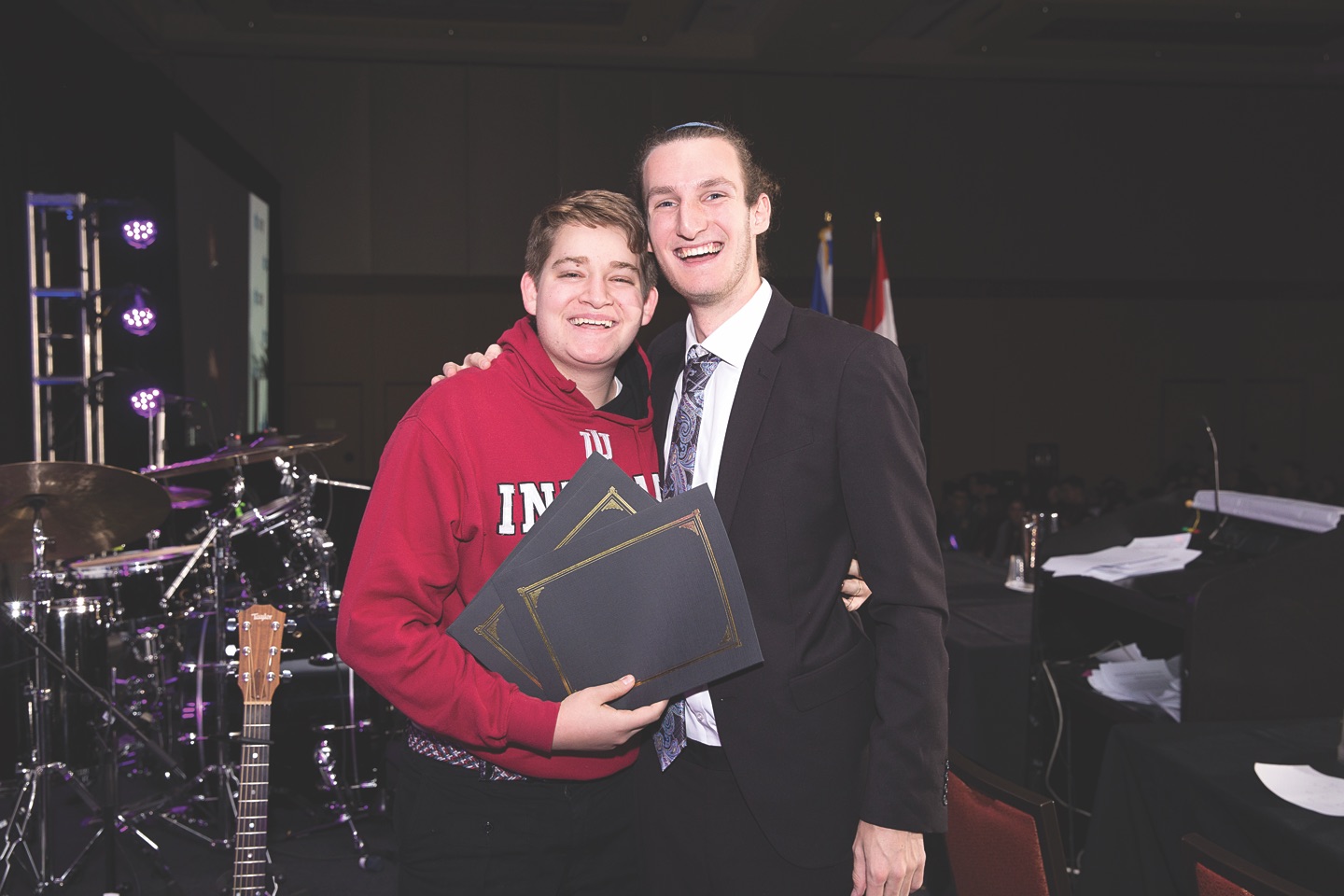
Far West USY President Ari Teckteil (left) accepts the Chapter of the Year awards on behalf of local L.A. synagogues from 2017 USY International President Noah Lee at the USY International Convention in Chicago. Photo by North Shore Photography
Southern California synagogues received top honors at the 2017 United Synagogue Youth (USY) International Convention in Chicago from Dec. 24-28.
For overall excellence in youth programming, USY recognized Temple Etz Chaim in Thousand Oaks, Congregation Beth El in La Jolla, Temple Beth Am in the Pico-Robertson neighborhood of Los Angeles and Congregation B’nai Israel in Tustin .
In addition, the Far West USY region, which includes more than 20 congregations in California, Arizona and Nevada, won the award for largest overall membership increase.
USY is a program of the United Synagogue of Conservative Judaism for Conservative Jewish teens in North America.
Attendees at the conference included Far West USY President Ari Teckteil and 2017 USY International President Noah Lee.
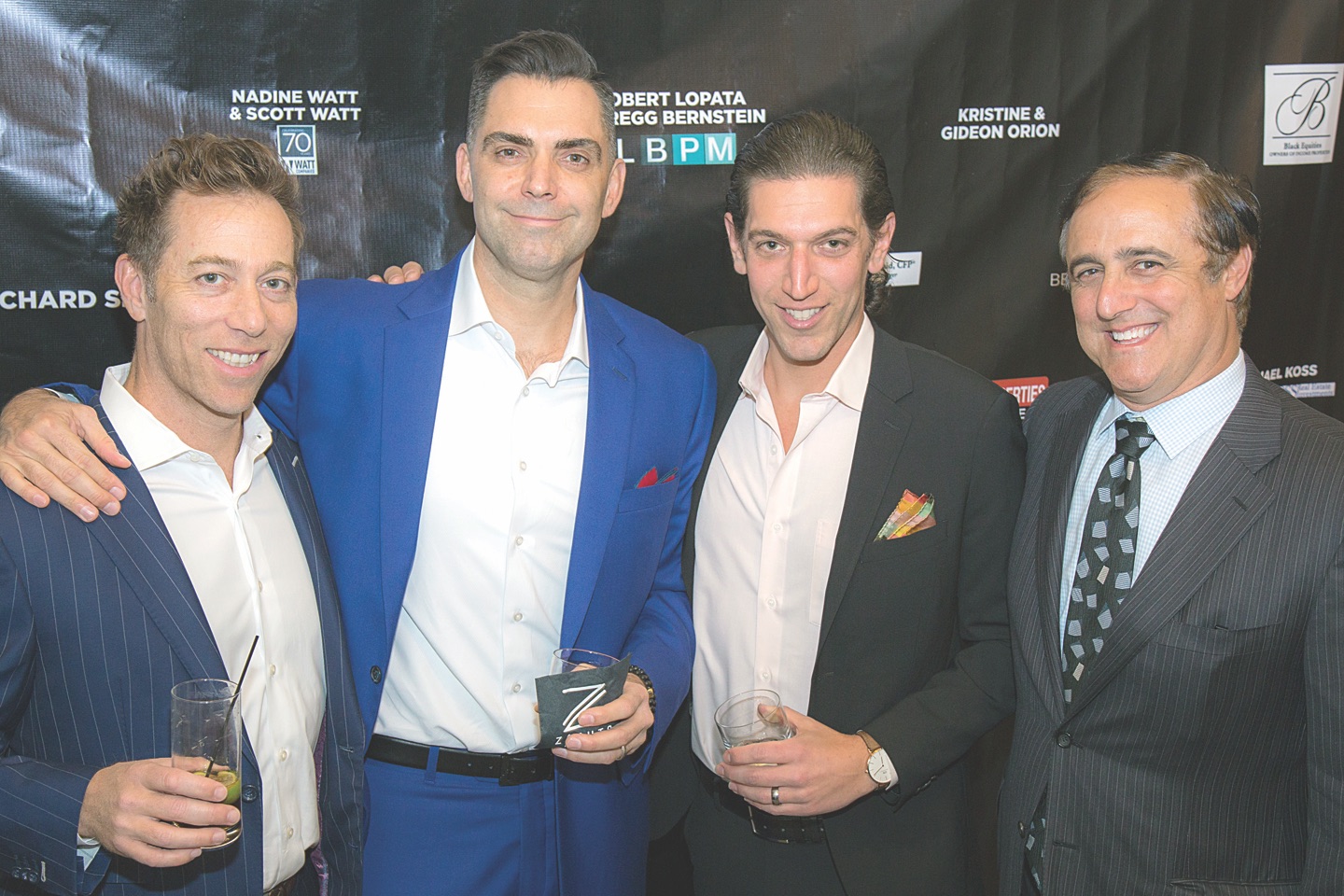
From left: The Guardians of the Los Angeles Jewish Home 2017 real estate event co-chairs Kenny Stevens, Peter Steigleder, Josh Keimach and Brad Luster. Photo courtesy of Guardians of the L.A. Jewish Home
The guardians of the Los Angeles Jewish Home, an event-driven organization that raises funds for the facility, held its annual real estate dinner on Dec. 13 at the Beverly Wilshire hotel.
Approximately 500 people attended the event, which raised $300,000 for the organization and honored Howard Banchik, co-founder and co-chairman of the board at Westwood Financial. His son, Randy, co-CEO of Westwood Financial and a member of the Guardians’ governors council, presented him with the award.
The event was co-chaired by Josh Keimach, a member of the Guardians’ 2017-18 young men’s leadership division; past president Brad Luster; and executive vice presidents Peter Steigleder and Kenny Stevens.
Guest speakers included Stuart Gabriel, director of the UCLA Ziman Center for Real Estate; Robert Hart, president and CEO of TruAmerica Multifamily; and Michael Koss, principal at Koss Real Estate Investments.
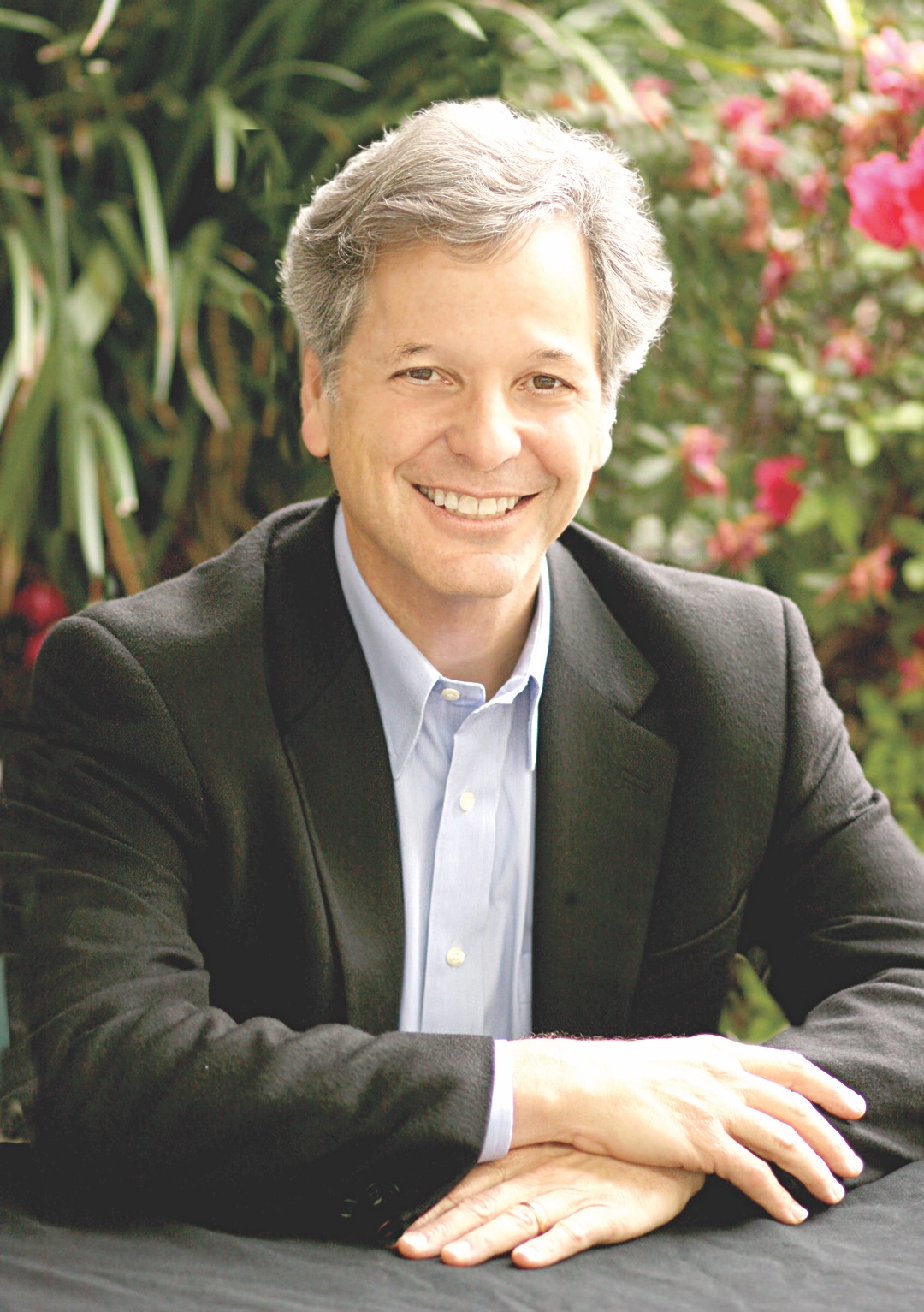
Temple Israel of Hollywood Senior Rabbi John Rosove. Photo courtesy of Temple Israel of Hollywood
Temple Israel of Hollywood (TIOH) is moving forward with searching for an interim rabbi to succeed its longtime Senior Rabbi John Rosove, who is retiring on June 30, 2019.
TIOH President Jonny Mars said in a Jan. 5 statement that the TIOH board of trustees arrived at the decision after consulting with a task force that examined whether the synagogue should hire a permanent replacement to immediately succeed Rosove or find an interim rabbi to guide the community through the transitional period.
The decision, Mars said, affords the synagogue the “opportunity to be operational and aspirational. … [An] interim rabbi will be able to help carry out rabbinic responsibilities as we continue to thrive as a community, while giving us time for thoughtful and intentional reflection, assessment of our identity, and confirmation of our values and priorities.”
Rosove is one of this city’s prominent Reform rabbis. Last February, he announced his intention to retire. He will become TIOH’s first rabbi emeritus in its 92-year-history.
The task force, led by TIOH board member Ilyse Pallenberg, consulted with Union of Reform Judaism professionals who specialize in synagogue transition, synagogue leaders who went through similar transitions at other congregations and others, Mars said.
The board of trustees came to its decision during a December meeting.
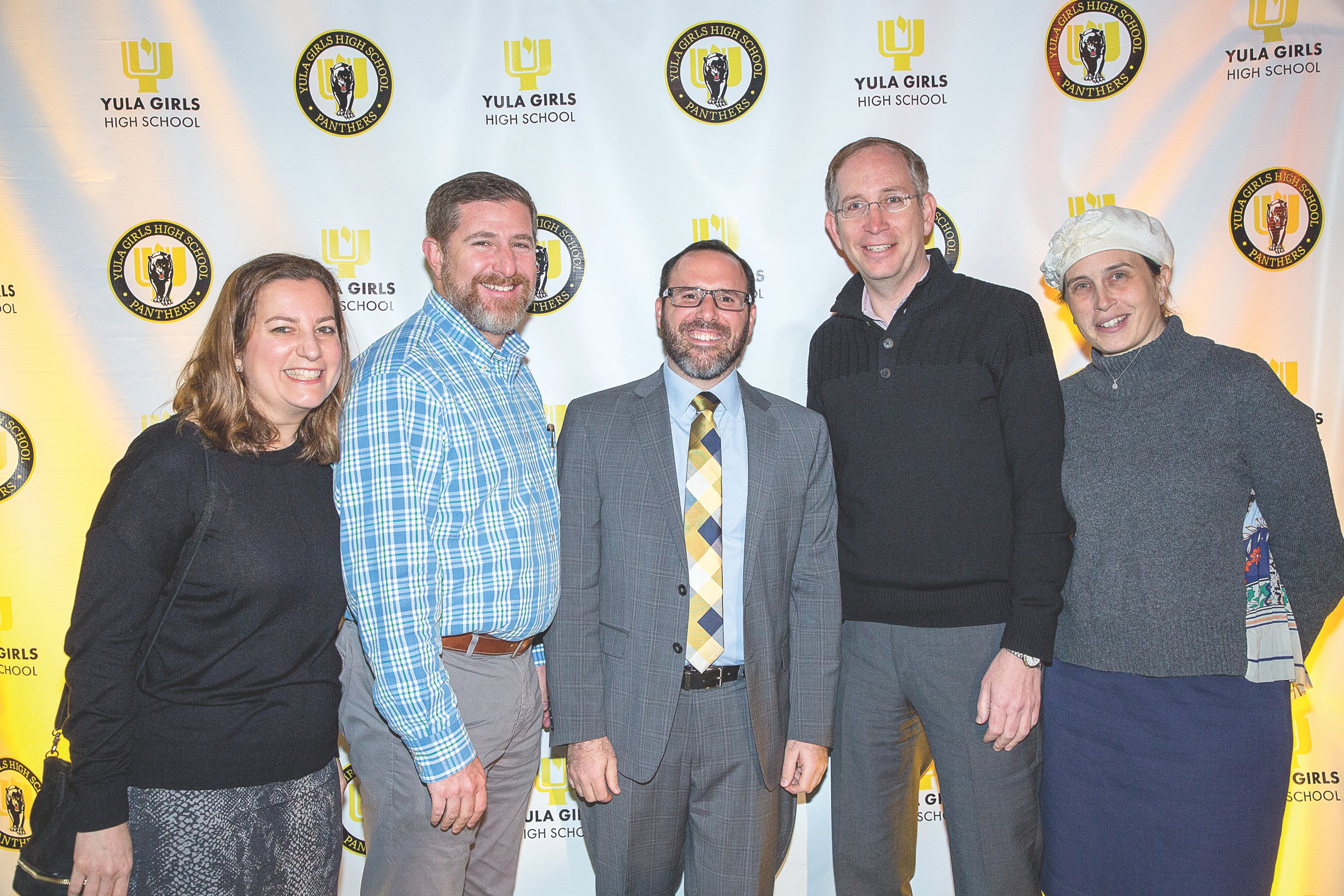
From left: Shuli and Avi Steinlauf, Rabbi Josh Spodek and Seth and Ruth Berkowitz attend the sixth annual YULA Girls High School Comedy Night. Photo by Lynn Abesera
The sixth-annual YULA Girls High School Comedy Night raised needed scholarship funds for the Orthodox yeshiva. Held on Dec. 4 at the school’s Pico-Robertson campus, the event featured performances by comedians Mark Schiff, Bobby Collins, Mark Weiner, Orny Adams and Nick Paul.
The approximately 250 attendees included YULA Girls High Head of School Rabbi Joshua Spodek and Schiff’s wife, Nancy, who headed the event organizing committee.
Each year, the school, which currently has an enrollment of about 165 students, provides more than $1 million in scholarships.
“This was probably our most successful year, not only with the attendance but with raising money,” Nancy Schiff said. “We hope to do it next year with a larger venue and to have more people come.”
The event kicked off with cocktails and hors d’oeuvres and featured a dinner catered by the La Gondola restaurant.
Joan Baranov died Dec. 23 at 79. Survived by husband Malcolm; son
Michael Rose; daughters Tina (John) Albert, Lauren (Anton) Schiff; 3 grandchildren. Hillside
Janice Baum died Dec. 25 at 89. Survived by husband Richard; daughters Halli Heston, Lisbeth Heston; son Rick; 5 grandchildren; 2 great-grandchildren. Mount Sinai
Michael Borio died Dec. 20 at 62. Survived by wife Allison; daughters Elissa (Andrew) Smith, Vanessa, Kelsey (Elan) Shelton; 2 grandchildren; sister Susan Linnerdoth; brother Ronald. Mount Sinai
Georgiana Diamond died Dec. 22 at 94. Survived by daughters Ellen Brown, Lori (Al) Singer; son Jim (Lucy); 10 grandchildren. Hillside
Joe Eisenmass died Dec. 22 at 81. Survived by cousins Elliott (Stella) Mason, Garrett Mason, Joshua (Lauren) Mason, Valerie (Dan) Gale, Hannah Gale, Jake Gale, Corey (Eran) Zerah, Michael Barshop, Kenneth Barshop. Mount Sinai
Claire Empol died Dec. 23 at 92. Survived by daughter Denise (Simon) Daniel; son Bruce (Terri); 6 grandchildren; 6 great-grandchildren; brother Alvin (Rachel) Goldman. Mount Sinai
Lucia Feit died Dec. 23 at 92. Survived by husband Israel; sons Harold (Brenda), Aaron (Toby), Murray (Margalit), Jonathon (Mabel); 7 grandchildren. Mount Sinai
Lillian Gelfand died Dec. 26 at 88. Survived by daughters Joan (Will) Matlack, Donna Finkle; 2 grandchildren; 2 great-grandchildren. Mount Sinai
John Gottlieb died Dec. 25 at 80. Survived by wife Joann; sons Jonathan, Alex (Mira); brother Daniel (Susan). Hillside
Judith Hartshorne Harte died Dec. 10 at 77. Survived by daughter Robin Hartshorne; daughter-in-law Sharon Harte; 1 grandchild; sisters Sally Swichtiss, Patty Gilbert, Marilyn Gilbert; brother Yacov Ginsberg. Mount Sinai
Linda Hirsch died Dec. 21 at 56. Survived by husband Steve; daughter Kim; son Ben; mother Donna Lefkovits; brothers Rick (Robin), Bill (Kathy). Mount Sinai
Jacob Kaplan died Dec. 24 at 21. Survived by mother Robyn; father Michael; sister Shelby; grandmothers Arlene (Michael) Lauer, Eunice. Mount Sinai
Irvin Kauffman died Dec. 27 at 98. Survived by wife Florence; sons Gary (Sandy), Scott (Juli); 2 grandchildren. Mount Sinai
Carol Levine died Dec. 24 at 69. Survived by husband Murray; daughter Lori (Harold) Solomon; son Michael (Ilene Claidius); 3 grandchildren. Mount Sinai
Linda A. Lieberman died Dec. 25 at 73. Survived by daughter Julie Ann (Perry) Lang; stepdaughters Helayne, Geralyn Lucas, Heidi Richmond; son Michael Harris; 8 grandchildren, 1 great-grandchild; sister Janet Olander Dean. Mount Sinai
Phyllis Malin died Dec. 23 at 81. Survived by son Gary (Rhonna); daughter Debbie (Jack) Gerber; 7 grandchildren. Mount Sinai
Richard Marias died Aug. 23 at 59. Survived by his wife Teri; daughter Rachel; son David; mother Seidel; brother Joel. Groman Eden
Ruth Morraine died Dec. 23 at 107. Survived by daughter Shirley Wiemokly; 7 grandchildren; 5 great-grandchildren. Hillside
Ruth Nussbaum died Dec. 27 at 97. Survived by son Howard (Debbie); 1 grandchild. Hillside
Richard Orkin died Dec. 24 at 84. Survived by wife Dianne Lantz; daughters Lisa, Lynne Orkin Fisher; sons Michael, Haris; brother Sandy. Mount Sinai
Helen Prince died Dec. 24 at 93. Survived by sons Steve (Karen) Twersky, Lee (Gale) Twersky; 6 grandchildren; 5 great-grandchildren. Mount Sinai
Philip Pumerantz died Dec. 26 at 85. Survived by wife Harriet; daughter Beth; sons Andrew (Dana), Richard (Brigitta); 5 grandchildren. Mount Sinai
Harriet Frances Rechtman died Dec. 24 at 83. Survived by sons Robert, James; 1 grandchild. Mount Sinai
Eliane Reiss died Dec. 23 at 72. Survived by husband Serge; daughters Claudine (Joel) Horowitz, Monique (Kiffen) Taylor; 6 grandchildren; brother Jack (Lilyan) Schnur. Mount Sinai
Alfred Rubel died Dec. 24 at 92. Survived by daughter Debra (Norm) Rosenberg; 2 grandchildren. Hillside
Martin Singer died Dec. 27 at 90. Survived by daughter Cathy (Larry) Pitts; sons Richard, Andrew (Toniann); 6 grandchildren; 3 great-grandchildren; sister Barbara Rait. Mount Sinai
Leona Margaret Stein-Ford died Dec. 26 at 69. Survived by husband Anthony Leonard; brother Maurice Stein. Mount Sinai
Susi Topf died Jan. 1 at 93. Survived by daughters Sonja Burian, Leslie; 5 grandchildren; 4 great-grandchildren. Hillside
Zoltan Veres died Dec. 22 at 82. Survived by daughters Doris (Daniel) Gaither, Judy (Rod) Sutherland; 4 grandchildren; brothers Laszlo, George, John. Mount Sinai