fbpx

January 16, 2018

Trump Admin Cuts Funding to UNRWA

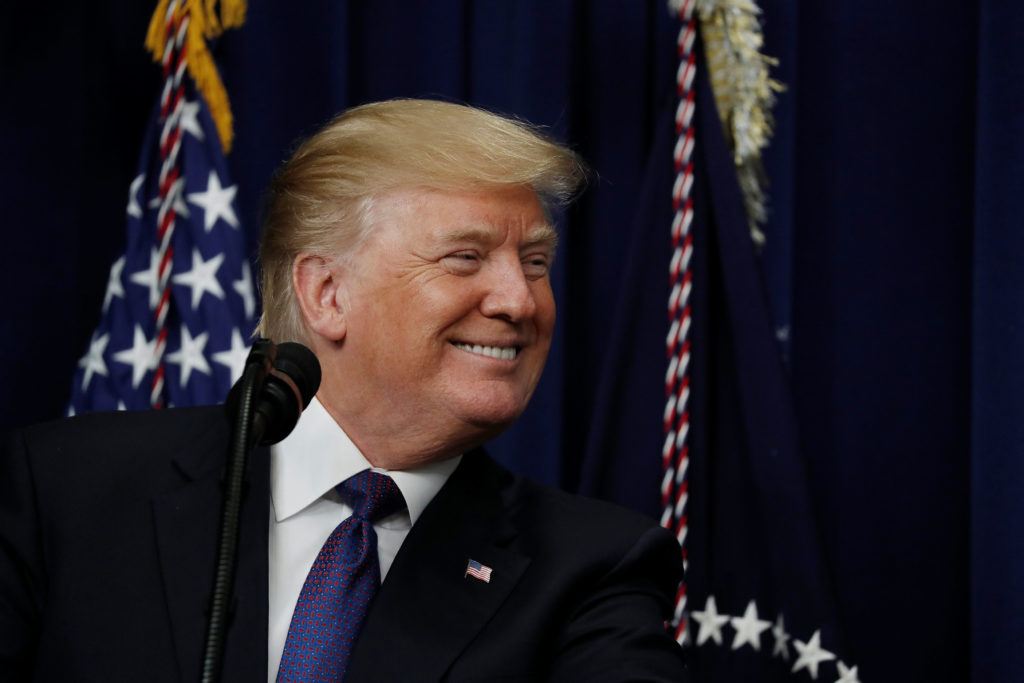
The Trump administration announced on Tuesday that they’re going to cut $65 million from the United Nations Relief and Works Agency (UNRWA).

In a letter to the agency, the administration told the UNRWA they would continue to provide $60 million to the UNRWA, but they would be withholding the remaining $65 million until further notice. The administration also called for the agency to undergo a series of changes. The $60 million to the agency is a drastic reduction from the $355 million that the U.S. provided the UNRWA in 2017.

UNRWA Commissioner-General Pierre Krähenbühl denounced the move in a statement, claiming that it put the lives of Palestinians at risk.

“At stake is the access of 525,000 boys and girls in 700 UNRWA schools, and their future,” said Krähenbühl. “At stake is the dignity and human security of millions of Palestine refugees, in need of emergency food assistance and other support in Jordan, Lebanon, Syria, and the West Bank and Gaza Strip. At stake is the access of refugees to primary health care, including pre-natal care and other life-saving services. At stake are the rights and dignity of an entire community.”

Israeli Ambassador to the U.N. Danny Danon praised the move in a statement.

“Just over the last year alone, UNRWA officials were elected to the leadership of Hamas in the Gaza Strip, UNRWA schools denied the existence of Israel, and terror tunnels were dug under UNRWA facilities,” said Danon. “It is time for this absurdity to end and for humanitarian funds to be directed towards their intended purpose — the welfare of refugees.”

The move comes after President Trump threatened to withhold money from the Palestinians if they refused to engage in peace talks. Palestinian Authority (PA) President Mahmoud Abbas declared in a weekend speech to the Palestinian Liberation Organization (PLO) that they would not consider any deal forged by the United States and even. Abbas also cursed at Trump, exclaiming, “May your house be demolished!”

According to the Jerusalem Post, there was some debate within the Trump administration how the president should follow through on his threat. U.S. Ambassador to the U.N. Nikki Haley advocated for Trump to zero out funding to the UNRWA altogether, but ultimately the president sided with Secretary of State Rex Tillerson, Secretary of Defense James Mattis and National Security Advisor H.R. McMaster to partially fund the agency. The Israeli government also wanted Trump to partially fund the agency.

Richard Goldberg, senior adviser to the Foundation of Defense Democracies, argued in a New York Post op-ed that the UNRWA only serves “to keep Palestinians as perpetual refugees.”

“In truth, it’s not a refugee agency but a welfare agency, which keeps millions of people in a permanent state of dependency and poverty — all while feeding Palestinians an empty promise that one day they’ll settle in Israel,” wrote Goldberg.

Additionally, U.N. Watch has reported on how UNRWA teachers have a penchant for making anti-Semitic Facebook posts, including “Holocaust-denying videos and pictures celebrating Hitler.”

Trump Admin Cuts Funding to UNRWA Read More »

UC Berkeley’s Vice Chancellor to Meet With Jewish Student Organizations Over Lecturer Who Re-tweeted Anti-Semitic Images

UC Berkeley is working to set up a meeting between the university’s vice chancellor and the Coalition of Jewish Student Organizations to discuss the matter of a lecturer who re-tweeted anti-Semitic images.

Hatem Bazian, who lectures on Asian American Studies, Muslim American Studies and the like, re-tweeted a tweet in November that featured two images: one of a Jewish man saying: “Look Mom! I is chosen! I can now kill, rape, smuggle organs & steal the land of Palestinians yay #Ashke-Nazi”; the other portrayed Kim Jong Un with a yarmulke stating that he converted his entire country into Judaism and then telling President Trump, “Now my nukes are legal and I can annex South Korea and you need to start paying me 34 billion a year in welfare.”

The full tweet can be seen below:

https://twitter.com/wherepond/status/892079717880344577

Bazian did issue an apology for re-tweeting the tweet, calling the images “offensive.”

“At the time, I saw the image of the North Korean Kim Jong-Un and tweeted it without giving it much thought as I was teaching a course in Spain and France,” Bazian said in a statement posted to Twitter. “I did not realize or read the full text in detail until it started re-appearing on my twitter feed again from a number of pro-Israel groups that target Palestinians.”

“While we do not believe that all criticism of Israel’s governmental policies is inherently anti-Semitic, the social media posts in question clearly crossed the line, and we are pleased they have been deleted,” UC Berkeley spokesman Dan Mogulof said in a statement. “We deeply regret the impact these posts have had on members of our campus community and the public at large. UC Berkeley is and will remain committed to fostering and sustaining a campus community, and a world, where everyone feels safe, welcome and respected.”

Four Berkeley Jewish student groups – Chabad Jewish Student Group, Bears for Israel, Berkeley Hillel and Tikvah: Students for Israel – called for further discipline against Bazian in a letter to the university administration, according to Fox News.

“While we fully support academic freedom and free speech, we believe Bazian’s record is severe enough to warrant more than just condemnation,” the letter reads. “We also know that there is a precedent for the removal of non-tenured faculty who promote hate on social media and elsewhere. Oberlin College fired professor Joy Karega, following an investigation into anti-Semitic statements she made on social media, a University of Tampa professor was fired for suggesting that Hurricane Harvey was ‘karma’ for the state of Texas, and a John Jay College professor was suspended for tweeting about ‘dead cops.’”

The letter also argued that Bazian has a history of anti-Semitism, including claiming in 2002 that UC Berkeley was under Jewish control.

Mogulof told the Journal in an email that the First Amendment prevents the university from firing Bazian.

“The expression in question took place outside of the work place, on the employee’s own time,” Mogulof wrote. “The University, no matter what the reason or who the perpetrator might be, cannot act in contradiction to settled law and ample court precedence that make it all but impossible to dismiss an employee of a public institution for activities or expression of this sort that takes place during the employee’s own time, and through the use of the employee’s, not the University’s, resources. While there are other steps we can and may have taken, as per University policy I am not at liberty to disclose or describe any personnel actions that might have followed this lecturer’s recent conduct.”

However, Mogulof informed the Journal that UC Berkeley Vice Chancellor Oscar Dubón responded to the Jewish student groups with a letter expressing his willingness to meet with them to discuss the matter; the university is working to schedule the meeting later in January.

“I believe that the Vice Chancellor’s letter, and his intention to meet and engage with the students, makes amply clear how seriously we take this matter and the extent to which this matter has not yet been settled,” wrote Mogulof.

UC Berkeley’s Vice Chancellor to Meet With Jewish Student Organizations Over Lecturer Who Re-tweeted Anti-Semitic Images Read More »

Memorial Held for Slain College Student

The parents of slain Orange County Jewish teenager Blaze Bernstein, 19, mourned their son’s death during a Jan. 15 funeral service at University Synagogue in Irvine.

“We are saddened to hear, on the day we laid our son to rest, that gruesome details of the cause of his death were published,” Gideon Bernstein and Jeanne Pepper Bernstein said in a statement released on Monday. “Our son was a beautiful gentle soul who we loved more than anything. We were proud of everything he did and who he was. He had nothing to hide. We are in solidarity with our son and the LGBTQ community.

“There is still much discovery to be done and if it is determined that this was a hate crime, we will cry not only for our son, but for LGBTQ people everywhere that live in fear or who have been victims of hate crime,” the statement said.

Bernstein, a University of Pennsylvania student, was stabbed more than 20 times on Jan 2.

Last Friday, authorities arrested Samuel Woodward, 20, Bernstein’s former high school classmate, on suspicion of Bernstein’s murder.

Woodward reportedly told investigators that Bernstein tried to kiss him.

Bernstein was reporting missing from his home at Lake Forest, on Jan. 3.  A search for him followed. Bernstein’s body was found on Jan. 9 in a shallow grave near a Lake Forest park.

Woodward, who was initially considered a witness, not a suspect, in Bernstein’s death, had told investigators that he had picked Bernstein up on the night of Jan. 2 for a late visit and drove Bernstein to a park. Woodward said he went to a restroom at the park and when he came out, Bernstein was gone and didn’t answer his phone.

Investigators discovered inconsistencies in Woodward’s story, however, and arrested Woodward after discovering Bernstein’s blood on Woodward’s sleeping bag.

According to a 16-page search warrant affidavit obtained by the Orange County Register, text messages sent by Bernstein suggested he may have been planning to sexually pursue Woodward.

Bernstein was home visiting his family during winter break at the time of his death.

Last Friday, Rabbi Arnold Rachlis addressed more than 500 attendees at Bernstein’s funeral. He expressed disbelief at Bernstein’s death.

“We are gathered here today because this is a death that we never expected and still find hard to believe,” he said during the 90-minute service.

Additional speakers included Gideon Bernstein, who spoke his final words to his son.

“Blaze, I know you didn’t like the spotlight,” he said, “but you’d be amazed at all the good things being done in your honor here today.”

Memorial Held for Slain College Student Read More »

Episode 72 – #metoo and the Power to Forgive

On October 5, 2017, only a few months ago, a report published in The New York Times shook the foundations at the epicenter of America’s film and television industry – Hollywood. More than a dozen women accused the hugely successful film producer Harvey Weinstein of sexual harassment, abuse and rape.

These allegations brought about a wave of accusations against prominent male figures in film and TV. It gave birth to a movement named #metoo and recently another movement named Times Up both aimed at empowering women to speak up against sexual violence and misconduct.

One year before this seismic report, there was a warning tremor. A tremor that was nonetheless seismic for the person reporting. A journalist from the Los Angeles Jewish Journal published an essay titled: “My Sexual Assault and Yours, Every Woman’s Story.” That journalist’s name is Danielle Berrin. Danielle refrained from naming names and instead conveyed her experience, her trauma and the devastation she felt from this once idolized man.

Soon it became clear that this man was the prominent Israeli journalist, Ari Shavit. Shavit apologized, begrudgingly, and stepped down from the public stage. Israel’s media world was shaken to its roots.

Danielle Berrin joins us today to talk about her story, the #metoo campaign and how, after the ashes settle, we might be able to build a better future.

Danielle Berrin on the Jewish Journal and Twitter

RSS Subscribe

Direct Download

Episode 72 – #metoo and the Power to Forgive Read More »

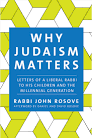
Why Judaism Matters – Letters of a Liberal Rabbi to His Children and the Millennial Generation

My book by the above title was first published in October, I wanted to offer it again. Here are the endorsements for the book on the book jacket. You can also check out what readers have said at amazon.com.This is not only for millennials, but for their parents and grandparents.


“John Rosove does what so many of us have struggled to do, and does it brilliantly:  He makes the case for liberal Judaism to his children. As Rosove shows, liberal Judaism is choice-driven, messy, and always evolving, “traditional” in some ways and “radical” in others. It is also optimistic, spiritual, and progressive in both personal and political ethics. Without avoiding the hard stuff, such as intermarriage and Israel, Rabbi Rosove weaves all of these strands together to show the deep satisfactions of living and believing as a liberal Jew. All serious Jews, liberal or otherwise, should read this book.” —- Rabbi Eric H. Yoffie is President Emeritus of the Union for Reform Judaism and a regular columnist for the Israeli daily newspaper Haaretz. 

“Rabbi John Rosove addresses his intellectual and well-reasoned investigation of faith to his own sons, which sets this book apart for its candor and its ability to penetrate not only the mind but also the heart.” — Matthew Weiner is a writer, director, producer, and the creator of the AMC television drama series Mad Men and he is noted for his work as a writer and producer on the HBO drama series The Sopranos and earned nine Primetime Emmy Awards Matthew has received nine Primetime Emmy Awards.

“Rabbi John Rosove gets it. Here is a religious leader not afraid to tell it like it is, encapsulating for his audience the profound disaffection so many young Jews feel towards their heritage. But instead of letting them walk away, he makes a powerful case for the relevance of tradition in creating meaningful lives. In our technology-saturated, attention-absorbing age, Rosove offers religion-as-reprieve, his fresh vision of a thoroughly modern, politically-engaged and inclusive Judaism.” —-Danielle Berrin is a columnist and cover-story journalist for the Los Angeles Jewish Journal. She is known for her Hollywood Jew blog, has appeared as a commentator on CNN and MSNBC, and published work for The Guardian, British Esquire, and The Atlantic. 

“Rabbi Rosove has written a wonderful book, a love letter to his children, and through them, to all our children. Prodigiously knowledgeable, exceedingly wise, and refreshingly honest, Rabbi Rosove has described why Judaism matters. It should serve as a touching testament of faith, spanning the generations for generations to come.” —-Rabbi Ammiel Hirsch is Senior Rabbi of Stephen Wise Free Synagogue, New York City  and is the co-author of One People, Two Worlds: A Reform rabbi and an Orthodox rabbi explore the issues that divide them with Rabbi Yaakov Yosef Reinman.

“Rabbi Rosove’s letters to his sons are full of Talmudic tales and practical parables, ancient wisdom with modern relevance, spiritual comfort, and intellectual provocation. Whether his subject is faith, love, intermarriage, success, Jewish continuity or the creation of a meaningful legacy, you’ll find yourself quoting lines from this beautiful book long after you’ve reached its final blessing.”  —- Letty Cottin Pogrebin is a writer, speaker, social justice activist, and author of eleven books including Deborah, Golda, and Me: Being Female & Jewish in America and Single Jewish Male Seeking Soul Mate. She is also a founding editor of Ms. Magazine, is a regular columnist for Moment Magazine.

“Rabbi John Rosove has given a gift to all of us who care about engaging the next generation in Jewish life. The letters to his sons are really love-letters from countless voices of Jewish wisdom across history to all those young people who are seeking purpose in their lives.  From wrestling with God, to advocating for peace and justice in Israel and at home, and living a life of purpose, this book is a compelling case for the joy of being Jewish.” —Rabbi Jonah Pesner, is the Director of the Religious Action Center of Reform Judaism in Washington, D.C and is Senior Vice President of the Union for Reform Judaism.

“If you’re a fellow Reform millennial, give yourself the gift of John’s insights. This book is written in a breezy, gentle, readable style that is welcoming without losing sharp insight. It makes an even better case for Judaism than challah. It was so enjoyable and refreshing to read and persuasive without ever being pushy. Rosove managed to do what only a truly worthy slice of kugel or chance viewing of Fiddler has done for me: reactivate my sense of wonder and gratitude about being Jewish. I am a huge WJM fan.” —-Jen Spyra is a staff comedy writer on The Late Show with Stephen Colbert (CBS) and formerly was a senior writer for The Onion.

“John Rosove’s letters to his sons based on his life, philosophy, and rabbinic work address what it means to be a liberal and ethical Jew and a lover of Israel in an era when none are automatic. He writes in an unassuming personal style steeped in traditional texts as he confronts conflicts of faith and objectivity, Zionist pride and loving criticism of the Jewish state, traditional observance and religious innovation. He is never gratuitous and invites his readers into his family conversation because what he says is applicable to us all.” —-Susan Freudenheim is the Executive Director of Jewish World Watch, was formerly the Managing Editor of the Los Angeles Jewish Journal and an editor at the Los Angeles Times.

“Rabbi John Rosove has written a book of the utmost importance for our time. It is an imperative read for all those who struggle with the changing and evolving attitudes towards belonging, behavior and belief. His analysis, stemming from deeply personal contemplation and decades of rabbinic experience, offers clear yet sophisticated approaches to tackling the challenges facing this generation and those to come. This book offers a treasure of wisdom through the lens of Jewish texts – both ancient and modern – which help to frame life’s major issues taking the reader from the particular to the universal.  Israel is one of the most complicated of issues tackled in this volume and his chapter on Israel bridges the divide between Israel’s critics and staunch supporters offering a comforting approach to those who are deeply at odds with Israel and offers and important opportunity for a shift in our basic narrative.  Moving beyond the conversation of crisis is critical for the millennial generation.” —-Rabbi Josh Weinberg is President of the Association of Reform Zionists of America and is a leading young voice in world-wide Zionist politics and affairs.

 

Why Judaism Matters – Letters of a Liberal Rabbi to His Children and the Millennial Generation Read More »