fbpx

January 4, 2018

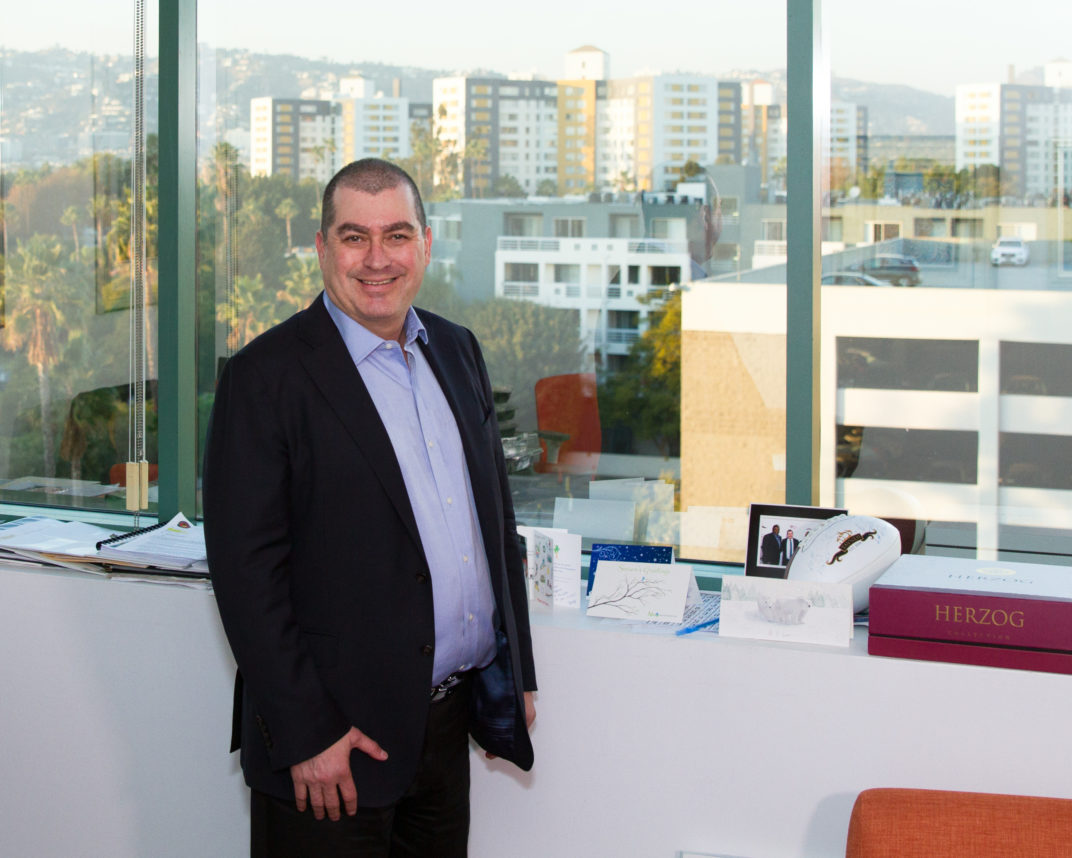
Ilan Kenig: The ‘Community-Minded’ Real Estate CEO

Ilan Kenig, 57, lives in Hancock Park, where he is a board member of Congregation Shaarei Tefila. Two of his six children go to Yavneh Hebrew Academy. He’s involved with many other organizations dedicated to promoting Israel, including the Israeli American Council (IAC), StandWithUs and the Donor Forum, which supports young pro-Israel nonprofits across the country.

But his definition of community is much wider than his neighborhood: The company he founded, FMB Development, doesn’t only develop real estate, it builds communities.

“We are not just building for the sake of making the profit and leaving, but we are there to stay,” Kenig said. “Being part of the community is blended in our culture in the way we think [and] design. Even the houses and communities we design, we are designing for the people who will live there and the people who will see those houses from the street.”

With projects from Venice to West Hollywood and from Koreatown to downtown, FMB works with local civic leadership to identify a community’s needs and historical themes.

“Taking the motifs and creating an art piece into the new constructions, we are integrating past with present and future,” Kenig said.

Because Los Angeles’ housing is unaffordable for so many, Kenig and FMB also support organizations that have the vision to develop affordable housing but need help from a professional developer. FMB’s projects designate certain units for lower-income people, or sometimes provide funding against the cost of the housing, “depending on what each city needs,” Kenig said.

“Being part of the community is blended in our culture in the way we think [and] design.”

Kenig’s background might be a factor in his staunch commitment to community. He grew up in Israel, in “a family where giving to the community is a part of our culture and our day to day. Since I was a kid, I saw it in front of my eyes.”

Kenig’s father was deputy mayor of the city of Ra’anana. Over the years, his mother taught hundreds of new olim (immigrants) Hebrew and math, and also helped them “learn and blend into Israeli society and be successful,” Kenig said.

Kenig practiced law in Israel and served in the Israeli military as a lieutenant colonel, first in the Sinai Desert, then moving to the north in the first Lebanon war. Then he moved to New York, where he was an investment banker. He would have stayed in New York, but the 9/11 attacks hit him hard.

“As much as I saw in the war and participated in combat,” he said, “my office was two blocks away [from the World Trade Center]. The human mind cannot comprehend what was happening there. Bodies all over the street, people crying and the smell of  the smoke.”

Arriving in L.A., he was surprised to see an “active philanthropic Israeli community that I haven’t seen elsewhere. I started realizing how much Israeli organizations are depending on funds received from the Los Angeles community.” He mentioned Haim Saban’s and Adam Milstein’s work, especially IAC, which started locally and a few months ago convened a 3,000-person national conference in Washington, D.C.

In his projects, Kenig is committed to “enhancing whatever the community needs in order to make the community better. We get to know the community and the community knows us,” he said.

Looking to the future, Kenig would like the next generation to understand that his work is an investment in the future.

“If we do what we are doing today, it will be a much better world for all of us.”

Ilan Kenig: The ‘Community-Minded’ Real Estate CEO Read More »

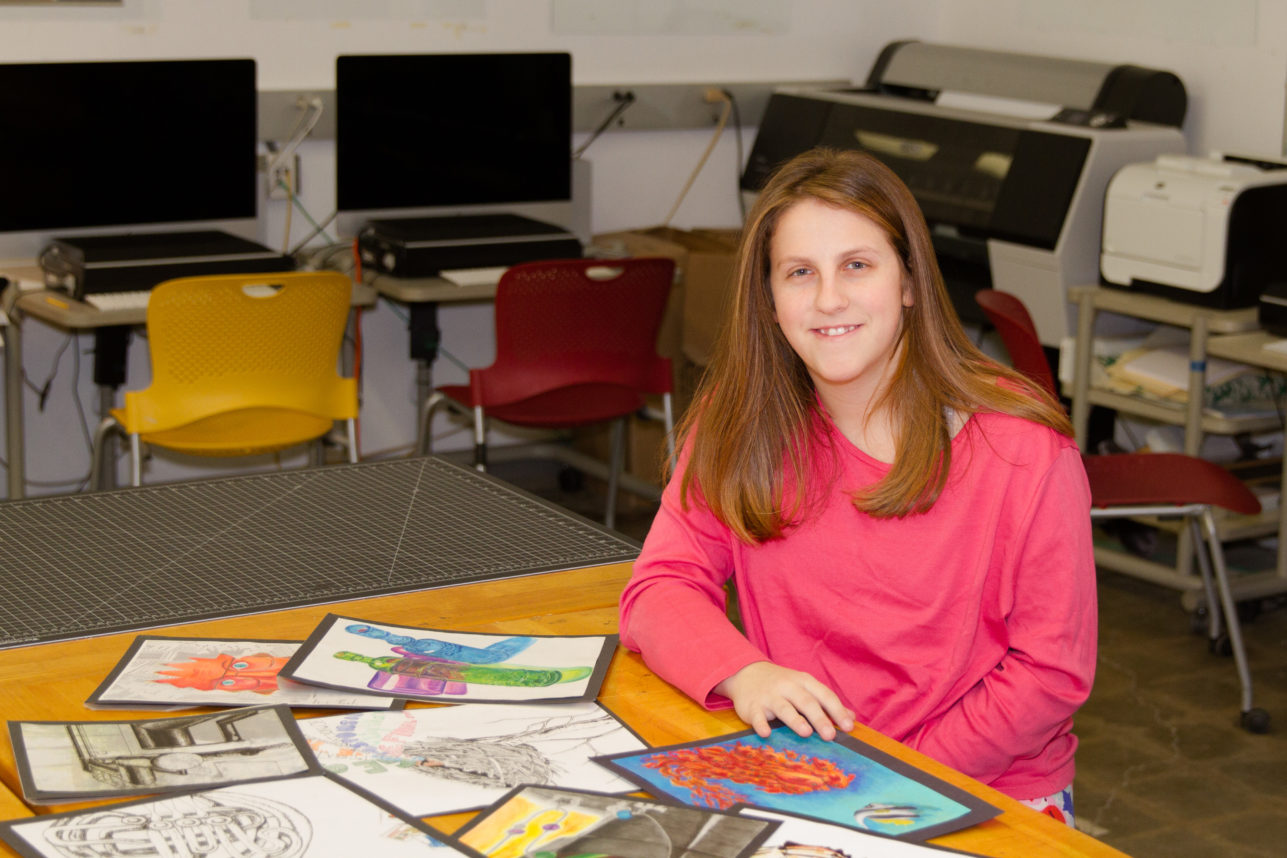
Tamar ‘Tammy’ Shine: Recorder of Righteous Conversations

As Holocaust survivors age and die, how will younger generations continue their legacy?

One 19-year-old, Tamar “Tammy” Shine, has invested her time in learning about and interacting with local survivors. A 2017 graduate and class valedictorian of Milken Community Schools, Shine is now a freshman at Wesleyan University in Connecticut.

Over the past seven years, throughout middle school and high school, Shine has been a volunteer with the Remember Us organization’s Righteous Conversations Project, which was created in 2011 to preserve the stories of Holocaust survivors and victims.

“I always felt really connected to that part of my history,” Shine said. “My grandmother’s family lives in London, and they took in children from the Kindertransport.”

Shine, who is from the Pico-Robertson neighborhood, has logged more than 100 hours talking and working with Holocaust survivors.

“I feel it’s really important to spend time with them and document their stories,” she said. “I want to relate to these people. I feel I’ve gained a lot of connection to and loving relationships with people who have these intense stories.”

“I feel I’ve gained a lot of connection to and loving relationships with people who have these intense stories.”

One of those relationships was with Lea Radziner, now 79, a child survivor of the Holocaust whom Shine invited to be her guest at Milken’s graduation lunch.

As part of her volunteer work with the Righteous Conversations Project, Shine designed the artwork for a Jewish Journal advertisement when the project was listed as one of America’s 50 most innovative Jewish nonprofit projects this year.

“[The design] was actually one of 12 pieces I did for my AP Studio Art class,” Shine said. “And it had an Elie Wiesel quote in it that meant a lot to me.”

That quote: “In the final stage of every equation, of every encounter, the key is responsibility. Whoever says ‘I’ creates the ‘you.’ Such is the trap of every conscience. The ‘I’ signifies both solitude and rejection of solitude.”

And in a serendipitous touch, when Shine went on the March of the Living trip during her senior year, she was one of six students asked to light a candle at Auschwitz alongside Elie Wiesel’s son.

“I always knew I wanted to do March of the Living,” Shine said. “It’s one thing to read or hear or watch videos about it, but it’s not really like the connection you feel when you’re in the place itself.”

In her first year at Wesleyan, Shine said, she has been busy working on gender equality issues on campus and is contributing to food-justice work in the local community.

While she’s still not sure what career she wants to pursue, she currently is focusing on chemistry.

“But I might do a second major in either philosophy or government,” she said. “The school has a science and society program, and I’m hoping to do that to integrate both my science and humanities minds.”

Tamar ‘Tammy’ Shine: Recorder of Righteous Conversations Read More »

Trump Admin Cuts Funding to Pakistan

The Trump administration officially cut funding to Pakistan on Thursday, stating the funding would cease until Pakistan begins effectively cracking down on terrorism.

According to NBC News, the administration is withholding “hundreds of millions of dollars” in funding to Pakistan that would have gone toward their efforts in fighting terrorism.

“Until the Pakistani government takes decisive action against groups including the Afghan Taliban and Haqqani network, we consider them to be destabilizing the region and also targeting U.S. personnel,” State Department spokeswoman Heather Nauert told NBC News. “Despite a sustained high level of engagement by this administration with the government of Pakistan, the Taliban and the Haqqani network continue to find sanctuary in Pakistan.”

The move comes after Trump tweeted on Monday that the U.S. was wasting money on Pakistan:

Pakistan responded to Trump’s tweet with a statement from their National Security Committee that read, “Recent statements and articulation by the American leadership were completely incomprehensible as they contradicted facts manifestly, struck with great insensitivity at the trust between two nations built over generations, and negated the decades of sacrifices made by the Pakistani nation.”

Pakistan’s central bank also announced that the country would be switching from the dollar to the yuan.

Islamic terror groups like the Taliban, Haqqani network and al-Qaeda have been embedded in Pakistan for years. Pakistan’s country has had trouble clamping down on terrorism and has long faced allegations of harboring terrorism. It has also been alleged that Pakistan uses the Haqqani network “as a strategic hedge against India and Afghanistan,” according to the Council of Foreign Relations.

According to Human Rights Watch, Pakistan has 19 people on death row for violating blasphemy laws and recently passed laws that allows the government to engage in online censorship. The government has also failed to crack down on child marriage and honor killings.

Trump Admin Cuts Funding to Pakistan Read More »

Blocks of Time: DIY Perpetual Calendar

It’s a new year, which means it’s time to get a new calendar for my work desk. After all, some of us are old school and would rather not have to switch on our smartphones just to check the date.

This calendar made of wood blocks was inspired by an idea I found on the design blog holasara.com — run by my colleague at the Journal, Sara Budisantoso — and I customized it so you’d have as few supplies to purchase as possible.

Just print out the free template HERE, cut out the months and dates, and glue them to three wood blocks according to the template. You will have a perpetual calendar that is good all year long — and for years to come.

What you’ll need:
Three 2-inch wood blocks
Printout of template
1 1/2-inch circle punch or scissors
Glue or glue stick

1.

1. Start with three 2-inch blocks, which you can find at crafts stores like Michaels. You also can find them on Amazon or other online retailers that sell arts and crafts supplies.

2.

2. Download the template, which features the necessary months and numbers for the six sides of the three blocks. Print out the three pages, one for each block. They are drawn to scale.

3.

3. Cut out each of the months and numbers with a 1 1/2-inch circle punch. Using a paper punch makes it easy, but if you don’t have one, you can cut them out with scissors. You can leave them in a square shape if you prefer.

4.

4. Glue each month and number to the blocks according to the template. The months will be on one block, with two months per side, and the other two blocks make up the dates 1 through 31.

Blocks of Time: DIY Perpetual Calendar Read More »

What’s Happening in Jewish L.A. Jan. 5-11: Special Shabbats, Film Screenings and Lectures

FRI JAN 5
NASHUVA SHABBAT SERVICE

Naomi Levy

A soulful monthly Shabbat service with the Nashuva community takes place in Brentwood. Led by Rabbi Naomi Levy, wife of former Jewish Journal Editor-in-Chief Rob Eshman, Nashuva (Hebrew for “return”) is a congregation of Jews committed to spirituality and social action. Services feature a live band, meditation and the embrace of a welcoming and accessible environment. Zimmer Children’s Museum staffs onsite and concurrent programming for children. An oneg Shabbat with treats follows. Attendees are encouraged to dress casually and wear white in honor of Shabbat. 6:45-8:30 p.m. Free. Brentwood Presbyterian Church, 12000 San Vicente Blvd., Los Angeles. nashuva.com.

JEWISH WOMEN SHABBAT

Lev Eisha, a community of Jewish women, holds a joyous Shabbat musical celebration for Jewish women. Rabbi Toba August, Cindy Paley and Joy Krauthammer lead the service. A Kiddush follows. Though the service is for and led by women, all are welcome. 9:30 a.m. Free. Beth Shir Shalom, 1827 California Ave., Santa Monica. (310) 575-0985. leveisha.org.

“THE WOMEN’S BALCONY”

“The Women’s Balcony”

Temple Beth Am screens the Israeli dramatic comedy “The Women’s Balcony” as part of the synagogue’s film series. In the film, an accident during a bat mitzvah celebration leads to a gender rift in the devout Orthodox community in Jerusalem. Producer, writer and film historian Michael Berlin participates in pre- and post-screening conversations. 7:30 p.m. $12. Temple Beth Am, 1039 S. La Cienega Blvd., Los Angeles. (310) 652-7353. tbala.org.

SUN JAN 7
BASIC STAINED GLASS TRAINING

Revital Goldreich, an award-winning artist who is in the process of earning a master’s in interfaith relations from the Academy of Jewish Religion, California, teaches how to make stained-glass windows to Shomrei Torah Synagogue members and their friends. Participants learn the four steps to the art: cutting, grinding, coppering and soldering. Goldreich cuts the glass and organizes a production line to grind, copper and solder the glass. The four-hour workshop is limited to eight participants. Ages 18 and older. Through March 25. $36 (first time in the studio), $18 (second time in the studio), free (third time in the studio). 1-5 p.m. Revital’s Studio, 20643 Quedo Drive, Woodland Hills. (818) 458-9389. stsonline.org.

“PUSH AND PULL GENEALOGY”

Jewish Genealogical Society of the Conejo and Ventura County founding member Werner Frank discusses the small world of Jewish genealogy and the rationale behind the claim that all Ashkenazi Jews are at least 30th cousins. 1:30-3:30 p.m. Free. Temple Adat Elohim, 2420 E. Hillcrest Drive, Thousand Oaks. (818) 889-6616. jgscv.org.

ADAT ARI EL’S 24TH ANNUAL ENGEL CHAMBER MUSIC CONCERT

The New Hollywood String Quartet & Friends will honor the 100th birthday of the late Rose Engel with an afternoon of music by Schubert. A reception with light refreshments will follow. Presented by the Rose & Edward Engel Music Commission. 2-4 p.m. Free; RSVP is requested. David Familian Chapel, Adat Ari El, 12020 Burbank Blvd., Valley Village. (818) 755-3480, ext. 244. adatariel.org.

TIKKUN OLAM FILM SCREENING AND DISCUSSION

Anthony Bourdain

Producer Anthony Bourdain’s “Wasted! The Story of Food Waste,” an exploration into why 1.3 billion tons of food is thrown away each year, screens at Kehillat Israel. Celebrity chefs including Bourdain, Massimo Bottura and Dan Barber appear in the 2017 documentary film. A free dinner kicks off the event. A panel discussion follows. 6:30-8:30 p.m. Free. 16019 W. Sunset Blvd., Pacific Palisades. (310) 459-2328. ourki.org.

MON JAN 8
THREE DOCUMENTARY SHORTS

“116 Cameras”

Would you jump from a 10-meter-high diving board for the first time for $30? Swedish filmmakers Maximilien Van Aertryck and Axel Danielson worked with this premise in their 16-minute documentary short, “Ten Meter Tower.” What drives the participants more: the fear of the plunge or the fear of missing out? This film, along with two other documentary shorts contending for best documentary short subject at the Academy Awards, screen at the Museum of Tolerance. The other films are “116  Cameras,” director Davina Pardo’s 16-minute film following Holocaust survivor and stepsister of Anne Frank Eva Schloss’ effort to preserve her story interactively, and director Garrett Bradley’s “Alone,” a film about the American prison system tearing apart a family. A discussion follows with New York Times Hollywood reporter Brooks Barnes and Van Aertryck, Pardo and Bradley, the films’ directors. 7 p.m. Free (advance reservations required). Museum of Tolerance, 9786 W. Pico Blvd., Los Angeles. (310) 772-2505. museumoftolerance.com/opdocs.

TUE JAN 9
“SEPHARDIC WOMEN’S VOICES”

Nina Lichtenstein

Nina Lichtenstein shares stories from her book, “Sephardic Women’s Voices,” which traces the lives and writings of contemporary Jewish women born in North Africa who migrated to France. The author explores the meaning of their Sephardic heritage, their roles as women and their experience of exile. There will be an excerpt reading, interview and Q-and-A with the author. Light refreshments served. Books available for sale. 7-9 p.m. $10. The Braid, 2912 Colorado Ave., #102. Santa Monica. (310) 315-1400. jewishwomenstheatre.org.

TOWN HALL WITH COUNCILMAN  PAUL KORETZ

Paul Koretz

Join a discussion about current events with Los Angeles City Councilman Paul Koretz, who represents the Fifth District, as he talks about key issues and challenges facing the community. Open to the public. A brief Q-and-A will follow. 1-2:30 p.m. Free; registration is required at (323) 937-5900. JFS Freda Mohr Multipurpose Senior Center, 6310 San Vicente Blvd., Suite 275. jfsla.org.

WED JAN 10
“INTERMARRIAGE: OPPORTUNITY, CHALLENGE, OR THREAT?”

Can intermarriage be transformed into an opportunity for the Jewish community or is it a threat to its survival? Sinai Temple Rabbi Erez Sherman moderates a panel discussion on one of the greatest issues facing the Jewish community. Participants are Rabbi Brad Artson, dean of rabbinic studies at American Jewish University, and Rabbi Aaron Lerner, executive director of Hillel at UCLA. Their discussion explores intermarriage from different points of view and addresses a number of critical questions: What are its implications for individual Jews, families and the community? Can the trend of an increasing number of Jews marrying outside the faith be reversed? Everyone welcome. 6:30 p.m. Free dinner for Sinai Temple Men’s Club and Sinai Temple members; $10 for nonmembers. Sinai Temple, 10400 Wilshire Blvd., Los Angeles. (310) 474-1518, ext. 3340. sinaitemple.org.

“RETHINKING INSULARITY”

Shulem Deem

Some observant Jews integrate elements of secular society into their lives. Others keep the outside world at a safe distance. During tonight’s Shalhevet Institute discussion, “Rethinking Insularity: The Role of Boundaries in the Modern World,” Shulem Deen, author of “All Who Go Do Not Return,” and Rabbi Yakov Horowitz, dean of Yeshiva Darchei Noam in Monsey, N.Y., discuss the challenges facing their communities. Abigal Shrier, a writer on Jewish affairs, moderates. 7:30 p.m. Free. Shalhevet High School, 910 S. Fairfax Ave., Los Angeles. (323) 930-9333. shalhevet.org.

“A SPOONFUL OF HESED”

Make meals for those in need of healing with Sinai Temple’s social action committee, sisterhood and Sinai Temple Rabbi Nicole Guzik. Ingredients and supplies for cooking soup will be provided. If you can’t join in on the cooking but are willing to drop off soup at someone’s house, contact Guzik. Adults and children ages 10 and older are welcome. 7-9 p.m. Free. RSVP at (310) 481-3234 or nguzik@sinaitemple.org. Sinai Temple, 10400 Wilshire Blvd., Los Angeles. sinaitemple.org.

“MY JEWISH GENERATION”

Pressman Academy alum and Milken Community Schools Jewish studies teacher Joshua Krug discusses “My Jewish Generation: A Portrait of Millennial Jewish Identities in the USA.” Krug opens up about his personal journey from Beth Am in the 1990s to a doctoral study in Jewish education while he reflects on the state of his Jewish generation. By sketching a loose map of his generation, he will shed light on what is happening to Judaism and Jewish identity in America today. 7:30 p.m. Free. Temple Beth Am, 1039 S. La Cienega Blvd., Los Angeles. (310) 652-7353. tbala.org.

THU JAN 11
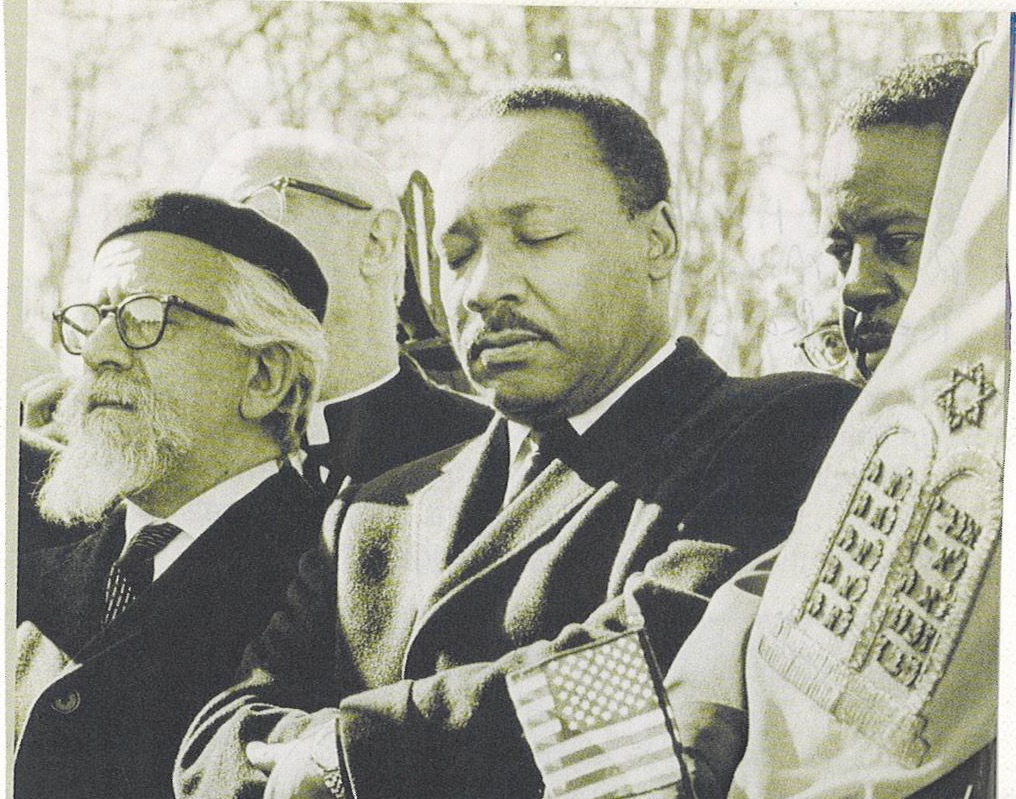
THE LEGACIES OF KING AND HESCHEL

Rabbi Abraham Joshua Heschel and the Rev. Martin Luther King Jr.

An interfaith event celebrates the birthdays and legacies of the Rev. Martin Luther King Jr. and Rabbi Abraham Joshua Heschel, partners and friends in the fight for civil rights. Choirs will perform, faith leaders will speak, and participants, including those from Stephen Wise Temple, Bel Air Presbyterian Church and Faithful Central Bible Church, will reflect on King and Heschel’s contributions to humanity. 7:30 p.m. Free. Stephen Wise Temple, 15500 Stephen S. Wise Drive, Los Angeles. (310) 476-8561. wisela.org/kingandheschel.

What’s Happening in Jewish L.A. Jan. 5-11: Special Shabbats, Film Screenings and Lectures Read More »

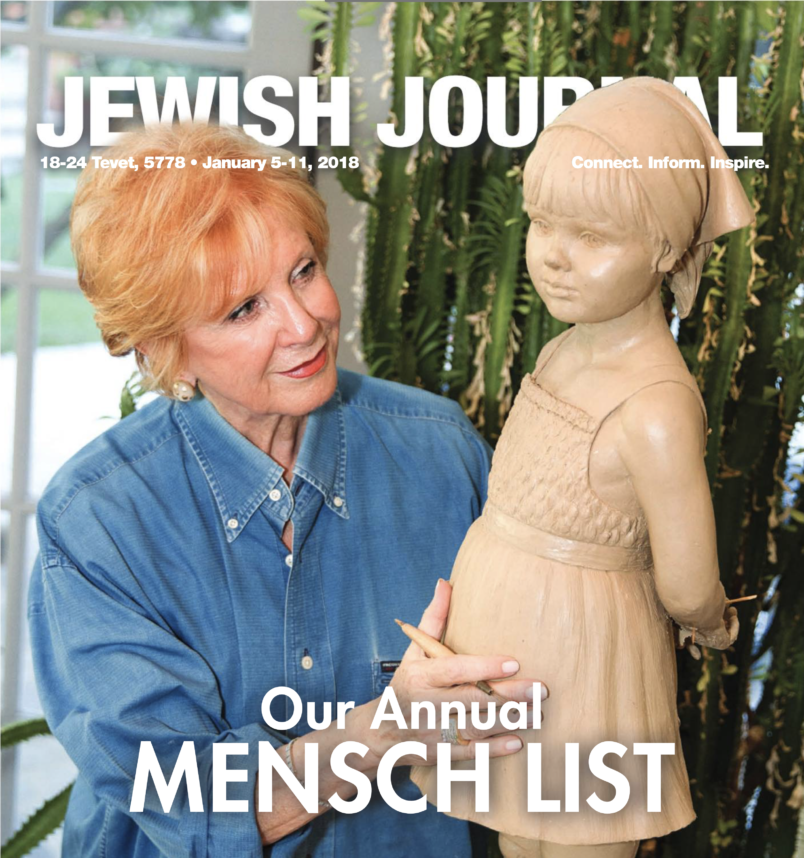
The 2017 Menschiest of Mensches

The Jewish Journal’s 12th annual Mensch List puts a spotlight on Jewish Angelenos who donate their energy, time and effort to strengthening our community and building a better world.

Jason Youdeem: Empowering the Next Generation of Jewish Leaders


Roni Tour: His Mitzvah for Mom and Dad Turns Into Charity for the Hungry


Rena Hirsch: Her Life Is ‘Being of Service to God’


Rochel Leah Bernstein: Protecting Children From Sexual Abuse


David Nimmer: Building Community, One Lunch at a Time


Tamar ‘Tammy’ Shine: Recorder of Righteous Conversations


Ilan Kenig: The ‘Community-Minded’ Real Estate CEO


Alana Yakovlev: Law Isn’t Just a Profession — It’s a Calling


Kfir Gavrieli: Well-Heeled Businessman Gives Back


Hayden Klein: YULA Student Picks His Cause

The 2017 Menschiest of Mensches Read More »

Moving & Shaking: JFS Groundbreaking, AISH Women Honored

Jewish Family Service of Los Angeles (JFS) held a groundbreaking on Dec. 18 for construction of the JFS Lois and Richard Gunther Center at 330 N. Fairfax Ave., which will transform the existing Freda Mohr Multipurpose Center into the organization’s new headquarters. The ceremony was attended by JFS leadership, staff, volunteers and clients, including JFS President and CEO Paul Castro and JFS Capital and Endowment Campaign Co-chairs David Levine and Dena Schechter. Civic and community leaders were there as well, including Los Angeles City Councilmen Paul Koretz and David Ryu, City Attorney Mike Feuer and state Sen. Ben Allen (D-Santa Monica).

“The new Center building will be as innovative and strong as the organization that is building it,” Castro said in a statement. “It will help us better integrate our services, expand and strengthen our reach within the greater L.A. community, consolidate our extensive array of programs, and increase our efficiency. This means that more time, energy and resources can be directed exactly where they belong: supporting the lives of our neighbors and community members.”

JFS expects to complete the construction, which follows a multimillion-dollar capital campaign, in two years. The new facility will house the Freda Mohr Multipurpose Center, the Hirsch Family Kosher Café, mental health services for Holocaust survivors, counseling services for victims of intimate-partner violence, an older-adult health and wellness center, and the JFS administrative offices.

The center is named for the couple who provided the lead gift for the capital campaign. Lois Gunther previously served as a JFS board president and has been a longtime JFS supporter; her husband, Richard, is a board member of Americans for Peace Now.

During construction, programs and services previously provided at the multipurpose center will be available at 6310 San Vicente Blvd., Suite 275, in Los Angeles.

Rabbi Yitzchak Sakhai, executive director of Sephardic Tradition and Recreation, lit a menorah at the L.A. Clippers’ Jewish Heritage night. Photo by Jacob Gonzalez/LA Clippers

The Los Angeles Clippers paid tribute to the team’s Jewish fans with Jewish Heritage Night on Dec. 20.

The evening took place on the eighth day of Hanukkah and featured a pregame ceremony. Rabbi Yitzchak Sakhai, executive director of Sephardic Tradition and Recreation, lit a large menorah at center court. His wife, Esther, joined him.

The Los Angeles Jewish Community Children’s Choir performed the national anthem. Milken Community School’s Israel Dance Company performed at halftime. The Clippers defeated the Phoenix Suns, 108-95.

The 2017 David Twersky Journalism Award recognized Jewish Journal senior writer Danielle Berrin for her October 2016 feature story, “My Sexual Assault, and Yours: Every Woman’s Story.”

Berrin, the sixth winner of the prize for Jewish journalism, joins past winners J.J. Goldberg, Jane Eisner, Andrew Silow Carroll, Larry Cohler Esses and Johanna Ginsberg.

“[Berrin’s] story was very well received by the judges and received either a first, a second or a third rank from each and every judge to comfortably win out of a field of eight finalists that included two past winners,” said the prize’s founder and chair, Amir Cohen.

In her first-person story, Berrin recalled how an Israeli journalist, who was in Los Angeles to promote his latest book, made unwanted sexual advances toward her as she interviewed him. Berrin did not name the journalist. However, after publication of her story, speculation prompted Haaretz correspondent Ari Shavit to acknowledge that he was the journalist who had met with Berrin. Shavit subsequently resigned from the Israeli newspaper.

The David Twersky Journalism Award is named for the late Jewish journalist, Zionist and peace advocate, who died in 2010.

Jonathan Rifkind (left), son of the late David Rifkind, with Rabbi Bentzion Kravitz, founder of Jews for Judaism. Photo courtesy of Jews for Judaism

International education organiza-tion Jews for Judaism held a gala event on Dec. 13 at Sephardic Temple Tifereth Israel in Westwood that presented Yaacov and Rayme Isaacs with its Community Service Award and commemorated the life of David Rifkind, a former board chairman and leader of multiple initiatives for the organization.

The event also marked the launch of the David Rifkind Legacy Fund, which will support JFJ initiatives.

The nonprofit works to discourage Jews from converting to other faiths via counseling and education centered on strengthening Jewish identity, addressing religious coercion and promoting critical thinking.

Speakers included Jews for Judaism founder Rabbi Bentzion Kravitz; Rifkind’s son, Jonathan; and screenwriter David Weiss, who served as master of ceremonies. He shared his story of how the organization played a role in his return to Judaism.

More than 200 people attended the event, which featured cocktails, a silent auction and dinner, and was co-chaired by Steve and Julie Bram and Alan and Dorit Teichman.

From left: Hollywood producer and philanthropist Steve Tisch; Tisch’s wife, Katia Francesconi; and Tel Aviv University alum and director and screenwriter Gideon Raff. Photo courtesy of American Friends of Tel Aviv University.

American Friends of Tel Aviv University honored Hollywood producer and philanthropist Steve Tisch at its annual gala on Dec. 6 at the IAC Building in New York City.

Tisch is a key supporter of the university. In 2015, he gave a $10 million gift to transform its Department of Film and Television into the Steve Tisch School of Film and Television.

“We thank our honoree, Steve Tisch, for his investment in the future of our students and for helping to strengthen Israel’s influence on the cinematic arts globally,” said the university’s president, Joseph Klafter.

Tisch’s producer film credits include “Forrest Gump,” “Risky Business” and “The Pursuit of Happyness.” He is the co-owner and chairman of the National Football League’s New York Giants.

Marsha Katz Rothpan (center) received the Outstanding Development Professional Award at the JCamp 180 conference. Photo courtesy of the Shalom Institute.

Marsha Katz Rothpan, development director of the Shalom Institute in Malibu, was presented with the Outstanding Development Professional Award at the Harold Grinspoon Foundation’s 13th annual JCamp 180 conference on Oct. 22-24 in Springfield, Mass.

“With this award, Ms. Rothpan joins a distinguished group of development professionals who have made significant contributions to the world of Jewish camps,” JCamp 180 Director Mark Gold said in a statement. “We are thrilled to have been able to recognize her contributions through this award.”

Katz Rothpan’s contributions to the Shalom Institute have included the introduction of Jeffersonian Dinners — dinner parties that aim to build a sense of community and partnership around a shared issue.

In an email, Katz Rothpan told the Journal that the dinners have generated new leadership and excitement within the organization, which is home to Camp JCA Shalom.

“We’ve reaped many things as a result — increased and new donations over time, new board members and other volunteers, campers, program participants — and gained tremendous knowledge and ideas related to services and programs provided and needed,” she wrote in the email.

During the conference, Katz Rothpan and Shalom Institute Board Secretary Larry Cohen led a workshop on the Jeffersonian Dinners as a model for relationship building.

Additional guest speakers included Union of Reform Judaism President Rabbi Rick Jacobs; JCC Association of North America President and CEO Daron Krakow; and Jewish Funders Network President and CEO Andres Spokoiny.

Seated, from left: Jewish Women’s Initiative honorees Lisa Richards, Rivkah Eisenberg, Emuna Braverman, Rochel Markman and Sandy Gordon, and (standing, from left) JWI Director Chana Heller, JWI luncheon co-chairs Susan Berman and Stacy Tilliss, JWI honoree Holly Magady, JWI associate director Sharon Shenker, event co-chairs Carolyn Ormond and Lisa Kodimer, and honorees Debbie Hirschmann and Lucy Blinder at the third annual JWI luncheon. Photo courtesy of AISH Los Angeles.

Aish Los Angeles’ third annual Jewish Women’s Initiative (JWI) luncheon, held Dec. 10 at the Warner Center Marriott in Woodland Hills, honored eight women: Lucy Blinder, Emuna Braverman, Rivkah Eisenberg, Sandy Gordon, Debbie Hirschmann, Holly Magady, Rochel Markman and Lisa Richards.

“This year’s honorees have been instrumental in lighting the way for Jewish moms to discover the significance of Judaism in their lives and their families’ lives,” JWI Director Chana Heller said in a statement.

The event, which drew about 300 JWI members and supporters, raised funds for JWI programming and scholarships for Jewish Women’s Renaissance Project (JWRP) trips to Israel.

The gathering began with a boutique, silent auction and event book signing, and it continued with a musical performance, lunch, tributes to the honorees and the awards presentation.

The honorees previously participated in the JWRP trips to Israel and have served as educators within the JWI movement.

“The mission of JWI is to empower Jewish women to communicate the beauty, joy and relevance of Judaism in their homes and communities,” a JWI press release said.

The organization holds weekly classes, monthly learning groups, a lunch-and-learn program, and an annual women’s retreat.


An earlier version of this article said the Shalom Institute in Malibu was a program of the Jewish Community Foundation of Los Angeles. The two are not affiliated. [Correction made Jan. 5].

Moving & Shaking: JFS Groundbreaking, AISH Women Honored Read More »

TABLE FOR FIVE: Five takes on the weekly parsha

PARSHA: Shemot, EXODUS 2:11-12

“Now it came to pass in those days that Moses grew up and went out to his brothers and looked at their burdens, and he saw an Egyptian man striking a Hebrew man of his brothers. He turned this way and that way, and he saw that there was no man; so he struck the Egyptian and hid him in the sand.”

Rabbi Marc Angel
Institute for Jewish Ideas and Ideals

This passage usually is understood to mean that Moses wanted to be sure he would not be seen when he slew the Egyptian. But it might be understood differently.

Moses was outraged by the entire system of slavery. Confronted with an Egyptian beating a Hebrew slave, he realized that “there was no man” — the oppressor had become a savage beast, the oppressed had become a work animal. The human element had vanished; there was no mercy, no mutual respect, no sympathy for each other. He could not deal with the injustices taking place in Egypt — a land where “there was no man,” where people had been reduced to animal status, to being objects rather than subjects.

The Torah’s story of the redemption of the Israelite slaves is ultimately a profound lesson teaching that each human being has a right to be free, to be a dignified human being, and to be treated as a fellow human being (as well as an obligation to treat others as such). Slavery is an evil both for the oppressor and the oppressed. It is a violation of the sanctity of human life.

When human beings treat each other as objects, humanity suffers. We can retain our own humanity only when we recognize the humanity of each of our fellow human beings.

Rabbi Adam Greenwald
American Jewish University

One of the great mysteries of Moses’ life is when he learns his own origin story. We, the readers, know well that the infant Moses was saved by a collection of rebellious women — the midwives who deliver him and do not turn him over to the authorities, the mother and sister who hatch a desperate plot to place him in a basket on the Nile, the princess who takes a foundling into the palace and raises the child there as a son.

However, the texts are silent on when and how the young Moses discovers his slave origins. All we learn is that at some point in his early adulthood he goes out and sees Hebrew slaves and identifies them as “brothers,” and then unleashes lethal violence against their taskmaster.

Had Moses known of his true origin for many years, holding his shame and anger at bay, until one day he snapped and couldn’t take it any longer? Or was it that Moses learned of his origin just in that moment and this fateful encounter happened as he fled the palace in disgust and despair? Or, perhaps most intriguingly of all, could it be that Moses never actually learns the true circumstances of his birth, but comes to identify with slaves as brothers, to see injustice done to one as injustice done to all?

Rabbi Cantor Hillary Chorny
Temple Beth Am, Los Angeles

What gave Moses the sense of urgency, the need to go out from his place of privilege and question what was happening out in the world beyond his? Verse 11 tells us that Moses went out toward his kinsmen — implying that it was a sense of kinship with the laborers that drew him to be a witness to their struggle. The commentator Sforno notes that it is that very same sense of kinship that led Moses to avenge the death of the Hebrew man.

What would our world look like if we were all compelled by a sense of kinship with those who occupy the circles that ripple out just beyond our doors? We might all become more powerful observers of the struggles of our fellow humans, and we might even be moved to act on behalf of those who are suffering. May our sense of brotherhood and sisterhood with our neighbors lead us into ever richer relationships within our communities.

Rabbi Denise L. Eger
Congregation Kol Ami, West Hollywood

This is the first of several passages in Moses’ story in which we see the unfortunate results of his rage, anger and lack of control. We see deep compassion in Moses, who is clearly upset and outraged at the cruel treatment of the Hebrews. These attributes will be necessary in the future leader. But he could have used the power of his position to end the beating. Instead, we see Moses’ dark side. His anger and rage cause him to strike and kill the Egyptian and hide him in the sand. Moses knows his actions are wrong.

We see other times when Moses’ anger controls him. When he comes down Mount Sinai with the tablets and smashes them, he also slaughters more than 3,000 as punishment for the sin of the Golden Calf. God did not demand their deaths, yet Moses’ anger was uncontrolled. We see his anger flare in the Book of Numbers, when Moses strikes the rock instead of speaking to it so the water will flow for all to drink.

Even the great Moses was human, bound by emotion. Maybe we are to question and wonder about controlling such outbursts. They did Moses no good in the end. Was he denied entrance to the Promised Land because his anger got the best of him? What might have happened if Moses had used his princely position to help stop the cruelty toward the Hebrew slave? We are left to wonder whether God might have written us a different story if humanity acted with forethought.

Rabbi Reuven Wolf
Maayon Yisroel Chasidic Center

Young Moshe enjoyed an idyllic life, being raised in the palace by the king’s daughter. Living in comfort and luxury, he was satiated, safe and secure. But Moshe was not content to remain in the protected bubble of royal life. Instead, he decided to venture out of his comfortable home to see how his Jewish brothers and sisters were faring, ready to do anything he could to help them. And indeed, when Moshe saw that “an Egyptian man was hitting a Jew,” he immediately jumped in to save his Jewish brother, though that came at the cost of risking his own life.

We all can learn an invaluable instruction from Moshe’s behavior. We may be content and satisfied, absorbed in the affairs of our own lives, reluctant to disturb the precious equilibrium we have finally found. We may even find ourselves in the “palace of God,” immersed in a spiritual life of connection to God and self-improvement. Yet, it is vital that we look beyond ourselves. It is vital that we care about how others are doing. It is vital that we inquire how our Jewish brothers and sisters are faring. And if, indeed, we find a Jew who needs help, it is incumbent upon us to do anything and everything we can — to the point of totally putting ourselves on the line — to help.

TABLE FOR FIVE: Five takes on the weekly parsha Read More »

A Pure Soul – A Poem of Moses’ Selection as Prophet


Moses at the Burning Bush – Marc Chagall

The Book of Exodus is the story about God’s saving love for the oppressed Israelites. It begins with the birth of Moses, follows him as a young prince, as a rebel and outlaw, a shepherd, and THE prophet of God.

Why Moses? What was so unique about him that God chose him to be his most intimate prophet?

Moses was complex, passionate, pure, just, humble, at home nowhere, carrying his people’s burdens while hearing God’s words.

He was unique, the only prophet to speak panim el panim (“face to face”) with God. That is what my drash-poem is about. Moses is the most important Jew in our history and our gold standard of a religious, moral, and political leader.

In our time the world has benefited from Mahatma Gandhi, Rabbi Abraham Joshua Heschel, Dr. Martin Luther King, Mother Teresa, the Dalai Lama, and Nelson Mandela. Nevertheless, Moses continues to stand alone.


A Pure Soul

I walk in a daze / Eyes sunk in creviced faces / Fettered to worldly tasks / Unable to glimpse rainbows.

I imagine Moses in Midian like that / Brooding in exile / Burdened by his people’s suffering / Knowing that each day / They scream from stopped-up hearts / Shedding silent tears.

A simple shepherd Moses / Staff in hand / Counting sheep / Until one day weaving among rocks / And bramble bushes / The shepherd / Heard thorns popping / Turning his head / His eyes opened / And he would never be the same.

God had from his birth taken note of him / And waited until this moment / To choose him as prophet.

Dodi dofek pitchi li / A-choti ra-yati yo-nati ta-mati. / Open to me, my dove / my twin / my undefiled one. (Song of Songs 5:2)

Moses heard God’s voice / And beheld angels, / His soul flowing in a sacred river / Of Shechinah light.

‘Why me? / Why should I behold such wonder? / Unworthy am I!’

God said / ‘Moses – I choose you / Because you are soft / Because you weep / Because your heart is burdened and worried / Because you know this world’s cruelty / And you have not become cruel / Nor do you stand idly by.

You are a tender of sheep, / And you will lead my people / With the shepherd’s staff from Egypt / And teach them to open their hearts / Without fear.’

Trembling, Moses peered a second time / Into the bush aflame / Free from ash and smoke.

His eyes opened as in a dream / And he heard a soft murmuring sound / Like the sound breath makes / Passing through lips. 

MOSHE MOSHE!—HINEINI!

Two voices—One utterance! / He hid his face / The more Moses heard / The brighter was the light / And he knew he must turn away / Or die.

The prophet’s thoughts were free / Soaring beyond form / No longer of self / To this very day / There has not been a purer soul than his.

God said ‘Come no closer, Moses! / Remove your shoes / Stand barefoot here on this earth / I want your soul.

I am here with you and in you / I am every thing / And no thing / And You are Me / I see that which is and which is not / And I hear it all.

Take heed shepherd-prince / My people‘s blood / Calls to me from the ground / The living suffer still / A thousand deaths.

You must go and take them out / Every crying child / Every lashed man  / Every woman screaming silent tears.

And Moses know this / “With weeping they will come / And with compassion will I guide them.” (Jeremiah 31:8) / The people’s exile began with tears / And it will end with tears.

I have recorded their story in a Book / Black fire on white fire / Letters on parchment / Telling of slaves / Seeing light / Turning to Me / Becoming a nation.

The Book is My spirit / The letters are My heart / They are near to you / That you might do them / And teach them / And redeem My world / That it might not be consumed in flames.

Poem composed by Rabbi John Rosove


A Pure Soul – A Poem of Moses’ Selection as Prophet Read More »

How to Get Started with Buying Bitcoin

Bitcoin has become the ultimate buzzword in the business world and its historical growth in value (currently worth little more than $14.800) inspired many to get involved. It is the very first decentralized digital currency that shook up the world, leaving financial experts speculating its future and long-term impact on the economy. Some are skeptical of the whole cryptocurrency craze, while others ask fewer questions and hurry to capitalize this revolutionary trend while it lasts. Wondering how to get started? Here’s what you need to know.

Understanding Bitcoin


The concept of Bitcoin might be difficult to comprehend mainly because it’s a bit abstract. In layman’s terms, Bitcoins represent a digital form of money which uses encryption to secure transactions and control the process of creating new units. Bitcoins are not concrete and tangible like cash and money but are simply a line of code numbers with value. However, they can be exchanged for real money. Bitcoin is specific because of the way the transactions are handled. Whereas with conventional money, you always have a trusted third party involved (i.e. a bank), where the transaction occurs directly between two parties, without going through financial institutions or clearinghouses, which means the fees are much lower.

How Does Bitcoin Work


Many people are confused about how does Bitcoin work, given the fact it implies operating in a whole different financial system compared to the one we are used to. To prevent frauds and misuse, Bitcoin is based on certain sets of norms and rules. That’s what is known as the Bitcoin protocol. Bitcoins can be spent and earned, so, therefore – you cannot send one specific Bitcoin several times. A cryptographic pair of keys ensures Bitcoins get sent and received properly. There is a private and public key. The public key is actually Bitcoin address to which Bitcoins are sent. The private key is a specific digital signature that authorizes the transaction, i.e. enables the sending of Bitcoins. The network is secured by individuals called miners which verify transactions. Sending and receiving bitcoins is as simple as sending a text message.

Earning Money With Bitcoin


There are numerous ways to earn money with Bitcoin today. To get started, firstly you have to make your own free digital wallet, which can be kept on your computer or mobile device. Once you decide on your wallet, you can start buying your very first Bitcoins. You can start by investing a smaller amount of money (e.g. $100) and putting it into your exchange account. This way, you’ll buy a fraction of 1 Bitcoin. You can also sell your product and services for Bitcoins. Experts advise to put some amount of purchased coins into cold storage and developing a portfolio over time. Given the fact Bitcoin has high volatility, you should invest for a period no longer than two years.

Myths and Truths About Bitcoin


Bitcoin is not guaranteed to make you rich overnight, although some people were that lucky and now sitting on their fortunes. However, whereas in the standard financial system banks are held responsible for defining the value of currencies, when it comes to bitcoin – the situation is different. The worth of a single Bitcoin depends on supply and demand; its value is defined by the current belief of the key stakeholders (e.g. people using Bitcoin), which is somewhat unstable. In any case, Bitcoins are definitely not worthless, nor are they a part of a pyramidal scheme, as some belief.

Opinions regarding the future of Bitcoin are divided, but if we investigate a bit, we’ll see that an increasing number of merchants and companies have started accepting it, including the great Microsoft itself and the globally renowned online store, Shopify. Maybe we will truly see some sort of standardization and therefore – stabilization of this crypto value. Undoubtedly, investing is not such a crazy idea. And if you have the resources to treat Bitcoin as a stock market – even better.


How to Get Started with Buying Bitcoin Read More »