fbpx

December 17, 2017

My Position on President Trump’s Position on Jerusalem and Reaction to Mahmoud Abbas’ Slander

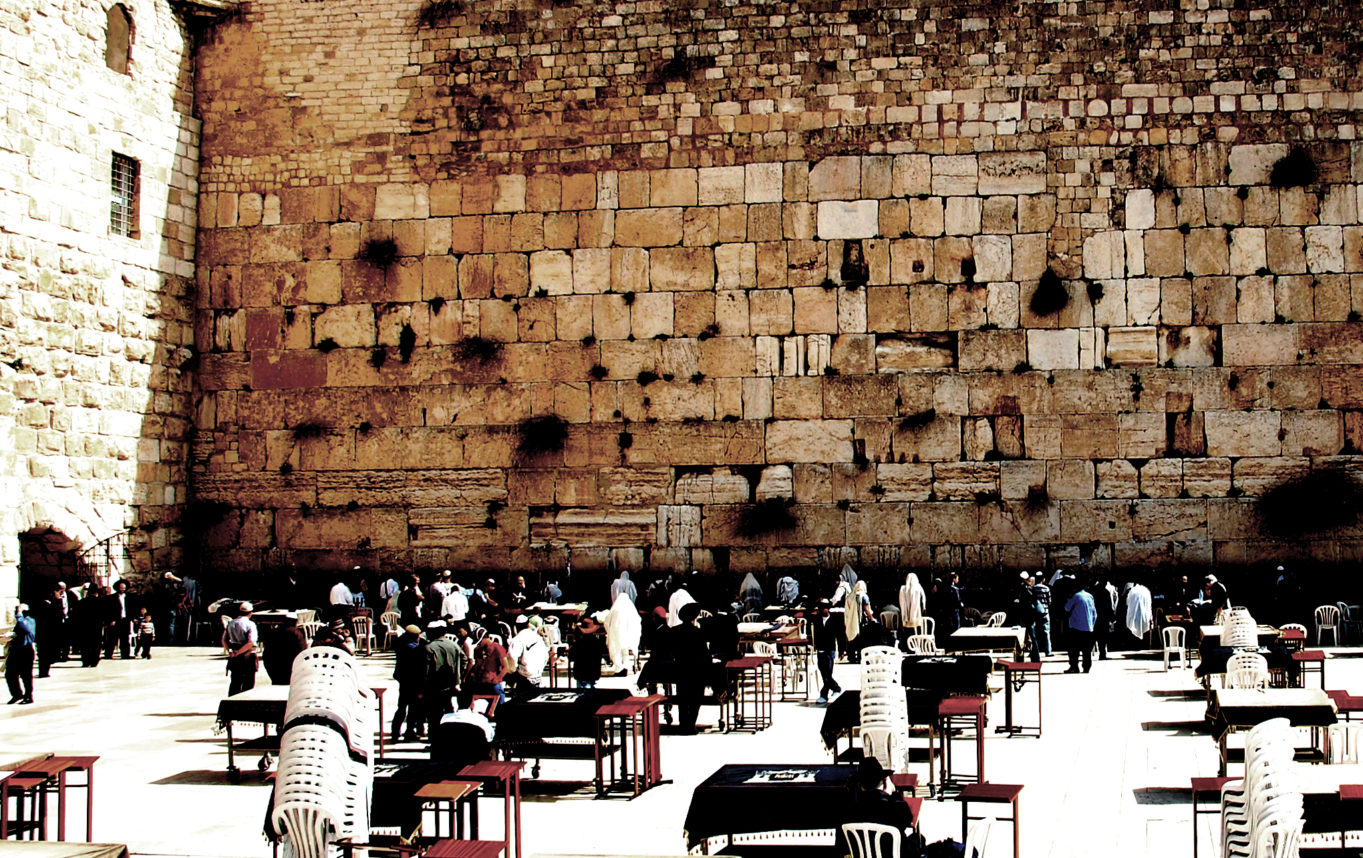
Photo of the Kotel by Peter Marcus

This week’s Los Angeles Jewish Journal printed my statement (below) on President Trump’s proclamation on Jerusalem as the capital of Israel.

I add my dismay and anger about the destructive and hostile rhetoric of Palestinian President Mahmoud Abbas that was delivered in the wake of Trump’s proclamation. Abbas was speaking to the Organization of Islamic Cooperation (OIC) and there he asked the international community to withdraw its recognition of the State of Israel. He added that the Jewish people has no historic claim to Jerusalem.

On its face, his statements are inflammatory and destructive. His claim that the Jewish people has no historic claim to Jerusalem is historically false. Though I can understand his frustration with the Trump message on Jerusalem, a statement avoided by every American President before Trump because they understood that such a statement ought to be considered only in final status negotiations between Israel and the Palestinian Authority. There is no excuse for Abbas’ defaulting hardline rejection of Israel’s national right to a homeland and a State in the land of Israel and to the lie that denies that Jews established Jerusalem as their capital city since the time of King David (1000 BCE).

What follows is my statement as it appears in this past week’s print edition of the Los Angeles Jewish Journal (Community Reacts to Jerusalem News – jewishjournal.com/cover_story/228595/community-reacts-jerusalem-news/)

“All Jews who love Israel recognize that Jerusalem is the capital of the the Jewish state. For me this has never been a question.

Our people’s yearning for international recognition of Jerusalem as Israel’s capital is as old as the state itself. Our yearning at last has been addressed by President Trump’s proclamation this week.

As satisfying as this is, there was something significantly missing in President Trump‘s address – recognition that Jerusalem is also the capital of a future Palestinian state. 

Had the President said that, world reaction would be magnanimous and I believe positive, and there would be less risk of violence against Jews, Americans, and Palestinians.

Now that Jerusalem has been so recognized, I would hope that the United States and Israel would be able to say publicly that East Jerusalem can one day be the capital of a Palestinian state in an end-of-conflict negotiated two state solution.

Only a two state solution can address the long term security needs of the State of Israel, preserve it’s Jewish character, and sustain its democratic system of government.

I hope that the needle has been moved in a positive direction as a consequence of President Trump‘s proclamation. I also hope that there is a secret strategic plan that the United States has developed to bring about a peaceful resolution of the Israeli-Palestinian conflict.

Both Israel and the Palestinians need to be prepared to make painful compromises in a negotiated settlement, and only the United States has the authority and power to help the two sides make peace.

I pray for the peace of Jerusalem.”


My Position on President Trump’s Position on Jerusalem and Reaction to Mahmoud Abbas’ Slander Read More »

Sunday Reads: Trump’s Hanukkah vs. Obama’s Hanukkah, Is it game over in Syria?

U.S.

Robert Malley and Stephen Pomper, two senior advisers to President Obama, find a recent NYT piece about the war on ISIS particularly troubling:

Those dead civilians that The New York Times found not to have been counted were not counted by the Obama administration. They were not counted by people who were intent on limiting civilian casualties and ensuring transparency. That those safeguards proved inadequate even in the hands of an administration that considered them a priority raises particularly vexing questions.

Derek Chollet believes Israel should be careful about associating itself with the Trump administration:

The danger is that being “pro-Israel” becomes a status confined only to Trump’s Republicans. Israel will not benefit from a relationship defined by partisanship, and it is foolish for Israeli leaders to fuel this, even if they are doing so unwittingly. Think of the next generation of Democratic political leaders, who will mainly remember the bitterness of the Obama era and stand against pretty much anything Trump is for. How will the Israeli government’s big bet on Trump look to them?

Israel

Shlomi Eldar writes about how Israel’s Education Ministry has been aligning itself with the right-wing ideology of minister Naftali Bennett:

Al-Monitor spoke with Aharon Barnea, a member of the Forum of Bereaved Families. His son Noam was killed in the battle for the Beaufort during the First Lebanon War (1982). He said that once the ministry learned that there was a commotion in the school over the cancellation, it claimed that it had not given the order to cancel the event. Barnea refuted the claim, saying that representatives of the parents were present in the principal’s office when she received the phone call from the ministry, and that while they were still there, the principal had called the district head to appeal the decision. Her supervisor told her that the activity was forbidden, and that she must cancel it. “There were teachers there who burst into tears,” said Barnea. “Two teachers even said that they were ashamed to be Israeli.”

Jerry Seinfeld talks about the difference between Israeli Jews and NY Jews and about how Israel inspired him at the beginning of his career:

Speaking to Hadashot news, Seinfeld said he he was not planning any special material for the Israeli crowd in his shows here. “It’s special for them, it’s special for me,” he said of his trip to Israel, noting that “Jews in Israel are not like New York Jews, they are not so whiny. Same dog, different breed.”

But he credited Israel with giving him the impetus to be a comedian, recounting how he spent the summer of 1970 on a kibbutz in northern Israel, cutting leaves in the banana fields.

Middle East

Hassan Hassan is not sure whether it is game over in Syria:

It is too early to tell whether this is game over in Syria. The gains for the regime over the past year are the most significant since the start of the conflict. Much of the fighting is paused throughout the country. The regime and its allies seem to have the upper hand on the political front too.

At the same time, the regime still has profound economic and military limitations. Much of the country is still out of its control, mostly under the influence of countries like Turkey and the US, and future scenarios will depend almost entirely on the choices made by the two countries, not those of the regime and its allies.

Steven Metz tries to figure out why Russia punches above its weight geopolitically: 

Nevertheless, even when Russia punches above its weight geopolitically for all these reasons, it is important to remember that Moscow’s impact is much like that of al-Qaida or the self-styled Islamic State: It can weaken vulnerable nations and society and undercut existing systems of order and authority, but it cannot create a viable alternative. The good news is that however much Russia draws from the Soviet Union’s playbook, it will never be able to build a world order centered on Moscow.

Jewish World

Emma Green talks to Rabbi Sharon Braus about politics in today’s synagogue:

I went to give a talk at a [synagogue] in the early spring, and I asked the rabbi in advance of the talk, ‘Are there any hot-button issues I should avoid?’ I don’t really go there to get them in trouble; I want to make sure I know where the community is. And he said, ‘You can talk about anything you want, but not politics.’ He said, ‘We have three Trump supporters in the community’—three, out of a community of 1800 families—‘and they will go ballistic.’ He was told, after the inauguration, not to say the word ‘Pharoah’ because it seems political, like an attack on Trump. Rabbis are being told, because there are three people who think that the most profoundly indecent candidate for president that we have ever seen, and the most unqualified, reckless, bigoted and indecent candidate has risen to power, that now we can’t speak Torah anymore because it might make people think we’re uncomfortable with that person and his values.

Eliora Katz discusses the difference between President Trump’s and President Obama’s Hanukkah speeches:

In the tale of two Hanukkahs who’s right? Is Trump making Hanukkah great again or is this a case of alternative facts? Is Hanukkah really a story of freedom as American as apple pie or as distinctly Jewish as a fried potato latke?


Sunday Reads: Trump’s Hanukkah vs. Obama’s Hanukkah, Is it game over in Syria? Read More »

5 Obvious Reasons Why Everyone Should Shop Online

If you look closely you’ll realize the high street is slowly changing. The number of traditional businesses seems to be dropping like flies unless they provide a service. It’s fair to say online shopping has taken over the world and it’s never going to change.

A few years ago it wasn’t the way we were headed. That all changed once people felt it was safe to hand over their credit card details to strangers. Now online sales are only increasing in numbers every year. Let’s look at some big reasons why it’s so popular.

1. It’s Very Easy To Find Great Deals


When you own a traditional store you need to pay for things like rent and electricity. Online stores only need an operational website and they’re in business. Even bigger companies will save a fortune.

Amazon has some of the best deals on the planet even though it has gigantic warehouses. ThinkUp is another shopping site where you’ll save money, because everyone is desperate to get customers by offering coupons.

2. There Are Much More Products Available


Can you imagine how big a store would have to be to stock every product imaginable? When you shop online you’ll have access to everything. Even if a brand has physical stores you’re better avoiding them.

Their website will carry a lot more inventory, which you might not find anywhere else. When you use the internet to buy products you’ll also be able to pick up gems from smaller companies unable to open stores.

3. Shopping Online Is Extremely Easy


Who wants to jump into their car and drive miles in order to buy something? Not only will you waste money on fuel, but you’ll ruin hours of your day too. It’s easier doing everything sitting in front of your computer.

You don’t even have to wait too long until your packages arrive at your door. It won’t be long before Amazon is making deliveries using drones. They’ll land close to your home with the help of a parachute.

4. It’s Perfect For Discreet Purchases


If you want to buy something discreetly it’s hard to do in a physical store. Even if you have the courage to walk through the door you might be embarrassed speaking to the cashier. It’s the complete opposite shopping online.

When you make purchases from your home nobody will know what you’ve bought. It gives you the power to buy almost anything. Companies are also known to deliver your products in boxes with no clues on them.

5. You Can Compare Prices In Seconds


We’ve already established it’s cheaper to buy products online, but it’s also easier to compare prices. If you were doing it the traditional way you’d need to spend hours walking into a multitude of stores.

You do things differently when you’re looking for the cheapest prices online. All you need to do is visit a price comparison website. You’ll know exactly where to go when searching for a specific product.

It’s Too Tempting To Buy Things Online


There are far too many benefits when it comes to buying products online. You’ve got to feel sorry for some of the companies with small offline stores. Giants like Amazon will eventually swallow them up.

5 Obvious Reasons Why Everyone Should Shop Online Read More »