Apple’s shiny new iPhone X is being delivered to early adopters this week. East Coast enthusiasts set their alarms to 3 a.m. local time on Oct. 27 to buy this magical new device promising to connect them to all the information in the world – for $999 and up.
Apple sold out its preorder stock within minutes.
It’s easy to be cynical about our obsession with the latest greatest technology. We are spending thousands of dollars on incremental upgrades, and there is no indication that our thirst for new tech devices ever will be quenched. Next year, Apple will release another new iPhone and everyone will want it all over again.
Why? Yes, it’s a shiny new toy, and we love shiny new toys. Perhaps Freud would say it’s one way of overcompensating for an unfulfilled youth. Or maybe needing a new phone is a modern form of hedonism. It’s possible that intense enthusiasm for new gadgetry is a symptom of the moral rot in our society. But is there something deeper about our insatiable yearning for a new iPhone? Does this yearning connect to a more sublime yearning in our souls?
Yes.
Our generation is the first to live in a world where addiction to information is possible. We are literate, and we can access nearly all the information known to man in the palm of our hand. Two generations ago, the idea that every person on the planet could easily connect to all the data in the observable universe was not even a dream. It was outside the realm of possibility. Literacy was a luxury and information was shared slowly in small bites instead of gigabytes.
The world is different now. We are overwhelmed by information overload. We can’t escape the deluge of data. Nothing is secret, and sometimes it feels like nothing is sacred. Information tantalizes us. Who is doing what? What is going on over there? When did that happen? How does this work? Who made that? Stolen pictures of that famous person? Celebrity gossip? Secret recordings? We need to know.
We are the first generation to lust after total knowledge.
That means, we are the first generation to understand the primordial story of Man. Adam and Eve lived in the Garden of Eden, where everything was available to them, save for the fruit of one tree, the Tree of Knowledge. Faster than Kramer lost “The Challenge” on Seinfeld, Adam and Eve succumbed to temptation and ate from the Tree of Knowledge.
The yearning we feel for knowledge is the same yearning that Adam and Eve could not resist. The rush we get when we imbibe in the endless sea of data is the rush that Adam and Eve wanted to feel. They wanted knowledge – all of it. Until very recently, this was not something humans could understand. It was impossible to truly unlock the meaning of this story. We could say the words, but we could never really get what it feels like to lust after knowledge. Today, we understand.
Unlike Adam and Eve, Apple is not our forbidden fruit. In the garden, Adam and Eve were given the chance to live a life without information. That life would have been a supercharged spirituality, but they we banished from the garden and the life of the garden was lost forever. Ever since that moment, the quest for knowledge beckons to us but knowledge is no longer forbidden.
For us, knowledge is power; power to choose, power to grow, power to live, power to build, power to love. The actual information is not forbidden, but the way we use information can be forbidden. When we use information the wrong way, we banish ourselves and others from our world.
Enjoy your new iPhone X and the all-access pass it grants you to the knowledge party. A bit of mindfulness about the soul of our information addiction, though, will help us use our knowledge to grow the Tree of Life.
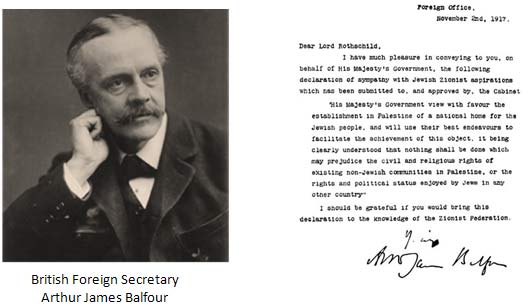
It has been 100 years since the Balfour Declaration – issued by the British government on Nov. 2, 1917 – offered the first international recognition of Jewish national aspirations. In many ways, its importance is obvious: it encouraged some 400,000 European Jews to emigrate to Palestine in the years 1917-1940, and made it possible to lay the groundwork for the State of Israel.
But there is another significance that has not been fully recognized among modern historians, even though it tells us more about the current obstacles to peace than any of the usual explanations. I am speaking of the politico-philosophical precedent set by the Balfour Declaration regarding national identity, land ownership, self determination and the notion of “indigenous people.”
On the surface, the declaration’s text touches on none of these issues. Known as “history’s most famous letter,” this 67-word text actually reads like a holiday greeting card: “His Majesty’s Government view with favour the establishment in Palestine of a national home for the Jewish people, and will use their best endeavors to facilitate the achievement of this object, it being clearly understood that nothing shall be done which may prejudice that civil and religious rights of existing non-Jewish communities in Palestine, or the rights and political status enjoyed by Jews in any other country.”
A close examination, however, reveals two asymmetries which, by today’s standards, would probably evoke bitter objections. First, the words “people” and “national” are attached to Jews, not to the non-Jewish inhabitants of Palestine, who are referred to as “communities.” Second, the non-Jewish communities are assured “civil and religious” rights, not national rights, let alone a “national home.”
This asymmetry is probably what infuriated Columbia professor Rashid Khalidi who, in an emotional lecture on Sept. 25 this year, reportedly pounded the table and blasted the Balfour Declaration as “a declaration of war by the British Empire on the indigenous population of the land it was promising to the Jewish people.”
Khalidi’s outrage at former British Prime Minister Arthur Balfour and his Declaration is hardly justified. First, the idea that the Arab population of Palestine harbors national aspiration would have been news to Balfour, just as it would have been to any political observer in 1917. Khalidi admits as much in his book, “The Iron Cage,” in which he labors to explain why Arabs did not develop a ripe sense of national identity until the late 1920s, when it was too late to “crush the Zionist Movement.”
Second, the Balfour Declaration did not preclude the creation of a “national home” for other national groups in the region, side by side with the Jewish polity. Ottoman Palestine, as we recall, embraced a huge territory which included Jordan and parts of Syria. Various partitions and coexisting constellations were proposed in the course of time, most notably by the Peel Commission of 1937 and by the United Nations in 1947. While Khalidi’s book never mentions these proposals as options, and we understand why, it was in effect the Balfour Declaration that opened these opportunities for Palestinian statehood.
Third – and this is critical – the concept of “indigenous population” has undergone a profound transformation since 1917, which Palestinian society refuses to accept to this day. By championing the Jewish plight for a homeland, the Balfour Declaration made it absolutely clear that there are other claimants to the title “indigenous population of the land” and that the arguments of those other claimants are no less defensible and no less supported by hard evidence and trust deeds.
The Balfour Declaration overturned the narrow conception of “indigenous people” as a group of tribes or families who happened to own land in a particular geographic location and pass it to their heirs over a number of generations. By focusing on the Jewish narrative, the declaration broadened the concept of indigeneity to include peoples who have maintained vivid collective memories of past civilizations and who shaped their identity through dreams of returning to the cradles of those civilizations.
This shift in the definition of indigineity was only implicit in the 67-word declaration. It was made explicit two years later, however, in Balfour’s introduction to Nachum Sokolow’s book, “History of Zionism, 1600-1919. ”
“The position of the Jews is unique,” Balfour wrote. “For them race, religion and country are inter-related, as they are inter-related in the case of no other race, no other religion, and no other country on earth. … In the case of no other religion is its past development so intimately bound up with the long political history of a petty territory wedged in between States more powerful far than it could ever be; in the case of no other religion are its aspirations and hopes expressed in language and imagery so utterly dependent for their meaning on the conviction that only from this one land, only through this one history, only by this one people, is full religious knowledge to spread through all the world.”
A man of wisdom and character, Balfour considered himself primarily a philosopher, not a historian or a statesman. It is amazing how this multifaceted individual managed to take time off his duties as Britain’s Foreign Secretary and study carefully the role that the Land of Israel had played in Jewish life through the ages. He captured this essence better than some of our most revered history professors, for whom Zionism is a 19th century invention that started with Theodor Herzl in 1896 and ended with the Six-Day War of 1967.
Balfour understood that Eretz Israel is an inextricable part of Jewish identity. Accordingly, he also understood that indigeneity is based on intellectual attachment and historical continuity no less than on physical presence or genetic lineage.
In 2014, when peace negotiations seemed somewhat hopeful, Palestinian chief negotiator, Saeb Erekat was reported in The New York Times as saying: “the Palestinians could never accede to Israel’s demand that they recognize it as the nation-state of the Jewish people. … I cannot change my narrative.” A few months later, when pressed to explain what narrative defines his position Erekat told the Times of Israel: “I am the proud son of the Netufians and the Canaanites. I’ve been there for 5,500 years before Joshua. ”
On this centennial celebration of the Balfour Declaration it is worth reminding Erekat and Khalidi that the declaration’s most profound imprint on the world’s conciousness has been a universal understanding that the essence of indigineity is cultural and intellectual, not genetic or geographical.
Palestinian resistance to accepting their neighbors as equally indigenous to the region has been so obsessive and so counter-productive that it begs to be enlivened through a hypothetical scenario, however imaginary. I can’t resist imagining Balfour attending Khalidi’s lecture at Columbia, raising his hand and asking politely:
“Professor Khalidi, can you name a Canaanite figure that you are proud of? A Canaanite poem that you enjoy reciting? A Canaanite holiday that you celebrate? A Canaanite leader who is a role model to your children?
Replace the word “Canaanite” with “biblical” and you will find four questions that every Israeli child can answer half asleep.
There is merit and wisdom in hypothetical scenarios. In this case, I would hope it could mitigate the Palestinian claim to exclusive ownership of the title “indigenous people” and, God-willing, usher a genuine reconciliation effort based on mutual recognition and shared indigeneity.
JUDEA PEARL is Chancellor’s Professor of Computer Science and Statistics at UCLA and president of the Daniel Pearl Foundation.
Many in the civil rights community have warned of the corrosive effects of President Trump’s attitude towards minorities and extremists from the day he announced his candidacy. His comments at his announcement, during his campaign regarding Mexicans, Muslims, African Americans, and, occasionally, Jews are now stuff of legend. He has continued in his incendiary musings during his tenure as president; he clearly holds stereotypic views of those who aren’t just like him.
But as insidious as his remarks are, even more troubling is his reluctance, or his inability, to relegate extremists (those who blatantly purvey hate and bigotry—not just dog whistles) to the periphery of American politics–as all his predecessors of the past century have done. He meets with them, he grants them interviews, and he ignores their toxic views to focus on those that align with his.
Instead of rejecting bigots out-of-hand, he has flaunted all the norms of political discourse and debate by using the very methodologies of those bigots. He traffics in bizarre conspiracy theories, he blithely ignores data, he bullies, attacks and demeans, he threatens, he blatantly lies with demonstrably false assertions on numerous issues, he claims to be the victim of a perpetual witch-hunt with a designated culprit[s] (other than himself) who is/are always to blame for what goes wrong.
Is it any wonder then that his brand of thinking has become more common, that extremists are being normalized and accepted, that bizarre—hitherto ostracized— views are now offered as an acceptable part of political discourse? The ripple effects of a sloppy thinker like Trump are only beginning to impact us.
This week, Moscow’s man in the House of Representatives, Republican congressman Dana Rohrabacher of Orange County, made clear that he has no qualms about consorting with a Holocaust denier.
After it was revealed that he took “conservative journalist” Charles C. Johnson [who has claimed that during the Holocaust around 250,000 Jews were killed in concentration camps and that the existence of gas chambers is questionable] to a meeting with Sen. Rand Paul, Rohrabacher found nothing amiss. He blithely asserted that “I welcome his support on those issues of agreement and oppose those ideas on which we disagree.”
Apparently, Holocaust deniers, bigots and extremists are acceptable if they endorse other issues that Rohrabacher supports.
He doesn’t get that Holocaust denial, and hate more broadly, are not isolated imperfections. The thinking that denies the most well documented crime in history, which blames minorities for society’s ills reflects a distorted and bizarre mind and an absence of reason and logic—it’s not a blip on an otherwise clear screen of sanity. Who would want the support of a bigot such as that?
That an American elected official in 2017 doesn’t feel compelled to ostracize and separate himself from a manifest extremist is an indicator of what is transpiring more widely.
This week the Anti-Defamation League reported a 67% increase in anti-Semitic incidents in the US through the third quarter of 2017 as compared to 2016. Not surprisingly, of the 1,266 incidents some 221 occurred on or near the August 11 rally in Charlottesville—the event that Trump had such ambivalence in condemning (recall, he thought a bunch of regular folks were marching with torches and Nazi chants).
What Trump clearly doesn’t get is that political extremists are different than mainstream politicians on both the left and the right. For decades, civil rights organizations and good people have endeavored to ostracize and relegate to the fringes of society extremists who violate a set of unwritten rules on public conduct and decency.
From the John Birchers and their flirting with anti-Semitism in the 60s to George Wallace in the 70s to Louis Farrakhan more recently (see my op/ed of 9/17/1985 in the Times) to David Duke and Louisiana politic–policies or comments that flirted with bigotry and stereotypes, even if made in passing, were enough to derail careers, elicit presidential condemnations and generate near universal abhorrence. It was clear to most leaders that overt expressions of bigotry and stereotypes were not acceptable vocabulary of late 20th century America and those who purveyed them were deservedly isolated and shunned.
But we now have a president who not only doesn’t understand what extremism is (except for the easy to discern Islamic version), he inspires others to follow his myopic lead; to wink at hate and sanitize the hater because “he agrees with me on other significant issues.”
The reality is that the hater wins, his bigotry ends up tainting everyone who consorts with him; the rationalizers become aiders and abettors of prejudice and their own words and deeds become suspect.
Trump can’t be stalwart and uncompromising in condemning radical Islamic terrorism and its brand of hate while being timid and apologetic regarding other versions of bigotry. It’s morally and politically dishonest and corrupting.
As Sen. John McCain said in his speech to midshipmen at the Naval Academy earlier this week,
We have to fight against propaganda and crackpot conspiracy theories. We have to fight isolationism, protectionism, and nativism. We have to defeat those who would worsen our divisions. We have to remind our sons and daughters that we became the most powerful nation on earth by tearing down walls, not building them.
The Union for Reform Judaism (URJ) announced on Friday that URJ Camp Newman will be hosting its summer 2018 camp will be held at California State University Maritime University (Cal State Maritime) after most of the camp was destroyed in the October wildfires.
The summer 2018 camp will be called “Newman by the Bay!”, where campers can enjoy the various amenities on campus, including large athletic fields, an Olympic size pool and a Beach Volleyball court, according to a press release.
Abby Michelson Porth, executive director of the Jewish Community Relations Council (JCRC), said that “everything fell into place when we connected with Cal Maritime.”
“When the need became clear, Rabbi Doug Kahn and I quickly reached out to university presidents and nonprofit CEOs whose response was extraordinary and overwhelming,” said Porth. “They were eager to partner with JCRC to help Camp Newman maintain its summer programs, understanding how critical those programs are for thousands of Jewish children. “
Camp Newman’s executive director, Ruben Arquilevich, said in the press release, “We can’t wait to welcome returning campers and new campers for the immersive, overnight, Jewish summer camp experience they’ve come to expect at Camp Newman, but at Cal Maritime’s beautifully scenic campus overlooking the bay, where we’ll be able to take advantage of exciting new facilities and activities.”
A promotional video for the 2018 camp can be seen here:
The Camp Newman premises were located in Santa Rosa until most of the site was decimated from the wildfires plaguing Northern California at the beginning of October. No one at the camp was hurt and the Torah scrolls were preserved.
There are enough unforgettable stories about David — the biblical poet, warrior and king — to fill several seasons of “Game of Thrones.” The story of David and Goliath even was referenced during a recent World Series broadcast. But what about the narratives that unfold with the likes of Bathsheba, Amnon, the Witch of Endor, Michal, Saul and Jonathan, too?
Selected strands of David’s wide-ranging story have been musically woven into “David’s Quilt,” an oratorio in 18 episodes by 15 Los Angeles-based composers, which premieres Nov. 5 at Stephen Wise Temple in Bel Air.
The project, begun two years ago by Valley Beth Shalom Cantor Phil Baron, found its way to UCLA music professor Mark Kligman, who helped shepherd it to completion. Now the free concert (reservations required) will kick off a two-day UCLA conference on Nov. 6-7, “American Culture and the Jewish Experience in Music,” which explores the ways European-Jewish sensibilities responded to American opportunity, transforming both cultures.
“We need to see Jewish music as a living entity.” – Mark Kligman
“Premiering a work like ‘David’s Quilt’ anchors our conference in the creative environment of Los Angeles,” said Kligman, who holds the Mickey Katz Chair in Jewish Music at UCLA. “It’s also a wonderful opportunity to create new music. We need to see Jewish music as a living entity, not just something in the past.”
For Baron, the biblical David’s flaws and inconsistencies make him one of the most approachable of the Bible’s heroes — and perfect for such an ambitious musical treatment.
“David is humanized through his imperfections,” Baron said. “He’s so much more than the stories of David and Goliath or Bathsheba. With the exception of Moses, there’s never been a character quite so large in our tradition.”
Baron said the styles of music in the piece vary widely. “We told the composers to write in the style of you, and that worked,” he said.
Like the oratorio, the two-day conference presents a quilt-like variety of topics and voices. On Nov. 6, David Lefkowitz, UCLA professor of composition, will lead a discussion “Jews and the L.A. Music Industry.” Another session delves into the extraordinary Milken Archive of Jewish Music with “Discovering a World of American Jewish Music,” a talk by the archive’s curator, Jeff Janeczko.
Subsequent sessions feature Judah Cohen of Indiana University looking at singing societies and choral music in the 19th-century American synagogue. Cohen also will lead a distinguished panel of scholars speaking on the significance and afterlife of the musical “Fiddler on the Roof.”
Professor Daniel Goldmark of Case Western Reserve University in Cleveland will explore what Jewish music sounded like in early 20th-century media. In another session, Goldmark will tackle the legacy of “The Jazz Singer,” the 1927 film about a cantor’s son who makes it big on Broadway, with a presentation looking at the notable films, cartoons and television shows inspired by the popular film.
“American pop culture is still drawing on the same basic musical palette of themes established in the 1910s and ’20s, themes for Native Americans, Jews, for most ethnicities,” Goldmark said.
The conference concludes on Nov. 7 with a re-creation of an April 24, 1945, chamber concert organized by musicologist Anneliese Landau at the Wilshire Ebell Theatre. Works by Jewish émigré composers in L.A. — including Ernst Toch, Arnold Schoenberg and Louis Gruenberg — will be performed by UCLA music students at Royce Hall, with commentary by musicologist Lily Hirsch, who is completing a biography of Landau, who died in 1991.
“The 1945 concert was an incredibly political concert,” Hirsch said. “[Landau] was a champion of contemporary music with a keen sense of justice. To her, these composers deserved a platform. Re-creating the concert is important because it focuses attention on this remarkable woman and the history of musical politics in the United States.”
UCLA’s Kligman, who also directs the Lowell Milken Fund for American Jewish Music, said the conference is intended as “a comfortable hybrid of accessible and academic,” designed to inform and enlighten both the public and the UCLA community. Although the conference covers a lot of ground, Kligman said there’s no one answer as to what American-Jewish music is.
“Jewish music in America has yet to become a discipline,” he said. “It’s many different kinds of things, redefined and used in different ways. It’s an exciting arena.”
A few days ago, someone said to me “Oh, you’re a hospital chaplain,” and before I could respond, followed up with “So you go around and visit patients.”
The easiest answer was “Yes.”
I visit patients of all sorts and in all sorts of circumstances. Some are happily going home with a new baby or a new knee. Others are recovering from a surgery, have a newborn in the NICU or have survived a stroke or a cardiac event. Others are undergoing chemotherapy or are testing in hopes of discovering the cause of their illness. Still others are leaving the hospital and transitioning to rehab facilities or going home to the reality of a life-changing, life-limiting or life-ending diagnosis.
But I don’t just visit patients. In addition to providing spiritual care and advocacy to patients, I provide spiritual care to patients’ families and friends and caregivers and to the hospital staff. And because I am also an experienced hospice chaplain and a certified palliative care chaplain, my workdays often involve end-of-life decision making and death.
As a Clinical Pastoral Education-trained chaplain, I am prepared to serve patients and families of any faith tradition or none. As the hospital’s Visiting Rabbi, I am always assigned to spiritual care for the hospital’s Jewish population. In some instances, I work with patients and families over a period of months—even years. Or, as happened this week, my first meeting with a patient and family comes at the time of death. And sometimes, as in this case, facing death often prompts someone who has previously declined chaplaincy visits to open to spiritual care.
After more than a month in the ICU, there were no further treatment options for Ruth. I had been contacted by the palliative care team ten minutes earlier, notifying me that Ruth would be soon placed on comfort care. Her sister had asked for me to be present.
“She’s had a horrible life, a terrible life since she was a teenager,” Ruth’s sister Rachel told me. “Now, I want her to have peace.”
Nine years younger than Ruth, and her power of attorney, Rachel was both broken-hearted and resolute about her decision to place Ruth on comfort care. Rachel is an RN and she was deeply involved in Ruth’s care. Rachel had steadfastly believed that Ruth would recover from some of the medical issues that had eroded her health and she had refused any spiritual care visits for her sister, fearing that Ruth would “give up hope” if a chaplain visited. Now, Rachel, her sister-in-law and her best friend and I sat together and Rachel shared her sister’s story.
Ruth, a social worker, was 57 years old. Her 72 year old husband lives in a facility for dementia patients; he is non-verbal and needs round-the-clock care. They had no children. For the last 8 years, since her husband had been moved to a facility where he can receive the care he needs, Ruth had lived with her beloved dog. When her dog died, she adopted a second beloved dog and her greatest worry, Rachel told us, was what would happen to her dog.
She cared more about her dog than she did about herself, Rachel said. Ruth drank too much. She gained an unhealthy amount of weight. She wouldn’t exercise. She worked too many hours and suffered from insomnia and didn’t get the medical care that she should. She had few friends and didn’t socialize. She was not connected to a Jewish community or any community.
Ruth mourned the loss of their brothers, both of whom had died, years apart, one as a child, one as a young adult, both on her birthday. She mourned the death of her parents. She mourned her husband, lost to early-onset Alzheimers.
Rachel said that Ruth acknowledged her depression but didn’t want treatment. Ruth had told Rachel months ago that she had had enough; she was ready to die. Ruth had been her babysitter when Rachel was a child and her lifelong friend and confidante. Ruth and Rachel were the last living members of their birth family, and Rachel shared her deep hurt that Ruth did not want to live, that she wanted to leave her.
In the hour that we spent together, the last hour of Ruth’s life, we engaged in life review, talked about grief and loss and about beautiful, sustaining memories. I chanted for Ruth and Rachel, and recited the Viddui and the Shema, We blessed Ruth for a gentle, peaceful transition. Rachel told Ruth how much she loves her, thanked her for the lifetime of loving care that Ruth had given her, and told her that wanted no more pain for her.
A couple of hours later, after Rachel and the others had left, after I had sat with Ruth’s body until it had been picked by by the mortuary transport, after I completed charting the visit, after I prayed and washed my hands, and stepped outside for a few moments of air, I reentered the hospital and went to another room to visit another patient.
Rabbi Janet Madden PhD was ordained by The Academy for Jewish Religion-California. She serves as the rabbi of Temple Havurat Emet and Providence Saint John’s Health Center and has been a student of the Gamliel Institute. She is a regular contributor to Expired And Inspired.
Rabbi Janet Madden
___________
GAMLIEL INSTITUTE COURSES
LOOKING FORWARD: UPCOMING COURSE
The Gamliel Institute will be offering course 5, Chevrah Kadisha: Ritual, Liturgy, & Practice (Other than Taharah & Shmirah), online, afternoons/evenings, in the Winter semester, starting January 9th, 2018. This is the core course focusing on ritual, liturgy, practical matters, how-to, and what it means (for everything other than Taharah and Shmirah, which are covered in course 2).
CLASS SESSIONS
The course will meet online for twelve Tuesdays (the day will be adjusted in any weeks with Jewish holidays during this course).
There will be an orientation session January 2nd.
Information on attending the online orientation and the course will be announced and sent to those registered. Register or contact us for more information. Detailed information on the preview will appear here in the weeks leading up to that event.
REGISTRATION
You can register for any Gamliel Institute course online at jewish-funerals.org/gamreg. A full description of all of the courses is found there.
Gamliel Students are invited to an informal online monthly session, held on the 3rd Wednedsays of the month (but watch for any changes). Each month, a different person will offer a short teaching or share some thoughts on a topic of interest to them, and those who are online will have a chance to respond, share their own stories and information, and build our Gamliel Institute community connections. This initiative is being headed up by Rena Boroditsky and Rick Light. You should receive email reminders monthly. The next scheduled session of the Gamliel Café is November 15th with a discussion of creative liturgy by Jean Berman.
Graduates of the Gamliel Institute and Gamliel students should be on the lookout for information on a series of “Gamliel Graduate’ Courses, advanced sessions focusing in on different topics. These will be in groups of three sessions each quarter (three consecutive weeks), with different topics addressed in each series. The goal is to look at these topics in more depth than possible during the core courses. The first course took place in Fall 2017, focusing on Psalms. The next course will be in April, and will look at death as seen in the Zohar. Registration is required, and there will be a tuition charge of $72 for the three sessions. Contact us – register at www.jewish-funerals.org/gamreg/, email info@jewish-funerals.org, or call 410-733-3700.
_____________________
DONATIONS
Donations are always needed and most welcome to support the work of Kavod v’Nichum and the Gamliel Institute, helping us to bring you the annual conference, offer community trainings, provide scholarships to students, refurbish and update course materials, expand our teaching, support programs such as Taste of Gamliel, the Gamliel Café, and the Gamliel Continuing Education courses, provide and add to online resources, encourage and support communities in establishing, training, and improving their Chevrah Kadisha, and assist with many other programs and activities.
You can donate online at http://jewish-funerals.org/gamliel-institute-financial-support or by snail mail to: either Kavod v’Nichum, or to The Gamliel Institute, both c/o David Zinner, Executive Director, Kavod v’Nichum, 8112 Sea Water Path, Columbia, MD 21045. Kavod v’Nichum [and the Gamliel Institute] is a recognized and registered 501(c)(3) organization, and donations may be tax-deductible to the full extent provided by law. Call 410-733-3700 if you have any questions or want to know more about supporting Kavod v’Nichum or the Gamliel Institute.
If you would like to receive the periodic Kavod v’Nichum Newsletter by email, or be added to the Kavod v’Nichum Chevrah Kadisha & Jewish Cemetery email discussion list, please be in touch and let us know at info@jewish-funerals.org.
Be sure to check out the Kavod V’Nichum website at www.jewish-funerals.org, and for information on the Gamliel Institute, courses planned, and student work in this field also visit the Gamliel.Institute website.
If you have an idea for an entry you would like to submit to this blog, please be in touch. Email J.blair@jewish-funerals.org. We are always interested in original unpublished materials that would be of interest to our readers, relating to the broad topics surrounding the continuum of Jewish preparation, planning, rituals, rites, customs, practices, activities, and celebrations approaching the end of life, at the time of death, during the funeral, in the grief and mourning process, and in comforting those dying and those mourning, as well as the actions and work of those who address those needs, including those serving in Bikkur Cholim, Caring Committees, the Chevrah Kadisha, as Shomrim, funeral providers, in funeral homes and mortuaries, and operators and maintainers of cemeteries.
After community activists alleged a continuing education class for Los Angeles public school teachers was biased against Israel, a Los Angeles Unified School District (LAUSD) official has contradicted them, reporting the class free of bias.
“My staff did not observe evidence of the concerns raised about the course,” Acting Superintendent Vivian Ekchian wrote in a letter to the school board.
Complaints about the two-day teachers course reached board members after Linda Cone, a retired schoolteacher from Orange County, attended the first session of “Learning About Islam and the Arab World” on Oct. 14.
She shared the course material with Jack Saltzberg, who runs the Israel Group, a nonprofit in Westlake Village that claims to defend Israel against attacks on its reputation. Saltzberg then wrote to the LAUSD board, claiming the course presented a one-sided view of the Israeli-Palestinian conflict, and shared his letter with thousands of his email subscribers.
LAUSD dispatched an observer to the second session of the course on Oct. 21. There, the observer found “diverse viewpoints were encouraged,” Ekchian wrote on Oct. 25.
Ekchian wrote the observer found that the course presenters “provided multiple sources to help participants formulate their own opinions” and “respectfully responded to two non-District individuals who repeatedly challenged the presenters,” one of whom was Cone.
Responding to Ekchian’s statements, Saltzberg said in an email, “Unfortunately, I am not at liberty to discuss any of these self-serving characterizations in light of anticipated litigation.”
He added that he is awaiting responses to California Public Records Act requests from LAUSD for documents related to the course and the Orange County Board of Education for documents about a similar course held Oct. 4 and Oct. 25 for public school teachers in Orange County.
Cone also took issue with Ekchian’s characterization, saying course materials were biased and participants were discouraged from challenging presenters. Cone said she attended both sessions of the LAUSD course along with another self-appointed observer, after learning about the Orange County course and attending the first session. She said both women are activists with ACT for America, an organization that describes itself on its website as a grass-roots network of national security activists, but which the Anti-Defamation League and the Southern Poverty Law Center label as an anti-Islam group.
Cone said in an interview that at the first session of the LAUSD workshop, participants were told that the term jihad, often applied to terrorist ideologies, in fact referred to internal religious struggle, and that any other definition is “a lie, a mistranslation, a misrepresentation.”
On the second day, the course shifted to discuss the Israeli-Palestinian conflict, she said. She described the materials and discussion as skewed toward a pro-Palestinian narrative.
“We are being told that the Palestinians are the victims and the Jews are the oppressors, categorically and totally,” she said of the course. “And we are being told that Hamas” — the political entity that controls the Gaza Strip — “is not a terrorist group; Hamas is a noble entity defending the rights of Palestinians.”
“When looking at a posted syllabus, I wasn’t convinced that the allegations were without merit.” – LAUD board member Nick Melvoin
A course primer that Cone shared with Saltzberg described Hamas as a “national liberation organization” and speculated that missile attacks on Israel hope “to send a message to the governments of the world that have not responded to Israel’s ongoing inhuman and illegal treatment of the Gazans.”
Jeff Cooper, the lead instructor on the course, declined to comment on Cone’s allegations.
After LAUSD received complaints prompted by Saltzberg’s emails, board member Nick Melvoin, who is Jewish and whose district includes parts of West L.A. and the San Fernando Valley, responded by saying he would seek a review of the district’s approval process for continuing education courses.
“While the District staff ‘did not observe evidence of the concerns raised about the course,’ I nevertheless insisted that we no longer continue the course until we can re-evaluate the course’s objectives, instructors, and materials,” he said in a statement posted to Facebook on Oct. 26. “When looking at a posted syllabus, I wasn’t convinced that the allegations of bias were without merit.”
The course is due for reapproval in 2018.
Ekchian concluded in her letter to the board, “L.A. Unified stands resolute in its dedication to diversity and respect for students and families from all backgrounds. I will keep you apprised of updates.”
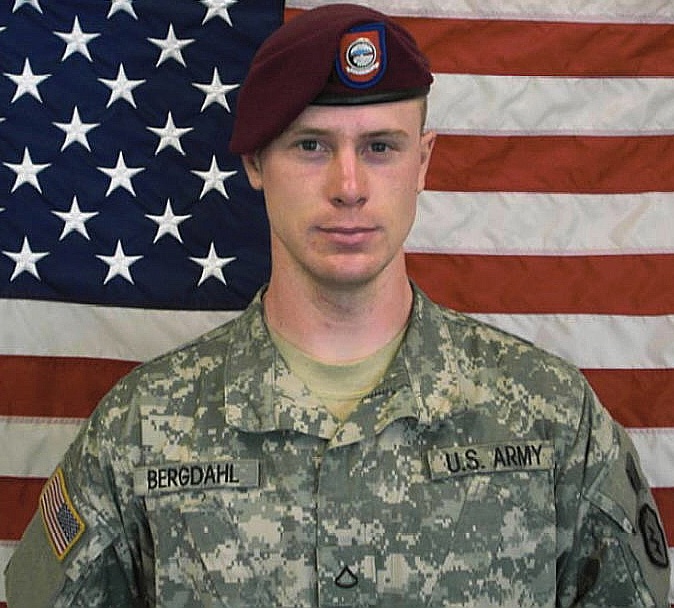
A military judge ruled on Friday that Army Sgt. Bowe Bergdahl will not be facing any prison time after pleading guilty to desertion and misbehavior before the enemy.
The judge, Army Col. Jeffrey Nance, instead slapped Bergdahl with a dishonorable discharge, a demotion to private ranking and revoked Bergdahl’s military benefits. Nance reportedly issued his ruling without much elaboration.
Bergdahl was held in captivity by the Taliban for five years after walking off from his post in Afghanistan. He had reportedly grown disillusioned with the war, telling his parents in an email, “These people need help, yet what they get is the most conceited country in the world telling them that they are nothing and that they are stupid.” Bergdahl later said he left his post in order to raise awareness of concerns he had about the Army leaders.
Nathan Bradley Bethea, who served in the same battalion as Bergdahl, wrote in the Daily Beast in June 2014 that six members in his battalion died during the search for Bergdahl. According to Military.com, three other military members are permanently damaged as a result of the search for Bergdahl, including Army National Guard Master Sgt. Mark Allen, who was shot in the head and is currently confined to a wheelchair and unable to speak as a result of the injury.
Bergdahl returned to the United States in the summer of 2014 after the Obama administration agreed to free five prisoners from Guatanamo Bay in exchange for Bergdahl’s freedom. The administration claimed that it was a necessary deal due to Bergdahl’s deteriorating health.
Bergdahl claimed that the Taliban held him in a cage, where they tortured him by repeatedly cutting his chest with a razor. And yet, he told The Sunday Times that he appreciated the Taliban’s honesty about their intentions over the court proceedings he had to endure.
“Here, it could be the guy I pass in the corridor who’s going to sign the paper that sends me away for life,’’ said Bergdahl, referring to U.S. courts. “We may as well go back to kangaroo courts and lynch mobs.”
Bergdahl’s defense team claimed that Bergdahl suffered from a myriad of mental health problems, a claim that has been disputed by some Army doctors. The defense also claimed that a dishonorable discharge was a worthy punishment after enduring five years of harsh treatment from the Taliban. Some witnesses also testified that Bergdahl’s experience in the Taliban’s captivity provided a treasure trove of intelligence information.
On Monday, Nance stated that Trump’s comments about Bergdahl being a “dirty, rotten traitor” would be considered “as mitigation evidence as I arrive at an appropriate sentence.”
I like CNN. Especially its coverage of international affairs has been providing audiences around the globe with much needed information in order to clearly understand what is going on in our globe today.
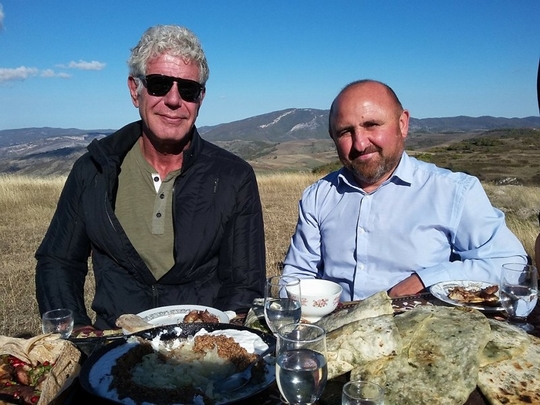
Last week however I was appalled and deeply disappointed to see Anthony Bourdain, one of my favorite celebrity chefs, drink vodka and eat pilaf in Shusha, the ancient capital of Azerbaijan’s Karabakh region. So you may ask what is wrong for a celebrity chef to drink, eat and get familiarized with foreign cuisines? After all it is his profession. The problem is that the region of Karabakh Mr. Bourdain has illegally visited is currently occupied by Armenia and has been made totally Azerbaijani-free since over 25 years. The very city of Shusha he visited had 100% Azerbaijani population before its invasion in 1992. All of those Azerbaijanis were either killed or expelled when the Armenian army invaded the city. Such a high profile visit to an occupied and ethnically cleansed region gives an incredible PR opportunity to those who committed these crimes to whitewash them. I think any self-respecting reporter and TV station should be mindful of such grave implications.
As a survivor of the Khojaly massacre that was committed against Azerbaijani civilians by Armenia in 1992 in the town of Khojaly, not far from Shusha that Mr Bourdain visited, and as someone who underwent terrible tortures in the Armenian captivity as a 20 year old girl, I was asked by other women survivors of Khojaly to bring their open letter to the attention of CNN and Mr Bourdain personally. I hope this letter will lead CNN and its celebrity chef to be henceforth more attentive to the plight of over 1 million Azerbaijani refugees – victims of illegal occupation and pure ethnic cleansing. Here is the letter:
“Dear Mr. Bourdain, We are writing to you as mothers, sisters and daughters, who survived one of the most horrific war crimes of the 20th century, the destruction of the town of Khojaly in Azerbaijan. War crimes, ethnic cleansing, indiscriminate violence against civilians have been an integral part of the ongoing aggression of Armenia against the Republic of Azerbaijan. During the active phase of the war in 1991-94, the attack on the town of Khojaly was especially brutal and tragic. Before the conflict, we, survivors of this massacre, and other 7,000 people lived peacefully in Khojaly in the Nagorno-Karabakh region of Azerbaijan. From October 1991, the town was entirely surrounded by the armed forces of Armenia. In the early hours of February 26, 1992, following massive artillery bombardment of Khojaly, the assault was launched from various directions. As a result, the Armenian armed forces, with the help of the motorized infantry regiment No. 366 of the former Soviet Army still stationed in the area, seized Khojaly. Invaders destroyed Khojaly with special brutality and completely exterminated its civilian population. Atrocities by Armenian troops included scalping, beheading, bayoneting of pregnant women and mutilation of bodies. Even children were not spared. As a result, 613 civilians were killed, including 106 women, 63 children and 70 elderly. Another 1,000 people were wounded and 1,275 taken hostage. To this day, 150 people from Khojaly remain missing. The intentional slaughter of the civilians in Khojaly town was directed at their mass extermination based on racial discrimination. In a cynical admission of culpability, Armenia’s then-Defense Minister and current President, Serzh Sargsyan, was quoted by the British journalist Thomas de Waal, as saying, “[b]efore Khojali, the Azerbaijanis thought that … the Armenians were people who could not raise their hand against the civilian population. We were able to break that [stereotype]” (Thomas de Waal, Black Garden: Armenia and Azerbaijan through Peace and War (New York and London, New York University Press, 2003), p. 172)). Indeed, Khojaly was chosen as a stage for further occupation and ethnic cleansing of Azerbaijani territories. As a result of war unleashed by Armenia against Azerbaijan, some 20 percent of Azerbaijan’s internationally recognized territory is currently occupied. In violation of international humanitarian law, Armenia carried out ethnic cleansing policy against almost one million Azerbaijani civilians in the occupied territories of Azerbaijan and in Armenia itself. It left Azerbaijan with one of the largest internally displaced population per capita in the world. Mr. Bourdain, We do respect your professionalism and your programs about international cuisine. In the times of peace, such culinary exchanges bring peoples together. But in the context of ongoing war and brutality, such a cultural program sends an unintended message of endorsing the ethnic cleansing and annexation by force to victims of war crimes, like ourselves, who have lost their loved ones and native homes. Please also understand that we are even deprived from the opportunity to visit graveyards of our parents and loved ones left in the occupied territories. For over 25 years, we live with the hope of returning to our native lands, rebuilding our homes and making traditional Azerbaijani shila pilaf for our children, like the dish you have been served in destroyed and depopulated Azerbaijani town of Shusha. Admittedly, your visit to the occupied territories of Azerbaijan on a military helicopter and preparations to make culinary show right next to Khojaly, where crime against humanity committed, have seriously disappointed us and added insult to our injuries. We would like to believe that you have been misled about the realities on the ground and your visit to the occupied territories of Azerbaijan was not intentional. After all, it is hard to imagine you enjoying German food at the site of a Nazi concentration camp or enjoying a lunch with Bosnian Serb militants while they were in control of the mass murder site in Srebrenica. Armenia’s illegal, violent and protracted occupation of Azerbaijani land, including our native Khojaly, harmed Armenia’s own people, its economy and its future. This is because our Armenian neighbors, with whom we lived in peace for centuries and hope to build a peaceful region together, need to understand that one cannot build happiness on the tragedy of others. Endorsing and thus prolonging the occupation and this war, helps nobody other than those who profit from this tragedy. Instead, we need to help the two nations find ways to come to peace and promote the international peace-making efforts. We urge to take into account sensitive nature of the situation and the suffering so many of us have lived through. We also appeal to you to reconsider your decision to include the segment from the occupied and ethnically cleansed territories of Azerbaijan in your show. We are looking forward to your understanding and cooperation. Sincerely Yours, Women Survivors of Khojaly,
Azerbaijani Community of Nagorno-Karabakh region of Azerbaijan”
A set of newly released documents from the CIA have exposed the working relationship between the Iranian regime and al-Qaeda.
Nine of the hundreds of thousands of documents seized in the raid that killed Osama bin Laden in 2011, reveal that in 1991, Iran offered to provide al-Qaeda “everything they needed,” including funding, weaponry and “training in Hezbollah camps.” Iran and its proxy Hezbollah also supported bin Laden when he was indicted for the 1998 bombings of the United States Tanzania and Kenya embassies.
Additionally, Iran allowed the 9/11 terrorists to slip through its country and into the United States before the deadly terror attack occurred.
Iran and al-Qaeda are on opposite sides of the Islamic spectrum – Iran is Shia and al-Qaeda is Sunni – and the two have had their rough patches, as the documents note that al-Qaeda once demanded the regime release al-Qaeda family members who were detained in Iran, and al-Qaeda once “kidnapped an Iranian diplomat to exchange for its men and women,” according to Long War Journal. However, the two sides still had a working relationship since bin Laden viewed Iran as the “main artery for funds, personnel, and communication” for his terror organization and the two viewed themselves as America’s enemies.
In 2012, a federal judge in Manhattan held that Iran, al-Qaeda and the Taliban were all responsible for the 9/11 terror attacks. According to the New York Daily News, it is believed that Iran not only knew of al-Qaeda’s plot, they also “provided some safe haven” to al-Qaeda in 2001.
Iran has long funded a multitude of terror groups in addition to al-Qaeda, including Hamas, Hezbollah and Islamic Jihad.

 camps and that the existence of gas chambers is questionable] to a meeting with Sen. Rand Paul, Rohrabacher found nothing amiss. He blithely asserted that “I welcome his support on those issues of agreement and oppose those ideas on which we disagree.”
 1,266 incidents some 221 occurred on or near the August 11 rally in Charlottesville—the event that Trump had such ambivalence in condemning (recall, he thought a bunch of regular folks were marching with torches and Nazi chants).