fbpx

August 11, 2017

Israel to probe hospitals heard requiring women to get rabbis’ OK for sterilization

Israel’s health ministry is probing hospitals that required women to obtain rabbinical approval for birth control procedures.

Accoarding to an expose published Thursday by the news site Ynet,  officials from two state-funded institutions – Laniado Hospital in Netanya and  Ma’ayane HaYeshua Hospital in Bnei Brak — are recorded telling women who sought tubal ligation to obtain permission from what officials called “the hospital rabbis.”

Tubal ligation is a permanent form of sterilization, which is generally prohibited according to halacha, or Jewish law, except in cases where it is meant to save the life of the mother.

At Laniado, only Jewish women who said they sought to undergo the procedure were referred to the rabbi whereas at the Bnei Brak hospital all women were referred to him.

“We do not agree with these practices,” a ministry spokesperson told Ynet about the procedures involving rabbis. “We intend to get to the bottom of this issue as soon as possible, possibly with the ombudsman of the medical professions, to inspect the disciplinary and ethical aspects of this affair, and will act according to the findings.”

A spokesperson for Ma’ayane HaYeshua defended the practice. “Since tubal ligation is not a life-saving procedure and is irreversible, the hospital believes it requires reflection and so we do not perform it at the patient’s request only,” the spokesperson explained. “We must find a clear medical reason requiring intervention and we make sure the women in question has considered the procedure.”

Non-Jewish women are evaluated by a social worker or psychologist, the hospital added.

Laniado did not respond to Ynet’s questions.

Israel to probe hospitals heard requiring women to get rabbis’ OK for sterilization Read More »

Letters to the Editor: Money & religion, comparing Trump with Obama

How Trump Is Judged, Compared With Obama

Rob Eshman’s last column was 100 percent on the mark (“The Double Standard,” July 28). Thank you for pointing out little-remembered but very important facts about the Barack Obama administration to Donald Trump supporters within and outside of the Jewish community.

Every ray of truth shines like a beacon in this dark night of Trump.

Myra Newman, via email


Money, Religion and the Alternatives

Enjoy your provocative columns!

Regarding Rob Eshman’s “Religion and Money” (Aug. 4): Why not set up some sort of program for the donation of previously used bar mitzvah suits for those parents and sons unable to afford a new form-fitted, expensive designer suit. This would truly be a blessing.

Joe Goldstein, via email

Many synagogues do allow people with financial difficulties to get reduced-price or free High Holy Days tickets, but it is difficult to get those tickets. Jewish families have been known to have to jump through multiple hoops, which include speaking with temple employees, showing tax returns, writing essays and more in order to get those discounted or free tickets to services that every Jew is entitled to.

“Progressive cost models” are attempts to maintain a balance between the financial needs of the temple and the cost of tickets and/or membership. But here again, these are models that do have heavily “suggested” donation amounts.

Many of us have been unaffiliated for years, and this has been a sticking point. We are bothered and offended that synagogues demand fees, rather than having faith that those of us who can give will support our communities.

The Chai Center in Los Angeles, and Temple Ner Simcha in Westlake Village operate without dues, membership or ticket fees. After 30 years, Chai Center is still open and inviting to everyone. Temple Ner Simcha switched to the no-dues/cost model last year. The Journal published a nice article about the motivations for the switch last year. 

As a donor and board member of Ner Simcha, I can vouch that there are significant financial challenges to creating and maintaining this model. I also can vouch for the positive feelings I have knowing that my support helps Jewish families.

I encourage every temple to examine this model.

Mark Mushkin, Westlake Village


A ‘Bold’ Choice to Become Orthodox

Columnist Gina Nahai’s shock over bumping into a childhood schoolmate, one she referred to as having been “least likely to become domesticated” but now bewigged, long-skirted and with several children in tow at the kosher supermarket, is utterly patronizing (“I’ve Seen This Woman Before,” Aug. 4).

Nahai assumes that the “boldness” she once knew in her former friend had been replaced by a “tamer, more rewarding connection to motherhood and religion.” As one who also traded some degree of social defiance for a similar path of Orthodoxy, I can tell you that choosing to become Orthodox, which went against the paths of all my friends and family, was the most daring and bold decision I ever could have made.

Judy Gruen, Los Angeles


Times Have Changed Since the Days of Leviticus

Dennis Prager is absolutely right that Muslim immigrants are causing Europe to go into a death spiral (“Wisdom vs. Compassion,” July 21). The Journal reader who invoked the line in Leviticus, “When strangers sojourn with you in your land, you shall not do them wrong,” conveniently forgets that in that time, the strangers did not assault, rape and kill their hosts.

Stephen Meyers, via email

Letters to the Editor: Money & religion, comparing Trump with Obama Read More »

Israeli-Canadian teen beats Rafael Nadal at Montreal tennis tournament

Israeli-born teenager Denis Shapovalov upset top-seeded Rafael Nadal to advance to the quarterfinals of Montreal’s Rogers Cup tennis tournament.

Shapovalov, 18, is a Canadian who was born in Tel Aviv to parents who had immigrated from the former Soviet Union. He beat Nadal, the world’s number two-ranked player, 3-6, 6-4, 7-6 (4) on Thursday night.

Shapovalov is the second youngest player ever to defeat Rafael Nadal since the Spanish champion turned pro in 2001. Earlier in the tournament he upset the 2009 U.S. Open champion Juan Martin Del Potro.

On Friday night he’ll face France’s Adrian Mannarino.

On Friday afternoon, Argentine Diego Schwartzman, the world’s top-ranked Jewish player (36), will advance to a quarterfinal meeting against Holland’s Robin Haase, ranked 52.

Israeli-Canadian teen beats Rafael Nadal at Montreal tennis tournament Read More »

Parashat Ekev: To walk in God’s ways

“…to walk in all (God’s) ways…”(Devarim 10:12) These are the ways of the Holy Blessed One: “HaShem, HaShem, God of compassion, grace, forbearance and great kindness and truth, granting kindness for a thousand generations, forgiving transgression, rebellion and sin…”(Shmot 34:6)  Just as God is called compassionate and gracious, so too you must be compassionate and gracious.  Just as the Holy Blessed One is called just, as it is written, “HaShem is just in all God’s ways…” (Tehilim 145:17), so too you must be just.  The Holy Blessed One is called kind, as it is written, “and kind in all God’s deeds” (ibid), so too must you be kind.”  Sifre Devarim

Parashat Ekev teaches us about relationship: about that between the human and God and about the potential in those we have with one another.  About our relationship with God, this parashah teaches us, above all, of gratitude.  One of our key prayers of thanks has its origins in this chapter.

The Birkhat ha-Mazon, our blessing following a meal contains the verse, “… (and) you have eaten and you have been satisfied, and so you will bless HaShem your God for the good land which has been given to you.” (Devarim 8:10)  The text goes on to make its point clear: “When you have eaten to satisfaction and built good houses…and everything which is yours has increased…and your heart swells and you forget your God who took you out from the land of Egypt…and who fed you manna in the desert…and you say in your heart, “My own strength has won this wealth for me…you will certainly be destroyed.” (Devarim 8:12-19)

In connection with this idea, the text gives us a saying that has been so overused in our culture that it can degenerate into a cliché: “The human being does not live on bread alone.”(Devarim 8:3)  The text goes on to say, “Thus, on all that comes from the mouth of God, a person lives.” (ibid)  The Sfas Emes, a Hasidic teacher, (Rabbi Yehudah Leib Alter, Poland 1847-1905), suggests in his commentary to Parashat Beshalakh that manna is a kind of rarified food, spiritual nourishment given directly from God, as distinct from food produced through natural processes.  In this way, the manna symbolizes the createdness behind those natural processes.  Reminding us of manna in this context, then, indicates that, even when we ourselves work hard to earn and produce our food and other goods, we do so as creatures, as recipients of God’s generosity and grace.

We are also reminded that, in the desert, we received Torah along with the gift of manna.  This is what came from “the mouth of God.” Again, a direct infusion of holiness from God into our everyday lives on earth.  The phrase, “not by bread alone,” in casual conversation often refers to beauty and art, as opposed to material goods.  As it was first used in Torah, this phrase does refer to spiritual sustenance, that which gives our material lives purpose and uplifts us, not only with the elegance of its words and the fascination of its stories, but also with its lessons for how to make the most of this embodied life we are given.

In some ways, this lesson from our parashah rubs against our American grain.  Much of our popular culture extols the virtue of self-reliance.  This emphasis on industriousness and resourcefulness can become distorted into a caricature; into the myth of that ontological impossibility, the self-made man.

Our Torah reminds us that none of us made our self.  For one thing, we Jews believe that each of us is a creation of the Holy One, that our souls connect us to the Divine.  Our Torah also teaches us that a Divinely ordered life is lived in community with other people; that the goods and services we enjoy and the work we do comprise the webs of relationship that make a society.  As the Sfas Emes teaches, the manna that we received along with our Torah symbolize our ongoing situation, that of dependence on God, along with our interdependence with one another.

This situation is clearly apparent in our lives today.  Few of us grow all of our own food and build our own houses by ourselves.  We dwell and eat in the context of social relationships.  Our parashah is clear about how to express and enhance the holiness of this life: “Do justice by the orphan and widow, and love the stranger by giving food and clothing; and you will love the stranger as you were strangers in the land of Egypt.”(Devarim 10:18,19)  Our text teaches us that a truly prosperous society provides a safety net, a standard of living below which no one, including the socially powerless, can be allowed to fall.  It teaches further that failing to remember the truth of our human interdependence by imagining ourselves to be the sole authors of our own success is to court destruction.

When we bless our food, we bless its Creator. We also acknowledge that our food today is not like manna. Human hands harvested it, prepared it, shipped it—made it possible for us to eat. When we bless the Creator of food, we bless those hands made b’tzelem Elohim, in the image of the Holy One. Not because God has a body—God does not—but because, like our Sculptor, human beings have the capacity to create, to turn one thing into another; to make wheat into food. When we bless our food, we bless the migrant, the trucker, and the grocer who made our satisfaction possible.

Our text does not condemn initiative or hard work or prosperity.  To the contrary, it suggests that these are ingredients for a wholesome life.  However, it does suggest that we are all in this together, that a society which creates conditions in which no one is allowed to fall beyond the place where hard work might help them rise is living in holy relationship, with God and with one another.

As the Midrash in Sifre reminds us, all that we are asked in return for the gifts of manna and Torah, the gift of life itself, is that we do our—necessarily imperfect—best to follow the example of our Creator in generosity and caring.  That which brings out our gratitude ought to elicit our emulation.

Parashat Ekev: To walk in God’s ways Read More »

Trump sending top envoys to Middle East to advance Israeli-Palestinian peace

President Trump will soon a team of his top aides, including his son-in-law, Jared Kushner, on a tour of the Middle East to advance “substantive” Middle East peace talks.

The delegation “will be meeting with leaders from Saudi Arabia, the United Arab Emirates, Qatar, Jordan, Egypt, Israel and the Palestinian Authority,” a senior administration official said Friday in a statement sent to JTA.

The delegation will comprise Kushner, a top aide whose brief includes Middle East peace; Jason Greenblatt, the White House’s top peace negotiator; and Dina Powell, the deputy national security adviser.

“As President Donald J. Trump has clearly stated, he is personally committed to achieving a peace deal between Israel and the Palestinians that would help usher in an era of greater regional peace and prosperity,” the senior administration official said. “He believes that the restoration of calm and the stabilized situation in Jerusalem after the recent crisis on the Temple Mount/Haram al Sharif has created an opportunity to continue discussions and the pursuit of peace that began early in his administration.”

A lethal July 14 attack by terrorists that killed two Israelis police at the Temple Mount led Israel to install metal detectors. That was followed by increased tensions among Palestinians, who worship at the site, which is holy to Jews and Muslims. Israel removed the metal detectors following interventions by Jordan and by Trump administration officials.

The trip, which does not yet have dates, reflects Trump’s approach of brokering a broader Middle East peace and includes meetings with some of the regions most important players.

“The president has asked that these discussions focus on the path to substantive Israeli-Palestinian peace talks, combating extremism, the situation in Gaza, including how to ease the humanitarian crisis there, strengthening our relations with regional partners and the economic steps that can be taken both now and after a peace deal is signed to ensure security, stability, and prosperity for the region,” the statement said.

Trump sending top envoys to Middle East to advance Israeli-Palestinian peace Read More »

A Jew Walks into a Mosque in the Middle of the Night

As I listened to the speech of Imam Shahin in Davis several weeks ago, my heart sank and my anger burned. Anger for the violence of the words themselves, being addressed to my community and my people, but also because of the violence done to the Islam I have learned from my Muslim friends across many different communities. And my heart sank knowing how much work it was going to take to repair the rifts — both in the Davis community, and down here in Los Angeles.

My mind wandered to sermons I heard in synagogues struggling righteously with the Torah portion which commands us to to wipe out Amalek. There were inflammatory ones, too.  I once had to leave the Bratslav shul in Jerusalem because my Hebrew was good enough to understand the equation being made between the Arabs and Amalek. Another time my husband felt compelled, during synagogue announcements to stand and say, “The sages say there are 70 faces of the Torah. I am sure that was not one of them” in response to a drash arguing the Biblical basis for total war against the Palestinians. I remembered the confusion, shame and anger at seeing the texts I love being used in such hateful ways.

Last week I watched my Facebook feed fill with fear and indignation from Jews, and with clear and unequivocal condemnations from Muslim friends and colleagues, expressing sentiments reflecting a similar combination of shame and anger as I had when my texts were being used to inflame. Behind the scenes I watched the Muslim Jewish network activate to confront the unacceptable rhetoric that had been derived from a tradition that Muslims loved too, challenging in the strongest possible terms and leveraging relationships to create a process of healing.

Our texts can be used to divide or heal.  As the final days of Ramadan approached this year, a 17 year old girl, Nabra Hassanen, was murdered in Virginia. It was a difficult time for my Muslim friends. I found myself pulled toward the Islamic Center of Southern California for Taraweeh prayers — not only to support my friends, but for my own experience and understanding, as well.

Taraweeh is a set of late night prayers recited after breaking fast during Ramadan. I had been at other Muslim prayer services, but never this one. I imagined it might have a similar feel to the slichot prayers Jews recite late a night or early in the morning before the High Holidays.  

I arrived a little late alongside other stragglers.  As Program Co-Director at NewGround: a Muslim-Jewish Partnership for Change, the ICSC has become a second home to me. I am there for Fellowship sessions and meetings at least twice a month. I knew I would be warmly welcomed as I had been any time I stepped across the threshold of the building on Vermont and 4th.

As I stepped into the women’s section, the evening’s sermon was already in progress. I worked my way to a corner from where I could respectfully witness. As I settled in, I heard the speaker say “Many of these verses talk about women, but this one talks about the Torah.”

What?! I had just stepped into a mosque. Why are we all of a sudden talking about the Torah?

The speaker, Dr. Laila al-Marayti, continued: “‘There is a parable: those who were graced with the burden of the Torah failed to bear this burden; it is like of a donkey that carries a load of books.’ So what good are books to an animal that can’t read them? Often we look at this as an admonition for the Jews, but this is really for all of us, lest we take our Quran for granted and we get used to just using it in a ritualistic fashion without really reading or understanding it.”

She had taken a verse that has been deployed against Jews, and turned it into an opportunity to explore the universal experience of failing to search for deeper understanding. Dr. Al-Marayati’s remarks were framed by the larger question about how we “balance mercy and justice” in our daily relationships, a question so familiar to me from repeated Jewish sources advocating that God and humans balance “rachamim” with “din” (compassion with judgement).

Perhaps, as according to both our traditions, herein lies the key.  We certainly need justice. We need to hold one another accountable — and hold our own communities accountable — for the ways in which we speak about one another. But that accountability must be balanced with compassion. Compassion comes through relationship. In building empathetic and vulnerable relationships we begin looking not only for one another’s culpability, but beyond it, as well. These relationships may offer us the gift of catching one another off guard — in acts of compassion. And it is in the context of these relationships that we, like those who delve meaningfully into the Quran and into the Torah, can learn to read and understand one another on a deeper level.

Andrea Hodos is Program Co-Director at NewGround: a Muslim-Jewish Partnership for Change and along with Tasneem Noor facilitates the Professional Fellowship. They are accepting applications for the 2017-18 cohort through August 18th.

A Jew Walks into a Mosque in the Middle of the Night Read More »

North Korean nukes: Has President Trump reached his “Leit Breirah” moment?

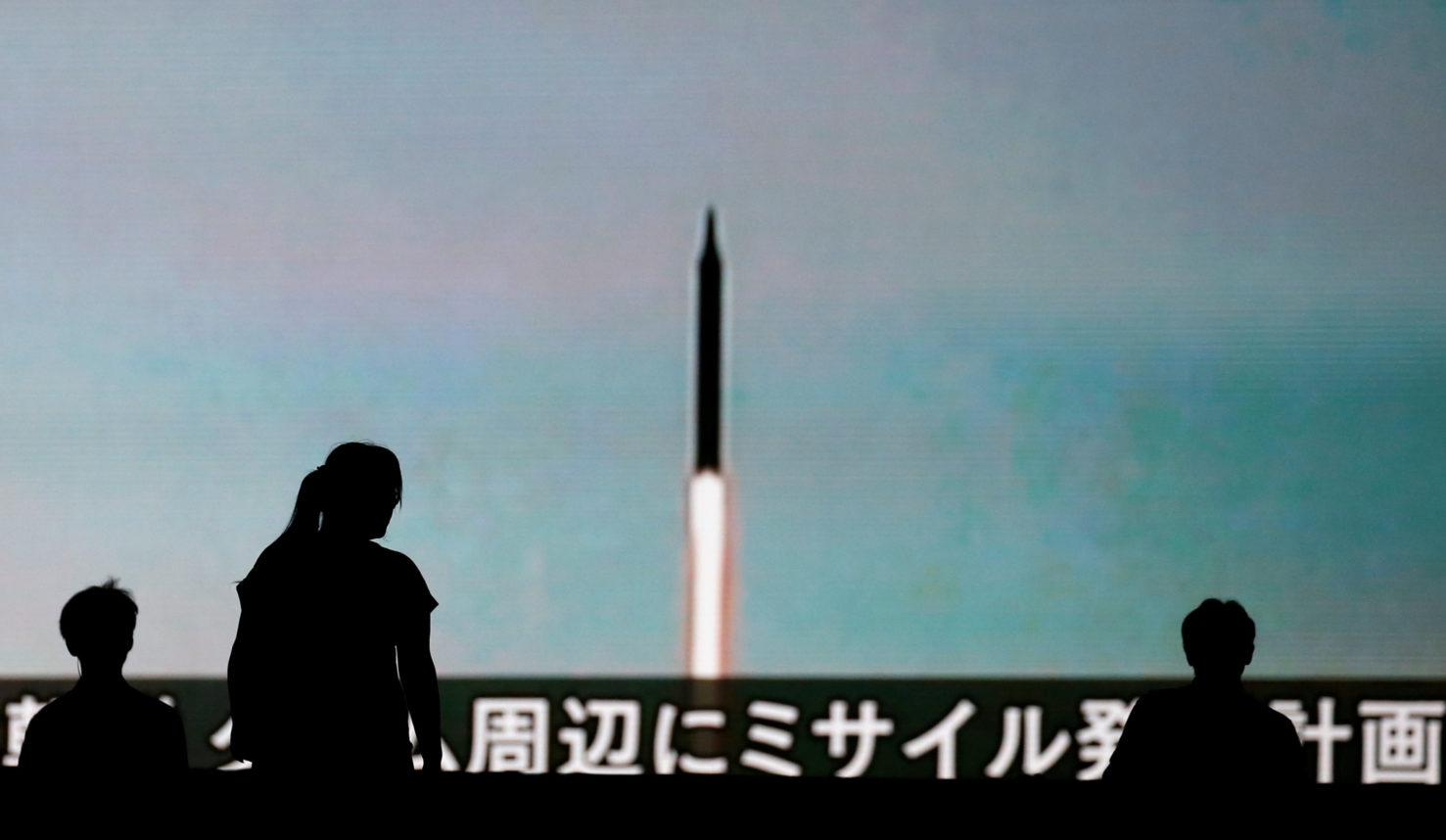
Previous U.S. Presidents have kicked the proverbial North Korea nuclear can down the road. Now it appears that President Trump may soon have to choose between continued “deterrence and containment” or some form of military action to stop Kim Jong Un from having an arsenal of nuclear-tipped ICBM’s targeting America’s heartland.

During the Cold War, MAD (mutually assured destruction) worked to straitjacket nuke-laden adversaries. But who’s to say if mad Kim Jong Un can be deterred? Every president from Bill Clinton on thought they could make a deal with the Kim dynasty and in the end got played. That hasn’t stopped Republicans and Democrats alike weighing in with advice and warnings to President Trump.

Perhaps a good place to for Trump to look for perspective is the 1981 decision by the late Israeli Prime Minister Menachem Begin. Against prevailing world opinion and Middle East expertise, he ordered the Israeli Air Force’s incredibly daring raid to take out Saddam Hussein’s Osirak nuclear reactor. 

That damaged facility wasn’t totally destroyed until the U.S Air Force did it during the 1991 Persian Gulf War. Ironic, since earlier the Reagan Administration joined the rest of the UN Security Council in condemning Israel and even delayed delivery of new F-16s. Yet what Israel did in 1981 was a game changer. You don’t have to be a general to understand how different the world would have been in 1990 if a nuclearized Saddam invaded Kuwait.

Still, a recent front-page New York Times article evaluating Trump’s options quotes experts who, incredibly, criticize Begin’s bold move for two reasons: Jerusalem violated a UN Security Council resolution and the Israeli PM could have delayed any action until there was a verifiable “imminent threat.”

The President of the United States, cognizant of his oath of office to defend and protect the American people cannot take cover behind “experts” or sanctimonious UN resolutions in face of a looming existential threat.

Setting up “imminent threat” as the standard or litmus test for taking action sounds reasonable—but not when you are confronted by perpetrators of unimaginable evil. Back in the 1930s, experts and elites in England lined up behind Neville Chamberlain as he pursued just such an approach with “Herr Hitler.” Some of the appeasers were fascists, some on the left. Rationale people, remembering WWI carnage, even had every reason to avoid another war. The problem was, instead of taking early and painful action against the Nazis, Chamberlain and Company allowed the cunning Hitler to constantly move the goal posts until it was too late. Chamberlain’s unwitting “delay of game” strategy would lead to 55 million dead in the catastrophic WWII.

Let’s be honest. For years, the U.S. allowed the Kims to move the goalposts, constantly re-defining what is an “imminent threat.”

It’s now left to the Trump team, which includes seasoned military leaders to draw a real red line on Pyongyang to ensure that Americans wake up tomorrow to embrace the future, not confront a nuclear holocaust.

President Trump may also want to read up on Israeli Prime Minister Gold Meir who had to consider launching a nuclear weapon strike when the Jewish state—the victim of sneak attack by Egypt and Syria on Yom Kippur, 1973, was in danger of being overrun in the early stages of that bitter war. Meir later admitted that her “heart was very much drawn” to a preemptive strike—like Israel’s in 1967 against Egypt’s Nasser— but was scared: “1973 is not 1967, and this time we will not be forgiven, and we will not receive [American] assistance when we have the need for it,” Golda later testified.

Thankfully, Israel was able to prevail sans nuclear weapons—but at a very high cost of dead and wounded. Golda Meir made mistakes in the lead-in to the Yom Kippur War. Unclear after all these years is exactly what those “mistakes” were. Was she right—or wrong—to refrain from a preemptive strike? One thing is clear that Israel has always been willing to deploy “a secret weapon”—in Golda’s words— Leit Breirah”: “we have no choice but to act” when our survival is at stake.

Today, President Trump does have choices about the NK nuke threat—none easy. Has he arrived at a Leit Breira moment that could trigger preemptive action? Or can he afford—and for how long—to give diplomacy one more a chance?

And will more words and more sanctions convince Kim to back down or prove to him that the US lacks the guts to act.

The answers to these questions will have grave consequences not only for Koreans, Japanese, Chinese, and Americans, but also for the Gulf States, Egypt, and Israel who are being menaced by an aggressive Iran emboldened by sweetheart nuclear deal with the P5+1 led by President Obama.

Think and say what you may about Donald Trump’s presidential style or choice of words. At this moment, we should all pray that he and his team take the right path…

Rabbi Abraham Cooper is Associate Dean and Director of Global Social Action for the Simon Wiesenthal Center

Dr. Harold Brackman, a historian is a consultant to the Simon Wiesenthal Center

North Korean nukes: Has President Trump reached his “Leit Breirah” moment? Read More »

Temple Mount saw record number of Israeli visitors, despite tensions

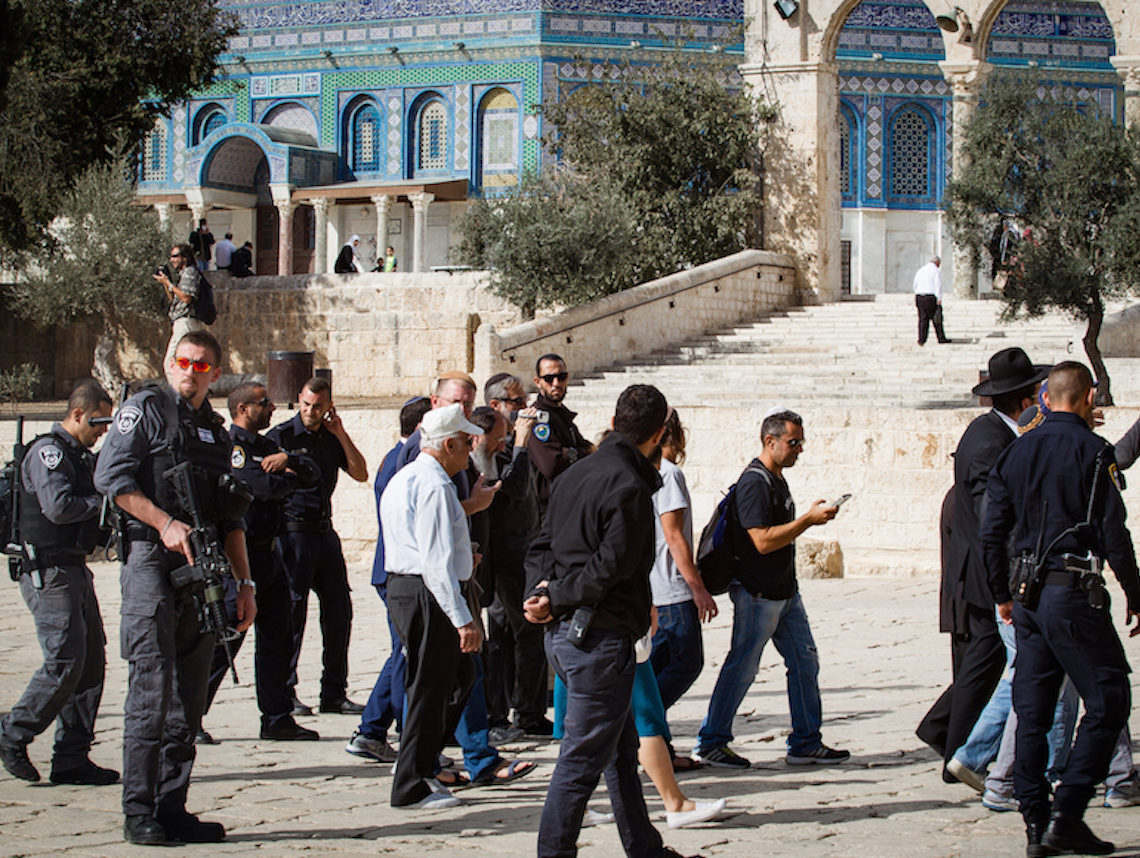
July saw the largest number of Jewish Israelis visiting the Temple Mount  in any single month since it came under Israeli control in 1967.

Some 3,200 people visited the site, which is holy to both Jews and to Muslims, who refer to the compound as Haram al Sharif, Army Radio reported Friday.

This was slightly higher than the total number of visits recorded during the High Holy Days last year – the busiest period of the year in terms of traffic by Israelis. In previous years, approximately 11,000 Israelis visited the site annually.

The surge coincided with tensions and a deterioration in the security situation around the Temple Mount – which was the site of both of Judaism’s ancient temples and houses the al Aqsa mosque — following the slaying of two police officers by three Arab-Israeli terrorists outside the compound.

Israel placed metal detectors at all the entrances to the Temple Mount in reaction to the attack, triggering rioting amid further acts of terrorism by Palestinians.

To protest the measure, which Israel reversed earlier this month in an apparent bid to defuse the situation, the Muslim custodians of the Temple Mount refused to enter it until the metal detectors were removed.

The custodians, belonging to the Waqf Muslim religious authority under Jordanian control, have jurisdiction to administer worship at the site. They allow Jews and others to visit, but prevent Jewish worship or religious activity at the site.

Because the precise site of the Temples’ “Holy of Holies” has not been identified, religious Jews were often hesitant to visit mount and inadvertently step on hallowed ground. In recent years, some prominent Orthodox rabbis have relaxed their objections to Jews visiting the site, and a growing movement of Jewish Temple Mount activists have encouraged visits on religious and nationalist grounds.

During the protest strike of the Waqf custodians, many Israeli Jews came to the Temple Mount to pray there.

Temple Mount saw record number of Israeli visitors, despite tensions Read More »

World’s oldest man, a Holocaust survivor in Israel, dies at 113

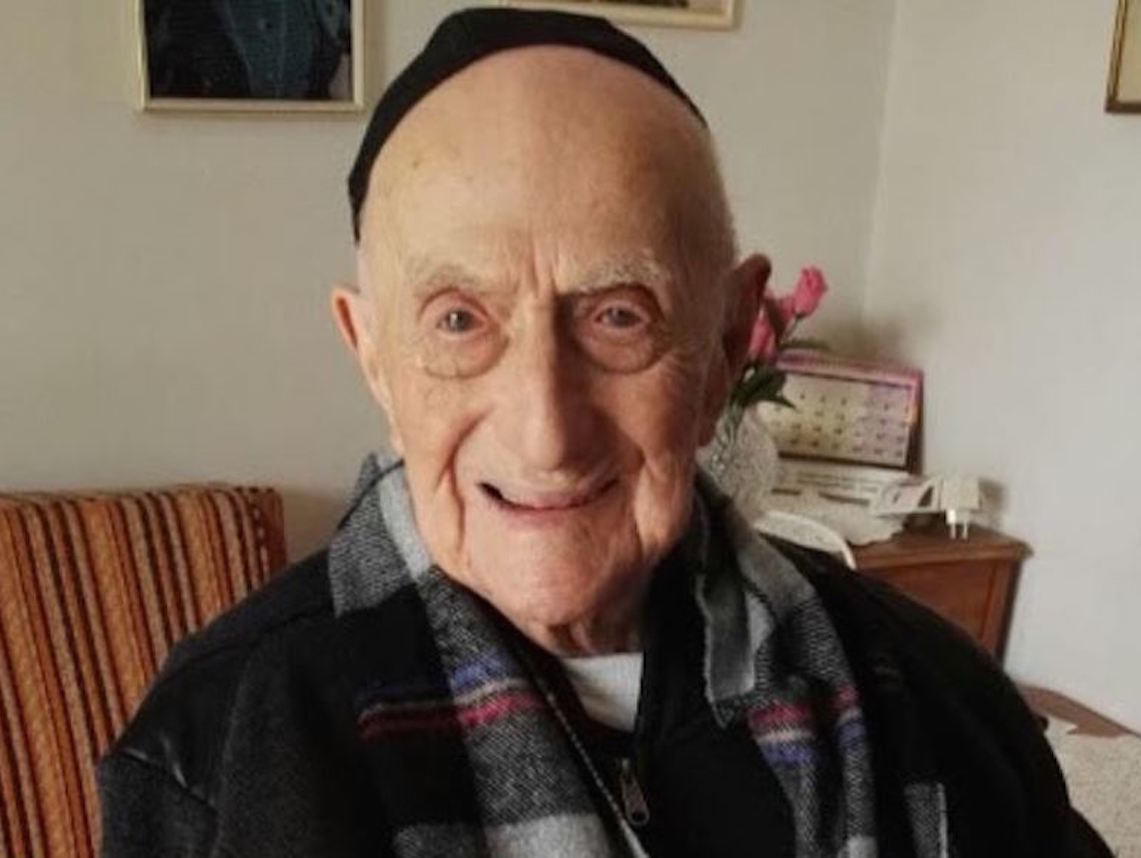
Yisrael Kristal, a Holocaust survivor from Haifa who was recognized by Guinness World Records as the oldest man in the world, has died, a month before his 114th birthday.

Haaretz reported that Kristal died Friday.

Born on Sept. 15, 1903, in the town of Zarnow, Poland, Kristal moved to Lodz in 1920 to work in his family’s candy business. He continued operating the business after the Nazis forced the city’s Jews into a ghetto, where Kristal’s two children died. In 1944, he was deported to Auschwitz, where his wife, whom he had married at 25, was killed.

In 1950, he moved to Haifa with his second wife and their son, working again as a confectioner. In addition to his son and daughter, Kristal has numerous grandchildren and great-grandchildren.

Guinness recognized him as the world’s oldest living man in 2016. When asked at the time what his secret was to long life, Kristal said: “I don’t know the secret for long life. I believe that everything is determined from above and we shall never know the reasons why. There have been smarter, stronger and better-looking men than me who are no longer alive. All that is left for us to do is to keep on working as hard as we can and rebuild what is lost.”

Last year, when he turned 113, about 100 family members celebrated his bar mitzvah, a century after he missed it due to the upheavals of World War I.

World’s oldest man, a Holocaust survivor in Israel, dies at 113 Read More »

Researchers find Jewish headstones at the Nazi killing site of Babi Yar

Nazi troops dumped dozens of stolen Jewish headstones at the same site near Kiev where they murdered tens of thousands of Jews, researchers in Ukraine discovered.

The Babi Yar Holocaust Memorial Center last month extracted  50 headstones from the Babi Yar ravine, where Nazis and local collaborators murdered more than 150,00 people, including 50,000 Jews, starting in September 1941.

“The tombstones were removed from a local Jewish cemetery during the Holocaust and thrown into the same ravines where over 150,000 Jews, Roma people and Ukrainians were murdered during the Holocaust,” Marek Siwiec, a former Polish politician and current head of the memorial center, said in a statement earlier this week about the discovery.

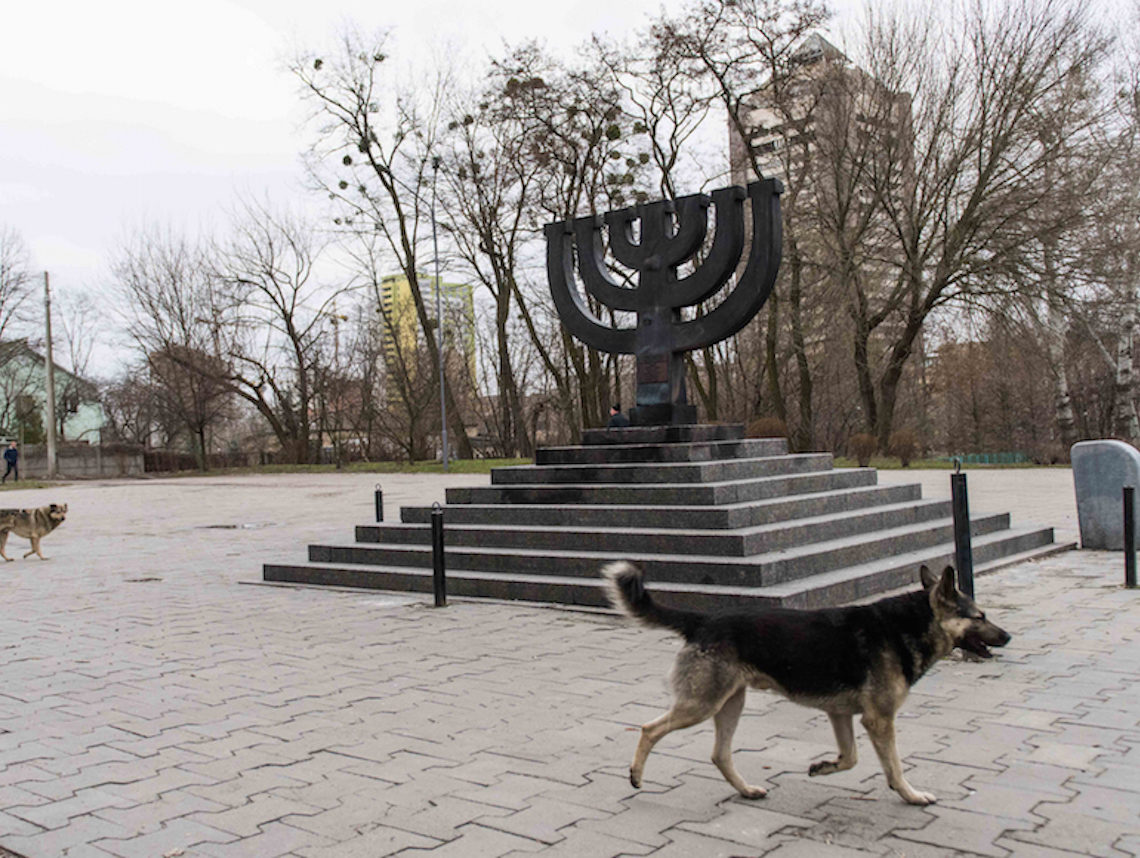
With a mandate from the Ukrainian government, Siwiec’s organization, which was set up last year, is heading international efforts to commemorate the Babi Yar tragedy in a manner befitting its scale. Jewish victims arememorialized at the site only by an unfenced six-foot menorah, which is situated near a dumping ground for industrial waste and is vandalized regularly.

“The significance of Babi Yar is of upmost importance, at this horrendously difficult site, the largest single act mass murder of Jews took place during the Holocaust, with 37,771 brutally murdered during a two-day period, it is our duty not just to remember this site but also proactively learn from the darkest days of human history to build a better future,” Siwiec said in the statement about the discovery.

Additional headstones from Jewish graves are scattered in the ravine but they require careful excavations to be extracted intact, according to Jonny Daniels, founder of the From the Depths organization, which promotes the commemoration of the Holocaust in Poland. Daniels visited the site earlier this week to see how From the Depths, which has focused on restoring pillaged headstones in Poland, could assist the Babi Yar Holocaust Memorial Center, he said.

Researchers find Jewish headstones at the Nazi killing site of Babi Yar Read More »