fbpx

July 11, 2017

Undermining unity at the Kotel won’t make Reform great again

Chabad lore tells a story of one of the rebbes playing with his brother as a child. Though the brother was older, he was also shorter.  Wanting to look his age, the older boy told  the younger one to dig a hole in the ground and step inside. The boys’ father saw this from the window and reprimanded his son. “If you want to be taller,” he said, “make yourself a mound and get up on it. But don’t drive your brother into a hole.”

In the past days, as the sanctity of the Kotel is being torn apart I am reminded of this story.

In the same breath that Netanyahu scrapped the Kotel deal, he also revealed plans to expand and enhance the Southern section, which is the deal’s centerpiece. In fact, this section of the Kotel has been available for  prayer by any denomination for over twenty years.

So if anybody can continue to pray at this part of the Kotel any way they like, what’s all the fuss over the dead compromise? Why are American Jewish leaders talking about “rethinking” their connection with Israel and stopping to fly El Al? What’s the battlecry all about?

Anyone thinking it’s all about prayer and freedom of religion should think again. As Lesley Sachs, the CEO of Women of the Wall, has so aptly put it, it’s all about power. Here’s why.

Since the alternative prayer area has been around for years, the Kotel compromise introduced two changes, creating equal joint entry and establishing an official governing body for is plaza, made up of Reform and Conservative representatives.

The deal is crucial for the liberal movements as the last chance to save themselves. With membership in the US in free fall, both Reform and Conservative leaders are looking for new “markets”. Both movements combined represent only 25% of American Jewry. The situation is so dire, that the Reform movement was forced to sell half of its offices in NY to fund programming, and liberal synagogues across the US are downsizing or closing down for lack of worshippers, making premises available for nearby booming Orthodox communities.

Enter the Kotel deal. The new section would have signaled official recognition of the liberal movements by the State of Israel and paved the way for attracting new recruits.

Creating an official non-Orthodox prayer plaza at the Kotel would have enable the liberal movements to re-educate both Israeli and Diaspora Jewry about what Judaism looks like.

Outside of North America, in Israel, Europe, Russia, and Australia, when Jews want to pray they go to an Orthodox synagogue, even if they are not observant in their private life. Reform and Conservative movements are negligible there.

This is the main reason the Kotel is run like an Orthodox synagogue. For the overwhelming majority of Jews worldwide, this is the face of Jewish holy places.

By creating an alternative at the Kotel, Judaism’s holiest place, the liberal movements had hoped to create legitimacy  in the eyes of Israeli and visiting Jews. For if you can pray this way at the Kotel, why not look up (or establish) a liberal community back home.

While I disagree with the Reform and Conservative rejection of the Torah, attracting new membership is certainly their prerogative. But tearing the holiest Jewish site apart is not the way to do it. Questioning the relationship between Israel and Diaspora Jewry only hurts all of us. Bashing the Israeli Orthodox community isn’t what’s going to make the liberal movements great again.

If Reform and Conservative leaders want to swell their ranks, perhaps they should rethink what can and should be done to inspire more Jews to experience and commitment to Judaism. Maybe they should consider what makes traditional Jewish practice attractive to young Jews and do more of that.

Instead they have set to drum up membership by turning the Orthodox and Israel into an enemy and inciting divisiveness.

Two hundred years ago, the Rebbe  had a better idea. Find higher ground. Become a beacon. And maybe they will come.

Don’t drive us all into the ground.

Leah Aharoni is the co-founder of Women For the Wall, a grassroots organization devoted to preserving the sanctity of the Kotel in the spirit of Jewish unity.

Undermining unity at the Kotel won’t make Reform great again Read More »

Meet the Jew behind Donald Trump Jr.’s Kremlin backchannel

The man behind Donald Trump Jr.’s Kremlin connection is a British-born Jewish publicist who once worked as a reporter for a Jewish newspaper.

Rob Goldstone confirmed July 10 to The Washington Post that he had an exchange of emails with the son of then-candidate Donald Trump in 2016 to organize a meeting with Kremlin lawyer Natalia Veselnitskaya at Trump Tower in New York.

“The lawyer had apparently stated she had some information regarding illegal campaign contributions to the [Democratic National Committee] which she believed Mr. Trump Jr. might find important,” Goldstone said in a statement to the Post.

The emails, first reported by The New York Times, have fueled speculation that the Trump campaign colluded with the Russian government in the 2016 presidential campaign.

Goldstone was born in Manchester, England, and attended a Jewish day school there, according to the Manchester-based Jewish Telegraph newspaper. His father, Isaac Goldstone, helped found the Hillock Hebrew Congregation, an Orthodox synagogue, according to the paper. The younger Goldstone went on to work briefly as a sports reporter for the Jewish Gazette and later as a music journalist before launching a career as a music publicist.

One of his clients is Emin Agalarov, an Azerbaijani pop star and the son of real estate magnate Aras Agalarov, who has close ties to Russian President Vladimir Putin. The elder Trump once appeared in a music video for the Azerbaijani singer.

Goldstone worked with Donald Trump on the Miss Universe pageant that Trump’s organization held in Russia, and appears to have become a link in backchannel communications between the Kremlin and the Republican presidential campaign.

“Emin just called and asked me to contact you with something very interesting,” Goldstone wrote in an email to Trump Jr. on July 3, 2016. “The Crown prosecutor of Russia met with his father Aras this morning and in their meeting offered to provide the Trump campaign with some official documents and information that would incriminate [Democratic candidate Hillary Clinton] and her dealings with Russia and would be very useful to your father.”

Though the meeting eventually took place, Goldstone told The Washington Post that little came of it.

That hasn’t stopped anti-Semitic trolls on the web from targeting the publicist for his heritage. Daily Stormer, a neo-Nazi website that strongly favors Trump, posted about Goldstone’s background hours after The Washington Post report, calling the story “fake news.”

Emin Agalarov, who goes by the stage name Emin, performed at The Wiltern theater in Los Angeles in May.

Meet the Jew behind Donald Trump Jr.’s Kremlin backchannel Read More »

American Orthodox rabbis are ambivalent about Western Wall controversy

American Orthodox leaders have a message for their non-Orthodox friends: Take a deep breath.

When Israel’s cabinet voted twice to further empower the country’s Charedi Orthodox religious establishment last month, Reform, Conservative and non-Orthodox Zionist leaders were outraged. They cancelled meetings with Israel’s prime minister. They gave an on-camera statement with an Israeli opposition figure. They launched lobbying efforts in Jerusalem. They accused Israel’s government of “betrayal.” They threatened legal action. One lay-leader said she’d stop flying El Al, Israel’s national airline.

These leaders have decried the June 25 votes to suspend the agreement to expand the Western Wall’s non-Orthodox prayer area and to advance a bill that gave Israel’s Chief Rabbinate more power over Jewish conversions. This week, leaders have also criticized the rabbinate’s so-called “blacklist” of Diaspora rabbis it does not trust to confirm the Jewish identities of immigrants to Israel.

But when it comes to the supposed crisis swirling between Israel and U.S. Jewry, America’s most prominent Orthodox organizations have remained mostly quiet. The Orthodox Union and Rabbinical Council of America, two umbrella American Orthodox bodies, both told JTA they are not commenting on the matter. The RCA will be meeting with the rabbinate next week regarding the list of rabbis, having received assurances that the “blacklist” may have been misconstrued.

And while some modern Orthodox rabbis have criticized Israel’s actions, they have not called for retaliatory action against the Israeli government. Others sympathize with what they see as the Chief Rabbinate’s defense of traditional Jewish law.

Rabbi Haskel Lookstein, a prominent modern Orthodox leader, was sympathetic with his non-Orthodox colleagues — up to a point.  “I’m disappointed in the modern Orthodox for not responding strongly, because of the divisive effect that this has on the Jewish people,” said Lookstein, the rabbi emeritus of Kehilath Jeshurun, a modern Orthodox synagogue on Manhattan’s Upper East Side. “And I am concerned about some of the overreactions of liberal groups who are calling for all kinds of boycotts and actions on the part of American Jewry to punish Israel for these decisions. That kind of response will be more dangerous than the actions of the Israeli government itself.”

Haredi Orthodox Americans, meanwhile, insist that the Jewish communal organizations criticizing the rabbinate do not speak for them. Rabbi Avi Shafran, the spokesman for the haredi Orthodox Agudath Israel of America, told JTA that the Chief Rabbinate is a “bulwark” against eroding and multiplying standards for Jewish observance and identity. Shafran views the rabbinate as a regulatory agency for Jewish matters along the lines of the Food and Drug Administration.

“If Israel is to retain a Jewish identity, it is essential for her to have a single set of standards determining who is a Jew and what is a Jewish marriage or divorce,” Shafran wrote to JTA in an email. “Were a constitution to impose multiple standards for such things, it would lead to plethora of ‘Jewish peoples’ – Reform, Conservative, Reconstructionist and others. That would spell disaster for both Israel and the Jewish people as a whole.”

Shafran feels warnings of an Israel-Diaspora crisis are overblown. Non-Orthodox Jews, he wrote, are largely disengaged from Israel, while Orthodox Jews — who frequently visit, agitate for and study in Israel — are generally not bothered by the recent decisions on the Western Wall and conversion.

“The Rabbinate’s policies have alienated some non-Orthodox Jewish leaders and some of their followers, to be sure, but the American Jewish community, if seen in aggregate is not greatly concerned about Israel,” Shafran wrote. “The vast majority of American Jews who care deeply about Israel (and visit and send their children there) are the Orthodox, who are not alienated at all by things like the recent controversial decisions.”

All three elements of the controversy — the Western Wall, conversion and the rabbis’ list — do affect Orthodox Jews. The conversion bill — which has been shelved for six months — sought to strip legitimacy from private Orthodox conversions in Israel. The list of rabbis included a range of Orthodox as well as non-Orthodox leaders. And under the Western Wall deal, the Women of the Wall prayer group agreed to move its services from its current meeting place in the Orthodox women’s section of the site — a frequent flash point between feminists and haredi Orthodox — to the expanded non-Orthodox prayer space.

Even so, Rabbi Efrem Goldberg of the Boca Raton Synagogue in Florida criticized Jewish federations for opposing the Israeli government’s actions so vocally. By weighing in on the debates, he said, the federations are supporting Reform and Conservative Jews at the expense of the Orthodox.

His local federation, in South Palm Beach County, shared on its website a statement from its national umbrella group criticizing Israel’s actions on conversion and the Western Wall.

“I’ve been very disappointed by the federations’ reaction,” he said. “I understand why Reform and Conservative would be using their organizations for advocacy on this issue, but federation is supposed to speak for all of the community. They’ve become an advocacy arm for the Reform and Conservative by taking up this issue of conversion.”

Goldberg added that non-Orthodox leaders should be cautious in criticizing the Israeli government, especially when some admonish J Street, the dovish pro-Israel lobby, for criticizing Israel’s policies vis a vis the Palestinians.

“It’s a dangerous precedent for Jewish organizations in America to be protesting the decisions of the democratically elected government of Israel,” he said. “Many of the same people who have no tolerance for J Street trying to interfere in the government of Israel are trying to do so themselves.”

Some Orthodox clergy do sympathize with non-Orthodox leaders. Maharat Ruth Friedman, who serves as vice president of the International Rabbinic Fellowship, a liberal Orthodox rabbis’ organization, said she felt the Chief Rabbinate’s actions were exclusionary and harmful to the Jewish people. She said, however, that her organization was not planning any protest beyond a statement of disapproval.

“I do not see the Rabbinate as a partner in furthering the spiritual growth of the Jewish people,” said Friedman, who emphasized that she was speaking for herself and not in an official capacity. “This sends the message that religious authority is about control and exclusion. That’s the opposite [of the] message we want to send to the Jewish people.”

American Orthodox rabbis are ambivalent about Western Wall controversy Read More »

Sheila Michaels, iconic feminist who popularized ‘Ms.,’ dies at 78

Sheila Babs Michaels, an iconic figure in feminist and social justice causes who has been credited with popularizing the courtesy title “Ms.,” died.

Michaels died on June 22 in New York. She was 78 and had been suffering from leukemia. 

In a 2009 New York Times article, Ben Zimmer wrote that in 1961, Michaels, then 22 and living in New York, saw “Ms.” on a piece of mail her roommate received. “In fact, she initially took it as a typo, albeit a felicitous one,” Zimmer wrote. “Fiercely independent, Michaels abhorred having her identity defined by marriage. Struck by Ms., she became a one-woman lobbying force for the title as a feminist alternative to ‘Miss’ and ‘Mrs.’”

“[I] was looking for a title for a woman who did not ‘belong’ to a man,’” Michaels is quoted as saying in a 2007 story in The Guardian.

By 1970, Gloria Steinem endorsed the term and it steadily grew in public usage. In 1971 “Ms.” was used as the title of the feminist magazine started by Steinem and Dorothy Pitman Hughes.

The Jewish feminist icon was born in St. Louis in 1939 and spent her formative years there and in the Bronx.

Michaels attended the College of William and Mary but was suspended for her political and racial opinions while on the school newspaper’s editorial board. After working in publicity for a TV station and hotel in St. Louis, she moved to New York in October 1959. Michaels attended Columbia University night school, studying mythology, Persian and Biblical literature, while working as a ghostwriter and editor.

Michaels was one of the first women to run the field offices for the Congress of Racial Equality and the Student Non-Violent Coordinating Committee during the volatile civil rights era of the 1960s. She also worked to organize the historic Civil Rights March on Washington in 1963, helping to write John Lewis’ speech for that occasion, and had leadership positions during the Freedom Summer of 1964.

Later she located and interviewed many other civil rights leaders, which led to the establishment of an archive of oral histories currently stored in the Columbia University Oral History Archives.

During her varied career, Michael also worked as a cab driver for 10 years in Manhattan and ran a Japanese restaurant. She worked in India, Singapore, Japan and Laos.

With Michaels at the time of her passing was Rabbi Sharon Kleinbaum of Congregation Beit Simchat Torah, an LGBTQ synagogue in New York of which she was an active member. “A giant has left us,” Kleinbaum said at her bedside. Michaels was also a member of Central Reform Congregation of St. Louis.

Michaels will be buried in her family plot in B’nai Amoona Cemetery in St. Louis.

https://www.facebook.com/heyalmacom/videos/1588920561158574/

Sheila Michaels, iconic feminist who popularized ‘Ms.,’ dies at 78 Read More »

Trump’s lack of State Department appointments can hurt Israel, experts say

Carmel Shama HaCohen, Israel’s ambassador to UNESCO, is second to none in his admiration for the Trump administration’s United Nations envoy, Nikki Haley. In fact, he’d like to clone her.

Shama HaCohen appreciated Haley’s efforts in trying to head off last week’s vote by UNESCO’s Heritage Committee naming Hebron’s Old City an endangered heritage site. And he believes the joint U.S.-Israeli bid to kill a resolution Israel saw as one-sided might have succeeded had a U.S. official of Haley’s caliber been onsite in Krakow, where the vote took place. (Haley conducted her efforts from New York.)

“We didn’t have the spirit that was strong enough,” Shama HaCohen said in an interview.

Crystal Nix-Hines, the Obama administration’s UNESCO envoy, left on Jan. 20. The Trump administration’s failure to replace her is part of a broader slowdown in naming top State Department positions. According to reports, fewer than 10 of the approximately 200 State Department positions that require nomination and confirmation have been filled.

Shama HaCohen, a blunt-speaking former Likud member of Knesset, said the absence of Israel’s most important ally at UNESCO was having far-reaching effects on defending his country.

“As soon as you have an ambassador, you have an ability to create a relationship with Washington, to advance an agenda,” he said. The absence of envoys “harms our efforts” to defend Israel, he said. “The United States is far from a capacity to bring her full complement to defend Israel.”

Shama Hacohen is not the only official on the front lines of defending Israel concerned about under-staffing among the U.S. diplomatic corps.

“The issue of staffing at the State Department is critical — at UNESCO and in the myriad other areas where U.S. leadership is crucial,” Jonathan Greenblatt, the Anti-Defamation League’s CEO, told JTA. “While there was a good-faith effort by Ambassador Nikki Haley and other members of the administration at UNESCO last week, the fact that there was no ambassador on the ground had an impact.”

For months, a broad array of Jewish groups and lawmakers from both parties have decried the Trump administration’s failure to fill another role: the State Department’s anti-Semitism monitor.

“We are also concerned by the Secretary of State’s seeming reluctance to appoint a special envoy to monitor and combat Anti-Semitism, which plays a critical role in raising awareness and action against anti-Semitism and anti-Israel actions globally,” Greenblatt said. “These positions should be filled as soon as possible.”

The understaffing and how it affects Israel-related diplomacy has also caught the attention of Republicans in Congress.

We “need more appointees in place,” said Kevin Bishop, a spokesman for Sen. Lindsey Graham, R-S.C., one of the Jewish state’s most ardent defenders in the Senate, when asked about Israel-related diplomacy. He pointed to remarks by Graham on NBC’s Meet the Press on Sunday: “Secretary (Rex) Tillerson needs to staff up the State Department and use it wisely,” Graham said, referring to a range of areas where he said it was AWOL. “I’m so worried about the State Department.”

A State Department official told JTA that the Trump administration remained committed to defending Israel in every international forum.

“We have been clear that the United States will oppose any effort to delegitimize or isolate Israel, wherever it occurs. We continue to do that,” said the official. “With respect to staffing, we continue to have a deep bench of experienced career professionals serving in key positions that are highly capable and able to help the Secretary lead the Department. We will continue the process of exploring and evaluating ways to improve organizational effectiveness and efficiency, including optimizing the impact of available resources.”

The White House has blamed Senate Democrats for obstructing nominations, noting in a release this week that Trump’s nominees are on average taking longer to clear the Senate than those of his predecessors. But Trump has also been slow to nominate: A June 29 count by the Washington Post showed that of the 200-plus State Department positions filled by nomination, Trump had formally nominated just 20 and that the Senate had confirmed eight.

Dan Shapiro, until January the Obama administration’s envoy to Israel, said career professionals were no substitute for diplomats who had the confidence of the administration.

“When in the past, during the Obama administration when we were fighting an anti-Israel resolution to recognize a Palestinian state, it was all hands on deck,” he said. “We would have ambassadors in capitals raising it, we would have senior officials, secretaries and under secretaries weighing with counterparts.”

Without the personal relationships diplomats cultivate with their counterparts in other countries, Shapiro said, “you don’t have the tools available, you can’t get to the most senior officials in other governments to be engaged to rally other countries to stand with us.”

Shapiro said the lack of appointees is hindering another issue Israel says is critical: Pressing the Palestinians to stop paying families of people jailed or killed while carrying out attacks on Israelis.

“We should be engaging many other governments at senior levels to urge them to let the Palestinians know we think it’s unacceptable,” he said.

Prime Minister Benjamin Netanyahu’s government is generally pleased with the Trump administration’s priorities, and appreciates that Trump himself raised the payments-to-prisoners issue in his meetings with Palestinian Authority President Mahmoud Abbas. Indeed, Shama HaCohen said that part of his frustration was that the career diplomats in the U.S. UNESCO office were carrying out Obama-era policies seen as friendlier to UNESCO — not because they sought to undermine Trump, but because it was the only guidance they had in hand.

Malcolm Hoenlein, the executive vice president of the Conference of Presidents of Major American Jewish Organizations, said the UNESCO vote might have been an outlier: The Obama administration stopped paying dues in 2011 because UNESCO recognized “Palestine” as a state, and as a result the United States lost its capacity to vote, diminishing its influence at the body in any case.

“We take the UNESCO issues very seriously and welcome the strong statements by Ambassador Haley,” Hoenlein told JTA.

Daniel Mariaschin, the executive vice president of B’nai B’rith International, said that the lack of staffing was a problem, but that Israel’s overall obstacle at the U.N. and its affiliated bodies was institutional bias.

“There’s no question, having ambassadors with the worldview of Nikki Haley, building relationships, is important,” he said. “But automatic majorities, block voting which is built in the U.N. infrastructure. that’s really where these problems lie.”

Trump’s lack of State Department appointments can hurt Israel, experts say Read More »

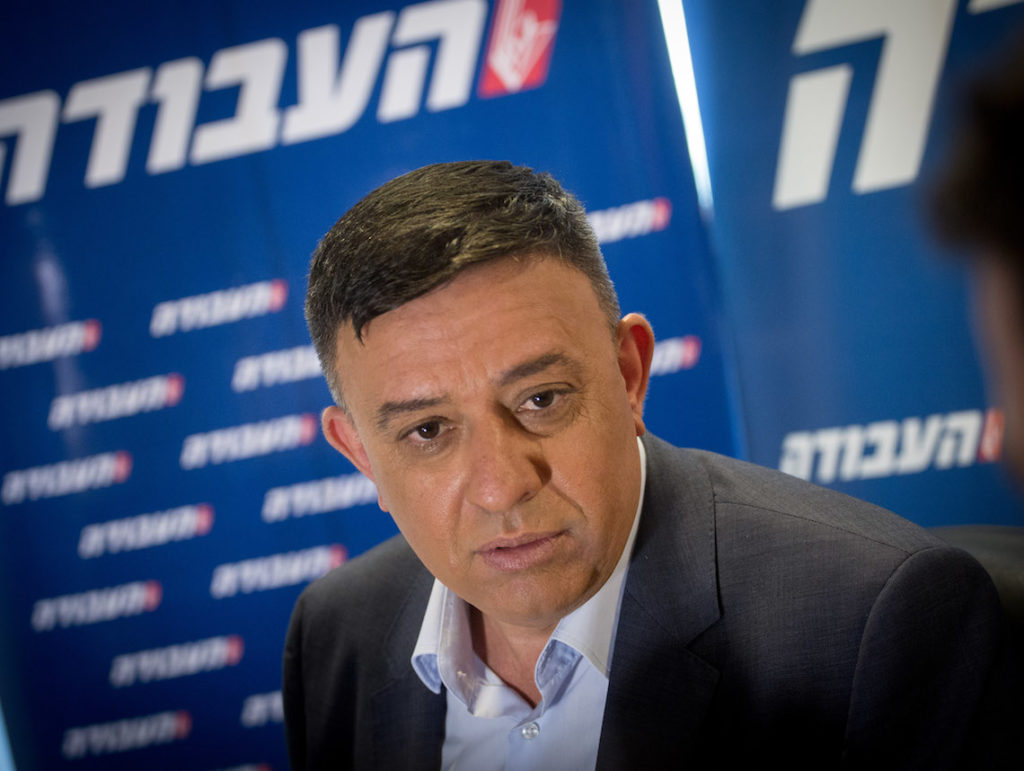
Avi Gabbay, ‘Israel’s Macron,’ wants to lead Labor party from the center

He’s charismatic. He’s an outsider. And he’s a political centrist.

Some have hailed Avi Gabbay, the telecom exec who was elected Monday to lead the center-left Labor Party, as Israel’s version of French President Emmanuel Macron, the banker who recently swept to power with an outsider campaign.

“Like Macron, Gabbay brings hope,“ said Abraham Diskin, a political science professor at the Hebrew University of Jerusalem. “People are again saying: Here is a new medicine. The old medicine didn’t cure us.”

But Israel already has two charismatic, outsider centrists in national politics. Both Yair Lapid and Moshe Kahlon in recent years led new moderate parties to electoral success, though not rule. So what does one more Macron mean for the country?

Gabbay (pronounced gab-BYE) successfully courted Labor’s left wing to win the primary. But he is widely viewed as a moderate.

He entered politics as a founding member of Kahlon’s center-right Kulanu party, and joined Prime Minister Benjamin Netanyahu’s right-wing government in 2015. During the campaign, Gabbay was even forced to retract a televised denial that he had previously voted for the ruling Likud party.

Labor, like much of the historic Israeli left, is a shell of itself. According to Diskin, Gabbay would now be wise to embrace the centrist label. It is no accident, he said, that Kahlon and Lapid — who led his studiously middle-of-the-road Yesh Atid into the government in 2013 — found success far from either political pole. Israel has a long history of successful centrist parties, most notably Ariel Sharon’s Kadima, which won the 2006 election.

“Macron knew the center is the best place to be, because most voters are there. That’s how you get political control,” said Diskin. “Or look at [Prime Minister David] Ben-Gurion. He tried to rule from the center and leave leftist parties out of his government. One of Labor’s biggest problems is that it has forgotten this lesson.”

After leading Israel to independence in 1948 and then dominating Israeli politics for three decades, Labor has fallen on hard times. The party’s most recent national election win was 18 years ago, and opinion polls have showed it ranked just fourth or fifth in size among major parties.

Gabbay, 40, is expected to give a much needed popularity boost to his party, at least in the short term. But his wider effect on Israeli politics is less clear. A stronger Labor could actually solidify Netanyahu’s grip on power by siphoning votes from Yesh Atid, the only party polls have shown challenging Likud.

Alternatively, some hope Gabbay — whose parents immigrated from Morocco — will help Labor overcome its longstanding image as a bastion of well-to-do Israelis of Ashkenazi, or European Jewish, descent and attract some of the working-class Mizrahi, or Middle Eastern Jewish, voters who vote for Likud or Kulanu. In that way, he could expand the center left.

Gideon Rahat, a political scientist at Hebrew University and a researcher at the Israel Democracy Institute, said Gabbay appeared to have the tools to rebrand his party.

“Israeli politics is highly personalized. So Gabbay’s personality and his character are huge assets,” said Rahat. “Maybe more significantly, he’s Mizrahi. He may be able to take some Mizrahi votes not just from Lapid, but also from Kahlon and Netanyahu.”

Gabbay grew up in a Jerusalem transit camp, one of eight children, and, after serving in the Intelligence Corps, went on to make millions as the chief executive of Bezeq, Israel’s telecommunications monopoly. In 2015, he helped launch Kulanu and became the environmental protection minister. But a year later, he quit in protest after Prime Minister Benjamin Netanyahu replaced Defense Minister Moshe Kahlon with the hawkish Avigdor Liberman as part of a political deal.

He joined Labor about six months ago.

Amid a crowded field, Gabbay made it to the party’s two-man runoff by coming in second to Amir Peretz, 65, a former Labor head and defense minister, who is also Mizrahi. Incumbent Labor chairman Isaac Herzog got the third most votes and threw his support behind Peretz along with most of the Labor establishment.

Nevertheless, Gabbay prevailed by winning the hearts of the party’s rank and file. He appeared likablee  and nonchalant in his many TV appearances and made savvy use of social media. On Sunday, he shared Peretz’s Facebook post asking the public for helping finding his son’s lost dog. The comradely gesture earned critical last minute coverage and social media buzz.

After Gabbay’s victory, Labor leaders quickly threw their support behind him. Ehud Barak, the party’s most recent prime minister who has hinted at a political comeback, called it a revolution in Labor and said Netanyahu and his allies would be “sweating tonight, with good reason.”

For his part, Diskin predicted Gabbay would do little to redraw the political map. But with some political skill, he said, the newly elected Labor leader might be able to form a government with the two other centrist parties. Then, he said, Israel could have its Macron moment.

Avi Gabbay, ‘Israel’s Macron,’ wants to lead Labor party from the center Read More »

Reporter who broke Chicago Dyke March story removed from reporting duties

The journalist who first reported the ejection of three Jewish women from the Chicago Dyke March has been relieved of her reporting duties.

Gretchen Rachel Hammond, an award-winning reporter for the Windy City Times, a Chicago LGBT newspaper, has been moved full-time to the paper’s sales desk as of Monday. Hammond was the first to report that three women were kicked out of the Chicago Dyke March, an LGBT parade on June 24, for carrying rainbow flags emblazoned with Jewish stars.

Organizers of the march say the women were ejected because they were carrying flags reminiscent of the Israeli flag at an anti-Zionist event and had “repeatedly expressed support for Zionism during conversations” with other marchers. Jewish groups criticized the decision as anti-Semitic.

Hammond confirmed that she is no longer reporting for the paper, but declined to say whether she was moved because of her coverage of the Dyke March. She said the shift is not temporary, and that she is looking for editorial work elsewhere.

“Right now I’m in the sales department,” she told JTA Monday. “I’m still a part of the company, and it’s my only source of income. To keep what job I have, I can’t comment on it. As an employee of Windy City Times who has loved the company and loved her role in the company for the past four years, I have to respect my publisher’s decision.”

The paper’s publisher, Tracy Baim, confirmed that Hammond had been moved, but would not elaborate. Regarding the Windy City Times’ coverage of the Dyke March, Baim said the paper’s editors “stand by our reporting by Gretchen and our other reporters on that story.”

Organizers of the Dyke March were critical of Hammond’s reporting on the flags incident. “I thought Windy City Times failed in its journalistic mission [breaking the story] and not looking for a real response from the Collective before putting Laurel’s position out there,” Alexis Martinez, a core organizer with the Dyke March Collective, told Hammond in her last article as a member of the reporting staff.

Laurel Grauer, Midwest manager of programs and operations for the pro-Israel LGBT group A Wider Bridge, was one of the women asked to leave the march. In the first article on the incident, she told Hammond that she and her friends were “harassed” by a number of marchers for waving the star of David flag, which she said “celebrates my queer, Jewish identity.” She later denied assertions by members of the Dyke March Collective that she and the two other women asked to leave were chanting pro-Israel messages or button-holing other marchers.

But according to Martinez, Grauer had come to the march specifically to counter the organizers’ anti-Zionist message.

Martinez said she told Grauer, “Nobody’s got anything against your flag. Wave it proudly. I am asking you if you’re trying to present a pro-Palestinian, pro-Zionist point-of-view.” When Grauer said she intended to keep expressing such views, Martinez said she told her,”This isn’t the format to do that. Either you have to stop or you have to leave.”

Both Windy City Times and the Dyke March Collective received threats in the weeks after the incident.

Reporter who broke Chicago Dyke March story removed from reporting duties Read More »

Friedman joins Greenblatt in meeting with Palestinian negotiators

U.S. Ambassador to Israel David Friedman joined President Trump’s envoy to the Middle East, Jason Greenblatt, in his meeting with senior Palestinian officials in Jerusalem on Tuesday, a White House official told Jewish Insider.

[This story originally appeared on jewishinsider.com]

Friedman was introduced to the Palestinian negotiating team by Greenblatt and U.S. Consul General in Jerusalem Donald Blome, who has the responsibility for dealing with the Palestinian Authority, according to the official. “They had an open, cordial, and frank discussion on many topics related to peace negotiations,” the official said.

Last month, Palestinian Authority President Mahmoud Abbas reportedly rejected the U.S. request to include Friedman in meeting with Trump’s son-in-law Jared Kushner and Greenblatt in Ramallah.

Friedman’s participation in Greenblatt’s meeting with the Palestinians was first reported by Haaretz.

The fact that Friedman was part of the meeting is highly unusual, but not unprecedented, former Ambassador to Israel Martin Indyk told Jewish Insider. Indyk met several times with then Palestinian leader Yasser Arafat but only in Gaza — in his first term (1995-1997) the U.S. Embassy had responsibility for Gaza — or to broker a ceasefire deal during the second intifada.

Former Ambassador Daniel Shapiro, however, never attended official meetings with Palestinian Authority officials in Ramallah despite being a member of Indyk’s team when he served as Mideast envoy under Secretary of State John Kerry.

According to the WH official, the President insisted that Friedman should be part of the team to broker peace talks between the Israelis and Palestinians. “The Administration believes that in order to give everyone the best chance to reach an ultimate deal, it is critical to have negotiators that are close with the President and that is why the team includes Senior Advisor Jared Kushner, Greenblatt and Friedman,” the official said.

“I believe Trump is serious about getting the ‘ultimate deal,’ but this incident probably says more about his lack of familiarity with the existing diplomatic protocols,” Indyk said. “Nevertheless, If Greenblatt wants Friedman on his team, he should have him. It’s good for the Palestinians to hear Friedman’s perspective which is informed by his knowledge of the Israeli side. But then by the same token Greenblatt should have the Consul General Doug Blome on his team and in meetings with Israeli negotiators. That way the Israelis could gain the benefit of his knowledge of the Palestinian side.”

Trump’s unusual move indicates he is serious about reaching a peace deal because he wants what he considers his best people working on it in all the meetings, a former U.S official, who was involved in previous peace talks and requested to remain anonymous, told Jewish Insider. “The Administration probably thinks it helps by giving the Palestinians another channel to and from Trump.”

Friedman joins Greenblatt in meeting with Palestinian negotiators Read More »

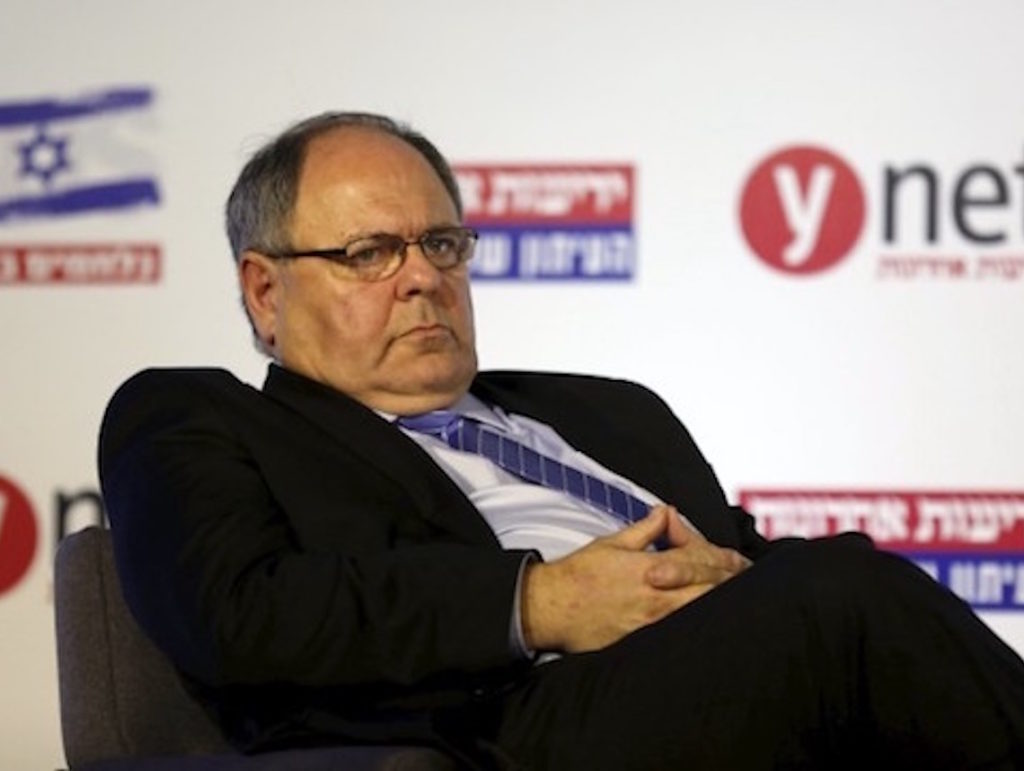
Principle over Politics – Israel’s envoy in NY says Jewish state neglecting Reform, Conservative

Dani Dayan laments Israelis’ lack of understanding and unwillingness to engage with liberal Jewish streams

Do read this article in the Times of Israel (see link below).

In Israeli’s political arena, one would have thought that Dani Dayan would align himself with the most right-wing in Israel on every matter – but it just isn’t true.

He was the head of the Yesha Council of settlers before becoming Israel’s Consul General for New York. As it turns out, on the pluralism issue the non-Orthodox have in Dayan a friend.

Dayan himself is not religious, and perhaps that’s why he is open-hearted to the non-Orthodox streams in Israel. But there may be something else as well.

I don’t know what Dayan’s attitudes towards the Reform movement in America were before he was arrived in New York. He may already have been a religious pluralist. If so – terrific, but since coming to the US he has been nothing shy of a friend to all the religious streams.

In my own encounters with Mr. Dayan in New York as Chair of ARZA, I found that he couldn’t be more open-hearted towards non-Orthodox Jewry if he tried. His magnanimity is both surprising and refreshing.

What we need now is a Prime Minister to show a measure of courage and stop cow-towing to the ultra-Orthodox political parties on the Kotel issue and Conversion Law, and then on civil marriage and civil divorce, on women’s issues, on the rights of NGOs to operate on behalf of human rights in the state of Israel and the West Bank, and everything that makes for a true democracy that Israel is and ought always to be.

The greatest leaders are those who stand for principle over politics – Dayan is showing himself on the issue of who is a Zionist to be a democrat (with a small “d”).

http://www.timesofisrael.com/israels-envoy-in-ny-says-jewish-state-neglecting-reform-conservative/

Principle over Politics – Israel’s envoy in NY says Jewish state neglecting Reform, Conservative Read More »

What could sink with Israel’s submarine corruption affair

The submarine affair or scandal – every newspaper and television show chooses a different slogan – is serious. It is more than serious; it’s heartbreaking. The details we have are not many. The police are investigating. Suspects are being detained – six yesterday, another one this morning. The story is simple: a bribe was paid to people whose role was to make Israel buy German submarines. And these people – the ones detained, investigated, mentioned – are not just people. They are the prime minister’s lawyer (and relative), the deputy head of the National Security Agency, the chief of the navy. Important, influential people, who had access to the top institutions and leaders.

You can dive into the details, learn the names of all those involved, try to untangle the web of connections. Or you can look at the bigger picture.

This case is tagged case 3000, to differentiate it from case 1000 – involving allegations that businessmen gave lucrative gifts to Netanyahu and his wife – and case 2000 – concerning Netanyahu’s alleged offer to the publisher of Israel’s Yedioth Daily to help in reducing the readership of rival paper Israel Hayom in exchange for more favorable coverage. And indeed, it is a different story. First, because the PM’s involvement has not yet been established. Second, because this is not about petty things and small favors. Submarines are expensive – one of the most expensive items a country buys. Submarines play a crucial role in Israel’s strategic defense – they are, according to many publications, Israel’s tool for a “second strike” if one is needed. The process of purchasing such war machines ought to be business like, professional, sober, almost sacred. We can tolerate politicians and mediators and dealers in lesser processes. We know that the mix of politics and business is an invitation for shady characters.

But we’d like to think that some decisions, some processes, can be insulated from these problematic influences. We’d like to think that when it comes to the decisions most crucial to Israel’s defense, no shticks will be tolerated.

What is the possible story unfolding in front of our eyes in this case? It is a story of a businessman that pays his way into representing a German manufacturer and then pressuring the government, assisted by the high-ranking people whom he (allegedly) paid to help him become the middleman, to purchase submarines from the company he represents.

To be clear: there’s a need to wait for the investigation to end before we have all the details. But if true – and one still hopes it’s not true, or only half true – this is not just corruption. This is traitorous. It is selling Israel’s vital interests for money.

And of course, this is not just a criminal affair – it is also a political affair. Some of the people under investigation are very close to the prime minister. His lawyer for all things in whom he has the utmost trust. His appointee – to the puzzlement of many – to become the national security advisor. So the question concerning the PM’s involvement is inevitable. And if not involvement, neglect. And if not neglect, sloppiness. And if not sloppiness, association.

Former Defense Minister Moshe Yaalon, a man pushed out by Prime Minister Netanyahu, but known for being a straight shooter and incorruptible, accused Netanyahu of possible involvement in this affair. “I had never suspected that he was corrupt,” he said about the PM. “But then he went behind the back of the chief of staff and the head of the navy to sign the deal with (German Chancellor Angela) Merkel, when the whole professional consensus — from the navy to the Defense Ministry — was that we needed five submarines, not six.”

Is this proof that Netanyahu was involved in any shady deals? Hardly. For the prime minister to decide against the advice of some of the top professionals would not be a first (ask former Defense Minister Amir Peretz, who battled with the professionals over developing Iron Dome). Netanyahu can say: this is what I thought was right, disregarding the advice of the military, or the whispers of other people around me. The question remains: were there such whispers? Were there senior assistants to the Prime Minister rooting for a deal because they were hoping to make a profit from it?

If the answer to this question is positive, Israelis will be justified in feeling angry, disappointed, disillusioned, suspicious. If the answer to this question is positive, more than one crime was committed. There is the simple, clear crime of taking or handing bribes. There is the more complicated crime – the crime of eroding Israel’s confidence in its defense establishment. An establishment in which we entrust our lives. The second crime is graver than the first crime.

What could sink with Israel’s submarine corruption affair Read More »