fbpx

June 29, 2017

Rep. Brad Sherman denounces Israel suspending Western Wall plan

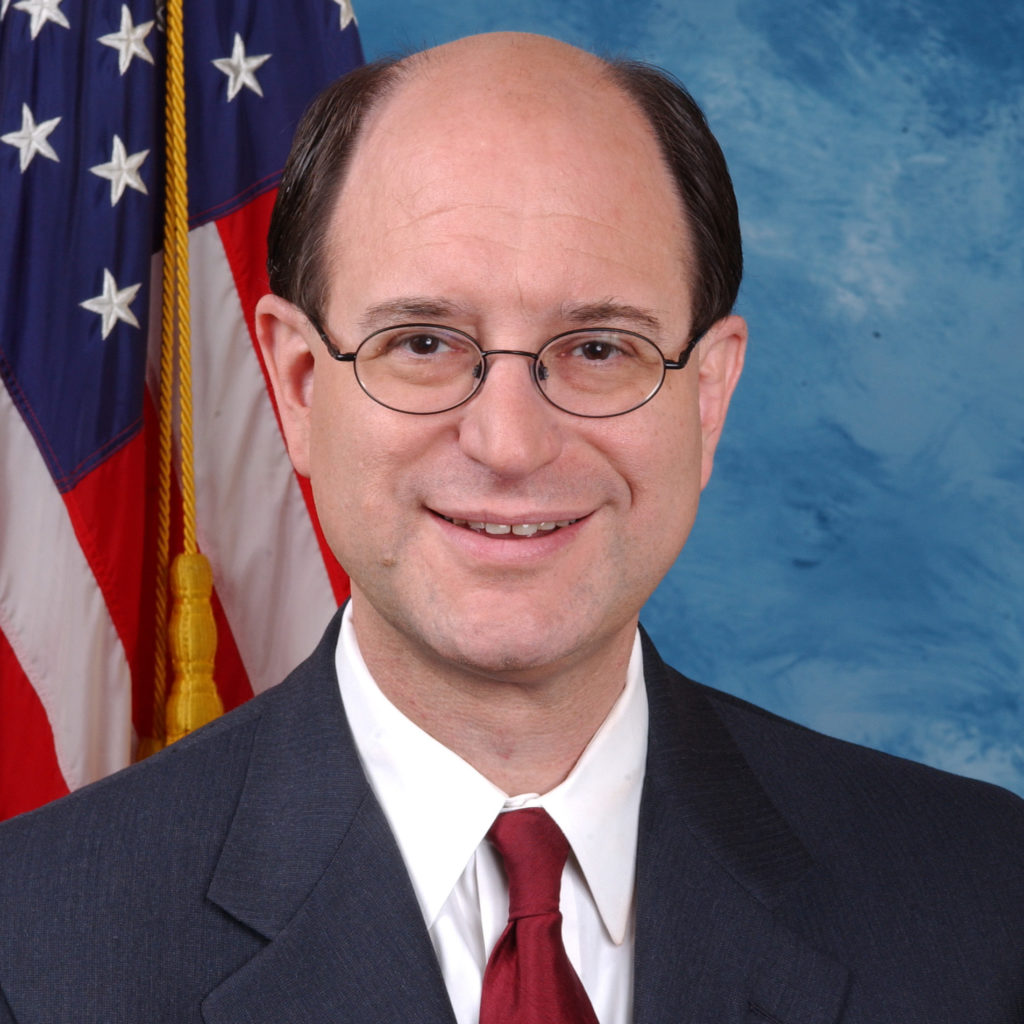
In a telephonic town hall on Thursday, Congressman Brad Sherman denounced the Israeli government’s decision to suspend a plan to create a mixed prayer space at the Western Wall.

Responding to a Journal reporter’s question about the Israeli government’s decision, Sherman, who is Jewish, attributed the Israeli government’s decision, which was announced this past Sunday and has sparked outrage in the non-Orthodox world, to politics.

“For what appears to be political reasons the government of Israel has reneged on the agreement to create a place at the Western Wall where Reform and Conservative Jews can pray in the manner they’re used to praying,” he said.

Journal columnist Shmuel Rosner has written about the issue.

Israeli Prime Minister Benjamin Netanyahu’s cabinet approved a compromise in January 2016 to formalize a pluralistic prayer space at the Western Wall. Egalitarian prayer – where men and women pray together, and women are allowed to read from a prayer book and a Torah scroll — already takes place at a southern part of the Western Wall known as Robinson’s Arch. The agreement would have created a entrance to the Western Wall for all of the denominations and placed the holy site under pluralistic oversight.

Since the approval of the plan, the ultra-Orthodox parties in Israel have worked to delay the implementation of the agreement. The Diaspora community, represented by organizations such as Jewish Federations of North America, Union for Reform Judaism and the United Synagogue of Conservative Judaism, have expressed disappointment with the Israeli government in the wake of the suspension.

Sherman, for his part, predicted Israel’s decision to suspend the agreement will damage Israel’s security.

“It shows Israel … kowtow[ing] to a few and to the extreme right of the religious spectrum. The government of Israel [with this decision]… cuts Israel off from Jewish-Americans and I think that’s a huge mistake,” he said. “I think long term that estrangement or even elements of estrangement is a threat to Israel’s security.”

Sizable chunks of American Jews identify as Reform and Conservative.

Rep. Brad Sherman denounces Israel suspending Western Wall plan Read More »

Diaspora Jews cannot expect veto power over Israel

American Jews seem surprised that Israelis aren’t all that moved by Diaspora grumblings they might withdraw support if the Kotel controversy is not resolved in a way that fully respects their forms of Judaism.

The American Jewish argument is, roughly: “Israel is the home for all Jews, and when I come to Israel I want to feel at home. Most specifically, I want to be able to feel comfortable when I pray at Judaism’s holiest site.”

The problem with that argument is political rather than religious. I know it’s painful to hear, but a role for Diaspora Jews in internal Israeli decision-making would be inappropriate (until they make aliyah, God-willing soon).

An analogy could be instructive. Many – but far from all – American congregations recite the Prayer for the State of Israel. It is a lovely practice that highlights the Jewish State at the apex of worship, usually connected with the Torah reading, reminding the community of the importance of Israel and praying to God for its security and success.

But not every synagogue says it. Some congregations don’t for ideological reasons, including yeshiva-style congregations that support the Land and People of Israel but not the State; and some more liberal congregations who reject right-wing Israeli policies. Other congregations omit it to keep the length of the service short.

Some communities in Israel also shun the prayer, but the State of Israel itself benefits from its widest possible adoption. Imagine if Israel stipulated as a condition of continued good Israel-Diaspora relations that every synagogue recite the prayer, so that Israelis who visited America would feel comfortable in any congregation.

It may sound silly, but the parallels are stark:

  • When in Israel, American Jews want to pray in a way that reflects their values. Well, the prayer for the State of Israel reflects the values of Israeli Zionists.
  • Jews in the Diaspora say every Jew should feel welcome at the Kotel. Well, shouldn’t every Jew feel welcome in every synagogue? There’s a reason it’s called a beit knesset (a house of gathering) whose prayers take place in a “sanctuary.”
  • American Jews consider the Kotel to be a special, unique site. Well, for Israelis in most cities, local synagogues are islands of Jewish life they gravitate to even if they’re not strictly religious.
  • American Jews don’t see how an extra section for egalitarian prayer really hurts the Orthodox. Israeli Jews could similarly ask who it hurts to add just one prayer to the liturgy of every American synagogue — after all, nobody will be forced to say it.

So what would be wrong with such a demand?

It’s simple: Israelis don’t get input into American synagogue policy. Worship is determined by rabbis and cantors, boards and congregants. In fact, engineering appropriate liturgy can sometimes create conflict among congregational factions. Outside demands would not be welcome.

It’s the same in Israel. Here’s a sketch of the political landscape regarding the Kotel status quo: Israel has one significant group (Charedim) who defend it very strongly; one (religious Zionists) who defend it more calmly; one (secular Israelis) who lean toward liberalization but don’t really care; and one (Arabs) who do not care at all. Very few Israelis enthusiastically favor change.

Any functioning democracy would maintain the status quo. The question becomes, then, whether Diaspora Jews should have a vote — or in this case, a veto. They should not.

I want the Israel-Diaspora relationship to continue to flourish. But there have to be red lines, and one of those is that neither side gets to threaten the entire arrangement over a matter whose purview truly belongs to one side. In this case, American Jews insinuate dampened financial and political support unless the Kotel they rarely pray at is run like the synagogues at home they really pray at. If American Jewish support for Israel is so tenuous that a kerfuffle over Kotel architecture can turn them away, they were never really in our corner anyway.

Israelis are known for being both sweet and prickly at the same time, and that’s how I’ll conclude: Diaspora Jews, we would love to welcome you as permanent parts of our society. The moment you get off an aliyah flight at Ben Gurion International Airport you will have both a figurative and a literal vote in all our controversies, Kotel and otherwise. If you’re not ready for that commitment, let’s work together to help both our Jewish communities thrive.

But if you mean it, and you’re not willing to help Israel unless we set aside the results of our democratic system to boost your self-esteem and enhance your davening during sporadic visits, then the Startup Nation in the Promised Land can do without you.


David Benkof is a frequent contributor to the Jewish Journal. He lives in Jerusalem. Follow him on Twitter (@DavidBenkof) and Muckrack.com/DavidBenkof, or email him at DavidBenkof@gmail.com.

Diaspora Jews cannot expect veto power over Israel Read More »

A crash course in extremism

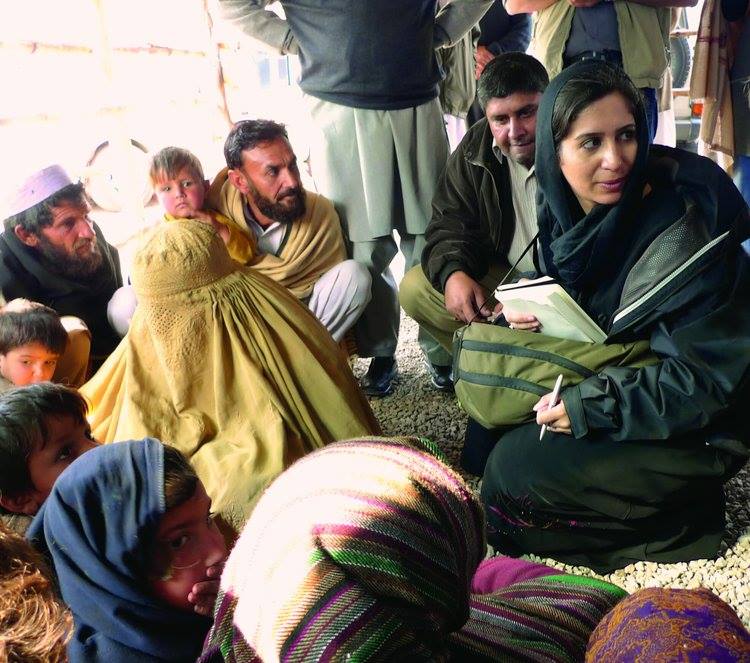
Of all the dangerous situations a single woman of marriageable age could enter into, interviewing Islamist extremists could easily top the list. 

But for reasons even she cannot explain, journalist Souad Mekhennet has been spared the grim fate of so many others, including many women and journalists who have not survived their encounters with Islamic jihad. 

In the early pages of her best-selling memoir, “I Was Told to Come Alone,” Mekhennet admits that her background makes her an “outlier” among those covering global jihad and claims it has given her “unique access to underground militant leaders.”

Though she was born and raised in Germany, she is a Muslim of Turkish-Moroccan descent who is well versed in the principles of Islam and speaks both Middle Eastern and North African Arabic. She also considers herself Western, liberal and feminist. As a child, she dreamed of becoming an actress.

It was the film “All the President’s Men” that led her to a career in journalism. Today, as national security correspondent for The Washington Post, Mekhennet’s manifold identity has played a role not only in her entrée to the dangerous, unpredictable and clandestine world of jihad but in her motivations for covering it. 

“Sometimes it’s really tiring,” she said when I met her during a recent book tour to Los Angeles. “Sometimes it hurts. Because I try to challenge; I try to somehow build bridges.”

Her work is reportage, but it’s also personal. Mekhennet tries to explain jihad to the West and the West to jihadists, often finding herself in the peculiar position of mediator. Not everyone wants to hear what she has to say: that violent extremists are people too; that they have stories to tell, beliefs that can and should be interrogated but which can be accessed only if we, Westerners, would listen.

For almost two decades, Mekhennet has searched for the answers to why and how individuals become radicalized. She began her work just after the 9/11 terrorist attacks, when the widow of a 9/11 firefighter told a group of journalists she blamed them, in part, for why her husband was killed.

“She said, ‘Nobody told us there are people out there who are hating us so much,’” Mekhennet recalled. “And she looked at me, because I was the only person of Arab-Muslim descent there. And she was waiting for an answer, and I couldn’t give her one.”

Mekhennet’s investigation has taken her all over the world, from the insular terrorist cells of Europe to the front lines of wars in Iraq and Syria. Along the way, she has struggled to understand those who use Islam to justify violence and to explain their motivations to a stupefied West. She tries to reconcile a perversion of Islam with the one she inhabits, claiming religion doesn’t radicalize people, people radicalize religion.

Throughout her encounters, Mekhennet finds herself in talmudic-like disputes with extremists, challenging them over their interpretation of the Quran. She told one ISIS commander, “This is not the jihad, what you’re fighting. Jihad would have been if you’d stayed in Europe and made your career. It would have been a lot harder. You have taken the easy way out.”

Her methods may seem audacious, even dangerous for someone who often finds herself in isolated areas beyond the rule of law of any government. And how many Western journalists could argue like that with a terrorist and live to tell the tale? Only someone educated in Islamic teaching could even mount such an argument, and one of the lessons of Mekhennet’s book is that knowledge of one’s subject is essential to ferreting out truth.

The question is: To what end?

No explanation can justify brutality. Plenty of people have suffered injustice and not taken up weapons and killed innocents. If Mekhennet’s version of Islam is compatible with modernity, then why is it also compatible with a murderous caliphate?

“When it comes to violent acts or terrorism, it is unfortunately the reality that [some] people are using Islam or call themselves Muslims and commit acts of violence,” she said. “There is a problem that we have within our Muslim communities where we need to have an honest conversation about who is speaking on behalf of Islam, and what kinds of interpretations and ideologies are out there, and how can we deal with that [as a community]?”

Mekhennet’s book is a cri de cœur to the West to try to understand “the hearts and minds” of extremists to better defeat them. She believes current policies are misguided, and that simplistic generalizations portraying a clash of civilizations are playing into the hands of recruiters who exploit Western antipathy to Islam to indoctrinate young jihadists.

For many radicals, she says, “it’s too late; there is a point of no return.” But others, she believes, can be saved.

“This is not a clash of civilizations or religions,” she said. “This is a clash between people who want to build bridges and look at what we have in common and those who want to preach divides.”

She recounted the time she went to Mecca for the Hajj pilgrimage. Next to the Kaaba, Islam’s holiest site, is another place of honor where it is believed Abraham set foot. Having spent years studying religious divides, “this was a moment, where I said to myself, ‘Why are people not getting it? We’re connected.’”

A crash course in extremism Read More »

On anti-Semitism at Chicago Dyke March

I am a queer Israeli Jew of Arab and North African descent. I’m no stranger to oppression in many forms. My family escaped Iraq in the early 1950s as anti-Semitism in Iraq reached a peak. I grew up in an underprivileged neighborhood in Israel and struggled to make my way out of it. I served in the Israeli army as an openly queer commander for five years, and had to endure many battles on the path for acceptance. Yet I cannot wrap my head around the bigotry, hatred and anti-Semitism coming from my LGBT community.

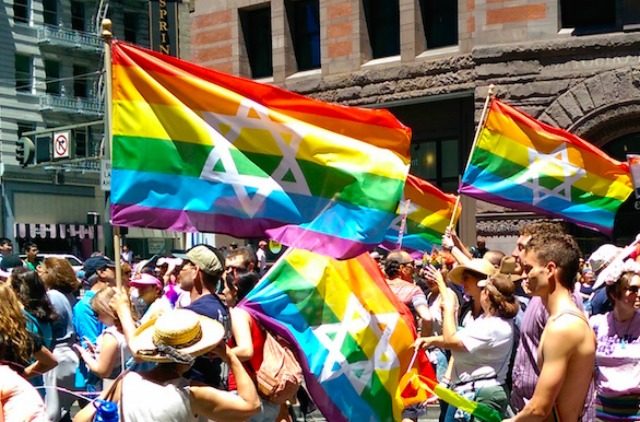
On June 24, the final red line was crossed at the Chicago Dyke March. What was supposed to be a march for equal rights for an oppressed minority turned into a hate-fest targeting Jewish people — yes anti-Semitism in the guise of LGBT rights. Three LGBT Jewish participants were forced out of the parade for holding a rainbow flag with a Star of David on it. For the organizers, it was unacceptable to have a Jewish symbol at the parade. While you might think that they would try to apologize after this shameful act, they didn’t. The organizers took to Twitter and argued: “Queer and Trans anti-Zionist Jewish folks are welcome here …” In other words, some Jews can join, but they will decide which ones.

It is not a political stand; we all know it is not. If this were political, why are they not targeting the countless countries that ban homosexuality and target LGBT people on a daily basis? Would they be removing Iranians from the parade for holding a flag with crescent on it? In Iran, they hang gays every day. Why not Gaza, where they throw gays off of rooftops? Or Chechnya? It is not political, it is ideological, an ideology called intersectionality. The problem with intersectionality is that it doesn’t even adhere to its original meaning: All struggles for rights are inherently connected. It has now become a tool to be used against not only Israel, but Jews in general, who are accused of “white privilege” even though we’re not white.

What does the support of Zionism (the movement to liberate the Jewish people in their ancient homeland) have to do with your LGBT identity? What does your religion have to do with it? Even if you are critical of Israel’s politics and policies, as I am and many Israelis are, why are the organizers supporting only “anti-Zionists”? The only meaning of anti-Zionism is the destruction of Israel, the only Jewish state. For the organizers of the parade to support anti-Zionism can mean only that they support the end of Israel, destroying the Jewish state. Iran’s leaders, ISIS, and many terrorist groups hold similar views to the organizers of the Dyke March. It can be defined only as anti-Semitic.

We are witnessing a trend among many in the progressive camp, a camp of which I am a part, that is losing its true identity and being used by campaigners and strategists manipulating them. Some queer groups and other minority groups are being used as tools to promote hatred of the Jewish state and the Jewish people. They are being told to use their identity, be it their race, gender or religion, to fight Israel for a cause they have no connection to. These groups must ask themselves, before taking a stand about Israel, when was the last time they took a stand about another conflict around the world? When was the last time they’ve judged a participant in an event based on his ethnicity or religion? Why is it only with Israel and Jews that they feel that they have the liberty to boycott, to discriminate and to hate?

The signs are clear and this type of hateful incident is a red flag for the LGBT community. What is this community if not a community that is fighting for equality and justice, for our community and for all? Although it is not popular to stand up for the Jewish people and the Jewish state, we must remember the lessons of history. It might start with us but it never ends with us.

Also, everything can change very quickly. The just thing to do is to stand up to this type of hatred and call it what it is, nothing more or less than anti-Semitism.


Hen Mazzig is an Israeli writer, speaker and social activist from Tel Aviv. You can follow him @HenMazzig.


On anti-Semitism at Chicago Dyke March Read More »

Riding food truck success, Holy Grill opens restaurant

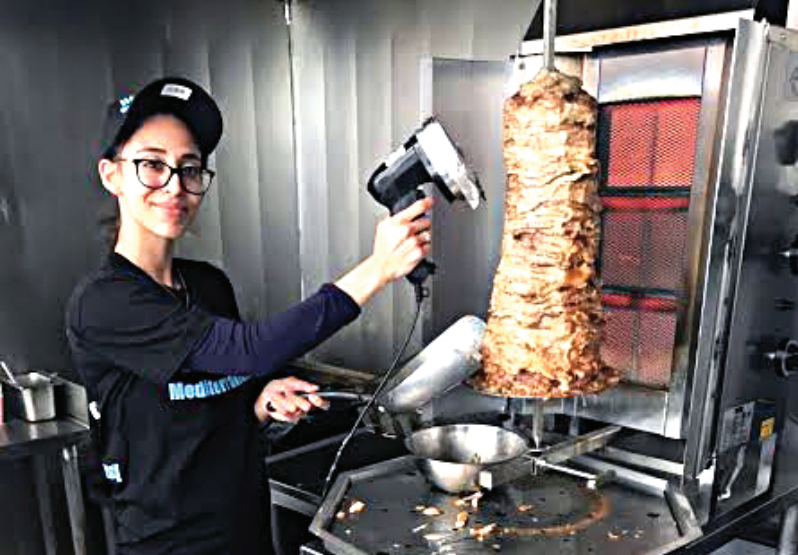
Almost four years ago, Ella and Adiel Nahmias opened a glatt kosher food truck called The Holy Grill, serving Israeli food in the Garment District downtown. The business became so popular that the husband- and-wife team has now opened a restaurant of the same name in Pico-Robertson.

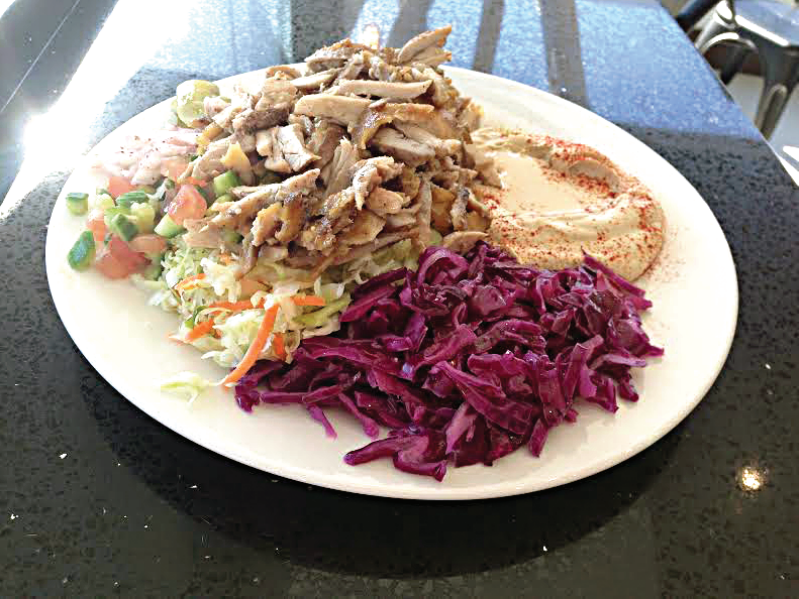
The Holy Grill at 8975 W. Pico Blvd. is glatt kosher certified, serving such fare as tender baby chicken shawarma, falafel, sabich (a pita stuffed with fried eggplant, hardboiled eggs and pargiot — tender chicken marinated overnight). For more Americanized taste buds, the restaurant offers a ground-beef kabob burger, chicken hot dogs and the Holy Burger Special (two beef patties, grilled pastrami, a sunny-side-up egg, red onion and a creamy barbecue sauce).

“Everything is made fresh daily,” said Ella, who manages the restaurant while her husband oversees the truck.  “We don’t use a pre-made mix for our falafel or anything else. That gives it an extra fresh flavor.”

The Nahmias hail from Israel — Ella from Jerusalem, Adiel from Afula. His family is Moroccan and would eat the traditional foods that his mom and grandmother cooked. One of Adiel’s favorite recipes is his mother’s cooked lamb with couscous and veggies.

Ella Nahmias stands in front of a shawarma spit. Photo courtesy of Ella Nahmias

All of my friends usually wanted to come over for the amazing food and love they received in our home,” he said. “I always loved watching my family cook, and was always interested in the way you had to dedicate time and  ‘give love’ to your food.”

After attending school and serving in the Israel Defense Forces air force, Adiel moved to L.A. in 2008. “It was a difficult decision, as I love my home country, Israel, and it was difficult to think of leaving friends and family,” he said. “But I knew it was the right decision for me at the time.”

Ella had been living in Southern California since 2002, when her family moved to the San Fernando Valley. She met Adiel at a mutual friend’s Shavuot party, and she said she knew immediately that  he would be her husband. They soon started dating, became observant together, got married and moved to Pico-Robertson.

Adiel built up his resume by managing Bibi’s Bakery Café on Pico Boulevard, while Ella has learned the business over the past few years. “When I met Adiel, I had to start learning how to cook on his level,” she said. “We sometimes argue who’s better at cooking certain things.”

The Nahmias negotiated over nine months to buy the space for the Holy Grill restaurant. Once it became theirs, they remodeled the building, adding large windows, a new floor and new countertops. “When we advertised during the whole three weeks of construction, people came in and asked when we were opening,” Ella said.

The restaurant serves lunch and dinner, and the couple still run their catering business for corporate functions and simchas. Ella said she is confident the restaurant will prove popular because of the portion sizes, homemade foods and the shefa (flow) of the place.

“What makes us different is the amount of food that we are giving,” she said. “Our flavor is from our secret family recipes, and we have positive vibes here.”

Their goal is to open more locations and serve a wider clientele beyond the Jewish community.

“I want our restaurant to continue to be inviting for all types of people,” Ella said. “This is a glatt kosher restaurant, but I don’t want to only target the Jewish communities. I want to make sure we reach everyone. I want them to come in and feel like we’re a part of Israel, whether they hear the music we play, or [experience] our customer service or see the amount of food we give on the plate.”

Though operating two food businesses can be stressful, Ella and Adiel, who are parents to two young children, have stayed strong.

“It’s mostly been amazing,” Ella said. “I don’t think I’ve ever met a couple that can handle it like us. We have some different views. My husband thinks more with his heart and I think more with my brain. I’m a little bit more business and he’s more heart.” 

Riding food truck success, Holy Grill opens restaurant Read More »

A Jewish Medical Hero from Azerbaijan: The Life of Dr. Gavriil Ilizarov

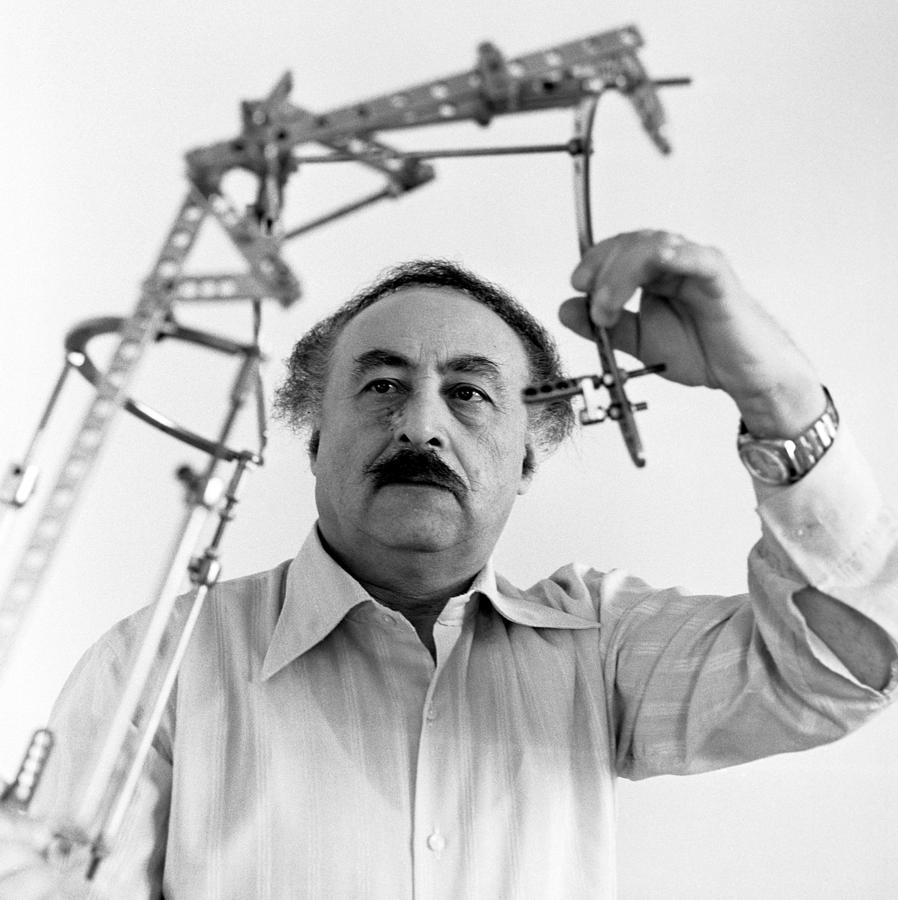
From my own experience and from the life stories of so many others, I know that a Jew, a Christian or Muslim growing up in Azerbaijan all have an equal chance at making a successful life and making significant contributions to our world. One such success story that has always stayed with me is that of Gavriil Abramovich Ilizarov. The story of a great innovator, scientist and thinker that did not have the internet, or many research associates; rather he had a desire to explore saving lives and in the most difficult of circumstances – war.  

Ilizarov was born in 1921 into a poor Jewish peasant family from Azerbaijan, who had moved to Poland. His father, Abram Ilizarov, was a Mountain Jew from Qusar, Azerbaijan, while the mother, Golda Ilizarova, was of Ashkenazi Jewish ancestry. When he was little, his family moved back to Azerbaijan, where he grew up in the town of Qusar, near Qırmızı Qəsəbə – a Jewish town. Ilizarov graduated from Buynaksk Medical Rabfac (an educational establishment set up to prepare workers and peasants for higher education) in Dagestan 1939 and was admitted into the Crimea Medical School in Ukraine. At the height of World War II his medical school was relocated to Kazakhstan, where Ilizarov completed his training, and encountered the worst cases of bone and limb damage imaginable among Soviet soldiers who fought against the Nazi army on the Eastern front.

From these experiences, Dr. Ilizarov embarked on groundbreaking discoveries that would change the future for people with severely damaged limbs. Dr. Ilizarov discovered that by severing bones in half, and affixing them slightly apart, so to leave a small amount of space, that the bones would regrow to fill in that space. This meant that even totally shattered bones could be repaired, and even lengthened. Dr. Ilizarov took his groundbreaking discovery one step further and developed an apparatus, based on the mechanics of a bicycle, to set severed bones in place and, at the same time, continuously spacing the bones apart so to facilitate regrowth.

For years, many doctors and scholars scoffed the idea; it was before considered unthinkable to repair a bone through the process of regrowth. But Dr. Ilizarov had seen the results first hand from his many years in Siberia, and he persisted in advancing and perfecting his surgical technique and his apparatus. In 1968, his reputation changed dramatically, after his success in treating the famous Russian Olympic champion, Valeriy Brumel. Brumel had injured his leg in a motorcycle accident and underwent dozens of unsuccessful surgeries before connecting with Dr. Ilizarov. Only then and with the help of what became known as the Ilizarov Apparatus, was Brumel able to recover, where before meeting Dr. Ilizarov he had faced the prospect of amputation. After this, Dr. Ilizarov became famous for his invention and more generally, for his magic touch with healing bones. In 1987, Ilizarov’s orthopedic techniques were brought to America, and he had officially achieved international recognition and fame. That same year, American manufacturers began distributing his apparatus; what they called the Ilizarov External Fixator.

Unlike the experience of Jews living in other nations within the region or regions nearby, Ilizarov  benefitted from the open and embracing culture of tolerance that exists in Azerbaijan, where a Jewish child can grow to become a doctor and scientist, with the rights and freedom to pursue passions and goals; just the same as anyone else. We have seen this with many examples, including our current Supreme Court Judge Tatyana Goldman, our Jewish Parliamentarian Yevda Abramov, and many leaders and heroes across the spectrum of industry and action, today and throughout our past.

Dr. Ilizarov was one of the Soviet Union’s most decorated civilians, and received the Order of Lenin three times, the Order of Hero of Socialist Labor, the highest civilian honors in Italy, Jordan and Yugoslavia. His discovery had finally changed the way in which doctors approach shattered or deformed bones, then and today.

I consider Dr. Ilizarov’s true bravery, this genius to pursue unique ideas; all in the face of overwhelming and tumultuous circumstances. I also consider the fact that he was given the freedom and resources to pursue his career in the first place, a fact that people from my generation and many parts of the world do not take for granted. What if his parents had not moved from Poland back to Azerbaijan, so that he could grow up in safety as a Jew and with support for his studies, rather than endure what so many Jews in Poland endured? How many people would have suffered with otherwise untreatable injuries or deformities if this one man did not have the opportunity to study and relentlessly pursue his passion?

I see there is a very strong connection between the homeland of Dr. Gavriil Abramovich Ilizarov and the accomplishments of his life. Like so many of his Jewish brothers and sisters from Azerbaijan, he nurtured and shared his gifts in order to make the world a better place.

A Jewish Medical Hero from Azerbaijan: The Life of Dr. Gavriil Ilizarov Read More »

Parashat Chukat: We all stand before the rock

As the parent of a preschooler, I am becoming well-versed in the prompt, “Please use your words.” What I’ve learned is that for a very young child who is just learning to speak, it often seems much easier to express one’s self in response to injustice (perceived or real) using a swift action — hitting, biting, pushing, etc. — versus taking the time to formulate the necessary words to get the point across. For some of us, this taste for action and reaction lingers long past our development of sophisticated language.

In this week’s parsha, Chukat, the Israelites are complaining of thirst. God commands Moses to assemble the Israelites and tells Moses to hold up his staff and “order the rock to yield its water” (Numbers 20:8). From this rock, God promises, water will flow and quench the thirst of the stiff-necked people. 

God says, speak to the rock. And inexplicably, Moses doesn’t. Or he can’t. Or he won’t.

In any event, Moses disobeys. He smashes the rock twice with his staff.

Water comes forth. The Israelites drink.

And God tells Moses he will not enter the Promised Land because of it.

The first word to jump out at me in reading God’s initial command to Moses is the word “the” (or in Hebrew, the preposition ha preceding the word “sela”). Why does Torah say “the rock” instead of “a rock”? Have we met this rock before? Surely in the desert landscape there were many rocks. What makes this particular rock special? How did Moses know which rock was “the rock” with which he was meant to speak?

Perhaps the use of the definite article here is a foreshadowing. This is not just any rock. This rock represents Moses’ greatest struggles. This rock has followed him for years and years. Of course, Moses knew which rock to hit.

As a young man, Moses witnessed deep injustice. When he saw an Egyptian taskmaster strike an Israelite slave, he looked left and right, and mirrored the violent act, striking and killing the Egyptian taskmaster. No words, just action.

The next day, Moses witnessed a second injustice: two Hebrew slaves fighting. He approached them and asked, “Why do you strike your fellow?” The Israelite responded, “Who made you chief over us? Do you mean to kill me as you killed the Egyptian?” Moses was frightened. He realized that his secret was out and he fled. No words. Action.

Moses fled to Midian, and there, God approached him in a burning bush. God told Moses, “I will send you to Pharaoh, and you shall free My people, the Israelites, from Egypt.” 

Moses replied, “Who am I that I should go to Pharaoh … Please, Adonai, I have never been a man of words.” Moses knew himself. He was not a person of words. 

But God was insistent. God said, “Who gives man speech? Who makes him dumb or deaf, seeing or blind? Is it not I, Adonai? Now go, and I will be with you as you speak and will instruct you what to say.” God believed that he could change Moses. That he could make him a man of words.

I wonder if Moses reflected on this exchange as he stood by the beaten rock, water flowing freely from it, next to his brother, and before the people. Moses struck the rock, water flowed out, and God said, “Because you did not trust Me enough to affirm My sanctity in the sight of the Israelite people, therefore you shall not lead this congregation into the land that I have given them” (Numbers 20:12).

Did God get it right? Was this really about mistrust? Or a negation of sanctity? Or was this about something much more fundamental: Moses’ inability to change and God’s inability to change him.

What might Moses have said to the rock if he could/would have spoken?

In the end, God can tell Moses, “Use your words,” but the command is where it ends. The speech — the growth, the change, the evolution — they were up to Moses.

Ecclesiastes tells us, “A time for silence and a time for speaking.” But, in the end, this week’s parsha is not only about speech and silence. It is about Moses facing the rock. His rock. And rising above his own limitations. Or not. It is about realizing full potential, or missing the moment.

And so it is for us. We, too, have found ourselves, or find ourselves, or will find ourselves in the desert. Wandering. Facing the rock that follows us. For some of us, the rock is a proclivity to react or act instead of taking time to listen or speak. For others, it is impatience or apathy, defensiveness or rage.

We, too, have limitations. Limitations that repeat themselves. Like Moses, again and again, there are aspects of ourselves that hold us back, which we seek to change.

And we, too, will be called upon again and again to stand before our own rock. We will have our own opportunities to rise above our limitations. Or not. For us, the Promised Land is still so very much a possibility. We stand, too, staffs poised. The question for us is: Now what? 


Rabbi Jocee Hudson is an associate rabbi at Temple Israel of Hollywood.

Parashat Chukat: We all stand before the rock Read More »

[WATCH] My Super Sweet Bar Mitvzah

Remember your Torah Portion? Your party theme?


Jewish Journal staffers share memories of their super sweet (and sometimes super awkward) bar and bat mitzvahs, from traumatic Torah portions to getting down on the dance floor. With no shortage of party themes, over-enthusiastic deejays, and dance floor crazes (remember heads up 7 up?), they recall their coming-of-age tales. Make sure to check out our Mazel Tov! supplement in this week’s issue of the Jewish Journal.


[WATCH] My Super Sweet Bar Mitvzah Read More »

Western-Wall

Reversal on Kotel decision ruptures promise of Jewish unity

Why wasn’t I surprised to hear that Prime Minister Benjamin Netanyahu flip-flopped again and reneged on the government’s 2016 decision to allow egalitarian prayer at the Kotel? Perhaps because at the same time I was watching the current season of “House of Cards,” where anything goes to stay in power.

Frankly, I don’t care so much about the Kotel. Yehuda Amichai, the great Jerusalemite poet, once wrote that Jerusalem will become normal only when a tour guide will stop telling his group, “You see the man sitting there? On his right, there is an ancient arch.” (I’m paraphrasing fom memory.) Instead, he should say, “You see the arch there? Left of it there is a man, probably coming back from the market.”

However, I remember vividly the moment 50 years ago, in the heat of the Six-Day War, when I landed from a sortie in Sinai and upon entering my squadron’s officers mess, I heard the words “Har HaBayit BeYadeinu” (The Temple Mount is in our hands). An outburst of joy erupted from our crowd of airmen, with none of us being even close to Orthodoxy.

Reflecting on this today, I know that what touched us at Squadron 103 so deeply had nothing to do with religion but with the fact that this Wall was the focus of yearning and praying of Jews over centuries. When Jews say “Next Year in Jerusalem,” they have the Kotel in mind. Indeed, some worship it because it was a part of the Second Temple, while others, like me, tend to regard it as an important magnet for Jewish identity. More than the Kotel itself, I value the fact that my friend, professor David Heid, a philosopher from The Hebrew University, is one of the four paratroopers immortalized in the famous photo taken by David Rubinger, standing next to the Kotel immediately after it had been taken. 

Now, the Kotel manages to stir emotion in my heart once more, this time rage, not elation, and again, it is not about religion but about the base, cynical and ungrateful attitude of the Israeli government toward fellow American Jews.

In November 2015, Netanyahu addressed the General Assembly of the Jewish Federations of North America, in Washington, D.C. To the standing ovation of the crowd he promised, “I will always ensure that all Jews can feel at home in Israel — Reform Jews, Conservative Jews, Orthodox Jews — all Jews.” 

Then he touched upon the issue of the Kotel specifically: “I am also hopeful that we will soon conclude a long overdue understanding that will ensure that the Kotel is a source of unity for our people, not a point of division. And we’re getting there, I have to say.”

Indeed, in January 2016, the Israeli government decided to establish a pluralist prayer section at the Kotel. The architect of this momentous move was Avichai Mandelblit, then-government secretary and today attorney general, an Orthodox Jew. On June 25, Netanyahu’s government surrendered to its ultra-Orthodox veto-holders and reversed its decision.

I wonder if Netanyahu would dare address the next General Assembly and speak again about Jewish unity to thousands of Jews of all denominations — those who responded to his oratory and rallied against their own government on the Iran deal, when he asked them to do so. What a shame.

What should American Jews do now? To start with, the board of governors of the Jewish Agency was right in cancelling a dinner that was scheduled with Netanyahu for June 26. In the longer run, the best thing that could happen would be an aliyah of 1 million American Jews — Conservative, Reform, Modern Orthodox — who would change the political scene here. Just see what the Jews from the former Soviet Union have accomplished here in a short time.

Assuming that this option is not so viable, then second best for American Jews would be not to wash their hands of Israel, but to ally with individuals, movements, organizations and parties in Israel that believe in and promote equality for all Jews, regardless of how they choose to exercise their religion.

There are still some of us here who will fight against this political-religious tyranny, and if necessary, I’m willing to even mobilize my old comrades from Squadron 103 for that cause.


Uri Dromi is director general of the Jerusalem Press Club. He served as spokesman of the Yitzhak Rabin and Shimon Peres governments from 1992 to 1996, during the Oslo peace process.

Reversal on Kotel decision ruptures promise of Jewish unity Read More »

Rachel Gastfrajnd Schwartz: Teamed with her sister during worst times

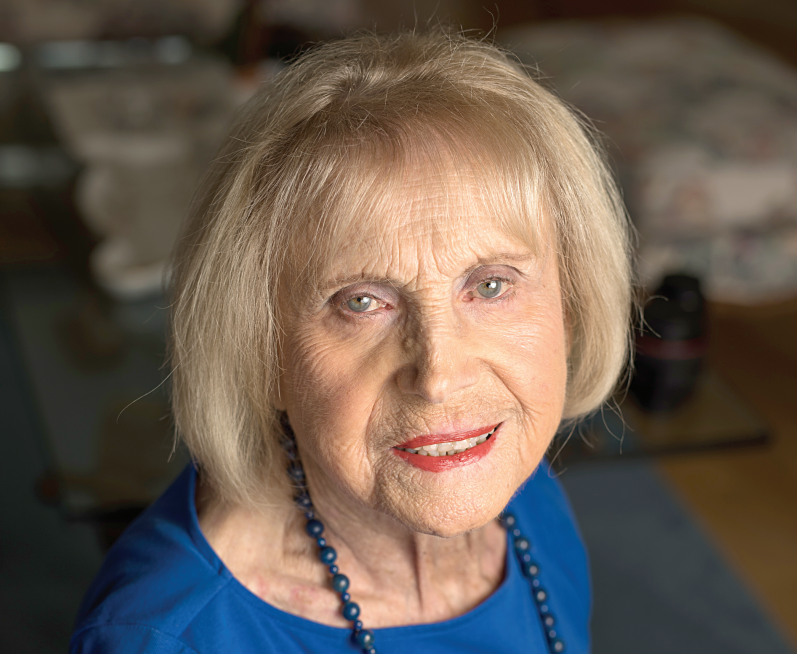
When Rachel Gastfrajnd and her older sister, Henrietta, first reached Detroit, in September 1946, Rachel was eager to write about how they survived the Warsaw Ghetto, three concentration camps and a death march. Rachel was 15, her sister, 17.

“Everything was so vivid,” Rachel recalled.

Then the nightmares set in.

Hoping to help the sisters, their maternal aunt,  Bessie Partovich, who had immigrated to the United States in the 1930s, set some rules: They had to put the Holocaust behind them and stop speaking Polish.

“You’re American girls now,” she told them.

“It was all meant to forget the bad experience,” Rachel said. “And people in general didn’t want to believe it or talk about it.”

Rachel took her aunt’s words to heart. For decades. Even her two American husbands and her sons were kept in the dark. It wasn’t until more than 50 years after the war, in 1998, that she felt comfortable enough to give testimony to what is now the USC Shoah Foundation, a decision she attributes to having seen the premiere of “Schindler’s List” in Krakow, Poland, in 1994.

Then, she went another 18 years before breaking her silence again, addressing a group of B-17 Combat Crewmen and Wingmen in Long Beach last October.

“Since the soldiers came to liberate us, it just touched me,” she said.

She also spoke this year at USC Hillel’s Yom HaShoah commemoration.

Rachel was the youngest of four children born to Sara and Israel Gastfrajnd. Her father owned a mattress factory on the ground floor of their apartment building in Warsaw. The family was financially comfortable, and Rachel remembers her parents as very loving.

Life was joyful until the morning of Sept. 1, 1939, when Germany declared war on Poland. As bombs fell on Warsaw, the Gastfrajnd family huddled in the basement of their building.

Sometime after Oct. 16, 1940, the family was forced to relocate to the Warsaw Ghetto, moving the mattress factory, which then produced cots for the German army, inside their cramped quarters. All six family members helped out. “That’s why we were still alive,” Rachel said.

Rachel and her family lived in constant fear. Food was scarce, dead bodies littered the streets, and soldiers often conducted raids. “We had to hide all the time,” she said, often in large barrels placed behind a door.

While the family succeeded in staying together in the ghetto, Sara often told her children, “Whoever survives the war, we have two aunts in Michigan,” drilling their names into their heads.

On the first day of Passover in 1943, as Nazi troops were attempting to liquidate the ghetto, buildings erupted in flames. Rachel and her family were forced to abandon their apartment, clustering with others at the Umschlagplatz, the holding area near the train station, believing they would be resettled in the East.

Guarded by German soldiers with rifles and dogs, people were screaming and crying. The men and women were separated. “That’s the last time we saw our father and two brothers,” Rachel said.

After several days, Rachel, Henrietta and their mother were crammed into a cattle car and transported to Majdanek, the concentration camp outside Lublin.

Waiting in line, they approached the SS officer conducting a selection. He pointed for Rachel’s mother to go right and Henrietta to the opposite side. He then directed Rachel to follow her mother. Henrietta burst into tears. “No, no, no,” she shouted. The SS officer stared at both sisters for a good minute and then motioned for Rachel to join Henrietta. “Maybe I reminded him of a daughter or somebody,” Rachel said.

Rachel learned about the gas chambers and crematoria, realizing her mother’s fate. Hopeful their father and brothers were still alive, the sisters focused on good memories, often by singing popular Polish and Yiddish songs. “We tried to lift ourselves up,” she said.

In fall 1943, Rachel and Henrietta were transported to Skarzysko-Kamienna, then a forced labor camp in east-central Poland. They shared the same barracks, and during their 12-hour work shifts, Rachel produced ammunition while Henrietta toiled in the mines.

In late July 1944, with the sounds of Soviet gunfire in the distance, two girls whom Henrietta had befriended at work invited her to join a group planning to escape into the forest that night. Rachel, they explained, was too young. Henrietta declined their offer, refusing to abandon her sister. Those who fled that night — estimates vary from 250 to thousands — were slaughtered by the Germans.

Soon afterward, the camp was evacuated and the remaining prisoners transported by cattle car to Buchenwald, a concentration camp near Weimar, Germany.

The two girls worked in an ammunition factory where an elderly German civilian supervisor took a liking to them, often slipping them a hard-boiled egg or apple.

In early April 1945, as the Soviets were closing in, the prisoners were marched out. “It was bitter cold,” Rachel recalled. They walked for several weeks, sleeping in fields and sometimes deserted barns. “We were just starving. We were eating grass,” Rachel said. After two weeks she began hallucinating.

One day, they awoke in a barn near the Elbe River to the sounds of soldiers speaking Russian. It was late April 1945, and they had been liberated. “We were probably unconscious by then. I’m sure of it,” Rachel said.

Several weeks later, having regained some strength, they began the chaotic journey back to Warsaw, riding in jeeps driven by Soviet  soldiers and by walking.

One night, while staying with a German family — elderly grandparents and their grandchildren — Soviet soldiers showed up. “What you have been through, we want to kill these people,” one soldier said. The sisters said no. “I was so sick of killing and death,” Rachel said.

They reached Warsaw in late June, discovering that their father’s factory had vanished and strangers inhabited their apartment. A neighbor told them that their father and older brother, Rubin, had been murdered in Treblinka. “We don’t have knowledge of Hershel,” Rachel said of her other brother.

The girls knew they didn’t belong in Poland anymore and dreamed of immigrating to the United States or Palestine.

The Jewish underground smuggled the sisters out of Poland, to the Landsberg displaced persons camp near Munich in early 1946. While there, they connected with their American relatives.

They docked in New York on Sept. 1, 1946, traveling a few weeks later to Detroit, where 40 relatives greeted them at the train station. “It was just unbelievable. My sister and I were very lucky,” Rachel said.

Initially, they lived with their Aunt Esther and Uncle Meyer Pechensky, but six months later, because of Esther’s failing vision, they moved in with Aunt Bessie and Uncle Louis Partovich.

Rachel graduated from Detroit’s Central High School in 1949. Two years later, she married Edward Schwartz. Their son Jeffrey was born in August 1953, and son Bruce in August 1957. In 1960, they moved to Los Angeles, attracted to the climate. After her first marriage ended, Rachel wed Arthur Lambert, who died in 2000.

In 1967, Rachel began working for the Feuer Corp., an air-conditioning company. Around 1991, she became a Realtor for Coldwell Banker and currently works in the company’s Santa Monica office.

In November 2012, Henrietta and Rachel spoke at the dedication of the Henrietta and Alvin Weisberg Gallery at the Holocaust Memorial Center in Farmington Hills, Mich., which Henrietta and her husband sponsored. It features a World War II-era German cattle car, which the Weisbergs purchased, and is dedicated to Sara and Israel Gastfrajnd and Rubin and Hershel Gastfrajnd.

Rachel now says that she still doesn’t want to speak regularly about her Holocaust ordeals, though she also feels a responsibility.

“In a way, maybe it’s time,” she said. “If we don’t say it, who’s going to say it?” 

Rachel Gastfrajnd Schwartz: Teamed with her sister during worst times Read More »