fbpx

June 28, 2017

There’s a California chef making waves in the Mahane Yehuda district

Chef Todd Aarons, left, and Tzvi Maller. Photo by Jessica Ritz

“We have mole, Baruch HaShem,” chef Todd Aarons said after dashing into his restaurant’s kashrut kitchen to check on the status of the complex sauce that originates from Oaxaca, Mexico. 

Leave it to a Californian to do things differently in Jerusalem.

Aarons, who years ago created Tierra Sur at Herzog Wine Cellars in Oxnard, opened Crave Gourmet Street Food last October in a particularly buzzy pocket of Jerusalem’s Mahane Yehuda Market district. Locating it steps from the vendors inside the legendary shuk, he joined forces with three partners to bring a culinary edge to Israel, thanks to the chef’s SoCal-influenced palate and an unorthodox approach to the restaurant business.

Crave eschews Israel’s typically low wages and awkward tipping system in favor of menus with prices slightly higher than those of hyper-casual restaurants and a stronger commitment to staff training.

Its eclectic menu makes perfect sense to diners who are familiar with California’s food truck culture and the state’s culinary cross-pollination of Asian and Latin American influences. But even among people who find these concepts novel, Crave has been doing a brisk business since opening. After all, diasporic mashups are an inherent part of Israeli cuisine and culture. And Aarons’ kosher cheeseburgers don’t hurt the appeal. 

Married to an Israeli, Nava, and the father of four daughters between the ages of 10 and 16, Aarons made aliyah two years ago. But he and his partners, in particular James Oppenheim, whose expertise is marketing in the tech industry, “wanted to come here and put an imprint on what it is that we do,” Aarons said.

Crave’s team recognized an opportunity to introduce progressive American innovations. “We’re big fans of Danny Meyer, and we dissected what he was doing,” Aarons, 48, said of the Union Square Hospitality Group and Shake Shack founder, who is committed to higher wages and benefits for his employees. “If I were to open up something in the Pico-Robertson area, I would’ve done the same thing,” Aarons said. 

To Aarons, making aliyah also meant finding ways to make a positive impact on Israeli society and culture. As he often asks his colleagues, “What kind of conversation can I add to what’s going on here?”

The Crave menu gives prospective diners plenty to consider and discuss when they enter to see street art murals that decorate the interior and outside walls. Other visual and design elements make Crave much less formal than Aarons’ previous restaurants.

Before he made lamb bacon served with Israeli craft beer, Aarons attended culinary school in San Francisco, where he worked at chef Judy Rodgers’ iconic Zuni Cafe on Market Street. Peter Hoffman’s erstwhile Savoy restaurant in New York City was a logical next step, given its role as an early adopter of market-driven, seasonal cuisine in which everything was made from scratch. Aarons also spent time cooking in Europe and Mexico as he was growing more serious about his Judaism.

During the mid-2000s, when Aarons was running Mosaica, his kosher bistro in New Jersey, winemaker Peter Stern and the Herzog wine family lured him back out West. Aarons then created Tierra Sur at the Oxnard winery, arguably the state’s best kosher fine-dining establishment.

“We happened to open up a place in an area with lots of farms,” Aarons said of his time at Herzog Wine Cellars. “The farmers really dictated our menu there,” which was an extension of his training at Zuni and Savoy.

Aarons spent nine years commuting from North Hollywood to Oxnard, and after leaving Tierra Sur and a short-lived project in the Pico-Robertson area, he moved to Israel.

One of his partners, Tzvi Maller, who hails from Northridge, operated restaurants in the United States, such as Nobo Wine & Grill and Sushi Metsuyan in Teaneck, N.J., even after Maller made aliyah. He was looking for a new project in Jerusalem, and he found the timing right to join forces with Aarons.     

But after years in white tablecloth-clad rooms, Aarons’ Jerusalem goals were different.

“I wanted to do street food, something that wasn’t as high-end, and [have it be] accessible,” he said. Incorporating the global cuisines he cherished back in Los Angeles also was key.

The four partners spent about 18 months polishing the concept, which remains a work in progress.

“Coming from Los Angeles, I miss Californian cuisine and Mexican cuisine. So for us, our comfort food is Mexican,” Aarons said. “When I grew up in L.A., I wasn’t kosher. I did plenty of Korean barbecue and Mexican food.” He pointed to his admiration of chef Roy Choi and his fusion Kogi truck empire.

Aarons uses techniques he honed over the years, such as slow cooking food in vacuum-sealed plastic bags in low-temperature water, a method known as sous vide.

Younger Israelis, he said, “travel and they’re looking for authenticity and something new and exciting.” So, his twist on a pastrami Reuben sandwich with house-made kimchee, truffle sriracha mayo and pickled onions slathered on the rye bread finds a warm welcome.

Questions of cultural appropriation that might arise in the United States when a Jewish chef serves Filipino-inspired adobo brisket or Baja-style fish tacos don’t seem to be an issue in Israel thus far.

“There are very few ingredients we have to bring in,” he said. “Chili flakes we don’t find. But sriracha is here. It’s a small country but everything is here.” 

There’s a California chef making waves in the Mahane Yehuda district Read More »

Israeli-born T.J. Leaf makes a bit of history in NBA draft

T.J. Leaf

At the 2017 NBA draft, all eyes seemingly were on UCLA point guard Lonzo Ball, the passing wizard with the brash, headline-grabbing father, who was selected second overall by his hometown team, the Los Angeles Lakers.

But in Israel, knowledgeable fans were more interested in what would happen to one of Ball’s college teammates, the only Israeli-born player projected to hear his name called on draft night.

When the Indiana Pacers went on the clock in the first round with the 18th overall pick — a fortuitous number for any Jews watching — a little bit of history was made.

T.J. Leaf, a 20-year-old, 6-foot-10 freshman out of UCLA, became the second Israeli-born player to hear his name called by the commissioner and receive the coveted congratulatory handshake, during the June 22 draft, held in Brooklyn. He was born in Tel Aviv, where his father was playing professional basketball at the time.

In 2009, Omri Casspi, who currently is on the Minnesota Timberwolves, his sixth team, became the first Israeli-born player to be drafted. The only other Israeli to play in the NBA was Gal Mekel, who currently plays for Maccabi Tel Aviv. He had brief stints with the Dallas Mavericks and New Orleans Pelicans, but signed as a free agent and was not drafted.

Pacers president Kevin Pritchard told reporters at Leaf’s introductory press conference, held in Indianapolis the day after the draft, that he has high hopes for the young prospect.

“He works out three times a day; he’s committed to winning,” Pritchard said. “We feel like we got a top-10 pick in this kid, and when you’re picking 18, that’s pretty good. Whatever his ceiling is as a player, he’s going to get there.”

During his one and only season at UCLA, Leaf flourished, leading the Bruins in scoring with 16.3 points per game and helping them reach the Sweet 16 of the NCAA tournament.

“He’s shown that he has a terrific skill set,” UCLA head coach Steve Alford said in a statement to the Journal. “The Pacers have a very talented young player coming into their program, and we can’t wait to watch him at the next level.”

Leaf’s father, Brad, also was selected by the Pacers decades earlier — in the seventh round of the 1982 NBA draft. He was cut during training camp but went on to have a successful career overseas, playing in Israel’s top league for 17 years.

“Brad was a very good ballplayer in Israel,” Israeli basketball legend Tal Brody said. “He did very well in leading his Galil Elyon team; just an excellent player in the league. The Israeli basketball world knows Brad for sure. Everybody liked him as a player and as a person. He had a very good career.”

T.J. is not Jewish but has dual citizenship. The Leafs moved back to the United States soon after T.J. was born, but he played for Israel’s under-18 junior national team in 2015, winning tournament MVP honors at an International Basketball Federation (FIBA) competition in Austria.

“Brad apparently worked with T.J. and
developed him into a very good player,” Brody said.

In an interview with The New York Times in February, Brad, who couldn’t be reached by the Journal, said his exposure to the European style of play favored in Israel inspired him to develop T.J. into an all-around player, not just a traditional back-to-the-basket big man.

“I just kept on having him play on the perimeter,” said Brad, who coached T.J. in pre-high school summer leagues and then at Foothills Christian High School outside of San Diego. “Guard skills — like over in Europe, like I was accustomed to.”

Brody, who forever will be revered in Israeli basketball circles for spurning the NBA to help grow the sport in Israel and leading Maccabi Tel Aviv to EuroLeague glory in the late 1970s, told the Journal that Brad’s legacy should help T.J. develop a following in Israel.

“The majority of people here in Israel probably don’t know T.J. himself or probably never saw him play, but there’s a percentage who love basketball and most likely watched some of his UCLA games at 2 or 3 in the morning,” Brody said. “But everyone knows his father very well. Once it was written in the papers here, they knew the name Leaf. A lot of people involved with basketball here are very excited to have a third player in the NBA.”

Israeli-born T.J. Leaf makes a bit of history in NBA draft Read More »

Documentary producer Sheila Nevins turns spotlight on herself in new book

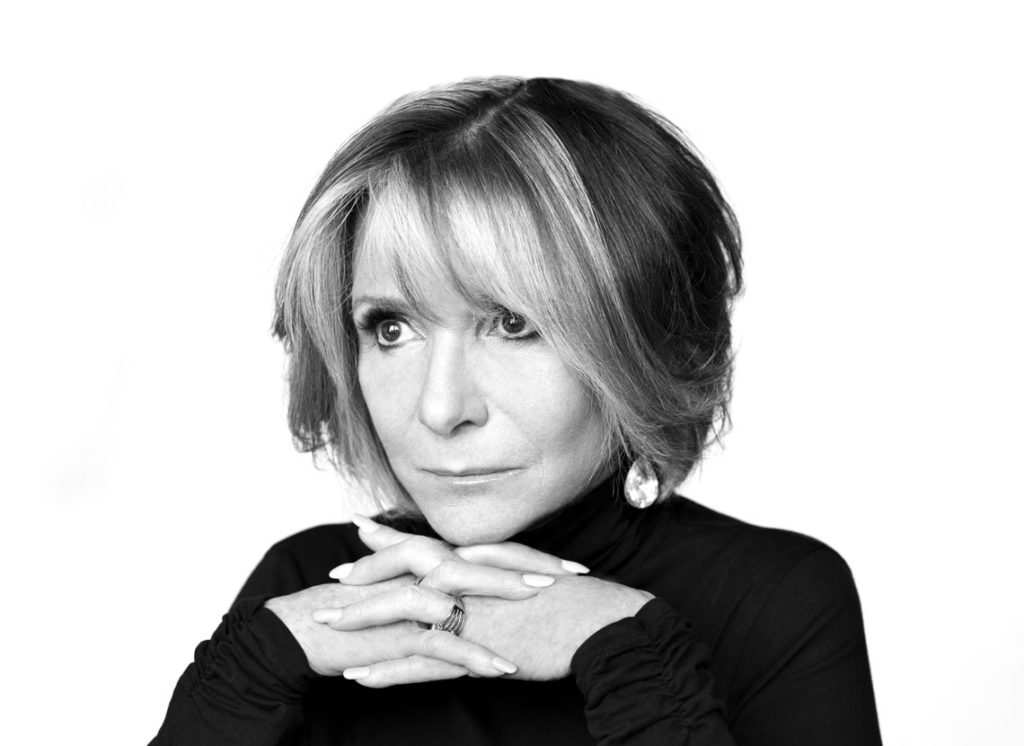
More than 50 years ago, Sheila Nevins — who now is HBO’s esteemed president of documentary films — was nervous and thrilled when her first love invited her to meet his parents at their tony home in Connecticut.
She was a graduate student at the Yale School of Drama, a secular Jew whose Russian immigrant father was a postman and whose mother was a card-carrying member of the Communist party.

Her boyfriend was a Harvard law student, descended from wealthy Christian stock. They had spent a blissful semester together. “I said to my girlfriends, ‘Do you think he wants to get engaged?’ ” Nevins recalled in a telephone interview from her home in Manhattan.

His mother was cordial until she and Nevins were washing dishes after a meal. “She asked me if I was Jewish,” Nevins said. Nevins replied that she was. “Then she said the clincher, which was, ‘Aren’t there any interesting Jewish men at the law school who would be more suitable for you?’ ”

After the visit, her boyfriend dumped her.

“I don’t know if anything had ever happened to me that was as traumatic,” Nevins said. “It took me 10 years to get over it. I hadn’t known that being Jewish could be a detriment in this country.”

From that painful experience, one of the most celebrated executive careers in modern television was born. Rather than succumb to the psychological scars left by a condescending woman or anyone of her ilk, Nevins vowed to extract revenge by succeeding beyond all expectations in her career, outmaneuvering obstacles, including sexism and ageism, to win respect for herself and, eventually, the division she now leads.

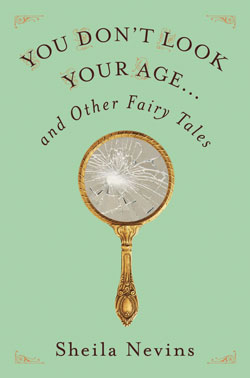
“This mother who deemed me unworthy has been by my side through accolades for accomplishment, praise for good deeds,” Nevins writes in her new book of essays, “You Don’t Look Your Age and Other Fairy Tales.” “Sometimes she is still with me as a driving force. … All I did was to prove her wrong.”

Nevins, who is 78, has produced more than 1,000 documentaries for HBO and has become widely regarded as one of the most influential executives in the world of nonfiction filmmaking. She has overseen productions that have received 32 Emmy Awards, 42 Peabody Awards and 26 Academy Awards. She has won 32 individual Primetime Emmys, more than any other person. Her celebrated films have included 2013’s “Manhunt: The Search for Bin Laden,” 2015’s “The Jinx: The Life and Deaths of Robert Durst” and this year’s “Cries From Syria.”

Now she is telling her own story for the first time, in a book of vignettes that serves as a kind of “sly memoir,” she said.

“You Don’t Look Your Age” does not discuss her films because “that would be boring,” she said in an interview that reflected her direct style. Nevins explores such issues as aging in Hollywood, her tendency to say exactly what she thinks (sometimes to her own detriment), sleeping with bosses early in her career to get ahead, “frenemies,” her mother’s lifelong struggle with a debilitating autoimmune illness and parenting a son with Tourette’s syndrome.

Some of the essays are written in first person, some are poems, while others are narrated by fictional characters. But, Nevins said, every piece reveals some essential truth as she perceives it.

After years of telling other people’s stories in her documentaries, why did Nevins choose to write about herself after so many years? “I wanted to come out old,” she said.

She admitted some have criticized her memoir for describing yet another life of a white woman of privilege. No matter. “I am now at the age where I feel as if I can say whatever I want,” she said.

Like any good storyteller, Nevins said she aims to lure readers by beginning her book with one of her most “outrageous secrets”: She had a facelift when she was 56. “In the mirror I saw a wrinkled, witchlike, scrunched up, squashed face,” she writes of the time. And later: “I must be young at any price. Young was in. I worked in media. Nobody wanted advice from an old broad. My bosses wanted a young audience.”

When a cabbie once mistook her for TV’s “Judge Judy” Sheindlin, she ran back to the doctor’s office for more facial work. “I would try it, no matter how much it cost, no matter how much it hurt, fooling no one,” she writes.

In another essay, Nevins reveals that she grew up “fearful of decay.” Her mother suffered from a severe case of Raynaud’s disease, which involves a lack of circulation to the extremities. Over time, her fingers were amputated, then an arm and a leg. Her mother’s suffering led Nevins, as a filmmaker, “to champion stories about those less fortunate,” she writes. “I chose to tell stories of the struggle to triumph in an uncertain and often cruel world.”

One of those documentaries, “Schmatta: Rags to Riches to Rags,” had a personal connection for Nevins. Her great-aunt Celia had died in the 1911 Triangle Shirtwaist Factory fire in New York, at age 17. Nevins had previously heard family lore about the tragedy, but while working on the film, she had her researchers confirm that Celia was on the official list of the women who had died, most of whom were Jewish.

“It made me feel very sad, very immigrant, very Jewish,” Nevins said.

The conversation turned to a chapter in her book titled, “From Cosmo to Ms.,” which recounts how, in the early days of her career, Nevins was a “pretty-girl provocateur” with her male bosses, “buying attention with a too-short skirt.” She adds, “Helen Gurley Brown assured me this was the way to the top,” referring to the Cosmopolitan magazine editor.

Nevins recalled fooling around with a boss at one of her early television jobs to enhance her chances of securing a raise and a plumb assignment. Even though a lower-level executive had told her she wasn’t in the running for that job, her hanky-panky with the big boss immediately earned her the gig.

Was she trying to sleep her way to the top? “Yes, of course,” she said. “And who are you kidding — it worked.”

That all stopped when Nevins was around 23 and she discovered Gloria Steinem and the feminist movement. “It made me realize that the cover wasn’t as important as the inside,” she said. “I began to feel that I was really smart, that I was as good as that guy, and somehow I had to maneuver around the fact that I was a woman.”

Yet even after Nevins joined HBO’s documentary division in 1979, she stayed home on her birthdays so colleagues wouldn’t ask her age. She never told her bosses that she had to take her son, who has Tourette’s, to the doctor, because she had to appear as committed to her job as her male co-workers. “I didn’t want to be considered a ‘woman’; I wanted to be equal,” she said.

These days, Nevins is a force to be reckoned with, but that doesn’t mean she’s immune to the fear of aging. “Please God, I’m an atheist who wants to look young,” she writes. “I have enough Botox in me to detonate Iran. Why can’t I go gracefully into gravity?” She adds: “The secret is I don’t want to say good-bye. I don’t think it’s fair to have worked so hard and given up so much time to not have more time. … I’m angry that it’s almost over.”

“But I’m looking forward to beating out decrepitude as long as I can, and something better than Botox — it’s sort of stopped working,” she said during the interview. “I’m looking forward to certain films and to tomorrow, I guess. I’ve had a good run, but I haven’t stopped running.” 


Documentary producer Sheila Nevins turns spotlight on herself in new book Read More »

Syrian teen and mother start over in L.A. in ‘Dalya’s Other Country’

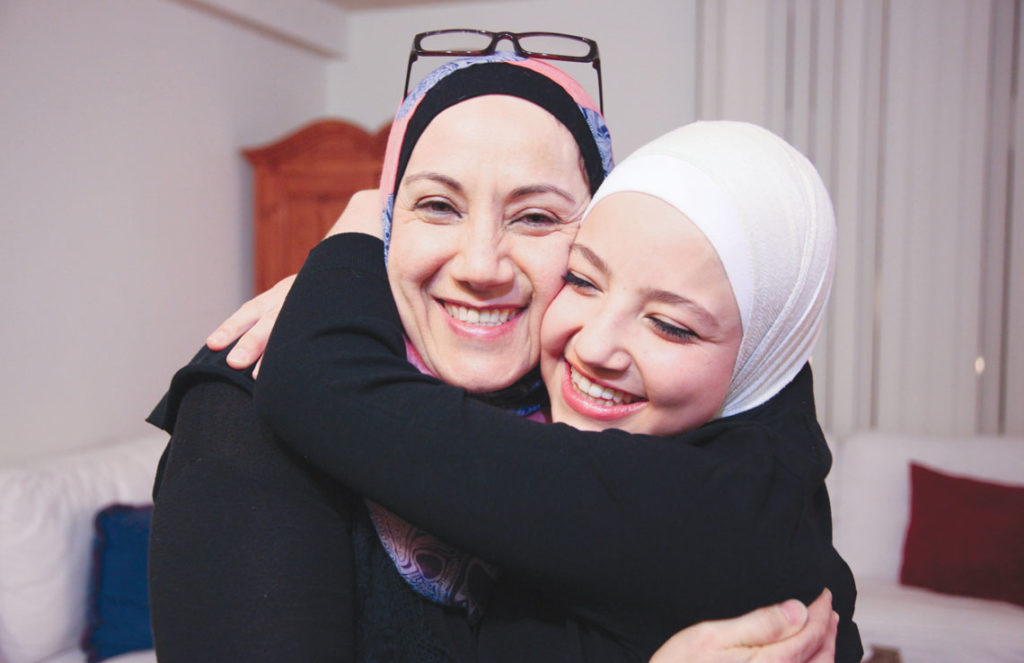
A documentary from a Jewish director about a Muslim teenager attending a Catholic high school may sound like a hypothetical ecumenical exercise. But Julia Meltzer’s “Dalya’s Other Country” is an engaging coming-of-age story about a young girl and her mother who flee war-torn Syria to start a new life in a strange, new place — Los Angeles.

As children of the Diaspora, Jews will relate to the film, which premiered on PBS stations on June 26 and is streaming on pov.org.

Dalya Zeno lived a comfortable, middle-class life in Aleppo, Syria, where she was born, until 2011, when civil war turned the city into a war zone and it became increasingly clear to her family that they would have to leave. Her parents separated and eventually divorced. Her father, Mohamad Hassan, an olive oil exporter, moved to Turkey. Dalya’s mother, Rudayna Aksh — whose sons, Mustafa and Hammoud, were born in Los Angeles in the 1980s when she and her husband lived here and she became a U.S. citizen — returned here with Dalya in 2012.

Meltzer, a Reform Jew, had lived and worked as a teacher in Syria on and off between 2000 and 2010 and made her first film there, “The Light in Her Eyes,” about a Quran school for women and girls. Following a screening of the film at the Levantine Cultural Center on Pico Boulevard (now the Markaz) in March 2012, she met Mustafa Zeno and they became friends. They discussed the Syrian civil war, its impact on his family and the family’s plans to get out.

“I felt that the war was going to go on for a long time, and I still do,” Meltzer said. “I thought one way I could be of service was to tell the story of someone coming from Aleppo.” With Mustafa as a producer, the Zeno family consented to be filmed. “They had seen my other film and knew I knew about their culture. I wasn’t a random Jewish person,” Meltzer said.

But for Dalya, having a camera crew in her life was intrusive, especially at first.

She had finished eighth grade at a Muslim school in L.A., but there wasn’t a Muslim high school nearby and her parents thought that there would be too much peer pressure at a public high school. She enrolled at Holy Family High School, a private, all-girls school in Glendale, where she was the only Muslim student.

“I struggled a lot,” said Dalya, now 18 and a student at Pasadena Community College. “I was awkward and scared. I already stood out, and having the cameras around made me stand out even more. It was really nerve-wracking. It took me till my junior year to get used to it.”

The turning point was an overnight trip for the junior and senior classes when she “opened up to my classmates and they opened up to me,” she said. “From that day on I felt so much better. Going to Holy Family was the best decision ever. Holy Family is my family.”

Shooting the film there, however, was “complicated,” Meltzer said, citing restrictions, disruption concerns and privacy issues that necessitated getting a signed release form from every girl that appeared on camera.

Originally, Meltzer intended to focus solely on Dalya and a friend, who is Korean-Palestinian and American-born, but she opted to also depict the struggle Rudayna faced as a woman starting over after a divorce. As she says in the film, “My marriage fell apart, and then my country, too.”

“Here’s a mother and daughter who are in some ways going through very similar transitions at totally different places in their lives,” Meltzer said. “I thought it was a good way to go.”

“When I first came here I was discouraged,” Rudayna told the Journal. “I didn’t stay in contact with my friends because I wasn’t happy with myself. I had no hope. But when I started going to [Glendale Community College] and worked on my studies, that helped me a lot. I started thinking about something else — the future. I had no time to think about bad things.”

Rudayna is transferring to UCLA this fall, and Meltzer plans to document her experience for a short film that Mustafa will co-produce.

Mustafa said he is proud of what his mother has overcome and achieved. “To me, it’s important to show that Muslims, specifically Muslim women, are neither perpetrators or victims,” he said. “They do have agency to control their lives.”

Mustafa, who teaches Arabic at Yeshiva University High Schools of Los Angeles (YULA), and his brother, Hammoud, who lives in New York, are seen in “Dalya’s Other Country.”

Mustafa, who worked with the Los Angeles Arab Film Festival for four years and directed it in 2014, is developing a documentary about refugees and fences and walls, both literal and figurative, as well as a short feature about a dystopian near-future in which Muslims are sent to internment camps, as Japanese-Americans were during World War II. Both he and Meltzer are involved with NewGround: A Muslim-Jewish Partnership for Change.

This summer, Dalya plans to visit her father in Turkey, where she would like to volunteer at a refugee camp. She also plans to transfer from Pasadena City College to Cal Poly Pomona and study to become an architect. She said she thinks about “one day going back to Syria and help contribute to rebuilding it.”

But it would only be for a visit. “I’ll always miss Syria,” she said. “I don’t think there will be peace anytime soon because there are so many groups fighting for control. But even if the war stopped, I wouldn’t go back because I’ve had so many opportunities to grow here and I love my life here.”

Rudayna said she wouldn’t move back to Syria, either. “I have a life here. I don’t want to go back to where the bad things and bad memories were,” she said.

She said she hopes her story will encourage women in situations like hers to get an education and become self-sufficient. She said she believes that the film will give people a better understanding of the situation in Syria and the plight of refugees. “We all have to think about others and how we can try to help,” she said.

As the film’s titular subject, Dalya admits that watching the film is “embarrassing
to me.”

“I don’t like to see myself as clueless and struggling and having people see how I was,” she said. “But I’ve been getting a lot of positive feedback, and I’m just hoping someone benefits from it, even if it’s the smallest thing that they take from the experience.”

At a time when Muslims face increased prejudice, “The most important thing is for Americans to stand by each other because that is the only thing that will keep us together and strong,” Dalya said.

In the film, she attends a protest against then-presidential candidate Donald Trump’s call for a ban on Muslims traveling to the U.S.

“It’s something I felt very strongly about because I could have been in these people’s shoes if I didn’t have citizenship. All these Americans, Muslims and non-Muslims were standing up with each other, and I felt so much love,” she said. “It made me more hopeful.” 

Syrian teen and mother start over in L.A. in ‘Dalya’s Other Country’ Read More »

No easy answers in the search for Jewish origins

Is Jerry Seinfeld a descendant of King David?
The question is no joke. Of all the issues that perplex the Jewish people and the wider world, none is so troubling is the primal one — what, after all, links us to the people, the land and the faith of distant antiquity as described in the Bible?

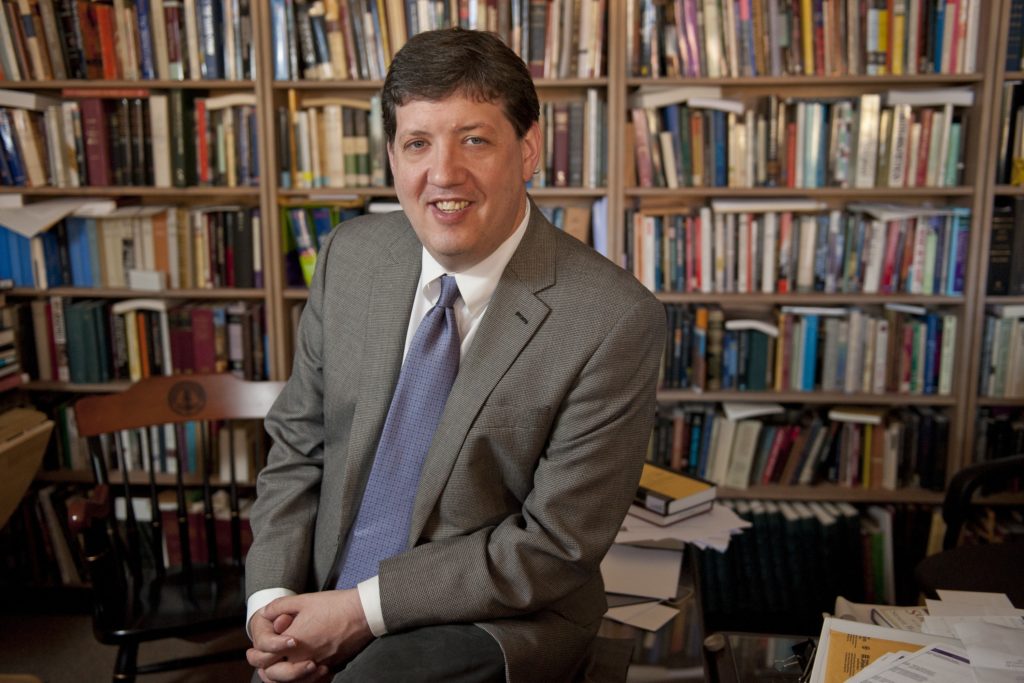
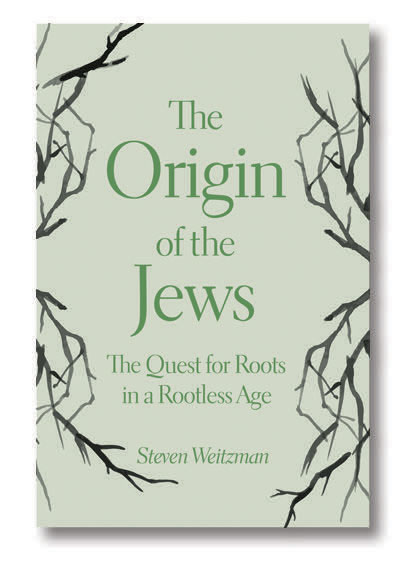
An answer is proposed in “The Origin of the Jews: The Quest for Roots in a Rootless Age” by Steven Weitzman (Princeton University Press), the Abraham M. Ellis Professor of Hebrew and Semitic Languages and Literatures at the University of Pennsylvania. He has studied and mastered the scholarship of Jewish origins, and he seeks to explain exactly what “connects all Jews into a single people, religion, or community; the very beginning of their collective story.”

The ancient scriptures, the author points out, only complicate the question: “[T]here is more to the story of how the Jews came to be than we can glimpse in the Bible,” he writes. Even the word “Jew,” which derives from the Hebrew word for the tribe of Judah (Yehud), may be misleading: “Are Jews today, in some collective sense, the same people as the ancient Judeans,” he muses, “or are they fundamentally different, transformed by the passage of time, or by some intervening change into another people?”

Weitzman explains the various theories that suggest a discontinuity between ancient and modern Jews. Freud imagined that the prophet and lawgiver Moses, the founder of what we call Judaism, actually was an Egyptian. Some scholars argue that Judaism as we know it today actually began only after the end of the Babylonian Exile or the destruction of the Second Temple in Jerusalem. Famously, and rather scandalously, Arthur Koestler’s “The Thirteenth Tribe” argued that the Jews of Eastern Europe actually are descendants of the medieval Khazars, who converted to Judaism in the medieval era. Even more recently, an Israeli historian named Shlomo Sand has argued that “much of what people think they know about the Jewish people goes back to historians in the nineteenth century and the first part of the twentieth, and that their representation of the Jews was a fiction that they contrived.”

Each contending theory carries its own subtext, some of which are overtly hostile to Judaism, or Zionism, or both.

DNA testing and the science of genomics seem to offer the promise of a definitive answer to the question of Jewish origins, but Weitzman reminds us that it can come uncomfortably close to some of the racist assumptions of Jew-haters ranging from the Spanish Inquisition to Nazi Germany. Moreover, while DNA evidence has confirmed that many of the Kohanim — Jews identified as descendants of the ancient priesthood — appear to share a common ancestor, we do not know yet that their ancestry dates all the way back to biblical antiquity.

Even the cutting-edge tools of modern genetic testing, however, do not support the claims of Davidic descent that have been credited to various luminaries, from Rashi to Elie Wiesel to even Jerry Seinfeld. As it happens, Weitzman acknowledges the late David Einsiedler, co-founder of the Jewish Genealogical Society of Los Angles, for the proposition that “there is no complete, reliable and positive proof of claims of descent from David.”

Weitzman’s book is rooted in serious scholarship, but he also is attuned to the ways in which the yearning for identity has been used and abused. Thus, for example, he reminds us of the shameful phenomena of forged Holocaust memoirs and suggests that some prideful Jews are willing to engage in “a kind of ‘genetic astrology’ ” in order to validate their imagined connections to great figures of Jewish history and the Bible.

Weitzman is aware that the authenticity of the linkage between modern Jews and the ancient tribes of Israel has been used against the Jewish people, no less in the ancient world than in the debate over the legitimacy of Jewish sovereignty in Israel today. Indeed, he concedes that some readers may decide that the question itself is “too contentious to pose.”

But it also is true that the Jewish tradition of asking audacious questions starts with the Torah and must be honored as one of the core values of Judaism. For that reason alone, Weitzman’s courageous and illuminating book is essential reading for anyone who wonders or cares about what it really means to be a Jew.

JONATHAN KIRSCH, publishing attorney and author of “The Woman Who Laughed At God: The Untold History of the Jewish People,” is the book editor of the Jewish Journal.

No easy answers in the search for Jewish origins Read More »

Survey: Jewish men more likely to marry non-Jews; Wives more likely to convert to Judaism

A detailed study of non-Jewish-born spouses in mixed marriages has confirmed that Jewish men are much more likely to marry non-Jewish women than the reverse and that women are more likely to convert than men.

The study, sponsored by the American Jewish Committee, was released at a press conference here Wednesday. It also found that most non-Jewish-born partners found it easy to integrate into the Jewish community, though few had been exposed to community “outreach” efforts. But they felt that born Jews lacked understanding for the converts’ particular situation.

The study was conducted by Dr. Egon Mayer, professor of sociology at Brooklyn College, and Dr. Amy Avgar, assistant director of the AJCommittee’s William Petschek National Jewish Family Center.

They based their findings on responses to questionnaires mailed in 1985 to a nationwide sample of born non-Jews married to Jews. Of the 309 respondents, 109 had converted to Judaism and 200 had not. Mayer reported that while 74 percent of the respondents were women, a higher proportion, 86 percent of the women, were converts.

EDUCATION IS INCOME CORRELATED

The study found that converts tended to have somewhat more education and higher income than non-converts and appeared to have been more favorably disposed toward Judaism than non-converts. Women were more likely to convert if they considered religious affiliation important to begin with and felt conversion to Judaism would be important to her husband.

About two-thirds of the converts and approximately one-third of the non-converts viewed the Jewish family into which they married as being “very” or “moderately” religious. According to Mayer, “This might imply that many of them were actively encouraged to convert to Judaism by their Jewish families.” Conversely, converts were more likely than non-converts to perceive their own parents as being “not at all” religious or “anti-religious.”

More than 70 percent of the marriages involving a convert were performed by a rabbi compared to 21 percent of those involving a non-convert. But nearly 84 percent of the converts and 45 percent of non-converts said they had approached a rabbi to officiate at their marriage.

The study found that the Jewish behavior and attitudes of converts resembled born Jews affiliated with Orthodox, Conservative or Reform Judaism in America.

More than 68 percent of the converts, compared to 34.8 percent of non-converts, described themselves as “very” or “moderately” religious. Similarly, 84 percent of converts and 44.8 percent of non-converts thought it was “important to have a religious identity”; 73.8 percent of the converts and 59.5 percent of non-converts felt a “personal need to pray”; and 78.7 percent of converts and 62.2 percent of non-converts expressed belief in supernatural forces.

Survey: Jewish men more likely to marry non-Jews; Wives more likely to convert to Judaism Read More »

Netanyahu defends suspending the Western Wall agreement. Here’s how.

American Jewish leaders are calling it a betrayal.

They say that 17 months after achieving a historic agreement to provide a non-Orthodox space at Judaism’s holiest prayer site, Israeli Prime Minister Benjamin Netanyahu reneged in a Cabinet vote Sunday, effectively canceling the deal and caving to the interests of his haredi Orthodox coalition partners.

Netanyahu disagrees. Far from killing the compromise, he believes the vote has given it new life. And far from betraying Diaspora Jewry, he says the vote shows his concern for Jews around the world.

In a lengthy conversation Monday with a senior Israeli official, JTA was given some insight into Netanyahu’s defense of the vote freezing the 2016 Western Wall agreement: why he did it, what the vote leaves in place and what it means moving forward.

The agreement, which was passed by the Cabinet in January 2016, has three components. First is a physical expansion and upgrade of the non-Orthodox prayer section south of the familiar Western Wall plaza. Second is the construction of a shared entrance to the Orthodox and non-Orthodox sections. Third is the creation of a government-appointed, interdenominational Jewish committee to govern the non-Orthodox section.

Sunday’s decision, the senior official said, leaves in place the physical expansion of the prayer site while suspending the creation of the interdenominational committee. Netanyahu’s haredi partners, the official said, objected to the idea that the committee amounted to state recognition of non-Orthodox Judaism.

With the controversy over the committee frozen, the official said, actual building at the site can start unhindered and will be expedited.

“The symbolic piece was holding the practical piece hostage,” the official, who wished to remain anonymous due to the sensitivity of the issue, told JTA. “What was frozen yesterday was the symbolic part. The practical part of advancing the prayer arrangements, that can now move forward. Regrettably, there are those on both sides who are spinning this as cancellation.”

However, several aspects of the project as it stands are murky. It isn’t clear whether the expansion of the site will proceed according to the dimensions outlined in the 2016 agreement. Nor is it clear whether construction will begin on the shared entrance to the site or whether the non-Orthodox space will have a staff, accessible prayer books and Torah scrolls, as promised in the agreement.

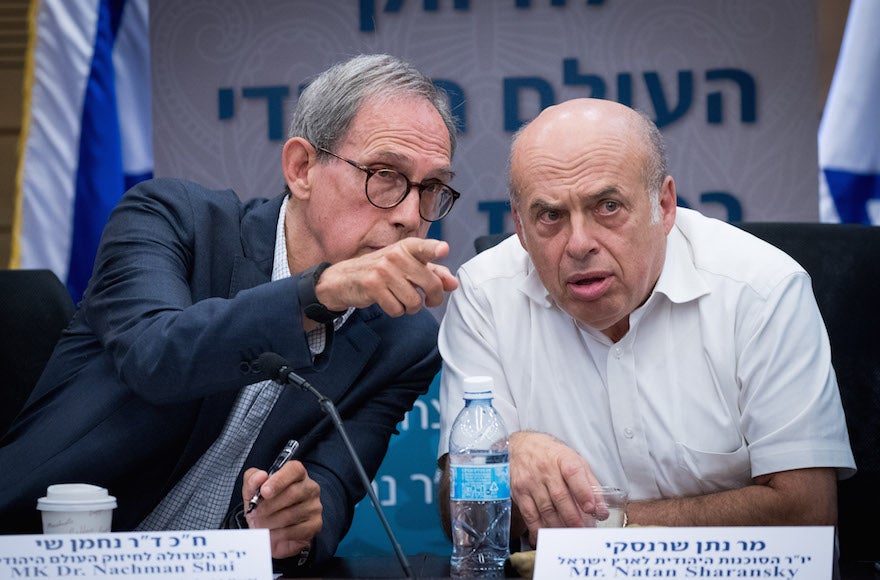
Israeli lawmaker Nachman Shai, left, and Jewish Agency Chairman Natan Sharansky at a meeting in the Knesset, June 27, 2017. (Yonatan Sindel/Flash90)

The official told JTA that the suspension of the deal is itself a compromise: the haredi parties wanted to cancel the deal altogether, a step he said that Netanyahu was unwilling to take. Freezing the agreement, the official said, allows for continued negotiations to rework it. It also may provide an acceptable answer to the Supreme Court, which is considering a petition to force the government to provide an “appropriate space” for non-Orthodox prayer at the wall.

The official added that “The prime minister takes Israel’s relations with Diaspora Jewry very seriously.”

But non-Orthodox leaders were not placated by these assurances.

Rabbi Steven Wernick, CEO of the United Synagogue of Conservative Judaism, called Sunday’s vote “sleight of hand.” He is treating it as a cancellation of the agreement, given that the agreement had not been implemented nearly a year and a half after being passed.

“It’s not really a freeze, it’s a kill,” he said. “It’s already been frozen. It hasn’t been moving for 18 months. We were waiting, and assured by the prime minister that entire time that negotiations were happening and they would get back to us. That hasn’t happened.”

Jewish leaders also called the expansion of the prayer space insufficient. They noted that the shared entrance would grant the non-Orthodox space equal standing with the Orthodox section, but the current plan for expanding the space is unknown.

“The physical portion of this agreement was far more extensive, including opening the site to the main plaza, making it visible and accessible,” Rabbi Rick Jacobs, president of the Union for Reform Judaism, told JTA. “What the government is currently planning to do in no way meets the promises and the details of this agreement.”

Anat Hoffman, chairwoman of the Women of the Wall prayer group, whose activism led to negotiations over the wall, also said that any physical expansion of one of the most sensitive sites in the world would take years. Given the delays that have already plagued the process, Hoffman said she is hesitant to trust assurances from Netanyahu.

“We sat for three years in good faith, our group split over this, we paid such a price, how could I possibly believe you?” she recalls telling Tzachi Hanegbi, a government minister and Netanyahu ally, on Tuesday. “And now you’re going to compromise over the compromise?”

On Tuesday, at the conclusion of its board of governors’ meetings in Jerusalem,  Jewish Agency for Israel Chairman Natan Sharansky urged 200 employees who represent the agency abroad to prepare for criticism of the government’s suspension in the Diaspora. The night before, the Jewish Agency canceled its scheduled gala dinner with Netanyahu over the Cabinet vote.

According to a statement, Sharansky urged the emissaries to “listen to expressions of anger and criticism that are being heard in many Jewish communities and bring them to the attention of public figures and politicians in Israel.”

After meeting with the prime minister on Monday, Jerry Silverman, CEO of the Jewish Federations of North America, told The Times of Israel that American Jewish groups plan to lobby Israelis to support their concerns about religious pluralism. American Jewish leaders, he said, will also invest more in lobbying Israeli lawmakers.

But the Israeli official told JTA that trying to force change in Israeli religious policy is what leads to acrimony over these issues. Better, he said, to let the laws change gradually and quietly.

“So what you have is, you have the status quo: a set of slowly evolving, informal rules,” the official said. “Often you get into trouble when one of the sides tries to formalize something by going to court or by legislation.”

Netanyahu defends suspending the Western Wall agreement. Here’s how. Read More »

Israeli lawmakers who vote for conversion bill not welcome in Chicago, Jewish federation head says

Steven Nasatir. Photo courtesy of JUF/Federation of Metropolitan Chicago

Israeli lawmakers who vote for a conversion bill making its way through the Knesset are not welcome in Chicago, said a top Jewish leader there.

“The federation in Chicago will not be hosting any member of Knesset that votes for this bill. None. They will not be welcome in our community,” Steven Nasatir, president of the Jewish United Fund/Jewish Federation of Metropolitan Chicago, told The Times of Israel in an interview published Tuesday.

On Sunday, government ministers approved a bill that would require the state to recognize only conversions conducted under the auspices of the Chief Rabbinate. The conversion bill, drafted last month by Interior Minister Aryeh Deri, head of the Sephardi Orthodox Shas party, would nullify Israel’s recognition of conversions performed in Israel under Reform and Conservative auspices, as well as a Supreme Court ruling recognizing conversions performed by private Orthodox rabbinic courts.

The bill will move to the Knesset plenum, where it must pass three readings.

“We’re past the time when we’re standing and applauding and being nice because they’re members of Knesset or because they hold this position or that position,” Nasatir, who has been an associate member of the Jewish Agency’s board of governors since 1993, also told The Times of Israel. “People who don’t have the understanding of what this bill means to the Jewish people — God bless ’em, but they’re not welcome in our community, period.”

Nasatir, whose federation last year allocated over $29 million for beneficiaries in Israel and overseas, said he would not be surprised if the Jewish federations of other cities followed suit.

He and the heads of the Jewish communities of New York and Cleveland, as well as Jerry Silverman, the head of the Jewish Federations of North America, and the Jewish Agency’s Michael Siegal, met Monday night with Israeli Prime Minister Benjamin Netanyahu to discuss the conversion bill, as well as a government decision to freeze an agreement to create an official egalitarian prayer section at the Western Wall.

Nasatir said that Netanyahu and his staff “underestimated” the reaction of Diaspora Jewry to the decisions.

The Chicago leader said he has not received any calls or emails from Jews in the city seeking to cancel donations or planned trips to Israel.

“That doesn’t mean that I may not have some waiting for me when I come home,” Nasatir said. “This transcends dollars; this is about a relationship, this is about unity. This is about being pained by bad decisions that impact the Jewish people.

“When people are pained, sometimes they react in different ways. I expect that I may have to deal with some of that, but not a whole lot.”

Israeli lawmakers who vote for conversion bill not welcome in Chicago, Jewish federation head says Read More »

Western Wall suit to come before Israel’s Supreme Court in July

The Israeli Supreme Court will hold a hearing in July on the status of the non-Orthodox section of the Western Wall.

The court will convene July 30 to discuss a petition from last year calling on the Israeli government to implement the Western Wall compromise passed in January 2016, according to Anat Hoffman, chairwoman of Women of the Wall, one of the parties to the petition.

In October, the court postponed a ruling on the petition to allow the government time to formulate a response.

On Sunday, the government voted to suspend most of the compromise. The compromise would have expanded the non-Orthodox prayer section south of the main Western Wall plaza, created a shared entrance to all prayer areas and appointed an interdenominational council to oversee the non-Orthodox section.

Sunday’s vote suspends the agreement but calls for accelerating the expansion of the non-Orthodox prayer area, though the timeline and dimensions of the expansion are unclear.

According to Hoffman, the government has until July 12 to give the court a response to the petition. Along with Women of the Wall, the Reform and Conservative movements in Israel are party to the petition.

Western Wall suit to come before Israel’s Supreme Court in July Read More »

The Origins of the Jews exchange, part 1: On our quest for roots

Steven Weitzman is the Abraham M. Ellis Professor of Hebrew and Semitic Languages and Literatures and the Ella Darivoff Director of the Katz Center of Advanced Judaic Studies at the University of Pennsylvania. Professor Weitzman received his Ph.D. from Harvard University after completing his B.A. at UC Berkeley and spent several years teaching in the Department of Religious Studies at Indiana University, where he served as director of its Jewish Studies program for six years. Before moving to Penn, he was the Daniel E. Koshland Professor of Jewish Culture and Religion and the director of the Taube Center for Jewish Studies at Stanford University. Professor Weitzman is the author of several books, including Surviving Sacrilege: Cultural Persistence in Jewish Antiquity (Harvard University Press, 2005); Religion and the Self in Antiquity (Indiana University Press, 2005); The Jews: A History (Prentice Hall, 2009); and a biography of King Solomon (Yale University Press, 2011). 

The following exchange will focus on Professor Weitzman’s new book, The Origins of the Jews: The Quest for Roots in a Rootless Age (Princeton University Press, 2017).

***

Dear Professor Weitzman,

In the introduction to your book, you mention several problems and suspicions that different groups and individuals might have with the attempt to investigate the origins of the Jews. Our introductory question: who are the ideal readers of this book, and what kind of effect would you like it to have on them? What can they expect to know by the end of the book, and what shouldn’t they expect?

Yours,

Shmuel

***

Dear Shmuel,

The question of how the Jews originated is usually addressed by studying the ancient past, but it is also a question about the present, about who Jews are and how they fit into the world. I approached the question as a scholar of antiquity, but I was conscious in writing the book that the subject has political, religious and personal dimensions that have consequences today. Because there is misinformation, debate and some dangerous ideas surrounding the topic, I thought it would be helpful to take readers on a tour of the research—to introduce them to how modern secular scholars understand the beginning of the Jewish story.

There are many books about the origin of the Jews, but as it turns out, no one had tried to bring all the different kinds of research together into a single account—the historical studies, the archaeology, the genetics and the other methods that have been brought to bear on the subject. At the beginning of the project, I thought the only people who would be interested in such a survey would be fellow researchers, but as the book developed, I realized it was important to make it as accessible as possible beyond academia because scholars are not the only ones interested in the question of where the Jews come from.

Consider the example of genetics research. I see ads for 23andMe, FamilyTree.com and Ancestry.com all the time, direct-to-consumer DNA-testing companies that draw on genetic research to deliver insights into your ancestors and where they come from. significant part of their customer base are Jews or possible descendants of Jews doing their own personalized research projects into their origins. What is true of genetics research is also true of other fields like genealogical research and even archaeology: there are experts who drive the research, but it isn’t only academics who participate in it or have a stake in its outcome, and the findings have become part of public debates about Jewish identity and Israel’s political legitimacy. This is why I decided that I needed to try to open the research up to anyone with the curiosity and open-mindedness to want to learn how scholars approach this question.

Beyond reporting on the research, however, I also wanted to weigh the arguments against it. Scholars have been seeking to understand the origin of the Jews for centuries, and the story of that effort has a dark underside. Nazi scholarship is the most notorious example. Part of the rationale for the Nazi effort to eliminate the Jews was scientific, a biological theory about their racial origin. This is part of what led the Nazis to support genetics research (the infamous Dr. Mengele was a genetic researcher) and it is one reason why critics of contemporary genetic research are concerned about its use to illumine the ancestry of the Jews. I didn’t see it as a goal to come up with yet another theory about the origin of the Jews—there are plenty of such theories. I wanted to help readers think through the question and assess different approaches, which meant exploring what scholars have learned but also facing up to the perils of such research.

I must acknowledge that the book will probably frustrate some readers, especially those who want a clear-cut answer or want to be reaffirmed in what they already believe. If I was to offer an accurate and comprehensive depiction of the scholarship, I would have to introduce readers to theories and information at odds with how some Jews see themselves and consider some challenging ideas and ways of thinking. I spent a lot of time struggling with how to balance engaging readers with presenting the situation honestly, and what I settled on was trying to make things clear and accessible without watering anything down or papering over the debated and the irresolvable. At the least, I hope the book helps readers understand how some of their ideas about the origin of the Jews originated, gives them a good sense of the many different ways there are to think about questions of ethnic and religious origin, and conveys to them that there is an enduring mystery about who they are that continues to elude even the most cutting-edged research.

Sincerely,

Steve Weitzman

The Origins of the Jews exchange, part 1: On our quest for roots Read More »