fbpx

May 4, 2017

Arrested Palestinian terror cell hid rifle in child’s bed with Dora the Explorer sheets

A Palestinian terror cell accused of being behind at least 10 shootings at military and civil targets in the West Bank was apprehended and the assault rifle allegedly used in the attacks was found hidden in a child’s bed.

Three men said to be aligned with the Popular Front for the Liberation of Palestine were arrested in the joint operation of the Shin Bet security service, the Israel Defense Forces and the Israel Police in the village of Faham, near Jenin, according to an announcement of the arrests cleared for publication Thursday by the Shin Bet. The suspects remain in custody.

The attacks, which caused damage but no injuries, occurred in early April near the northern West Bank settlements of Shavei Shomron, Hermesh and Shaked, near Jenin and another Palestinian city, Nablus.

An M-16 was found in the headboard storage space of a child’s bed made up in Dora the Explorer sheets.

“This cynical exploitation of hiding things in a children’s room is known to us,” an unnamed senior IDF intelligence officer told The Times of Israel. “It’s not the first time, and it won’t be the last time that weapons are hidden in a child’s room or other places where they think we won’t look.”

Arrested Palestinian terror cell hid rifle in child’s bed with Dora the Explorer sheets Read More »

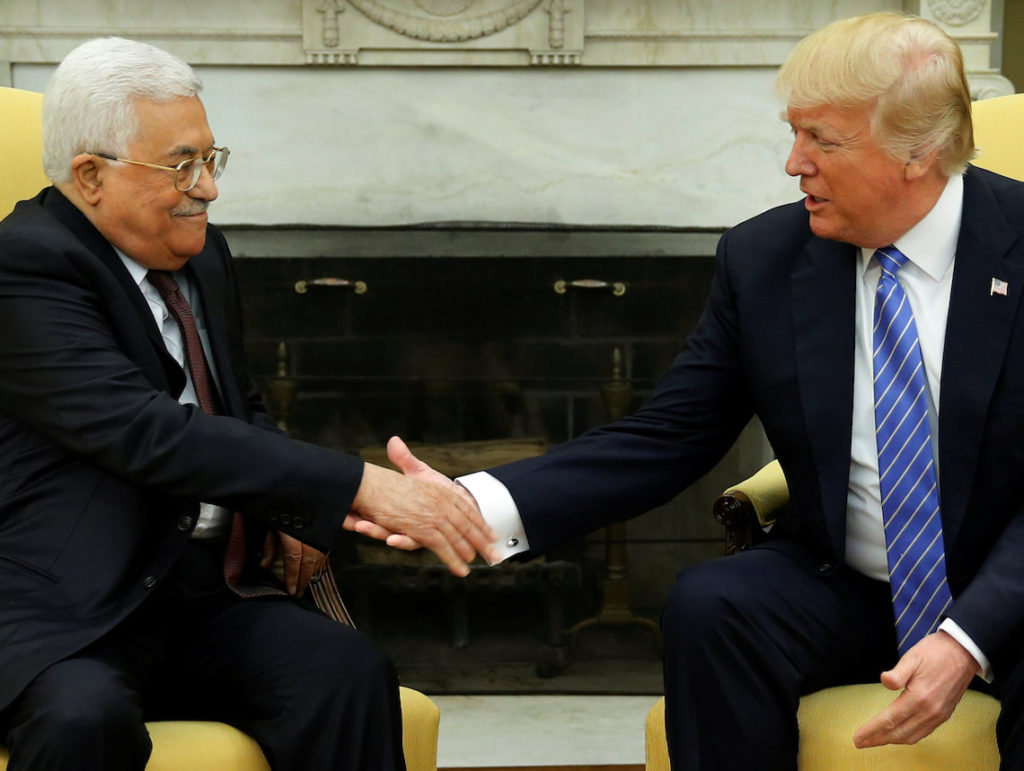
Trump removes tweet saying it was an ‘honor’ to host Abbas

President Donald Trump deleted a tweet in which he said it was an “an honor” to host Palestinian Authority President Mahmoud Abbas at the White House a day after the two leaders met.

The tweet, which also included video from the two leaders’ meeting, was gone on Thursday, 13 hours after it was originally posted, according to ProPublica, which tracks the president’s deleted tweets.

After meeting with Abbas, Trump wrote on Twitter: “An honor to host President Mahmoud Abbas at the WH today. Hopefully something terrific could come out of it between the Palestinians & Israel.”

At the meeting, Trump said he was optimistic that he could pull off the deal for Israeli-Palestinian peace that has frustrated at least four of his predecessors, with the most recent collapse of talks in 2014 followed by a war between Israel and Hamas in the Gaza Strip.

“We will get it done, we will be working so hard to get it done,” the U.S. leader said.

He did not address — at least in the public portion of the meeting — a demand by Netanyahu that Abbas stop Palestinian Authority payments to families of terrorists killed or jailed by Israel. Trump did, however, call on Abbas to address incitement.

“There can be no lasting peace unless the Palestinian leaders speak in a unified voice against incitement to violence and hate, there’s such hatred, but hopefully there won’t be such hatred for very long,” the president said.

Trump removes tweet saying it was an ‘honor’ to host Abbas Read More »

Mother’s Day

We wrote essays and memorized poems about the saintliness of mothers, their selflessness, their sacrifices. Every Mother’s Day in elementary and middle school, we stood up and read to the class a new ode to the person who had given up her youth and good health, her freedom and grand ambitions — her self, really, though in those days women had no “self” outside of motherhood — to give us life and make sure we kept eating and breathing. Thank you, Mother, for relinquishing body and soul.

It made sense in a devastating, heartbreaking way, especially if you were a girl, meaning that your very existence was a detriment to any mother’s value, and more so if you were one of a number of girls, each birth another nail in the poor woman’s coffin, and now she was going to have to love and care for you, anyway, make sure you looked good and behaved well so you, too, could wear a crown of flowers one day in your mid- to late teens, become a wife and, nine months later, a mother.

And if you were a boy? There was a story we read every year, about a son who, in a rage and very self-servingly, beats his mother to death and buries her in a ditch. For reasons that escape me now, he has occasion to dig her up later, long teeth and hair and smooth, fleshless bones, only to find that her heart is still beating with, yes, love for the murderous son. I may be wrong, but I could swear there was even something about the mother being worried that the son was tired and thirsty from the physical exertion of burying and exhuming her.

This was motherhood as martyrdom — which, we know, is always a privilege, more so if the suffering is greater — something that you earned through sacrifice and devotion, that you aspired to knowing how you would end up. Because of how you ended up.

“I was 15 years old when I gave birth to my first child,” my own grandmother once said. “I went home with that baby and didn’t emerge again until I was an old woman with 10 children.”

She wasn’t lying, not even exaggerating. To her eternal credit, she also raised a great many orphans and abandoned children, cared for the poor and the sick of all ages, fed and clothed and counseled every stranger who knocked on her door. Later, as an “old woman,” she even found time to buy and sell land, make a good bit of money on her own, jetting between Tehran and Tel Aviv, New York and Los Angeles. Hers was a meaningful and memorable life, the kind of existence that creates lasting good. I know this. I hope she knew this.

We do, in fact, turn our backs on life as we knew it once we become parents.

But after the day I heard her speak of her — stolen? squandered? perhaps the word is “surrendered” — youth, I’ve never been able to think of her without a quiver of heartache. I keep seeing her as a teenage mother, the girl in those black-and-white pictures in the homes of her children, white skin and dark eyes and that pomegranate-red lipstick so favored by’50s movie stars. I see her turn her back on me and walk through a door. I see the door close.

It wouldn’t be much to celebrate, this Sisyphean practice we mothers engage in, one generation after another, often without question. Forget those of us in the First World who marry late and hire Third World help and have access to health care and technology; we couldn’t fathom the hardships the majority of mothers suffer every day just to keep their children alive. And yet, even we know this is as hard a job as any. I certainly don’t begrudge us the odes or Hallmark cards on Mother’s Day — celebrated this year on May 14 — or any other. But I also know they don’t tell the whole story, and that’s a crime — it perpetuates a sense of victimhood on the part of many mothers and guilt on the part of their children, especially their daughters.

We do, in fact, turn our backs on life as we knew it once we become parents. In many ways, more than any of us would be able to imagine ahead of time, we do surrender our old selves at the door, forfeit the big wide world and the possibilities it may offer, in favor of a small house with walls and a roof.

But these walls we surround ourselves with are covered with vines of Poet’s Jasmine that bloom, delicate as a breath, every morning, releasing into the universe the everlasting scent of youth and beauty and hope. And this roof we capitulate to opens up every night to reveal a flood of stars. And whether we have one or a dozen children, whether they’re our own or others’, sick or healthy, obedient or not, this house they pull us into is called Joy.


GINA NAHAI’s most recent novel is “The Luminous Heart of Jonah S.”

Mother’s Day Read More »

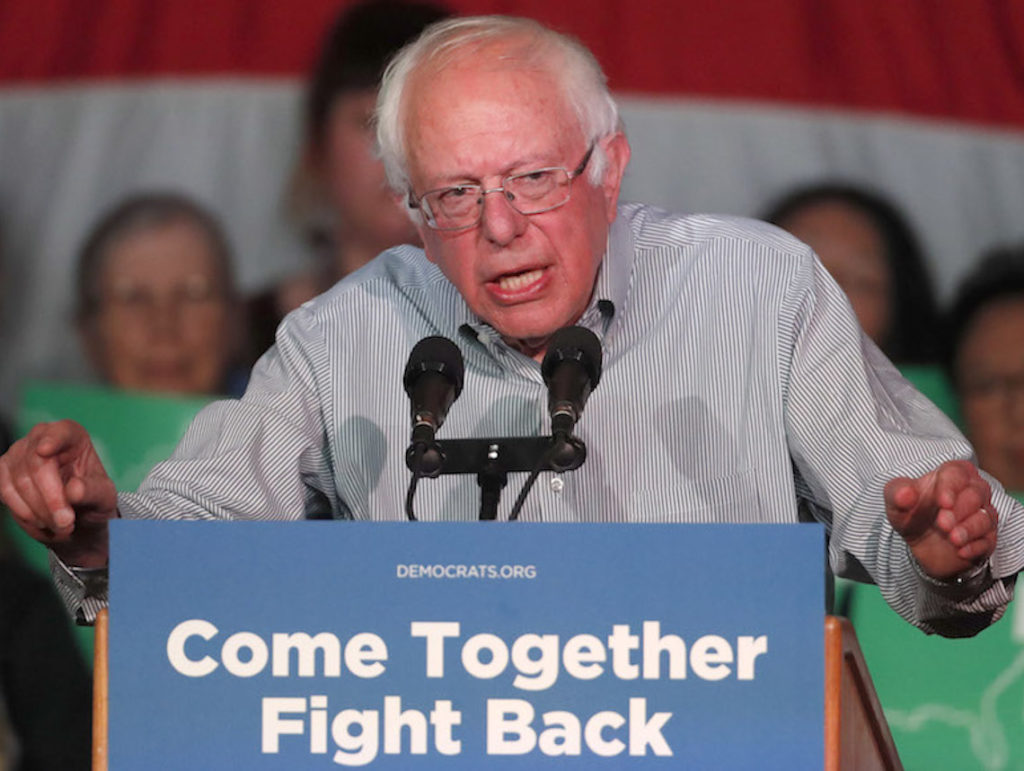
Bernie Sanders just defended Israel on Al Jazeera. Here’s why that’s a big deal.

In an appearance on Al Jazeera, Bernie Sanders defended Israel’s right to exist, rejected BDS as a tactic and assailed the United Nations for singling out the country for condemnation.

The Vermont senator’s interview Wednesday on the Qatar-based network, known for its often hypercritical coverage of Israel, was consistent with a style that Americans came to know last year during his run for the Democratic Party’s presidential nomination: Sanders does not modify his messaging for his audience.

Sanders, despite his defeat in the primaries to Hillary Clinton, who went on to lose to Donald Trump, remains the standard-bearer of the American left. His robust rejection of the Boycott, Divestment and Sanctions movement is evidence that a firewall remains on the American left against more radical expressions of Israel criticism that have gained traction overseas.

The interviewer, Dena Takruri, challenged Sanders for joining every other U.S. senator last month in signing a letter to U.N. Secretary-General Antonio Guterres urging him to remedy the body’s “anti-Israel agenda.”

Takruri asked why Sanders was “effectively trying to shield [Israel] from criticism.” Sanders interrupted, “No, no, no, no, no, I don’t accept that,” saying “there are many problems with Israel” and he would continue to “be critical of a lot of what Israel does.”

“On the other hand, to see Israel attacked over and over again for human rights violations which may be true, when you have countries like Saudi Arabia or Syria, Saudi Arabia – I’m not quite sure if a woman can even drive a car today,” Sanders said.

“So I think the thrust of that letter is not to say that Israel does not have human rights issues — it does — but to say how come it’s only Israel when you have other countries where women are treated as third-class citizens, where in Egypt, I don’t know how many thousands of people now lingering in jail, so that’s the point of that, not to defend Israel but to say why only Israel, you want to talk about human rights, let’s talk about human rights,” he said.

Asked by Takruri whether he “respected” BDS as a legitimate nonviolent protest movement, Sanders said, “No, I don’t.” The senator suggested in his reply that the tactic was counterproductive as a means of bringing the sides to peace talks.

“People will do what they want to do, but I think our job as a nation is to do everything humanly possible to bring Israel and the Palestinians and the entire Middle East to the degree that we can together, but no, I’m not a supporter of that,” he said.

“What must be done is that the United States of America is to have a Middle East policy which is even-handed, which does not simply supply endless amounts of money, of military support to Israel, but which treats both sides with respect and dignity and does our best to bring them to the table.”

Sanders also rejected Takruri’s assertion that the two-state solution is almost dead and said he would not embrace a one-state solution.

“I think if that happens, then that would be the end of the State of Israel and I support Israel’s right to exist,” he said. “I think if there is the political will to make it happen and if there is good faith on both sides I do think it’s possible, and I think there has not been good faith, certainly on this Israeli government and I have my doubts about parts of the Palestinian leadership as well.”

Sanders, the first Jewish candidate to win major party nominating contests, was critical of conventional pro-Israel postures during the campaign, but also defended the state.

He told MSNBC last year that anti-Semitism was a factor driving the BDS movement, yet in a debate in the New York primary – with its critical mass of Jewish voters – Sanders chided Clinton for barely mentioning Palestinians in her speech earlier the same year to the American Israel Public Affairs Committee.

During the campaign, he hired as his Jewish outreach staffer Simone Zimmerman, who founded IfNotNow, which protests mainstream U.S. Jewish silence on Israel’s occupation. Although Sanders fired Zimmerman after her vulgar postings on Israeli Prime Minister Benjamin Netanyahu came to light, the very hiring was a signal that there was now a political home for young Jews who embraced the idea of Israel but were willing to robustly protest its government’s actions.

Sanders also named prominent Israel critics to the Democrats platform-drafting committee, yet when their Israel-critical language was rejected, he nonetheless robustly endorsed the platform because it met his other demands on economic inequality. He described himself at a meeting in New York’s Harlem neighborhood as a “strong defender of Israel” and for the first time spoke warmly about the time he spent in Israel in the 1960s on a kibbutz.

Democrats in recent years have grown increasingly critical of Israel, a result in part of the parlous relationship between Netanyahu and President Barack Obama, and the fraught tone of the debate in 2015 over the Iran nuclear agreement.

But the tense tone of the Al Jazeera interview and Sanders’ refusal to accept anti-Israel pieties commonplace among progressives here and overseas suggests the resistance among Democrats to more radical expressions of Israel criticism. Democratic lawmakers, for instance, continue to join Republicans in overwhelmingly approving anti-BDS legislation on the state and federal levels.

Bernie Sanders just defended Israel on Al Jazeera. Here’s why that’s a big deal. Read More »

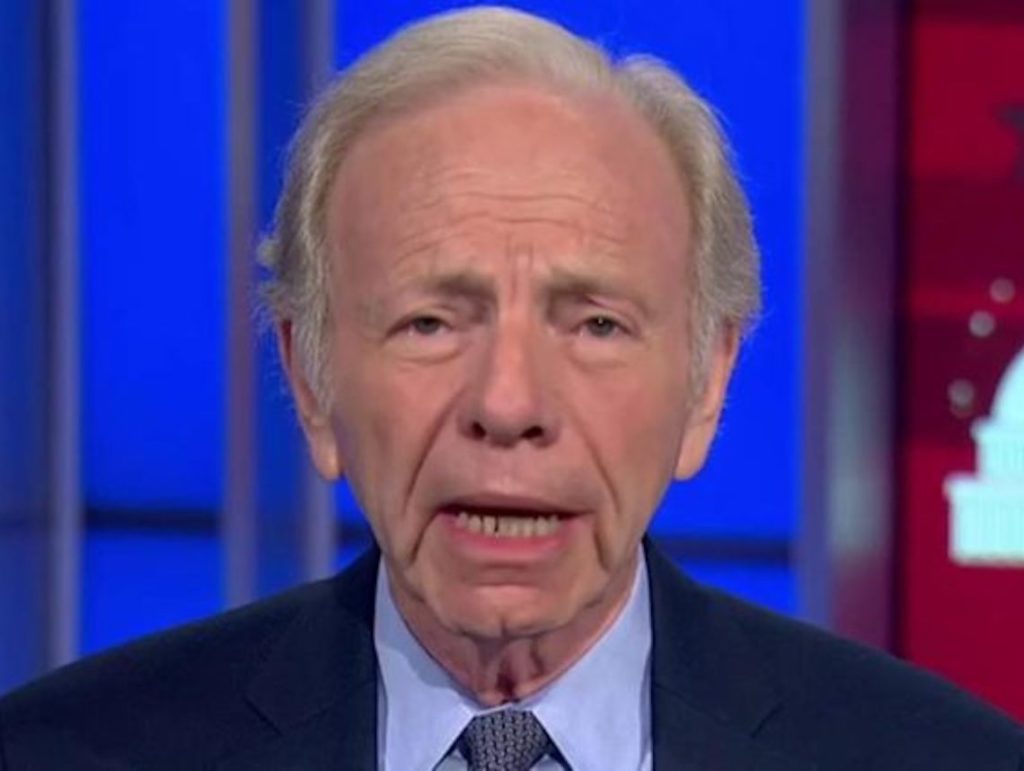
Interview: Joe Lieberman on Iran deal, Jerusalem embassy

Former Senator Joe Lieberman discussed the Iranian elections and the implications of the outcome in a phone interview with Jewish Insider on Wednesday.

[This story originally appeared on jewishinsider.com]

“Unfortunately I would say that there is no preferable outcome for the United States,” Lieberman said about the May 19 Iranian presidential election. “In other words, Rouhani was described as the moderate has been the leader of the government during the time when they have done so much damage in their own countries with a number of executions of political opponents is up. They’ve also presented thousands of IRGC soldiers into Syria. They’ve greatly strengthened Hezbollah which strengthened Syria, but also threatening Israel. And they’re involved in aggression in Yemen. So he may call himself a moderate, but he’s not. Ebrahim Raisi, the main opponent to Rouhani, seems to be more theologically conservative and enjoys, it appears, the backing of the Supreme Leader. But in the end, the Supreme Leader is the power and he’s not changing. In fact, very little has changed about the regime of the Islamic Republic of Iran since 1979 when it seized power. And, therefore, they remain, as they say themselves, our determined and intransigent enemies.”

Lieberman on its impact over the nuclear deal: “I would guess that whoever wins the election in Iran will stick to the nuclear agreement to the same extent, because it benefits Iran so much. But they need constant monitoring and inspection to guarantee that they’re keeping their part of the bargain. The problem obviously is that they’ve already received as a result of sending the agreement, billions of dollars that they’re using to strengthen themselves militarily and politically. And again, not by my estimate, but by the words of the Supreme Leader, the nuclear agreement was separate. It has nothing to do with their hatred of the United States or Israel and in fact of their Sunni Arab neighbors. So I don’t expect much to change.”

“I think the change that’s occurred, if I may, on the nuclear agreement, the more significant change is the election of President Trump in the US. And I speak as a supporter of Hillary Clinton, but I think the change, let’s put it this way, from President Obama to President Trump, with regard to the nuclear agreement, is very significant. Unlike President Obama, President Trump is not committed to sort of protecting this agreement and in some sense bending over backward or closing our eyes to what the Iranians are doing in order to sustain the agreement. President Trump as you know has been a critic of the agreement from the beginning. And I think we can count on his administration to demand full compliance, not only with the agreement, but as he’s recently said when he said the Iranians were not keeping the spirit of the agreement and Secretary Tillerson has said, across a wide array of activities: support of terrorism, aggression in the region, particularly in Syria and in Yemen, and a repression of the human rights of people in Iran.”

On how to address the Iran deal going forward: “I think the first and most important thing that could be done by Congress and the President is to impose new sanctions on Iran for their bad behavior in so many other areas: the firing of ballistic missiles, the aggression in Syria and Yemen, and the human rights violation in their own country. And for the administration to both accept and sign those new sanctions, but also to enforce them. And I think that then the pressure is on Iran to either accept that new series of economic sanctions or itself to break out of the agreement. And they may just break out of the agreement since they’ve gotten so much up front from us. But I think in other words the important point is essentially to react to what respond directly or what the Supreme Leader, Khamenei, has said, which is, ‘This is an agreement that is separate from everything else we do.’ Obviously if we see them really beginning to break out and build a nuclear weapon, then we have the tough decision to make, which is whether to take military action to stop them, but we’re not there yet.”

Lieberman on whether he thinks his friend Ambassador David Friedman will work from Jerusalem when he formally assumes his position in Israel: “I don’t know. I’m going to leave that one to President Trump. I mean, clearly I hope that the President when the next waiver date comes up, which is June 1st, he announces that one, the United States recognizes Jerusalem as the capital of Israel, which it self-evidently is, and two, that we’re beginning the process of moving our embassy there. I was a lead co-sponsor on the Democratic side in the 1990s of the legislation that mandated that the embassy move to Jerusalem. And so it’s very important to me from an American point of view because this is still, I believe, the only country in the world where we don’t have our embassy in a city that the host country designates as its capital. And when you think that this is Israel, one of America’s closest allies in the world, it is a sign of American weakness that we don’t go ahead and put our actions where our principles are and our policies are and that means moving our embassy to Jerusalem.”

“So I hope before long David Friedman will be Ambassador Friedman he will be working out of Jerusalem and before long moving there as well. And it’s important to say something you know, the embassy’s going to be located on land which has been Israeli since ’48. So this move will not at all affect negotiations regarding land with the Palestinians. And it’s just a falsehood to argue that it will unless one believes that Israel has no right to any of Jerusalem, which obviously is something that is a position America would never accept.”

Interview: Joe Lieberman on Iran deal, Jerusalem embassy Read More »

White House: Trump will reinforce strong alliance, talk peace on Israel trip

President Donald Trump will visit Israel later this month after visiting Saudi Arabia, his first foreign trip since taking office in January.

“Tolerance is the cornerstone of peace,” Trump said during an event in the White House’s Rose Garden. “That is why I am proud to make a major and historic announcement this morning and share with you that my first foreign trip as president will be to Saudi Arabia, then Israel, then the Vatican in Rome.”

[This story originally appeared on jewishinsider.com]

A senior administration official said the planning started shortly after the elections after being approached by Saudi Arabia wanting to reset warm relations with the U.S. Administration.

Trump’s trip to Saudi Arabia, according to the WH official, will focus on trying to reach an understanding with Arab leaders on joint “long-term” goals to achieve peace and stability in the Middle East.

In Israel, Trump will “reinforce the strong alliance that we have with the Israeli people, and then we are going to talk a little bit about the peace process with the Palestinians and how we plan to go forward.”

The official did not provide any specific details and refused to say whether or not Trump will work to arrange a meeting between Prime Minister Benjamin Netanyahu and Palestinian Authority President Mahmoud Abbas while on the trip. “We are hoping to achieve peace between now and then,” the official said. “We will approach it with a lot of humility. The President is very involved in [discussing] a lot of ideas.”

In a statement, Press Secretary Sean Spicer said Trump will discuss with President Reuven Rivlin and Prime Minister Netanyahu “a range of regional issues, including the need to counter the threats posed by Iran and its proxies, and by ISIS and other terrorist groups” and “discuss ways to advance a genuine and lasting peace between the Israelis and Palestinians.”

Trump will also meet with Abbas “to discuss ways to advance peace between the Israelis and Palestinians, as well as efforts to unlock the potential of the Palestinian economy,” Spicer said.

White House: Trump will reinforce strong alliance, talk peace on Israel trip Read More »

House members divided about Trump’s optimism on Middle East peace

Similar to almost every appearance by President Donald Trump, his meeting with Palestinian President Mahmoud Abbas on Wednesday afternoon was met with great anticipation and a sense of unpredictability. “I will do whatever is necessary to facilitate the agreement… And we will get this done,” asserted Trump.

[This story originally appeared on jewishinsider.com]

Representative Raul Grijalva (D-Ariz.) was not convinced that the real estate mogul turned Commander in Chief will bring a resolution to the decades-old Israeli-Palestinian conflict. The Arizona lawmaker told Jewish Insider, “This is not a real estate deal you are putting together. An effort without content and just blowing smoke is a huge mistake given his reversal of positions on foreign affairs, it begs the question whether he can handle it or not.”

On the other hand, Republican House Members expressed appreciation for the President’s commitment and handling of the issue. “Like everyone else, I want to see peace there. I think the President deserves a chance,” noted James Comer (R-KY). “He’s our leader and does things a different way and maybe that’s what we need in foreign policy. As a leader of the strongest nation of the world, he is an appropriate negotiator.”

While Abbas called for an independent Palestinian state with East Jerusalem as its capital during his White House remarks, Trump declined to endorse the two state solution, just as he refrained from doing so when meeting with Israeli Prime Minister Benjamin Netanyahu in February. Rep. Emanuel Cleaver (D-MS) explained, “That has been our policy across Democratic and Republican administrations. It has served us well. Saying the opposite could stir up the hornet’s nest. I would hope that as usual — the President just forgot.”

Putting aside the question of a two state solution, Robert Aderholt (R-AL) believes the President offers a unique perspective. The Alabama lawmaker told Jewish Insider, “I know this is an issue that is very near and dear to his heart because Israel is one of those issues he talked quite a bit about during the campaign.” Hosting both Netanyahu and Abbas during the first few months of his presidency “sends a strong message that he is interested in moving forward and try to get a peace agreement,” Aderholt added.

While repeatedly pushing for a “deal,” Trump did not mention any of the thorny final status agreements that have long divided the parties including East Jerusalem, refugees, or borders. The Republican leader did find the time to praise Abbas. “That seems to be consistent with his (Trump) foreign relations strategy to get people to like him. That might work with a few Members of Congress, not many of them. That’s not going to work (here),” emphasized Cleaver.

When asked if he agreed with Trump’s proposal for the “ultimate deal,” Aderholt responded, “It’s important to what the deal says. Did he elaborate on what was in the deal? That really is the $64,000 question.” The US President did not offer any details on Wednesday. Noting the ongoing violence that has resulted from the Israeli-Palestinian conflict, Cleaver warned, “Moses would have great difficulty getting a deal as would Abraham so this is not a business deal. This is the Middle East and it involves people who have been at war for almost a millennium.”

House members divided about Trump’s optimism on Middle East peace Read More »

Why I love Berlin when I was supposed to hate it

The following article was originally published in German in Fluter.de, a German political magazine for young adults ages 18-25.

I was supposed to hate Berlin when I first visited from Tel Aviv in 2014. I came with my American father, who wanted to see the former Displaced Persons camp in Hannover where his Polish parents, Auschwitz survivors, gave birth to him. I may not have come had a good friend from Los Angeles not recently moved to Berlin. My Israeli mother opposed the trip. While her parents are Iraqi, she still swears off German cars.

I admit, when I first walked the Berlin streets, I didn’t see a modern city. I’d imagine Nazi banners strewn across the buildings. I’d wonder from which of these adorable Alt Bau apartments Jews were dragged out. I’d hear German: the language that murdered my grandparents’ families. I’d take a train: to what death camp? This creepy Holocaust awareness must be common for Jews during a Berlin initiation.

That same year, Berlin made headlines in Israel in what became known as the “Milky Controversy.” An Israeli Berliner angered Israeli parliamentarians when he encouraged Israelis to move to Berlin, comparing grocery receipts that put Berlin’s chocolate pudding one third cheaper than Israel’s famous “Milky” brand. By 2015, when I returned to work with my friend on a music project, I started to understand why young Israelis flock to Berlin. (Although I recently learned that the German brand is made with unkosher beef gelatin.)

With the obligatory visit to the Holocaust Memorial and Topography of Terror already out of the way, I could focus on enjoying Berlin as the creative, vanguard, affordable capital it is. My friend and I still made occasional Holocaust jokes (like when we’d behold a stunning blue-eyed, blonde German who looked like an “Aryan” poster boy), but overall, we made music, went out, and socialized with friendly locals, forgetting the city once housed SS headquarters.

As I struggled to like Berlin, I interviewed young Germans living in Tel Aviv, its Israeli “sister-city”, to find out if the attraction was mutual. Naturally, the Holocaust came up, and one woman said that I can’t blame her generation for the sins of the fathers. “I wasn’t born when it happened,” she said, while acknowledging she feels a special responsibility for Jewish safety today.

I realized Germans and Israelis are quite alike – we come from two people struggling to rebuild and make sense of a troubled yet soaring national identity after a great trauma. Even though we come from opposing sides – the persecutor and the victim – we, this third generation, carry a burden that may be best unpacked together.

Still, I shocked fellow Israeli patriots when I told them I planned to spend Summer 2016 in Berlin. They scratched their heads when I started adding heart emoticons around Berlin on my Facebook statuses. Their shock had run out when I announced my decision to stay, indefinitely.

The artistic vibe, the historical richness (and scars), the ease of getting around, and, of course, the insanely cheap groceries and beer all make Berlin loveable to many internationals: Australians, Argentinians, Brits, etc.

But the pleasure I get from just walking the streets is deeper; it’s like a transmutation of the pain Jews must have felt here, once, in fear of deportation, of torture, of death – a fear I don’t have to feel anymore. Now I don’t see Nazi banners, but delightful café signs; I don’t see “Aryanized” Jewish apartments, but apartments I’d like to own; I hear German: a challenge; I take the train: to which party?

While growing up in the US, I learned about Germany through horror stories almost as much as I learned about Israel through heroic legends. Hence, my strange familiarity and connection to this land. And as much as the Jewish state is a modern miracle, so is the re-transformation of Berlin into a force for liberty.

Why I love Berlin when I was supposed to hate it Read More »

April news 2017 from Lisa Niver

April News: I am so PROUD of my accomplishments

April NEWS: Plant seeds and Watch them GROW!

At times over the last few years, I have wondered if I am making progress. Was leaving teaching to write about travel the right choice? Lately, I see that the seeds I have been planting are taking root and growing! I am very proud of my accomplishments!

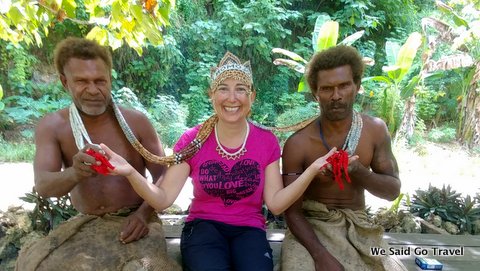
Lisa Niver is the Adventure Correspondent on The Jet SetMy trip to the Solomon Islands for two weeks in March was incredible and I am working on my story for Smithsonian. I have 31 videos to share from my adventures and will have more articles to share soon. I hosted a twitter chat and shared many photos which can now be seen on my Instagram about my trip. I have over one million video views, I am verified on Twitter and all my social media accounts are growing! Thank you for all of your amazing support!

I am now the Adventure Correspondent for The Jet Set! See my first segment about Utah and skiing with the visually impaired here. I also reported about my first ride on the Winter Comet Olympic Bobsled! Did you see my interview on The Jet Set: Interview of Lisa Niver: Transformational Travel

I loved flying on Delta and reading my article about Fabien Cousteau in Delta Sky Magazine! That was amazing! And I loved when Fabien Cousteau shared about the article when he flew on Delta and read about himself in my article. What a great month!

Lisa Niver wrote for Delta Sky Magazine about Fabien Cousteau.Where did I travel in April?

I traveled to New York City to celebrate a family birthday and Passover. I also went to the Auto Show to learn more about the e-Grand Prix as I am going to Monaco for a race in May! I have new two stories on Sheknows:

  • Discovering New Sports: 50 Things before I am 50 about my first hockey game, my first NCAA Basketball Game and learning to play tennis! Also about my story for The Jet Set in Utah skiing with the visually impaired and going on the Olympic Bobsled!
  • Where to stay in NYC? I loved my stay at the DoubleTree By Hilton and I love their new Cook(ie)Book! Read more about it here! 

I also LOVED being at the Sugar Sand Festival in Clearwater Florida. I love sand art sculptures and this festival supports a local elementary school! Photos and video are coming soon!

Newest Videos:

Where can you find my 650+ travel videos? Here are links to my video channels on YouTube, Amazon Fire Tv, Amazon Short Video and Roku Player. I hope you enjoy my “This is What it is Like” Episodes!

Recent Articles written by or featuring Lisa:

Lisa Niver in the Solomon IslandsTravel Writing Award: 

Thank you to everyone who has participated in our We Said Go Travel Competitions! We will announce the winners of the 2016 Gratitude Travel writing award in May 2017. The 2017 Inspiration We Said Go Travel Writing Award entries are currently being published. The Summer Independence Award will open on May 11, 2017. I have been honored to publish nearly 2000 writers from 75 countries with the dozen writing competitions I have hosted on We Said Go Travel. I hope you will consider participating in the next competition or sharing it with someone who wants to tell their tale. Thank you for all the support over the years.

I love the Oprah and Deepak 21-day Meditation Challenge. Recently Oprah said: “Let life carry you. Life is the dancer and you are the dance.”  She also said, “Be one with life. You don’t live your life, life lives you!”

Thank you for your support. Lisa

Discover more on my social media accounts:  InstagramFacebookTwitterPinterestYouTube.

Newest Videos from Lisa and We Said Go Travel: Lisa Niver on at the LA KINGS Game!

April News: I am so PROUD of my accomplishments Read More »

The new messiah and the old cynic: Notes on the Trump-Abbas meeting

1.

President Donald Trump believes that bringing about peace between Israel and the Palestinians “is frankly maybe not as difficult as people have thought over the years.” At least that’s what he said yesterday, when he was meeting with Palestinian Mahmoud Abbas at the White House. And he is right, of course: It is not difficult. If only the Palestinians accept what Israel offers – or if Israel agrees to what the Palestinians demand – a peace agreement could be signed.

It is interesting to contrast the upbeat optimism of Trump with the somber pessimism of the people involved in this process. When Israelis were asked in April by the IDI “Do you believe or not believe that negotiations between Israel and the Palestinian Authority will lead in the coming years to peace between Israel and the Palestinians?” less than a quarter of them said they “moderately” or “strongly” believe that peace is coming.

So maybe Trump knows something they don’t know (that’s possible, something might be happening that is still a secret). Or he might understand something that they don’t understand (because they are stuck in the past and he is the future). Or maybe it is all a game of make believe. Or maybe he is just being clueless – a clueless president with an ego to match.

2.

Trump presented no plan for peace yesterday – at least not to the public. Maybe a not-so-difficult peace doesn’t even necessitate a plan, maybe the details are left for others, or maybe he was presenting a plan to Abbas behind closed doors. But more likely: Trump is the plan. Trump believes that him being there, instead of his incapable predecessors, will be enough to make a difference. Trump assumes that his deal-maker persona will be enough to broker a deal that has eluded Israelis and many of their neighbors for more than a century.

Does he remind you of someone?  Perhaps one of his predecessors? Perhaps his immediate predecessor?

For one to become the president of the United States, one must have a large ego – one must hold to the belief that one’s personality and leadership skills can bring about change. So the fact that Trump has an ego – and that President Obama had an ego – is not a condemnable offense. An ego becomes problematic when it prevents a president from also being realistic. When it is so large that it blocks the view. When Obama believed that the force of his personality could change realities that had eluded his predecessors for so many years, his critics called him messianic. This is not a bad description for a president who not only believes in bringing about a peace agreement but also believes that thanks to his not-yet-clear policies “hopefully there won’t be such hatred for very long.”

3.

The president said: “any agreement cannot be imposed by the United States, or by any other nation.” This is what Israel wants to hear. Because the Palestinians surely cannot force Israel to agree to their demands.

The President said: “We will get it done. We will be working so hard to get it done. It’s been a long time, but we will be working diligently. And I think there’s a very, very good chance, and I think you feel the same way.” The Palestinian leadership hopes that if Trump truly wants it Israel will be hesitant to stand in his way. On the other hand, if it’s not so difficult – why the need to work so hard?

The president called the late Prime Minister Yitzhak Rabin “a courageous peacemaker.” That’s interesting. Most Israelis believe that the deal Rabin signed was a mistake. He was indeed a courageous leader, but the deal was a mistake. Making him the model to look up to was an interesting choice for Trump and his team. And I assume it was not an accidental choice.

4.

President Abbas did not show any sign of readiness to moderate his positions. “Our strategic choice is to bring about peace based on the vision of the two-state – a Palestinian state with its capital of East Jerusalem that lives in peace and stability with the state of Israel based on the borders of 1967.” Or maybe he did. By saying “based on” the 1967 line – namely, by agreeing to show some flexibility about the line. Or by saying “I also believe that we will be able to resolve the issue of the refugees and the issue of the prisoners” and hinting that he is ready to accept a creative formula for the refugees other than the nonstarter “right of return.”

Abbas – like Netanyahu – does not really know what President Trump wants and how high on his agenda the Israeli-Palestinian issue is going to be. He is playing for time. Trying not to contradict or annoy the president, trying to take advantage of this ego of his. Abbas is no less of a cynic about the American effort than most Israelis. But he is no less cautious about revealing his cynicism than their leaders.

5.

The President does not have a plan that we can talk about – he did not even say the words “Palestinian State” – so his ultimate goal is an agreed-upon solution. Agreed upon by whom? By Israel and the Palestinians. And what if they disagree, as they are likely to? The President says a solution cannot be imposed on them.

Something’s got to give.

Either the president is serious about his no-imposition policy. In such case, the most likely outcome of the current process is neglect.

Or he is serious about having an agreement. In such case he will have to apply pressure – namely, to impose his prescribed ideas on one or both parties.


The new messiah and the old cynic: Notes on the Trump-Abbas meeting Read More »