fbpx

March 28, 2017

Restoration of vandalized Philadelphia Jewish cemetery begins

Dozens of volunteers and laborers launched the restoration of toppled and damaged headstones at a Philadelphia Jewish cemetery.

Experts in grave restoration are overseeing the work at the Mount Carmel Cemetery, which began Tuesday, the local Fox affiliate reported. Two Philadelphia labor unions offered to provide free repairs and added security.

The work will include setting and gluing the stones, fixing the cemetery fence and increasing the lighting for security purposes.

The damage to about 175 gravestones was discovered in late February, days after a Jewish cemetery in St. Louis was vandalized. No suspects have been identified.

Meanwhile, most of the 154 toppled gravestones at the Chesed Shel Emeth Cemetery in St. Louis have been righted and resealed to their bases, local public radio reported. Some 16 of the stones have to be replaced, which could take three months, according to the report.

On Monday, the directors of all seven Jewish cemeteries in the St. Louis area issued a joint statement condemning the attack on Chesed Shel Emeth, the local Fox affiliate reported.

“We hope the perpetrators are found and brought to justice,” the statement said. “We as a group are taking action to ensure that our cemeteries are secure and sacred grounds for all. We thank the entire St. Louis community and the global community as well for your concern, support and assistance in our efforts.”

A crowdfunding campaign launched by two Muslim activists for repairs to the St. Louis cemetery as of Monday had raised over $162,000 with four days remaining. Its initial goal was $20,000.

The page said a $40,000 check has been given to the cemetery to cover all costs to repair and replace damaged headstones. The campaign also sent a $5,000 check to the downtown Chicago Loop Synagogue to help repair recent anti-Semitic vandalism there.

“With extra funds raised, we have decided to embark on a major project to restore a neglected and vandalized Jewish cemetery in Colorado which is on the National Register of Historic Places. Costs will be over $100K,” an update on the page said. “Learn about the story of this historic cemetery here. We are now hoping to raise a total of $200,000 to ensure we have the funds for this project while helping other vandalized sites as well.”

Restoration of vandalized Philadelphia Jewish cemetery begins Read More »

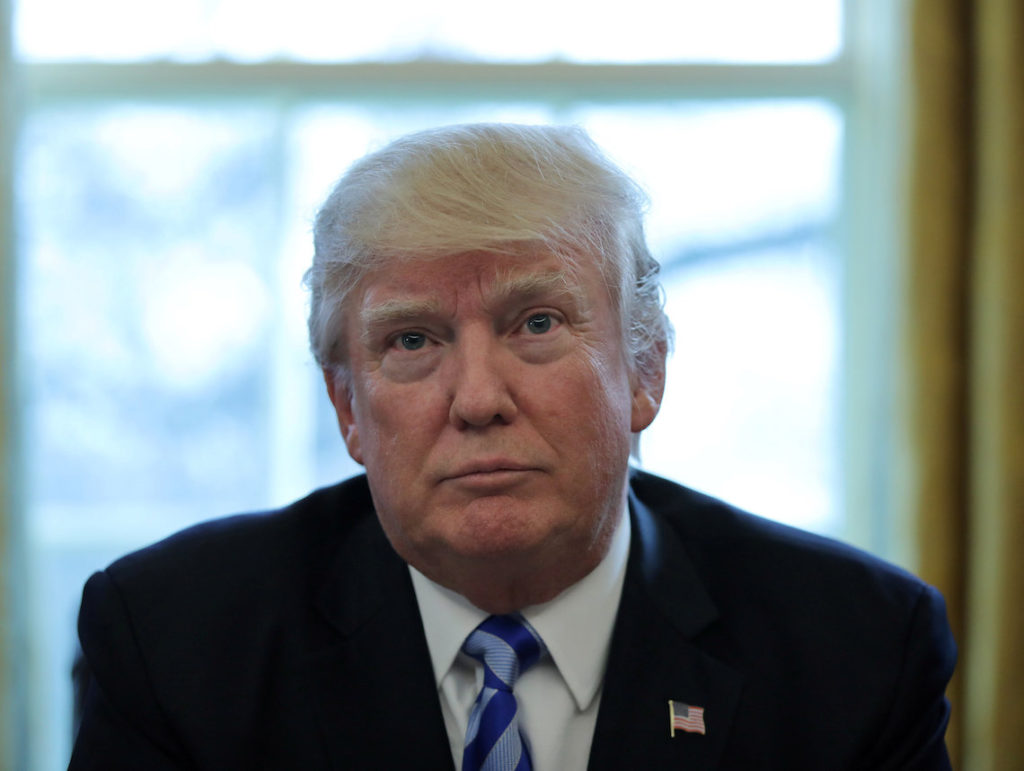
Is Trump owed an apology after the JCC bomb threat arrest? Is anybody?

Literally within seconds of the news of the arrest in Israel of an Israeli-American teenager for the bulk of the JCC bomb threats, Twitter lit up with Jewish anxiety.

“[I] fear the inevitable backlash from haters who we whipped [into] a frenzy for our own nefarious political aims” is how someone responded to the JTA story about the arrest.

A colleague’s friend wrote, “And now people will have another excuse to not take anti-Semitism seriously.”

The shock and anxiety inspired by news of the arrest were understandable. After all, anti-Semitic organizations and websites keep tallies of “false flag” anti-Semitic attacks carried out by Jews in order to discredit the very idea that anti-Semitism exists. (Such incidents are few and far between, and pale next to the actual tally of attacks on people and property, but never mind.)

But the JCC bomb threat hoax wasn’t just an isolated swastika daubing — it was an ongoing story affecting Jewish institutions in nearly every American Jewish community. It shaped a communal narrative that something ugly and insidious was happening out there. And it fueled a political crisis among most American Jewish organizations and the White House, with the former accusing the latter of taking too long to denounce anti-Semitism and to comfort Jews traumatized by the bomb threats and at least two major cemetery desecrations.

Coming almost as quickly as the expressions of anxiety was the political exploitation of the arrest.

“The Ultimate Self-Hating Jew, a 19-yr old Israeli-American, was behind the JCC bomb threats,” tweeted Marc Zell, the co-chairman of Republicans Overseas Israel. “The US Jewish leadership owes @POTUS an apology.”

David Bernstein at the Washington Post’s conservative Volokh Conspiracy posted in a blog: “[T]he fight against actual anti-Semitism and other forms of racism will likely have been dealt a blow because self-serving groups like the ADL chose to hype and politicize the threats without any idea of their actual origin.”

Before we get too far into the rituals of finger-pointing, a few things are worth considering: First, JCCs and other Jewish institutions across the country, and the children and adults who use them, were traumatized by the string of some 150 bomb threats. It cost JCCs members and money, and diverted funds from programs to heighten security. That the main hoaxer allegedly was a Jewish guy living in Israel doesn’t erase three months of anguish.

Second, it is a huge relief to Jewish institutions — and the community that relies upon them — that someone has been caught. Perhaps they can return to business as usual. Let’s give them their moment of relief.

Third, Jews didn’t do this to “themselves.” This was a criminal act by an individual. Blaming all members of a community for the act of an individual is a page out of the anti-Semitism playbook.

Many Jewish groups did go too far, too fast in assuming the identity of the culprit (or culprits), pinning the threats on a political climate inspired by President Donald Trump.

“We’ve never seen, ever, the volume of bomb threats that we’ve seen,” Oren Siegel, the director of the ADL’s Center on Extremism, said at a news conference following the arrest of the first suspect, Juan Thompson (a copycat motivated by some weird romantic grudge that appears to have had little to do with Jews). “White supremacists in this country feel more emboldened than they ever have before because of the public discourse and divisive rhetoric.”

Bend the Arc, the liberal Jewish social justice group, was more explicit in blaming Trump.

“In recent days, we have seen manifestations of the hatred stirred up by President-elect Donald Trump throughout his campaign,” it wrote in a statement after the first wave of JCC bomb threats. “Trump helped to create the atmosphere of bigotry and violence that has resulted in these dangerous threats against Jewish institutions and individuals.”

At this moment, we don’t know the motive of the Israeli suspect. But assuming this kid was dealing with personal demons and the JCC bomb threats can’t be pinned on typical anti-Semitic ideology, does this mean that the spike in hate crimes tallied in New York and elsewhere didn’t happen? Were these Jewish groups wrong to assume that anti-Semites were responsible for anti-Semitism?

Groups who pinned the bomb threats on an atmosphere that Trump “helped to create” certainly went too far, but does their lack of caution mean that Trump’s divisive campaign rhetoric should be forgiven? Should advocacy groups not have called out a campaign and an administration that has tolerated and encouraged the “alt-right” and habitually indulges in ethnically divisive rhetoric?

Ann Coulter — asking “Has ANY anti-Trump story been true?” — joined the chorus of those suggesting the arrest exonerated Trump, though exonerated of what is not clear. Jewish groups wanted a strong statement from the White House condemning the bomb threats and the cemetery vandalism not because he was the perpetrator or a Republican, but because he is the president of the United States. Issuing statements of condemnation and support is what presidents do, automatically and usually inconspicuously. Only Trump has seemed to take this task as an affront, somehow believing that to condemn hate crimes is to take responsibility for them.

Others are saying that the arrest of a Jew in the bomb threats vindicates Trump’s comments last month suggesting that the threats were a “false flag” attack. According to Pennsylvania Attorney General Josh Shapiro, Trump told a meeting of states’ attorney generals that “Sometimes it’s the reverse,” and attacks are made “to make people – or to make others – look bad.”

Some took this to mean that Trump was suggesting a Jew was behind the attack, although more likely he was referring to a political enemy. Whatever he meant, he couldn’t have sounded more tone-deaf. Again, dozens of institutions and hundreds of families were reeling from a series of bomb threats. As in his famous blowup in response to a question from a Jewish reporter about rising anti-Semitism, Trump made the events about him rather than the victims.

The ADL and other Jewish groups have a tough PR challenge ahead of them: keeping the focus on acts of anti-Semitism by traditional enemies — white supremacists, neo-Nazis, the virulently anti-Israel far left — while acknowledging that one of the most extensive and public anti-Semitic acts of recent memory was carried out by a Jew. They’ll need to recast the narrative of resurgent anti-Semitism by omitting the wave of JCC bomb threats, but not at the expense of the victimized JCCs.

As the American Jewish Committee put it in a statement, “This is a lesson in not leaping to assumption[s] about complex links between polarizing politics and anti-Semitic acts. But it does not dispel [the] age-old reality of anti-Semitism.”

And they’ll have to find a way to stay vigilant in a polarized and poisonous political era without being seen as the boys who cried wolf.

Is Trump owed an apology after the JCC bomb threat arrest? Is anybody? Read More »

At a cemetery, leaders promote tolerance

The images of toppled headstones at Jewish cemeteries deeply saddened, even infuriated Aimee Ginsburg Bikel.

Thoughts turned to staging a protest, something intimate and “folksy” to make her point, that this is wrong.

“But then I realized that I didn’t want to protest against cemetery desecration,” Ginsburg Bikel told the Journal. “I wanted to affirm something, to show we are as one and to stand together.”

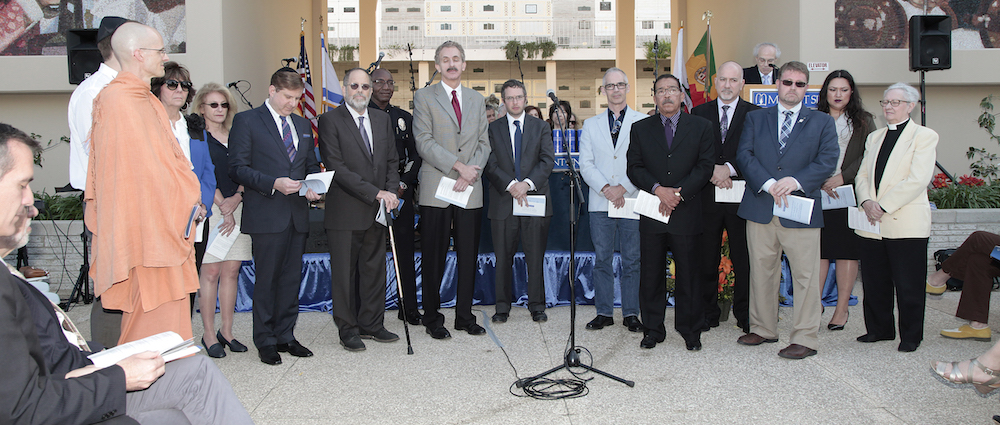
On March 26, she was overcome with emotion as all that came to fruition with the sight of nearly 400 people gathered at Mount Sinai Memorial Park in a showing of “unity, love and mutual respect.” The crowd, made up of elected officials, law enforcement, clergy and community members, was a kaleidoscope of people in headscarves, hijabs, yarmulkes, priestly robes and turbans.

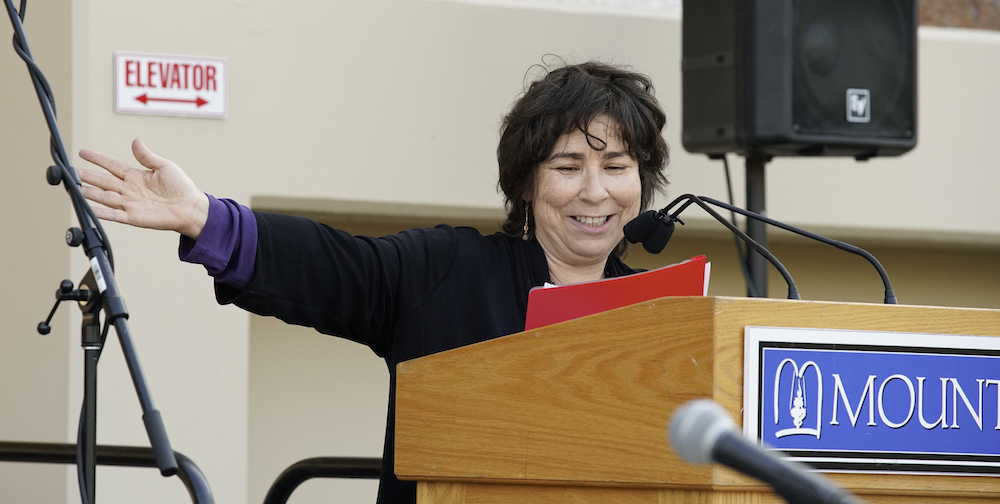
“I wish all of you could see what I see,” Ginsburg Bikel said from a podium. “This is some view. It’s astonishingly beautiful. All of your faces look like flowers in a garden.”

Everyone joined together for her interfaith “We Stand Together” event to hear prayers, songs and speeches promoting tolerance and embracing diversity. It was held atop a hill overlooking most of Sinai’s lush 82-acre burial grounds nestled in between Griffith Park and the buzzing 134-freeway. The park is owned and operated by Sinai Temple.

The event was organized by Ginsburg Bikel, the widow of civil rights activist and film actor Theodore Bikel, along with Rabbi Neil Comess-Daniels of Beth Shir Shalom in Santa Monica and Hazzan Mike Stein, cantor at Temple Aliyah in Woodland Hills, under the auspices of the Theodore Bikel Legacy Project. Mount Sinai Memorial Parks and Mortuaries also sponsored the event. 

Ginsburg Bikel drew on the words and experiences of her late husband to demonstrate to her audience the importance of standing together and being heard during times of peril.

“We know what happens when good people stay silent, [Theo] used to say often, alluding specifically to the occupation of his beloved Vienna when the Nazis took over in 1938 a few months after his bar mitzvah,” she said. “We celebrate Theo’s legacy here today by raising our voices now and not later asserting that the red lines have already been crossed and that we won’t allow it. We will stay united and we will build a world of peace together.”

Beneath Sinai’s “Heritage Mosaic,” a mural spanning 145 feet made of Venetian glass depicting a panorama of American Jewry, guests included local rabbis, imams, ministers, pastors, Hindu, Buddhist and Sikh priests and representatives from the Los Angeles Police Department’s Counter Terrorism and Special Operations Bureau. Mayor Eric Garcetti, City Controller Ron Galperin and California Assembly member Laura Friedman were also in attendance.

The event wasn’t advertised to the general public for security reasons, according to Ginsburg Bikel.

Aimee Ginsburg Bikel speaks on March 26. Photo by Mount Sinai Memorial Parks and Mortuaries

In a ceremonial candle lighting ceremony, community leaders read aloud from works by such peace icons as Elie Wiesel, Martin Luther King Jr. and the Dalai Lama. LIFE (Love Inspiration Faith Everlasting), a gospel choir, performed a stirring rendition of Barry Manilow’s “One Voice”.

Rabbi Ed Feinstein of Valley Beth Shalom in Encino delivered a fiery speech in which he drew parallels between Jewish cemetery desecration and a recent wave of hate crimes against Muslims, Sikhs, gays, transgender individuals and other minority groups.

“The woman who wears the Islamic head scarf and is assaulted on a New York subway by someone who tells her ‘Go back to your country’ is my sister, and she is my problem,” Feinstein said.

“If you can’t live in your own soul and in your own heart there’s no neighborhood in this land that will be home to you,” he added. “The narrative of otherness is what we’ve come to declare war against. We are one. We will be one. Only as one will we ever have peace.”

Garcetti, who told the crowd he has an uncle buried at Mount Sinai Memorial Park, had come straight from a celebration of Bangladeshi independence, to attend. Wearing a yarmulke, he said during difficult times he chooses to opt for hopefulness, focusing on how to continue building up the city as a beacon for diversity.

“It’s time for us to stop thinking so much about the most powerful person in this country and to start thinking again about the most vulnerable people in this country,” Garcetti said to applause.

Religious and elected leaders stand together. Mount Sinai Memorial Parks and Mortuaries

Joseph Schwartz, 51, heard about the event at IKAR, the synagogue he attends, and felt compelled to participate. He said the attendance of elected officials was both a highlight and encouraging.

“It was very good, very moving,” he said. “It shows that officials on the local and state level are truly committed to doing what is right.”

A unity pledge was available for all elected officials and clergy present to sign. Ginsburg Bikel said that she plans to display the pledge, a proclamation of unifying principles, at a different house of worship for several days at a time over the next year.

She told the Journal that she’s glad the event helped some in the community heal from a collective sense of sorrow in light of recent events. She said organizing more unity events might be in her future. 

“People have been telling me they feel inspired and refreshed,” she said. “They feel that they’re not in this alone and they now know they’re surrounded by like-minded people. They want to know what the next thing is. What are we doing next? That’s the response of elected officials, clergy and the public. I have to take it under advisement. I wasn’t expecting to start a movement.”

At a cemetery, leaders promote tolerance Read More »

Wexler’s Deli Coming to Century City

News of the death of the deli continues to be premature.

Wexler’s Deli announced today that it will be opening up its third location in Century City.

The deli that is on the cutting edge of the artisanal Jewish food movement will add to its original Grand Central Market location and subsequent Santa Monica outlet with a new operation at the remodeled Westfield Century City Mall in Summer 2017.

Wexler’s Deli’s latest location at Westfield Century City will be designed in partnership with Otto Design Group (ODG),” read today’s press release. “The 400-square foot restaurant will feature 10 counter seats and communal seating in the renovated dining terrace.”

The menu at Wexler’s Deli will feature traditional deli favorites including corned beef, pastrami, lox, and sturgeon – all cured, smoked, and hand-sliced in-house – as well as house made condiments and freshly baked breads and bagels. Returning favorites from both the Downtown LA and Santa Monica locations include The O.G. sandwich with pastrami, mustard, and rye, Smoked Meat and Smoked Fish Packages for extensive office catering, along with a selection of new items exclusive to the Century City location.”

Founded by Chef Micah Wexler and Michael Kassar, Wexler’s adheres to traditional items — lox and cream cheese, pastrami and rye — using sustainably sourced ingredients and in-house preparation.  Wexler applies his experience as a chef in numerous high-end restaurants to elevating traditional Jewish food. (To bring a little Wexler to your Passover table, check out this recipe for Beet Salad with Grilled Halloumi).

The Journal covered the opening of Wexler’s Santa Monica location with a  video that captured the community buzz, below.  Now, the excitement will no doubt build over the new location. Something about nostalgia gets people really excited about the future.


Wexler’s Deli Coming to Century City Read More »

When politics gets in the way of Jewish giving

Lisa Greer didn’t think twice when she used her cellphone to donate to IfNotNow, a Jewish organization that protests Israel’s West Bank occupation.

Greer and her husband, Joshua, had given millions to progressive Jewish and Israel causes, and she sits on the board of the Jewish Community Foundation of Los Angeles. So last October, she gave the $5,000 contribution to IfNotNow from her donor-advised fund at the foundation, a mechanism for philanthropists to give to specific causes via local Jewish philanthropic bodies.

But two days later, the Jewish Community Foundation, the planned giving arm of the Jewish Federation of Greater Los Angeles, blocked the donation. While Greer can choose where her fund’s money goes, the foundation has to approve every grant. And because IfNotNow protests federations and other Jewish establishment groups, the foundation said no.

It was the first Greer had ever heard of a grant being denied.

“We give to all different kinds of organizations. There’s never been an issue,” said Greer, who gave the IfNotNow donation in September. “I’d never heard of this happening before. I was beyond shocked. I really did start shaking.”

Greer’s gift isn’t the only contribution from a Jewish donor-advised fund to come under scrutiny. Nationwide, donor-advised funds affiliated with Jewish federations give a collective $1 billion per year, according to the Jewish Federations of North America. Of those gifts, relatively few are rejected — but red lines surrounding donor-advised gifts remain unclear. Beyond confirming a recipient nonprofit’s legal standing, federations often mandate only that a recipient’s mission be consistent with the federation’s goals — itself a vague requirement.

“Jewish Federations’ charitable goals include aiding the most vulnerable, building vibrant Jewish communities and supporting Israel,” read a statement from JFNA spokeswoman Rebecca Dinar. “Grants to organizations that fall outside of those parameters require each community to apply their own judgment.”

What falls within and outside those boundaries?

While the Jewish Community Foundation of Los Angeles blocked the IfNotNow grant, it has allowed grants to the New Israel Fund, which supports a range of nonprofits that oppose occupation. Federations have also faced pressure on donor-advised donations to right-wing groups.

Last Thursday, Jewish Voice for Peace, which supports boycotts of Israel, issued a report tallying donor-advised gifts via Chicago’s federation-affiliated foundation to groups that JVP describes as “Islamophobic.” According to the report, gifts to two organizations — Middle East Forum and Investigative Project on Terrorism — totaled nearly $800,000 between 2011 and 2014. (Both groups say they do not oppose Islam but rather “Islamist violence” and “radical Islamic involvement in terrorism.”) Last year, students in J Street U, the student arm of the dovish Israel lobby, wrote an op-ed in the Forward detailing donor-advised gifts totaling more than $60,000 via the Chicago and Milwaukee federations to groups that fund West Bank settlement construction.

“If their only basis for who they give money to is whether it’s legal, they need to stop saying they stand together against all forms of hate,” said Michael Deheeger, one of the JVP report’s co-authors, about the Chicago federation. “They still retain total discretion over whether to let money go to these organizations. They can stop this today.”

For wealthy donors, donor-advised funds are a way to make giving easier. They place their money into a tax-free charitable account, tell the federation where they want it to go and the federation takes care of the rest, including paperwork and tax filing. Federations benefit by receiving an initial donation from each donor as well as a small percentage of each donation. Traditional charities like The United Way and the Salvation Army run donor-advised funds, as do mutual fund groups like Fidelity and Charles Schwab.

The popularity of donor-advised funds has grown beyond the Jewish community. According to The Economist, almost $80 billion sit in over 270,000 donor-advised funds today, compared to $34 billion in 180,000 donor-advised funds in 2010. In 2014, Jewish federations and affiliated foundations held over $17.5 billion in donor-advised funds, according to EJewishPhilanthropy.com.

Federations embraced donor-advised funds in recent years to cultivate wealthy families who wanted more say in where their donations go — unlike donations to the federation’s annual campaign, which are generally apportioned by the federation’s lay board and staff. But there are limits. Donors’ gifts from funds are subject to federation approval.

Andres Spokoiny, CEO of the Jewish Funders Network, which offers resources for Jewish philanthropists, said controversies on the margins of the funds shouldn’t tarnish their value as a way to facilitate giving. But the best way to assuage those concerns, he said, is for each federation to clearly set  its red lines.

“That gets inscribed into the broader question of what are normative positions for the Jewish community,” he said. “What are the limits of public discourse? It’s a debate that’s full of gray areas and the goalposts keep moving. The solution to that is to have an honest and open conversation in each community.”

Some federations do have specific policies on donor-advised gifts. Portland’s federation, for example, notes that it does not make its own allocations beyond Israel’s pre-1967 borders, but that it will generally accept donor-advised gifts intended for charities beyond the so-called Green Line. Others, including the Chicago federation’s foundation and the Los Angeles community fund, prefer not to single out any one cause or group in their guidelines for donors.

“It’s the donor’s money sitting at JUF, and very wide latitude is then given to the donor,” said Jay Tcath, executive vice president of the Jewish United Fund, Chicago’s federation. “Which is why there are groups on the right that are going to be funded that antagonize the left, and groups on the left we fund.”

Asked to elaborate on its denial of Greer’s request, the L.A. fund wrote in a statement to JTA that it will approve gifts to any nonprofit “whose programs and goals are not inconsistent with the fundamental mission of the Jewish Community Foundation,” and which is not anti-Semitic nor anti-Israel.

Jewish Voice for Peace would like the Chicago federation to establish a policy disqualifying funding to “Islamophobic” groups. In the period covered by the JVP report, the Chicago federation’s donor-advised funds made a total of $175 million in grants to 3000 organizations.

That included more than $750,000 of donor-advised gifts between 2011 and 2014 to the Middle East Forum, an organization led by researcher Daniel Pipes that the Southern Poverty Law Center included on a list of anti-Muslim extremist groups, and $26,000 to the Investigative Project on Terrorism, led by Steven Emerson, which also appears on the SPLC list.

“If they want to cast such a big tent that it puts them in the position of funneling money to hate groups, they need to stop positioning themselves as speaking on behalf of the entire Chicago Jewish community,” Deheeger said.

Tcath rejects JVP’s charge that his organization is Islamophobic, noting money it has raised for relief efforts in Syria and Bosnia as well as its work helping resettle refugees of all religions in Illinois. He said his federation opposes bigotry, and that SPLC’s list of Islamophobic organizations, which came out in December, two years after the period studied by JVP, could prompt a re-examination of those groups. But he added that JUF would not disqualify a group based solely on one or two of its founders’ offensive statements.

“Any bigotry is against our values and interests, but it is not for certain that everybody would really agree with that characterization of the Southern Poverty Law Center,” he said. “Are they serving the noble goals on which their mission statement is based? If that is the case, then we’re not going to stop the donors’ requests to the group because of this or that statement.”

The Chicago federation does set red lines: Tcath said any group that advocates violence toward, or forcible expulsion of, Arabs from Israel would not receive funding. On the left, he ruled out any group that promotes boycotts of Israel — including JVP — but not groups that support boycotts limited to the settlements. In the past, Tcath also recalls the federation denying a request to fund a church that engaged in proselytizing.

Tcath said he had “no idea” whether JUF would honor a request to fund IfNotNow, noting its focus on protesting Jewish federations like his own.

After being denied by the L.A. community fund, Greer gave her donation directly to IfNotNow. In the months since, she has kept her money in the donor-advised fund, noting her support of most of the organization’s work in the Jewish community. But she’s looking for a more progressive home for her philanthropy.

“If I can get a little bit of money back to the Jewish community through that 1.5 percent, it’s a good thing,” she said, referring to the percentage of each gift that goes to the Jewish Community Fund. “But I’m actively looking for an alternative, and if an alternative presents itself, or if I were given money to create an alternative, I would do it in a heartbeat.”

When politics gets in the way of Jewish giving Read More »

Menendez signals openness to Taylor Force Act

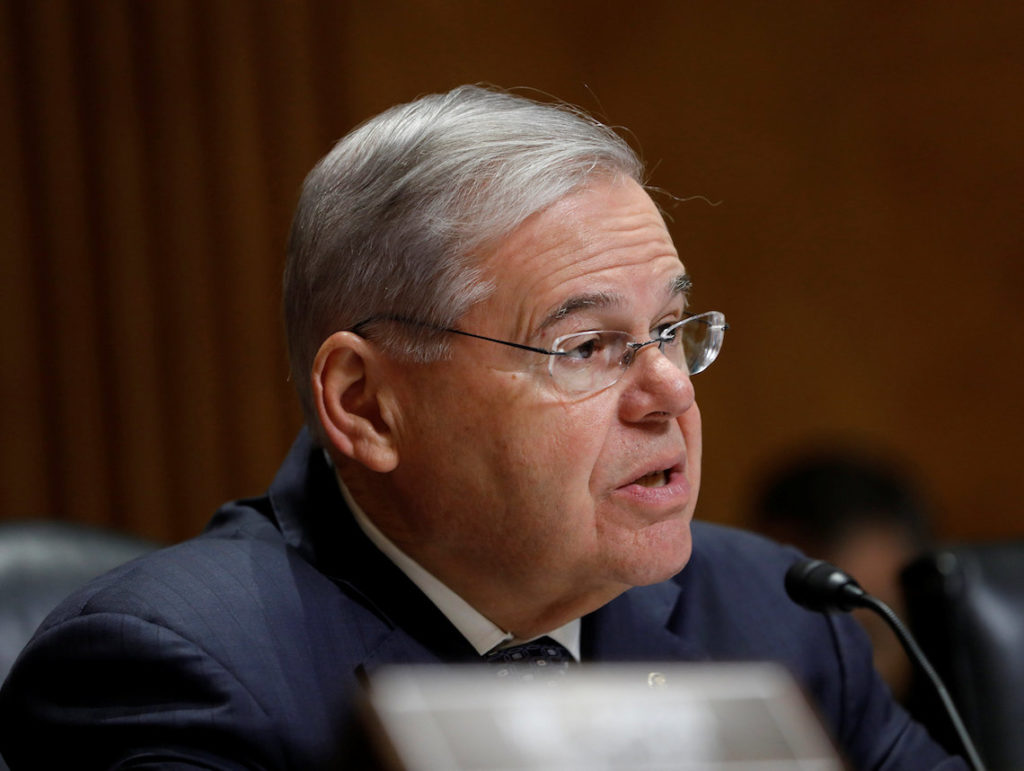
Democratic Senator Bob Menendez showed openness on Tuesday to consider backing the Taylor Force Act, a bill calling on the US to cut its financial assistance to the Palestinian Authority if payments to terrorists’ family members persist. When asked about the legislation, Menendez told Jewish Insider,  “I have a degree of sympathy for finding ways to change the Palestinian Authority’s views that you support people who are dedicated to killing Jews — whether that is a more calibrated denial of money versus what I am hearing, which is an outright cut, — is the only question for me. I think something should be done.”

[This story originally appeared on jewishinsider.com]

At a press conference on February 28 to introduce the bill along with Senator Tom Cotton (R-AK) and Roy Blunt (R-MI), Lindsey Graham (R-SC)  predicted that the Taylor Force Act “if it gets to the Senate floor it will be overwhelmingly passed,” while assuring that President Donald Trump would sign the legislation.

At the same time, the New Jersey lawmaker is looking to consult with the Israeli government about the legislation, which could have dramatic impact in the West Bank. “I don’t know that Israel needs a collapsed Palestinian Authority next door to them,” he added. Menendez was one of only two Democratic Senators to vote for David Friedman as US Ambassador to Israel in last week’s vote and also jointed with the Republicans against the Iranian nuclear agreement.

The Taylor Force Act was introduced last Congressional session but failed to pass the Senate and obtained no Democratic support.

Ranking Democratic Member Ben Cardin (D-MD) told Jewish Insider on March 2, “I generally don’t support an approach that could jeopardize needed assistance for stability in the West Bank.” Chairman Bob Corker echoed his Democratic counterpart, cautioning, “I think there is probably a more targeted way of dealing with that issue.”

Christians United for Israel (CUFI) is aggressively lobbying for the bill while AIPAC did not include the legislation in its priorities this week when members lobby Capitol Hill during the annual Policy Conference. The bill is currently waiting in the Senate Foreign Relations Committee for approval where Chairman Corker would need to bring the Taylor Force Act to a committee vote, which often is a lengthy process. As a Democratic Senator, Menendez supporting the legislation could force AIPAC to take a clear position on the legislation, as it generally only backs bipartisan efforts.

The bill was named after a US military officer who was stabbed to death by a Palestinian terrorist while participating in a study abroad program in Israel.

Menendez signals openness to Taylor Force Act Read More »

American Jewish Committee returns to Warsaw

The American Jewish Committee returned to Warsaw after eight years.

AJC on Monday opened a new office in the city dedicated to serving Poland and six other Central European countries: the Czech Republic, Estonia, Hungary, Latvia, Lithuania and Slovakia.

“Welcome home!” Andrzej Folwarczny, founder of the Forum for Dialogue and recipient of AJC’s Jan Karski Award, said at an evening ceremony at the Polin Museum of the History of Polish Jews.

Folwarczny, who is not Jewish, has been cooperating with AJC for more than 20 years, organizing study visits of opinion leaders from Poland and the United States. The groups travel to the U.S. to address issues of concern in Polish-American and Polish-Jewish relations. Folwarczny’s best-known project is School of Dialogue, which helps young people living in small Polish towns to learn about their local Jewish community’s history.

Polish President Andrzej Duda, in a statement marking the event, said he sees the depth of symbolism in the fact that the ceremony coincided with the launch of NATO forces’ presence in Poland.

“In the period when Poland, having regained her sovereignty after the collapse of the communist regime, strived to join the North Atlantic Treaty Organization, the American Jewish Committee proved to be our valuable ally,” he wrote in a letter read to gala participants.

Jonathan Ornstein, director of JCC Krakow, told JTA that the opening of AJC’s office in Poland will give a boost to its growing Jewish community and help Poland strengthen ties with the Jewish world. He said the choice of Warsaw is yet another sign that world Jewry recognizes Poland as a growth area and a bright spot in Europe.

“We at JCC Krakow are excited to cooperate with AJC and eager to access their experience in community building as our Krakow Jewish community continues to develop and reemerge after the fall of communism,” he said.

In 1997 David Harris, who has led AJC since 1990, testified before the U.S. Senate Foreign Relations Committee in support of NATO admission for the Czech Republic, Hungary and Poland. AJC was the only Jewish organization to do so.

In a partnership with the Polish government, AJC helped protect and memorialize the site of Belzec, a German death camp located in southeastern Poland, where approximately 500,000 Jews were murdered in less than a year.

American Jewish Committee returns to Warsaw Read More »

Millions of Israeli children said at risk of stunted development, possibly from desalinated water

JERUSALEM (JTA) — Israel’s first-ever national survey of iodine levels in the population revealed widespread deficiencies, which could mean millions of children are at risk of stunted development.

The survey, whose unpublished results were presented last week to endocrinologists in Ramat Gan, found that 62 percent of school-age children and 85 percent of pregnant women have iodine levels below the World Health Organization minimum.

According to the researchers behind the survey, Israel appears to have one of the highest rates of iodine deficiency in the world. The national health problem is likely related to Israel’s world-leading use of water desalination, they said.

“We could be talking about a significant detriment across the population,” Dr. Aron Troen, a nutritional neuroscientist at the Hebrew University of Jerusalem who helped lead the survey, told JTA. “For anyone below the minimum level, you may lose 7 to 10 to 12 IQ points, which translates into a huge decrease in GDP due to reduced productivity.

“We are concerned that increased reliance on desalinated water in the Israeli food chain is contributing to iodine insufficiency in the population.”

Even mild iodine deficiency can limit intellectual development. In the womb or early childhood, deficiency has been shown to impair brain development and in severe cases cause physical malformation, dwarfism and intellectual disability. Previous studies have found the children of iodine-deficient mothers perform much more poorly in school.

Researchers from Hebrew University, Maccabi Healthcare Service, Barzilai University Medical Center in Ashkelon and ETH Zurich in Switzerland collaborated on the survey, which analyzed urine samples from 1,023 school-age children and 1,074 pregnant women. They found similar results among Israeli Arabs, secular Jews and Orthodox Jews.

From left, researchers Dov Gefel, Yaniv Ovadia, Aron Troen and Jonathan Arbelle (Courtesy of Hebrew University)

Based on their findings, the researchers called on the Israeli government to mandate the addition of iodine to salt or other foods, as do many other countries, including the United States. They said the change would be easy, inexpensive and have potentially large public health benefits. They also called for regular monitoring of national iodine levels.

In the meantime, Israelis can change their diets, including by buying iodized salt, which is currently expensive and hard to find in Israel.

“Individuals can improve their iodine status through increased consumption of iodine-rich foods such as milk, dairy and saltwater fish. They can also replace regular table salt with iodized salt,” Yaniv Ovadia, the doctoral student and registered dietitian who performed the survey, said in a statement.

Israel was one of only a few countries to have never before gathered nationally representative data on its residents’ iodine levels. But Troen said “the trajectory” of his research suggests the problem has worsened in recent years and may be related to Israel’s pioneering use of water desalination, which removes iodine as well as other minerals. About half of the water Israelis consume is desalinated – a higher percentage than in any other country.

In a study last year, Troen and fellow researchers found a “surprisingly high” prevalence of insufficient iodine intake among the residents of the southern Israeli city of Ashkelon, where residents get much of their water from the local desalination plant. They also found a strong association with thyroid dysfunction among adults and evidence that the problem increased in the 2000s, as Israel was ramping up its water desalination program.

According to data from the Israel Center of Disease Control, self-reported use of thyroid medication among Israeli adults increased 63 percent between the Israeli National Health Interview Surveys of 2003-04 and 2007-10.

Troen said other potential explanations for Israelis’ iodine deficiency are increased consumption of processed foods and surprisingly low consumption of dairy products. The scarcity of iodine-enriched salt and other food is certainly a factor as well, he said. Troen has started new research on the causes of iodine deficiency in Israel.

Millions of Israeli children said at risk of stunted development, possibly from desalinated water Read More »

Democracy and the Sleep of Reason

Democracy is in retreat, at least according to Jascha Mounk. The Harvard lecturer has been saying that for years in his columns for Slate, but now people are listening. Jonathan Rauch cited Mounk’s research in the March Atlantic:

“When asked to rate on a scale of one to 10 how essential it was for them to live in a democracy, 75% of Americans born in the 1930s chose 10, but the proportion dropped with each succeeding decade, falling to only about 30 percent for people born in the 1980s.”

Believing in democracy has been a cornerstone of the American civil religion since the United States became a country. What would account for this loss of faith? Mounk points to three factors: economic decline, economic inequality, and ethnic anxiety. When people make less money, or see others making more, or when their ethnic group loses social status, they lose confidence in the system.

Which leads to the question: Is democracy truly valuable in and of itself, or is it largely a means to secure those other benefits? Presidents from Teddy Roosevelt to Barack Obama have spoken about democracy as inherently good, as if no arguments were needed to prove its self-evident value. Mounk finds, however, that voters now see democracy primarily as a way to safeguard prosperity, economic parity, and social or cultural status.  When those are threatened or lost, so is support for democracy.

Consider another factor. The democratic idea, a child of the Enlightenment, is built on the assumption that informed voters will generally make rational choices. But, as Elizabeth Kolbert observed recently in the New Yorker, “today reason often seems to fail us.” She reports on studies which show the impact of confirmation bias—the tendency to see new information as supporting what you already think, no matter what it actually says. In other words, most people don’t actually draw rational conclusions from the information they have. They just believe what they want to believe.

Kolbert’s article also cites research into “the illusion of explanatory depth”—the common feeling that you understand more than you actually do. There’s yet another study which shows that people who actively defend their (mistaken) beliefs enjoy a pleasurable physiological reaction, a dopamine rush that reinforces the habit of denying inconvenient truths. These findings test Thomas Jefferson’s famous pronouncement that “a well-informed citizenry is the best defense against tyranny.”

What does this mean for American democracy?  If those studies are right, political positions will become even more polarized and inflexible, and rational arguments won’t change many minds. More people will stay within their own echo chamber of ideas. There will be more rallies and demonstrations, and less analysis and discussion.

Of course it’s a classic mistake to assume that current trends will simply intensify over time. History is full of surprises and disruptions, and undoubtedly there will be a few in the coming years. For now, though, it’s hard to foresee much good news for the cause of democracy.


Democracy and the Sleep of Reason Read More »

Notes from AIPAC: Is there really no daylight between the US and Israel?

1.

In year 5777 of the Hebrew calendar, just two weeks before Passover, the people of Israel are reliving the story of Pharaoh and Moses. The Pharaoh is not a king, it is an organization – the UN. The Moses is a brilliant Indian-American politician, a woman of ambition and courage – Nikki Haley. Their Moses made a promise yesterday at the annual AIPAC policy conference: there’s a new sheriff in town.

“The days of Israel bashing are over,” Haley told a crowd of pro-Israel activists already in awe with her performance. In the previous two days of deliberations, this crowd burst in applause every time her name was mentioned. She is easily the most adored US official among this crowd. She is easily the one about which there’s some kind of consensus. The US ambassador to the UN will part the sea of discrimination for the people of Israel; the US ambassador to the UN will bring them to a promised land of being treated like everybody else. The US ambassador to the UN will destroy the Golden Calf of Israel bashing.

The Trump administration, having spent more than two thirds of its first hundred days in office on juvenile skirmishes, can point to at least one great thing it did for Israel. Of course, Haley was not appointed “for Israel” – she was appointed to drive a message from the US to the UN. Can she change the UN? Can Trump tame this anti-Israel behemoth? That is too soon to asses. But no one can mistake Haley’s message: the days of Obama are over, the days of contemplating a vote against Israel without the US vetoing it are over.

2.

On the first day of the conference, Israel’s Ambassador to Washington Ron Dermer made the following statement: “For the first time in many years, perhaps even many decades, there is no daylight between our two governments.”

This is a statement worth parsing. Let’s start with the meaning of “many decades.” What does that mean?

“Many” means at least two. Two decades means going back at least twenty years, to 1997.

So Dermer is essentially saying that the current daylight situation is better than the one Israel had during the last leg of the Clinton administration, the full two terms of the Bush administration and the full two terms of the Obama administration. I cannot say this is wrong, because there are certainly things I don’t know about the current state of the relations. But Dermer, trying to be dramatic, put the bar high. This was a fancy assessment of the state of the relations.

3.

Continuing with Dermer. What did he mean by “no daylight between our two governments”?

You could say: no difference in assessing the situation and the necessary policies. But we know that cannot be the case. Had it been the case, Dermer would not busy himself in an attempt to reach an understanding with the Trump administration about settlements. It is really simple: negotiations between the countries are necessary because they don’t see eye to eye on the settlement issue. And since we have negotiations, we know there are differences. So “no daylight” can’t mean “no differences.”

What can it mean, then? It can mean “no public brawls.” It is noteworthy that negotiations between Israel and the US on sensitive issues are conducted civilly. The Trump administration and the Netanyahu government do not leak against one another, do not smear each other, do not try to alienate the other side by hinting to the press, or in a speech, that something is wrong with their counterpart.

This is indeed a welcome change from the Obama years. Let’s hope it lasts.

4.

“No daylight” could also be a wish more than a description. I’ve had several conversations in Washington in the last couple of days with people who have ties to the Israeli government and to the Trump administration, and in all of these conversations one thing was clear: the future policy of the administration is currently unpredictable.

This makes the job of officials in Washington difficult, because they don’t always understand what policies they are expected to pursue. It makes the life of the Israeli government, ambassador Dermer included, even more difficult. Because it doesn’t know what to expect.

And we should be clear: predictability is the most important quality of an American administration when it comes to Israel (except for general positivity). Predictability is much more important than agreement on a certain specific policy. Predictability enables Israel – for whose national security strategy the US is a main pillar – to plan ahead and calculate its next moves.

But Trump and his administration are unpredictable. This is partly because the president has such a temperament. It’s also partly because the administration is still missing key elements and it is not always clear who is supposed to be making specific policy decisions.

The result is ironic. Israel not only has to deal with an unstable and hence unpredictable region – it also must deal with an unpredictable policy of its most trusted ally.

5.

A few words about the meaning of “seriously considering.”

Vice President Pence says that the president is seriously considering a move of the US embassy in Israel to Jerusalem. What does he mean by that? Does he mean that the issue is no longer on the table – seriously considering in this case is more like indefinitely postponing. Or maybe he wants to hint that the issue is back on the table – seriously considering in this case is, well, seriously considering.

President Trump made a promise that the embassy is going to move. It is a promise that he could have easily decided to implement, but he did not. Escaping criticism over this will not be difficult, because Israel is not going to pick a fight over the embassy, and most other countries will praise Trump for climbing off this ladder. However, escaping mockery will not be easy. In two months Trump will have to either sign the waiver that keeps the embassy in Tel Aviv, or scrap it – and ignite the process of relocation. In other words: the option for him to ignore the issue doesn’t exist. He will have to actively show that his promise will not materialize, for now. Or – he can deliver.

I asked several diplomats what options they see for Trump on this issue, and two possibilities seem interesting. One – Trump will sign the waiver while making a promise that this is the last time for him to sign it, thus igniting a slower-moving process of relocation. Two – Trump will not sign the waiver and give Netanyahu this present in exchange for Israel announcing a partial settlement freeze. This could help Netanyahu silence criticism from the right. It could help Trump justify his move as quid-pro-quo diplomacy.

6.

There are some people around Trump who are somewhat suspicious of AIPAC. A lot of it has to do with last year’s policy conference and AIPAC’s decision to apologize for Trump’s attack on president Obama during his speech. AIPAC made the right choice and invited Trump to its conference last year. It made a more problematic choice by apologizing for his speech. I wonder if they’d do the same had they known that he was going to get elected.

Of course, this should be water under the bridge by now. Except that the Trump people don’t easily forget. The administration specifically asked several officials to refrain from attending the conference. The President did not speak at the conference (his VP, Mike Pence, did a fine job – but Trump’s absence still resonated). Members of Trump’s team hinted in private conversations that they want to see what person is appointed as AIPAC’s next president. If someone closer to the Trump camp is appointed, maybe they will forgive and forget.

On the other hand, if someone closer to the Trump camp is appointed, it will make AIPAC’s attempt to maintain a bipartisan approach much harder.


Notes from AIPAC: Is there really no daylight between the US and Israel? Read More »