fbpx

November 30, 2015

On #GivingTuesday, time to turn philanthropic thinking on its head

Nonprofit organizations are preparing for a new but remarkably successful philanthropy holiday, #GivingTuesday, which this year falls on Dec. 1.

Organizations are busy crafting special campaigns, creating new online giving portals and planning fundraisers for the holiday, which began in 2012 on the Tuesday after Thanksgiving as a kind of counterweight to the consumerism of the holiday shopping season.

Anyone in the nonprofit sector can already anticipate what their email inbox and social media feeds will look like on Tuesday: solicitation after solicitation from dozens if not hundreds of nonprofits.

There’s nothing wrong with fundraising. And there’s certainly nothing wrong with encouraging giving. That’s what drives us every day in our roles leading Natan, a major giving circle in New York, and Amplifier: The Jewish Giving Circle Movement, Natan’s field-building arm.

But giving is also what’s keeping us up at night. We’re worried that something important is getting lost in this giving extravaganza – namely, the very people who are central to its success: the givers.

A recent Chicago Community Trust report shows that donors aren’t giving to the causes they care about, partly because they don’t know how to access the information they need about the issues and organizations they might support. Couple that finding with other reports showing that substantial numbers of donors don’t trust nonprofits or understand the philanthropic and nonprofit sectors very much, and then ask yourself: What is this onslaught of appeals actually accomplishing?

Campaigns like #GivingTuesday may well succeed in bringing in one-off donations, but they prevent sustained giving or deeper support over time. Donors are still left questioning exactly what organizations actually do and how their money is helping.

We need to flip the thinking about giving on its head. We need to focus on building the supply side of the giving equation, and not just on strengthening the capacity of organizations to demand. We need to focus on the giver.

At Natan and Amplifier, together with the dozens of partners we work with inside and outside the Jewish philanthropic sector, we’re seeking to build an ecosystem of empowered philanthropy: inspired, educated and engaged givers.

To accomplish this, we’ve focused on giving circles and the incredible value we think they can deliver. A giving circle is a group of people who pool their charitable donations and decide together how to give them away. It’s a simple yet infinitely customizable model that puts the giver in the driver’s seat. In a giving circle, members determine the values that guide their giving, discover areas that address the change they want to make in the world, and engage in deep discussions about organizations doing the work they believe in.

Giving collectively with friends, family or neighbors adds additional layers of meaning and fun to the experience and enables giving circle members to leverage each other’s money, wisdom, experience and perspectives to make a much greater impact than they might have made alone.

In the end, giving circle members emerge with a deeper knowledge of the causes they care about and the organizations addressing those causes. As research has shown, this leads giving circle members to give more dollars, give more strategically and develop a deeper sense of civic responsibility.

At Natan, we’ve engaged over 200 members in our giving circle and have given away nearly $11 million to more than 180 nonprofits, social entrepreneurs and social businesses. After seeing the transformative impact that Natan was having on its members and grantees over the years, and after hearing identical stories of impact from other giving circles (including venture philanthropy funds, women’s foundations and teen foundations both inside and outside the Jewish community), we created Amplifier to connect giving circles inspired by Jewish values to one another and provide resources that enable anyone to create their own giving circle.

What kinds of transformations happen to people in giving circles? People become enthusiastic about giving regularly and adopt the practice of giving on a regular basis. Time and again, we’ve seen giving circle members become so passionate about organizations they discover during a giving circle’s grant-making process that they join those organizations as volunteer leaders and board members. When you give someone the opportunity to actualize their vision through giving, they become active agents of change in their communities – not passive, one-time donors.

This #GivingTuesday, we need to put the needs and goals of givers first. Foundations and nonprofits alike can be major players in helping to build a broad culture of empowered philanthropy. Invest in building this culture, and the donations will follow. The world’s leaders and change-makers – and ultimately the people our organizations support – depend on it.

(Felicia Herman has been executive director of The Natan Fund since 2005. Joelle Asaro Berman is responsible for overseeing the Amplifier program, a global network of giving circles and Natan’s field-building arm.)

On #GivingTuesday, time to turn philanthropic thinking on its head Read More »

I went to Auschwitz to learn something I had forgotten

The other week, I went on a school trip. This is not your typical school trip to New York or Washington D.C; rather it was a trip to Poland, a country with one of the most tragic histories. Of course, the trip was filled with tears, but to simply cry about the past without taking any lessons from it for the future would be a wasted experience. For that reason, I am writing what I have taken from my visit to Poland.

As I walked on the train tracks that led into the Auschwitz concentration camp, an unforgettable thought crossed my mind: I was walking on the same tracks that led my great­ grandparents to a life of calamity.

Standing on the soil where atrocious acts against Jews were committed troubled me. I asked myself a very tough question. The question I asked was not how people survived, it was why. What could possibly make a life so traumatized worth living?

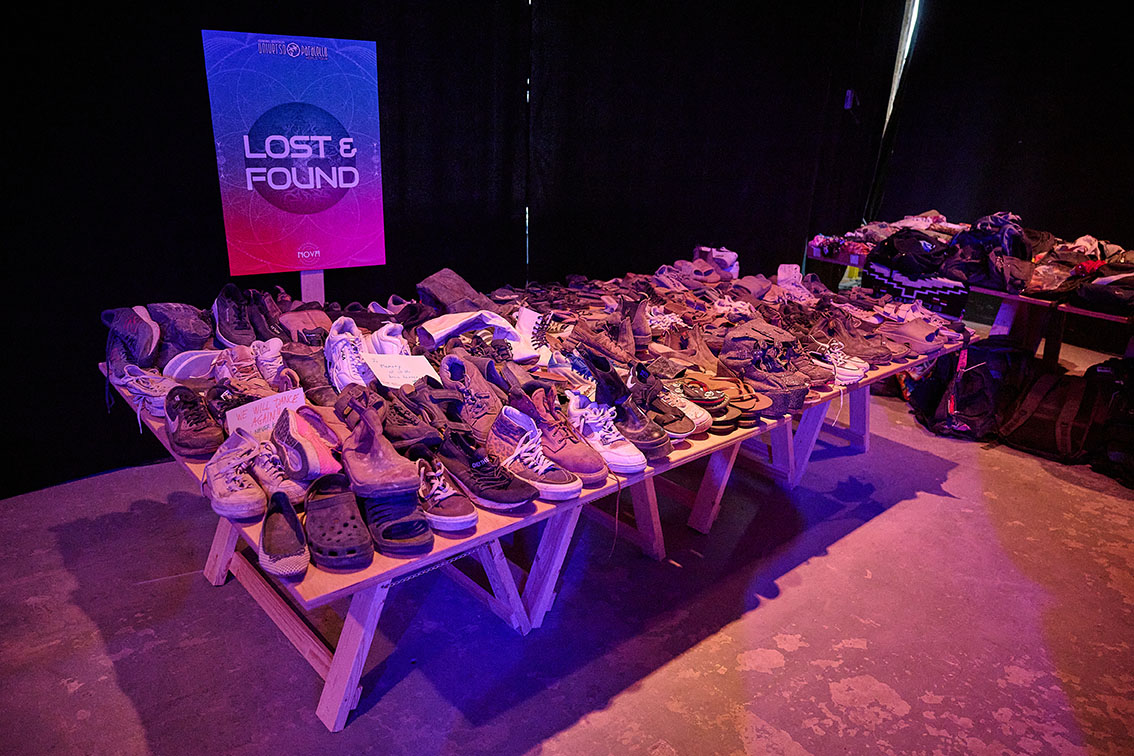
After seeing Auschwitz II, we visited Auschwitz I, where I got the answer to my question. In Auschwitz I they have rooms that display the belongings of the Jews who were brought there. One of the displays was a huge pile of shoes.  These were not just any shoes, these were shoes of children. I was quickly reminded of my three-year-old niece, Katie, and that is when I got my answer: they survived for us.

They survived because they saw a future that would come from them.  A future of scientists, doctors, lawyers, philosophers, engineers, artists, actors, mothers, fathers, grandmothers, grandfathers, sisters, and brothers who would learn from the pain their ancestors suffered and in effect, make the world a better place.

Joseph Hier is a senior at YULA Boys High School in Los Angeles.

I went to Auschwitz to learn something I had forgotten Read More »

The Wind Report 2016 Elections Blog #1: How Jews Vote-Unpacking Jewish Voters

There appear to be six categories of Jewish voters. A brief explanation is offered in this blog report about each of these distinctive voting groups:

Red State Jews: there is a significant base of Jewish Republicans whose families over time developed deep connections within their home states (frequently mid-Western) to the base of the Republican Party; these families may be among the longest standing party “loyalists” of any voting group.

Republican Converts:  those Jews who have “converted” their political loyalties to the GOP or as “New Americans” have found a home within the Republican Party. Jews from the former Soviet Union, Iran, and Israel often identify with the national security priorities of the Republican Party.

Israel Advocates: this is a more recent phenomenon of voters who frame their activism and support around “pro-Israel” candidates and issues, prepared to offer support to both parties, as long as their positions are affirmed.

Jewish Independents:  often described as “moderates,” these voters would be comfortable with many Republican candidates, minus their social values agenda, while endorsing their economic policies and pro-Israel positions. An increasing number of younger Jewish voters, are now found in this category, often unprepared to nominally accept their parents’ political labels and loyalties.

Blue State Democrats: a deeply-rooted cohort of American Jews who have been anchored for decades inside the Democratic Party, who for the most part, reside in traditional Democratic electoral districts or states. In keeping with their family tradition, these loyalist Democrats have maintained a consistent voting record over many decades. This large sector of voters tend to be situated in ten key electoral states (Maryland, Pennsylvania, New Jersey, New York, Massachusetts, Illinois, California, Florida, and Texas).

Red Diaper Descendants: this small but still present “left wing” contingent whose politics were framed around socialist and other radical political ideas, these voters often find Democratic candidates barely acceptable, preferring at times to register their dissent by voting for third party candidates.


This material has been prepared by Steven Windmueller, Ph.D., the Rabbi Alfred Gottschalk Emeritus Professor of Jewish Communal Studies, Jack H. Skirball Campus, Hebrew Union College-Jewish Institute of Religion, Los Angeles.  For a complete listing of Dr. Windmueller's writing, visit The Wind Report 2016 Elections Blog #1: How Jews Vote-Unpacking Jewish Voters Read More »

BDS backers go on labeling spree on Israeli products in German town

A team of self-styled “goods inspectors” in a German town tried to label all the Israeli products they could find as being “from illegal Israeli settlements.”

On Saturday, the proponents of the anti-Israel Boycott, Divestment and Sanctions movement visited businesses in downtown Bremen, in northwest Germany, checking to see that products from Israeli settlements were not marked “Made in Israel.”

Dressed in white overalls, the self-styled inspectors visited fruit stands to department stores ostensibly to enforce a European Commission rule that will soon go into effect requiring the labeling of foods and cosmetics that are made in the West Bank and the Golan Heights. But a spokesman for the group told the TAZ newspaper that the activists were making an educated guess on which products originated from those two places.

One “inspector” reportedly laughed in the face of a passer-by who accused the activists of anti-Semitism.

In one pharmacy, the activists were shown the door and barred from reentering after trying to record their actions putting little paper flags on the shelves that read “Warning: This product could come from an illegal Israeli settlement.”

They demanded that the shop manager erase the tape from the shop’s surveillance camera, offering to erase their own tape in return. The manager told TAZ that she did not approve of people entering her shop and disturbing business.

BDS backers go on labeling spree on Israeli products in German town Read More »

How a Jewish trans father inspired a hit series

Writer and director Jill Soloway grew up in what she calls a “somewhat normalish, upper middle class Jewish household” in Chicago. Her mom was a public relations consultant (she worked for Mayor Jane Byrne) and her dad a psychiatrist.

But she always sensed that “something was a little off,” she tells JTA in a telephone interview. “Not much more than that. Just a little bit different.  Nothing I could easily identify.”

What that “little bit” was became clear about five years ago, when her father came out as transgender. His announcement not only filled a hole in her life, “it provided a missing piece in my understanding of myself and my ability to create authentic work,” Soloway says.

The “authentic” work that grew out of dad’s announcement is “Transparent,” the program that brought the problems facing transgender people to the forefront of public consciousness. When it debuted last year, it put the nascent Amazon Prime streaming service on the map.

The series, which begins its second season Dec. 11 and has already been renewed for a third, is about the impact on a family when dad makes such an unexpected announcement. In “Transparent,” the central character is 70-year-old Maura (nee Mort) Pfefferman (played by Jeffrey Tambor), who reintroduces himself to his ex-wife and three adult children — though it turns out he isn’t the only one with secrets.

Although its far from a traditional sitcom, “Transparent” is a show replete with many laugh-out-loud situations. They are leveled by poignant moments, many from Soloway’s real life. Standout scenes from the first season include when Maura tries to cash a check made out to Mort, or use a department store ladies room with daughters Sarah (Amy Landecker) and Ali (Gabby Hoffmann).

From the get-go, near unanimous critical praise made the show an awards juggernaut. It was nominated for 11 Emmys, winning five, including best director for Soloway and best actor for Tambor. Tambor scored another win for his role at the Golden Globes, which also named the show as best musical or comedy. The Television Critics Association named it program of the year — and the list goes on.

Soloway, 50, had a respectable career before her dad’s revelation. She was a writer and producer for several years on HBO’s “Six Feet Under” and was an executive producer and showrunner for “The United States of Tara.”

But she wanted a program of her own creation; her dad’s announcement provided inspiration.

And, yes, she told her parents that “I wanted to write a television show about our family,” Soloway recalls. “But I’d written so many failed pilots, I told them not to worry.”

And why would they? After all, what are the odds that a network would air a show about a man in his late 60s coming out as a woman?

“I took the show to all the usual suspects — HBO, Netflix, Showtime — and they all had different reasons why they didn’t pick it up,” Soloway says. “Everybody had a little excuse. But Amazon vehemently loved it and even though they didn’t have any [other original] shows, I went with them.”

Still, the unabashed success of “Transparent” was a bit of a surprise. “Since then, we’ve all had time to get used to [the show’s success], to realize it’s a part of a much bigger journey,” she says.

“We feel that sacrifice — no, that’s not the right word. We feel that allowing our family’s journey to be part of this civil rights movement and to contribute artistically, we all feel honored.”

That the Pfeffermans are Jewish is no accident.

“I’m just trying to be authentic and create characters who are real,” Soloway says. “I’m Jewish. My parents and grandparents are Jewish.”

Soloway adds that giving the Pfeffermans a strong Jewish identity has nothing to do with highlighting the family’s “otherness.”

“I think everyone feels a sense of otherness at some time,” she says. “You don’t have to be trans to feel everyone is staring at you. You don’t have to be trans to feel awkward and find it hard to know how to have sex with someone. At some point, everyone feels ‘other.’ Everyone has a family and wonders will they still love them if [they change].”

Plus, “the Jews love it,” she adds. “There’s so much Yiddish and they love Shelly [Judith Light, who plays Maura’s wife] and that the show is so unabashedly Jewy.”

The Jewiness continues this season: There’s a Yom Kippur episode and — spoiler alert! — a rabbi may soon join the family.

On a darker note, there are also flashbacks to 1930s Germany and Nazi attacks on Magnus Hirschfeld, a physician and sexologist who advocated for gay and transgender rights. It will provide a historical perspective to the issue and introduce a Pfefferman ancestor.

Maura loses her way, but Shelly stays centered providing unconditional — if occasionally kvetch-filled — love to all, the ultimate Yiddishe mama.

The great irony is that Soloway’s success is a result of what was almost certainly a difficult — or at least, confusing — time for her family. What would she be doing today if her father had kept his secret?

“That’s a good question,” Soloway says. “It’s a really good question. I’d probably still be struggling to get stuff made.”

How a Jewish trans father inspired a hit series Read More »

Why I hired a Belgian butcher to circumcise my son

They warn you that parenting means doing a bunch of stuff you never imagined yourself doing.

I had always assumed this applied to saying to children things like, “You watch your tone of voice, young lady” or, “Let’s not eat things we find in our underwear.”

But in my case, the moment came before my son was even born, when I found myself begging a Belgian kosher slaughterer, or shochet, to come to the Netherlands and circumcise him.

In my native Israel or the United States, securing the services of a ritual circumciser, or mohel, is as easy as picking up the phone. But in the Netherlands, where Jews have lived since the 12th century, it can be an ordeal involving international travel, community politics, Holocaust-era trauma and unexpected objections by close family members.

Negotiating these hurdles helped me to fully understand the fears, long expressed by community leaders, that the dearth of religious services pose a long-term threat to communal survival. Indeed, the Conference of European Rabbis last month set up a think tank charged with bettering circumcision and kosher food services to small communities, calling the lack thereof “a major concern.”

On paper, I shouldn’t have had any problems. Circumcision, which was last outlawed here by the Nazis, is perfectly legal in the Netherlands, which has about 40,000 Jews. The country’s Orthodox Jewish communities keep a list of about five mohels, plus a number of Reform physicians who perform circumcisions for their congregants.

But in a country where 50 percent of Jews don’t circumcise their sons, the Reform physicians have much less practical experience with the body part in question. Unimpressed by fancy titles, my wife and I preferred a humble mohel with thousands of foreskins under his belt to a celebrated professor with many diplomas but far fewer penile notches on his.

That proved difficult to arrange. The Dutch one who came recommended had about 1,500 on his meter but had to be flown in at our expense from Israel, where he moved some years ago. So we widened the search to Belgium, where about half the country’s 40,000 Jews are Orthodox.

There we finally found our guy.

“He really knows his meat,” said one of the many people who recommended the shochet to us.

Widely considered one of the best mohels in the region, the shochet accepted in principle. But he needed special permission from the Dutch Jewish community for poaching on their turf — the result of recent “administrative problems” that arose just a few months ago.

“I need it because I don’t want to get in trouble with your people,” the shochet said.

Which is when I started begging.

Ultimately, the shochet agreed to circumcise our son if we cut through the red tape for him. I got on the phone, hoping train traffic would not be interrupted because of the current terrorist threat in Belgium.

The shochet, a hulking and patient rabbi from Antwerp, arrived on our doorstep on Sunday, a few days after the baby’s eighth day, when the ritual is traditionally performed. The bris went off without a hitch, but for a brief moment when the shochet held up the boy briskly to test his strength.

“He’s handling him like a chicken!” an aunt from Brussels exclaimed.

The search left me with many unanswered questions. How could Judaism’s initiation rite be such an ordeal in a country with a Jewish community that dates back more than 800 years? Are these difficulties the cause or the effect of the fact that only half of Dutch Jews circumcise their children, according to a 2009 survey?

Part of the complication, according to Bart Wallet, a historian from the University of Amsterdam who specializes in Dutch Jewry, is the system in which Jews pay annual membership fees (it can reach more than $1,000 per year) in exchange for religious services. Only 20 percent of Dutch Jews are paying members of a Dutch Jewish community, according to Wallet. With Dutch congregations straining to finance Jewish communal life here, there’s little reason to make it easy for people like me, who eschew membership and consume religious services a la carte.

But as with many things in Dutch Jewish life, ultimately it all goes back to the Holocaust. Prior to the war, the Netherlands had 140,000 Jews spread across the country and several traveling mohels servicing far-flung congregations, according to Wallet. After the war, in which 75 percent of Dutch Jews were murdered, the practice fell off.

“Jewish life, including circumcision, never fully restored here,” Wallet said. “Many Dutch Jews skipped the circumcision as a lesson from the past, when their relatives could be identified by taking off their underwear.”

For my Amsterdam-born wife, the Holocaust consideration is a distant second to her main issue with circumcision, namely that it involves causing pain for symbolic reasons. She regards it as a “necessary evil” — necessary only because of my insistence on it.

Some of our relatives here are less resigned. One called me to appeal our decision, citing the main argument used by the European liberals — that it supposedly violates children’s rights. This was the grounds on which a German court enacted a temporary ban on circumcision in 2012, which inspired similar moves in nearby countries. Since circumcision has no real medical benefits, my relative argued, it was not my decision to make.

At our son’s bris, Dutch Chief Rabbi Binyomin Jacobs made a short speech in which he raised this argument in acknowledging what he called the “attack on circumcision” in Europe.

“You don’t ask the baby whether they want to be born, either, but we have them to continue our legacy,” Jacobs countered.

As for me, I told the relative (who himself was circumcised) that circumcision “comes down to tribalism.”

“I respect that,” he replied, “but can’t you just give him a T-shirt or something instead?”

Why I hired a Belgian butcher to circumcise my son Read More »

Sheldon Silver found guilty on all counts in corruption trial

Former Speaker of the New York State Assembly Sheldon Silver was found guilty on all counts by a jury on Monday.

Silver, 71, faced seven counts, including mail and wire fraud, extortion and money laundering after his arrest earlier this year. He was accused of using his position at a law firm to conceal more than $3 million he earned from referring asbestos cases to the firm from a doctor who received undisclosed state grant money. Separately, Silver took in $700,000 from steering real estate developers with business before the legislature to another law firm, prosecutors said. He was also accused of putting most of that money into an investment vehicle and then taking official actions to benefit the investor who provided him access.

The verdict came in the fifth week of the trial in Federal District Court in Manhattan. He was convicted on all counts.

U.S. Attorney Preet Bharara, the chief prosecutor in the case, said in a short statement, “Today, Sheldon Silver got justice, and at long last, so did the people of New York.”

Before his resignation, Silver claimed the title of the 2nd longest-serving Democratic Speaker in the history of the state and became the most powerful politician in the state. He was denied the title of the longest-tenured speaker after resigning in January. Silver was first elected as interim speaker on January 25, 1994, at the age of 49, replacing Saul Weprin, who suffered a severe stroke a week earlier, and officially became the speaker on Feb. 11, 1994, after the sudden death of Weprin.

Sheldon Silver found guilty on all counts in corruption trial Read More »

Study: Conservative shuls spend on operations at expense of engagement

Conservative Jewish synagogues are focused more on operations than youth engagement, and are more than twice as likely to have a cantor than an associate rabbi, a new survey of synagogue staffing found.

About 50 percent of Conservative synagogues employ a youth director, but in only about 12 percent is that a full-time position, according to a survey of Conservative shuls conducted by the United Synagogue of Conservative Judaism. While about 54 percent of Conservative synagogues have a cantor (37 percent of them full time), fewer than 25 percent have assistant or associate rabbis, and only 18 percent have a full-time associate rabbi.

The most common position in Conservative synagogues is rabbi, at about 93 percent of synagogues, followed by custodian (70 percent), administrative assistant (66 percent), bookkeeper (about 65 percent), executive director (61 percent), education director (59 percent) and cantor (54 percent), according to the survey.

When only full-time employees are counted, 85 percent of Conservative synagogues have a rabbi, 56 percent have an executive director, 46 percent have an administrative assistant, 43 percent have a custodian, 38 percent have an education director, 37 percent have a cantor, 35 percent have an early childhood director and about 34 percent have a bookkeeper.

The survey relied on data provided by 331 of USCJ’s 580 member synagogues in the United States and Canada. The findings were presented at the umbrella organization’s recent conference in Schaumburg, Illinois.

“Staffing tends to lead toward operations, not engagement,” said Ray Goldstein, USCJ’s kehilla relationship team leader (kehilla, Hebrew for “community,” is the organization’s preferred term for synagogue).

“When a synagogue comes into money, they hire an executive director before they hire an assistant rabbi,” Goldstein said. “The data does not support that our kehillot are putting money into hiring youth directors.”

The survey, which was led by Goldstein and Barry Mael, USCJ’s director of kehilla administration and finance, also found that despite much talk in the movement about creating new kinds of positions to address the movement’s changing needs, none of those innovative positions “have taken hold in any meaningful way.”

Not surprisingly, the synagogues least likely to have a rabbi are those that are smallest: Only 23 percent of those with fewer than 100 members have a full-time rabbi, compared to 80 percent of those with 100-199 members. Associate rabbis mostly appear in synagogues with more than 450 members, while executive directors show up among synagogues in the 100-199-member category or above.

Study: Conservative shuls spend on operations at expense of engagement Read More »

Russia bans George Soros foundation as state security ‘threat’

Russia has banned a pro-democracy charity founded by hedge fund billionaire and philanthropist George Soros, saying it posed a threat to both state security and the Russian constitution.

In a statement released on Monday, Russia's General Prosecutor's Office said two branches of Soros' charity network – the Open Society Foundations and the Open Society Institute Assistance Foundation – would be placed on a “stop list” of foreign non-governmental organizations whose activities have been deemed “undesirable” by the Russian state.

“It was found that the activity of the Open Society Foundations and the Open Society Institute Assistance Foundation represents a threat to the foundations of the constitutional system of the Russian Federation and the security of the state,” the statement said.

It did not elaborate, but the Hungarian-born Soros urged the West earlier this year to step up aid to Ukraine, outlining steps toward a $50 billion financing package that he said should be viewed as a bulwark against an increasingly aggressive Russia.

The Open Society Foundations said it was “dismayed” by the Russian decision.

“Contrary to the Russian prosecutor's allegations, the Open Society Foundations have, for more than a quarter-century, helped to strengthen the rule of law in Russia and protect the rights of all,” Open Society said in a statement.

“In the past, our efforts have been welcomed by Russian officials and citizens, and we regret the changes that have led the government to reject our support to Russian civil society and ignore the aspirations of the Russian people,” it said.

Soros, meanwhile, said in a separate statement: “We are confident that this move is a temporary aberration; the aspirations of the Russian people for a better future cannot be suppressed and will ultimately succeed.”

Soros founded the Open Society Foundations in 1979 when his hedge fund had reached about $100 million and his personal wealth had climbed to about $25 million. It began its philanthropic activity by giving scholarships to black South Africans under apartheid.

Soros, 85, now funds a network of foundations that support human rights, freedom of expression and access to public health and education in 70 countries around the globe.

Russia bans George Soros foundation as state security ‘threat’ Read More »

Russian military jet violated Israeli airspace

A Russian military jet violated Israeli airspace but was not shot down, Israeli Defense Minister Moshe Yaalon said.

The jet breached Israeli airspace by a mile and turned back when Russia was informed of its mistake, Yaalon said Sunday during an interview on Israel Public Radio. The breach came recently while Russia was carrying out airstrikes against rebels in the Syrian civil war.

“Russian planes do not intend to attack us, which is why we must not automatically react and shoot them down when an error occurs,” Yaalon said a week after Turkey downed a Russian jet that it said repeatedly violated Turkish airspace.

Israel is coordinating with Russia to prevent the accidental downing of its planes while operating in and around Syria, Yaalon said. The defense chief noted a hotline to share immediate information.

Israeli and Russian officials met in September to coordinate after Russia announced it would operate in Syria in support of Syrian President Bashar Assad.

One year ago, Israeli forces shot down a Syrian warplane that penetrated Israeli airspace over the Golan Heights.

Russian military jet violated Israeli airspace Read More »