fbpx

A Jewish Mother Paints the Daughter She Never Had

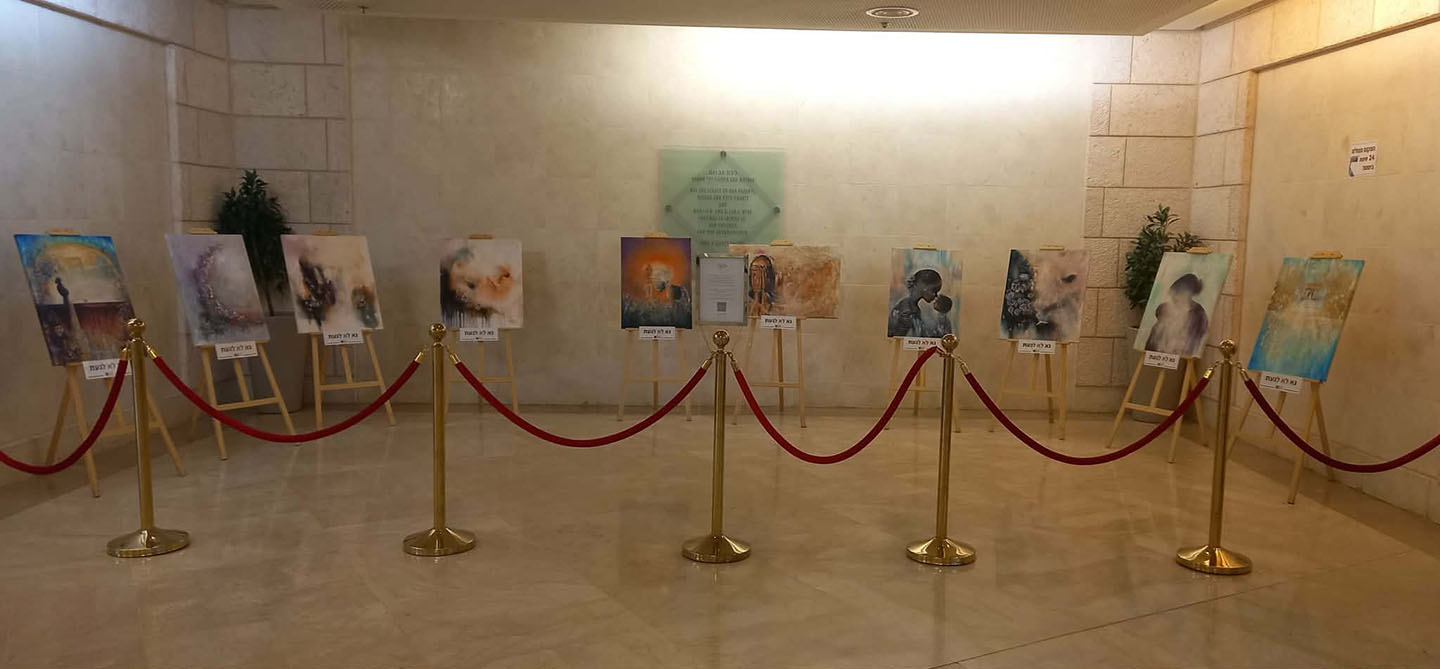
Allison Kroll’s “A Girl (I Will Never Meet) In Pink” can be seen in the Annual Women’s Artist Exhibition at the Dacia Gallery in N.Y.
[additional-authors]
March 17, 2024
Allison Kroll is an artist whose work is currently featured at Dacia Gallery.

Art sometimes imitates life and at other times, it’s a sign of what you’d like to happen. The latter was the catalyst for artist Allison Kroll’s new painting, “A Girl (I Will Never Meet) In Pink,” at the Dacia Gallery in downtown Manhattan until March 23.
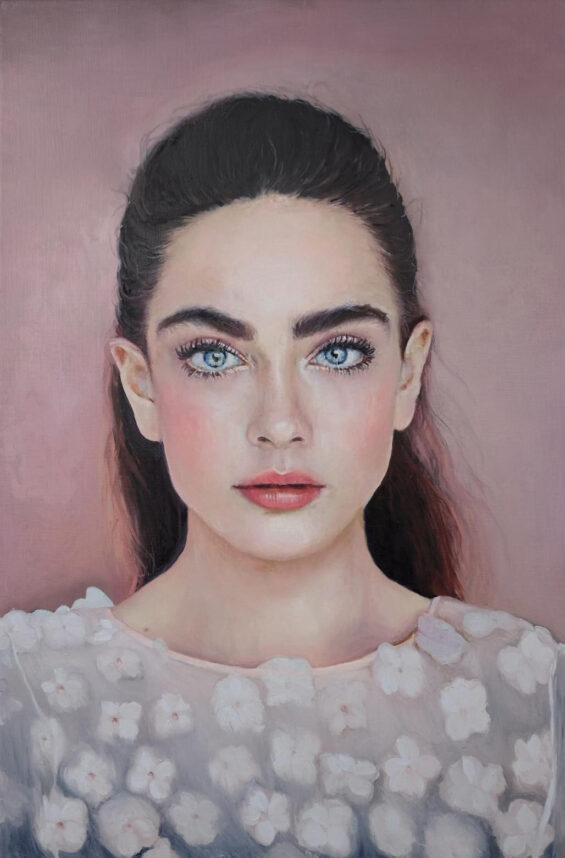
Kroll painted this based on an image she saw and it is called “A Girl (I Will Never Meet) in Pink.

“I’m a Jewish mother of two wonderful boys,” Kroll told the Journal. “I always wanted to have a daughter. My mother and I had a very close relationship. I saw a picture of this girl online. This is the idealized version of a daughter I never had. I fell in love with this girl, and I had a connection to this image. It reminded me of my mother in a way and we have a close relationship. I later did more research and found out this model is Russian which is the same background that I have.”

“I’m a Jewish mother of two wonderful boys (but) I always wanted to have a daughter. My mother and I had a very close relationship. I saw a picture of this girl online. This is the idealized version of a daughter I never had. I fell in love with this girl, and I had a connection to this image.” – Allison Kroll

Someone asked if it’s a painting of her or a relative; it is not.

Kroll, a New Jersey resident who is still close with her mother,  was a high school art teacher in Forest Hills, Queens, where some of her students were from Uzbekistan and were Bukhari Jews.

“I became interested and studying some of the history and sadly there are so few Jews there anymore due to persecution, forced conversion and expulsion,” she said. “You can see it was a really beautiful community and the culture is wonderful.”
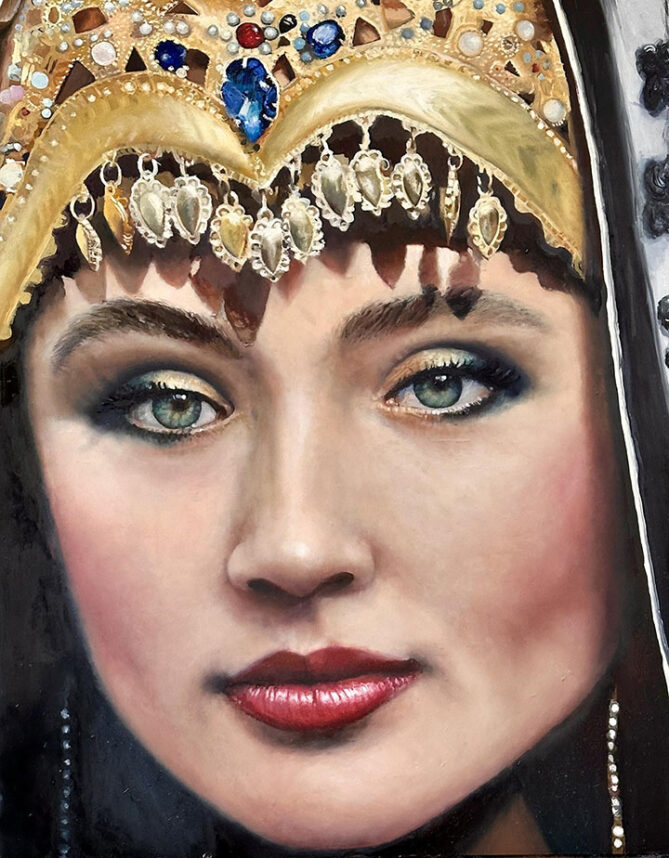
“Bukharian Bride” was painted by Kroll after she researched Jewish Bukharin history and culture.

Her research inspired her to paint “Bukharian Bride” a 16’20 oil on Claybord.

A fan of rock and roll, Kroll in 2016 knew she was going to meet Aerosmith frontman Steven Tyler. So, she painted him and gifted him her work, which shows his mystique and rocker hair. But she kept her composure and was not crying when she met him.

“He loved it and was very cool,” she said. “He is full of life and a great performer. I wanted to show his mystique and his hair.”
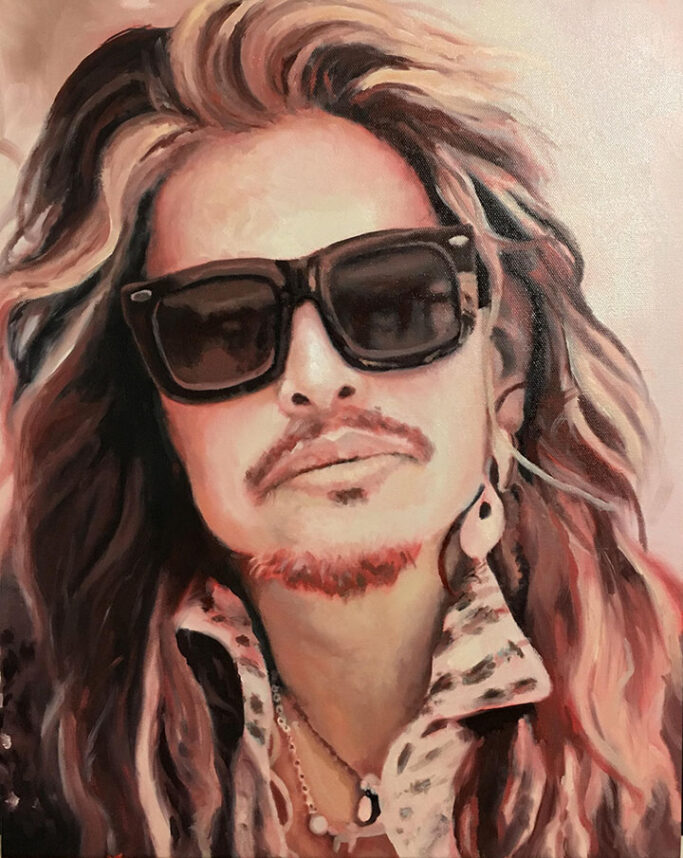
The painting of Steven Tyler that Kroll gave to the Aerosmith rocker.

Kroll, who has had three solo shows and whose artwork has been in numerous exhibitions, said there is a belief that all art comes from pain.

“That’s not always true,” she said. “I think it can sometimes be true, but it’s about expression and desire and whatever strikes the artist at a given point in time.”

While she is thrilled to be part of an exhibition of female artists, and is a proponent of women’s rights, Kroll said she stays away from politics in her art.

“With all the insanity and the stress, when I can go in my studio, I get away from all of that and it’s a great escape.”

Kroll studied at Maryland Institute Art College, where she was part of the school’s honor’s program in Aix-en-Provence, France and earned a Bachelor of Fine Arts in painting. She received a Master’s of Fine Arts from Queens College.

She said she is proud to be Jewish and hopes people don’t forget their heritage, adding that all people should be knowledgeable about their religion and culture.


Did you enjoy this article?
You'll love our roundtable.

Editor's Picks

Latest Articles

The Beat Goes On

While so much of the world seems obsessed with and consumed by its hatred of Israel and Jews, Israelis continue to build, create, work, celebrate, argue, raise families, and plan for the future.

Viral AI Video Targets Jewish Comedian

“The biggest concern is that people now have a pathway to shut down Jewish voices through complete falsities that people will believe. … For the future of Jewish entertainment, it’s very scary.”

Yiddish Historians: Writing in Their Own Language for Their Own People

Mark Smith has compiled an important anthology of Jewish history using 49 works by Yiddish historians to recreate or at least open the door to a world of Jewish thought that was once almost mainstream, but which no longer exists, except in the minds of too few specialists.

The Everlasting Melody

Most Jews who have sung “Eitz Chaim” over the past half-century probably never knew Portnoy. They did not know when he wrote the melody or how young he was when he composed it. They simply knew the song.

Who’s Really the Victim?

Those who would revel in Israel’s demise are claiming victimhood on every front and denying attacks on us in the same breath.

Biblical Deterrence

After Oct. 7, the sentiment in Israel toward the Iranian leadership was unequivocal: You went medieval — so we will go biblical.

How Sukkot Makes Us Whole

This year, I bless us that we open our eyes to truly see the beauty and the holiness of the world, and of the person before us at each and every moment, and to see the godliness of their aspirations and their fears.

The New Ushpizot

Ushpizin invite us to “welcome in our ancestral constellation and dwell amongst them.” This year, it’s Ushpizot, for the women. It’s the year of the Feminist Visitation.

Macklemore, Or Less

In between his songs, he proclaimed, “Free Palestine,” which is fine, asserted that opposing Israeli military actions is not antisemitic, which is accurate, and accused Israel of apartheid and genocide, which is offensive, untrue and hateful.

The Rokeach’s Remarkable Sukkah

To Rabbi Eleazar ben Judah of Worms (1176-1238), the medieval German pietist known as the Rokeach, the sukkah symbolized Jewish military might.

The Sukkah and the Power of Endurance

They can destroy our Temples, demonize us in social media, shower us with hate, but they can’t destroy a spirit that never stops building. That enduring spirit is the power of the sukkah.

NY Mag’s Habibi City

A satirical response to Zaina Arafat’s erasure of Jews in her New York Magazine article “Habibi City,” written as Zaina Arafat.

The ‘Fauda’ Enigma

In many of the nations that believe Israel has no right to exist and routinely root for terrorists to slaughter Jews, a TV show that depicts Israeli covert operatives outsmarting and dispatching Arabs has an inexplicably loyal global audience.

More news and opinions than at a Shabbat dinner, right in your inbox.