Less than a year after the student government at the University of California, Berkeley fell one vote short of pushing through a bill to divest from American companies providing materials to the Israeli military, UC Berkeley’s School of Law on Thursday, Feb. 24, announced the launch of a new institute to advance the study of Jewish Law and of Israel on campus.
With the help of a $750,000 seed gift from the Rosalinde and Arthur Gilbert Foundation, the new Berkeley Institute for Jewish Law and Israeli Law, Economy and Society will advance academic work in these fields through coursework, grants and support to faculty and through public forums.
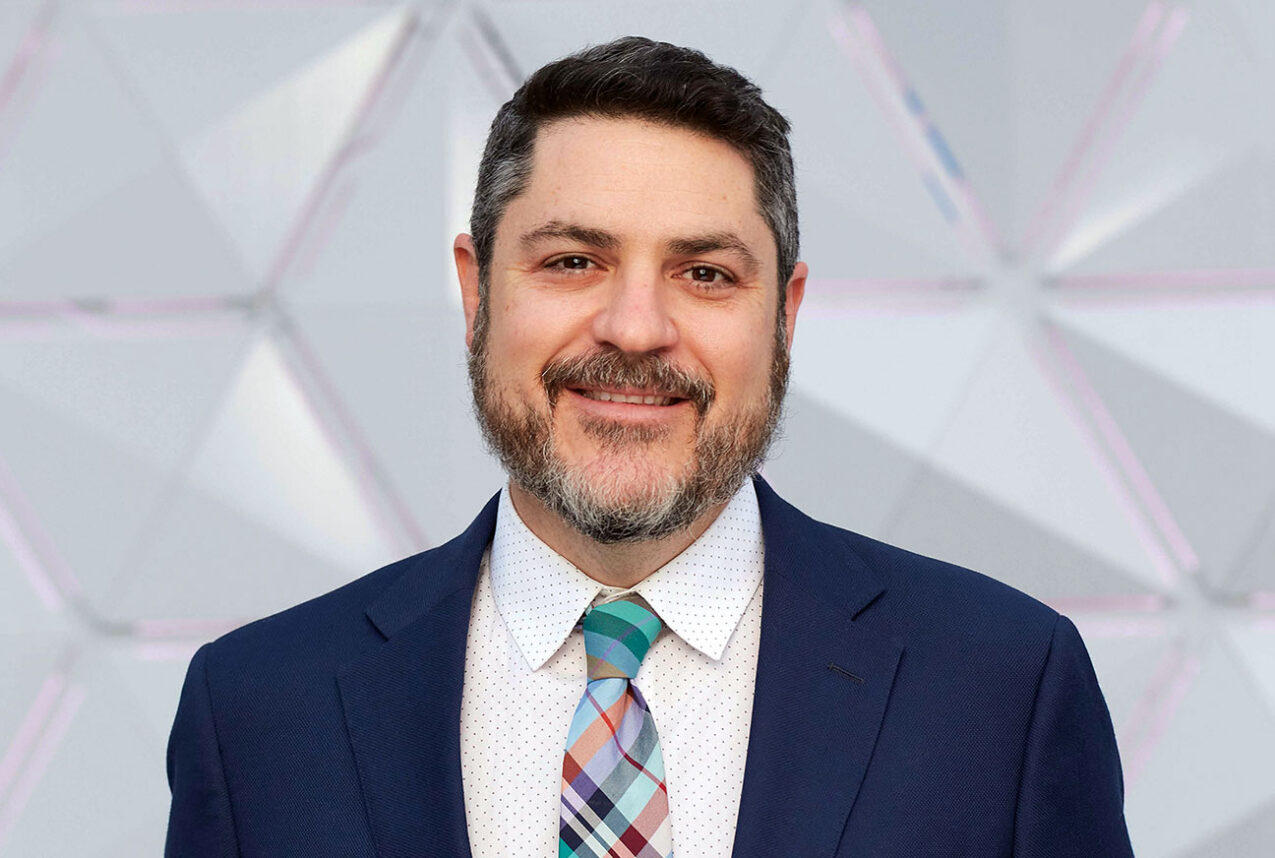
“The law school has deep strengths in both the study of Jewish law—and religious law more generally—and also focuses on the study of Israel,” said Kenneth A. Bamberger, an assistant professor and the institute’s faculty director, who has been teaching courses in Jewish law and ethics at the UC Berkeley law school for the past two years. “As more people got involved, it seemed like a real contribution could be made to those engaged in the discourse around Jewish law and Israel on campus.”
The institute will build on resources already available on campus, supervising Berkeley Law’s seven-year-old joint Tel Aviv/UC Berkeley masters degree program; coordinating programs with the university’s Jewish Studies department and the joint UC Berkeley/Graduate Theological Seminary PhD program and making use of the university’s Magnes Collection of Jewish Art and Life.
Half of the institute’s mission—to develop and broaden the discourse around Israel on campus—can be seen as a response to the student-government body’s targeting of Israel on campus, which reached a fever pitch at the school last year.
In March 2010, before a veto by the president of the Associated Students of UC Berkeley, the association had approved a bill calling for divestment from General Electric and United Technologies. The companies were targeted for allegedly being complicit in Israeli war crimes and for helping to perpetuate the occupation of Palestinian lands. After being blocked by Will Smelko, the student body president, in mid-April, the bill failed to garner enough votes to overturn the veto.
It was, to say the least, an uncomfortable time for Jewish students at UC Berkeley. “There was a lot of friction,” Adam Naftalin-Kelman, executive director of Berkeley Hillel, said. “It created a ton of divisiveness in the campus community.”
At the time, Naftalin-Kelman said, Hillel worked to organize Jewish and pro-Israel students to fight the bill, with the help of Hanan Alexander, whose permanent academic home is University of Haifa, but who was then serving as the Richard and Rhoda Goldman Visiting Israeli Professor at UC Berkeley.
Which explains why Naftalin-Kelman is enthusiastic about the work that the institute will do to extend discussion and debate about Israel—in ways that go beyond the Israeli-Palestinian conflict.
“The institute is an amazing step forward to bring a balanced perspective of Israel on campus in an academic setting and to also offer courses that are not necessarily politically motivated but to look at Israeli society through a diverse perspective,” Naftalin-Kelman said.
Numerous Israelis are already at UC Berkeley, both as students and visiting faculty, and the new institute will provide an academic umbrella for them all. The two separate institute programs have already launched working groups for their graduate students in order to encourage and support their scholarship.
In the two months since the institute was opened, it has organized two meetings of a monthly colloquium. Arieh Saposnik of UCLA spoke about his research on Israel studies in U.S. universities; Dana Blander of Tufts presented on the possible uses of the referendum in Israel to decide political issues. It also brought Suzanne Stone from Cardozo Law School of Yeshiva University to deliver the 2011 Robbins Collection Lecture in Jewish Law.
The institute has hired an executive director who will also lecture at the law school, and is in the process of organizing a multi-disciplinary conference about how the social, business and legal atmosphere in Israel helped to foster the growth of its high-tech sector. The conference is slated to take place in Spring 2012.
For the past two years, Bamberger and Rabbi David Kasher, senior educator at Hillel, have co-taught a course on Jewish law at Berkeley Law. The course is open to law students and undergraduates enrolled in the legal studies major.
Naftalin-Kelman has heard good reviews. “There are many Jewish students who see this as a Jewish experience for them, even though it’s in a classroom,” he said. Naftalin-Kelman noted that Rabbi Elliot Dorff of American Jewish University has been teaching a similar class in the law school at UCLA for decades.
Naftalin-Kelman estimates that there are between 2,500 and 3,000 Jewish undergraduates enrolled at UC Berkeley, or around 10% of the total student population. Over the course of a year, Hillel probably sees about 1,000 of those students in some capacity. Membership in the Jewish Law Student Association at UC Berkeley varies by the year, but Naftalin estimates that anywhere between 10 and 30 students usually take part.