
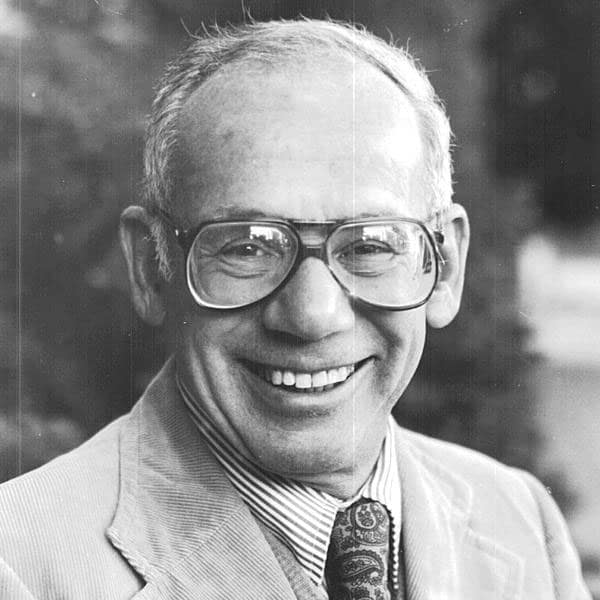
When Rabbi Harold M. Schulweis asked a group of approximately 80 retirees in his Conservative congregation how many had a non-Jewish member in their family, almost every hand shot up.
"At first, I was genuinely shocked," said Schulweis, the spiritual leader of Valley Beth Shalom in Encino. Then the rabbi, widely known for his innovative ideas and projects, decided to transform shock into positive action.
He outlined his concept in a recent address titled, "Inreach-Outreach and the Jew by Choice," at the Rabbinical Assembly, the national association of Conservative rabbis.
The aim of the program, Schulweis said, "is to turn a cadre of our congregants, many of whom are passive Jews, into active mentors of potential Jews. It involves personally bringing the seeker into the Jewish homes, into the shul, into the Jewish lecture, the Jewish concert, the Jewish camp."
Since there is no better way to explain a subject than by trying to teach it to someone else, the "inreach" portion of the equation would force the mentors to find answers to their own, and their children’s, question: "Why be Jewish?"
While the basic motivation of "Inreach-Outreach" is to welcome the potential convert, who seeks to join the Jewish community because of marriage to a Jewish partner or the spiritual attraction of Judaism, there are also persuasive demographic reasons.
Citing "stark statistics" and projections, Schulweis estimated that by 2005, almost two-thirds of "Jewish" marriages will involve a non-Jew and that by 2010, converts will make up 7 to 10 percent of the Jewish population.
Yet, in the face of low fertility rates and rising intermarriage, of the 750,000 children now living in mixed-marriage households, less than a third are raised as Jews, and fully half learn nothing about their Jewish heritage.
Schulweis assigned much of the blame to "the sorry reputation of the synagogue as exclusionary, distancing and judgmental" and the failure of his own Conservative movement to welcome the intermarried. In its most extreme form, the belief that the convert will never be a fully authentic Jew, is summarized in the Yiddish expression, "A shikse bleibt [remains] a shikse and a goy bleibt a goy."
Schulweis criticized this attitude as "flirting precariously on the boundaries of racism" and denounced some modern Jewish scholars, who assert that Jewishness is defined by "Jewish blood" and through biological and genetic inheritance.
Pointing to the repeated biblical injunction to love and understand the heart of the stranger and the example of Ruth, Judaism’s most celebrated convert, Schulweis declared that "Ruth teaches us that a Jew is not a Jew by virtue of genes, chromosomes or blood type. We embrace those who come to us with heart, mind and soul."
Although he hopes that "Inreach-Outreach" programs will eventually be adopted by all Conservative synagogues, the rabbi believes that he will first have to prove the validity of the concept in his own congregation.
"On Rosh Hashanah, I will talk to my congregants and call for volunteers to train as mentors and open their homes to interfaith couples and other potential converts," he told The Journal.
Schulweis also hopes that the board of Valley Beth Shalom will weigh the possibility of accepting the non-Jewish partners in interfaith marriages as full members of his congregation.
The importance and urgency of his project, Schulweis believes, is reinforced by a recent study that concluded that Jews throughout the world are "disappearing" at the rate of 50,000 a year, adding, "We must turn this demographic challenge into a spiritual opportunity, both for Jews and for seekers."

































