Blurring Lines of Church-State
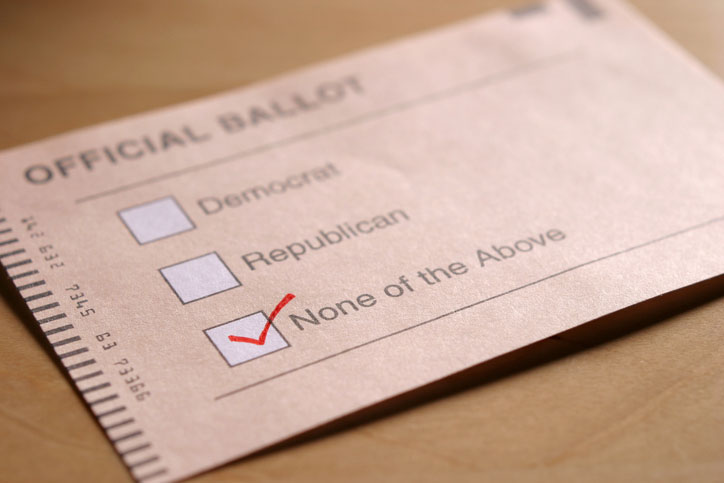
Should religion play a larger part in America’s public life. Yes, say many Americans — a fact the Anti-Defamation League (ADL) finds troubling.
“American Attitudes Toward Religion in the Public Square,” a national poll of 800 American adults conducted by the ADL in October, found that 64 percent believe religion is “under attack,” and 53 percent of Americans believe that religion as a whole is “losing its influence” in American life.
Other numbers paint a different picture — indicating increased support of a more direct role for religion in the public arena, with large numbers favoring organized prayer in public school (47 percent), the teaching of creationism alongside evolution (56 percent), and the display in public buildings of religious symbols, such as the Ten Commandments (64 percent).
“Our nation’s proud tradition of church-state separation is threatened as never before,” said Abraham H. Foxman, ADL national director.
But others say Foxman has exaggerated the threat.
“I don’t see any evidence of government being influenced by faith-based organizations,” said Avi Davis, executive director of the Israel-Christian Nexus, a local organization founded to link Jews and Christians in common support of Israel.
The increased support in faith-based organizations in America, Davis said, is due to a “moral vacuum” in society.
Davis just returned from a mission taking 30 pastors to Israel: “We find it extraordinary the level of deference evangelicals give Jews and Judaism. The real threat to civil liberties, Davis said, is radical Islam: “Not from Christians, not from those who support Judeo-Christian values.”
Reform Reforms
Non-Jewish spouses should be encouraged to convert to Judaism, and their children should be raised in only one religion, the leader of the Reform movement announced at the movement’s biennial convention in Houston last month.
“We want families to function as Jewish families,” Rabbi Eric Yoffie told 4,500 delegates at the Union for Reform Judaism’s convention, which took place Nov. 16-20 in Texas. “While intermarried families can surely do this, we recognize the advantages of an intermarried family becoming a fully Jewish family, with two adult Jewish partners.”
Yoffie’s remarks fit into the Reform movement’s recent move to the right religiously, incorporating more traditional practices into its platform. This call to encourage non-Jewish spouses to convert to Judaism comes 27 years after the Reform movement officially welcomed non-Jewish spouses into synagogue life in 1978.
Yoffie said that the Reform movement has, over the past quarter-century, made non-Jews feel comfortable and accepted in Reform congregations, but “perhaps we have sent the message that we do not care if they convert,” Yoffie said. “But that is not our message,” he said. “It is a mitzvah to help a potential Jew become a Jew-by-choice.”
Yoffie also said that interfaith families should raise their children in one faith. A child “recognizes at a very young age that he cannot be ‘both,’ and that he is being asked to choose between Mommy’s religion and Daddy’s religion,” he said.
He encouraged congregational leaders to enforce a 1995 resolution that encourages congregations to enroll only those children who are not receiving a formal religious education in any other religion.
Ed Case, the president of Interfaithfamily.com, said he thought Yoffie’s speech on encouraging conversions was very respectful and tolerant of non-Jewish partners, calling them “heroes,” but was worried that members of the movement will only hear the call to convert.
“My concern is that if you promote conversion too much, it will turn people away,” he told The Journal.
And although Case believes children should be raised Jewish, he thinks the Reform movement should allow children of a non-Jewish parent to attend religious school for a trial period instead of denying them flat-out. That is the way the Chabad movement treats children of non-Jewish parents, Case added.
Other resolutions at the four-day convention included a call to curb sexual activity among teenagers, and to emphasize loving and caring relationships. Teenagers experimenting with sex is hardly new, said Yoffie, 58.
“But what is happening now is radically different. We are witnessing changes that go far beyond sexual experimentation of the past,” he said.
Yoffie said that while the movement’s youth groups and summer camps do well at monitoring children’s behavior, they have to teach the values of Jewish tradition.
“We are not very good at saying ‘no’ in Reform Judaism,” he said.
OU’s West Coast Biennial
The Orthodox Union will be holding its annual West Coast Torah Convention for three days starting Dec 22. “The Polarization of Orthodox Judaism: Finding Harmony in Diversity,” as the conference is titled, begins Thursday night and continues throughout Shabbat at various shuls in Los Angeles in the Valley.
Session topics during the convention will include pluralism in Orthodoxy, Torah and science, post-Gaza Zionism, women’s influence on the community and the educational synthesis between schools, shuls and parents.
For more information, visit www.ou.org/west or call (310) 229-9000.
Â