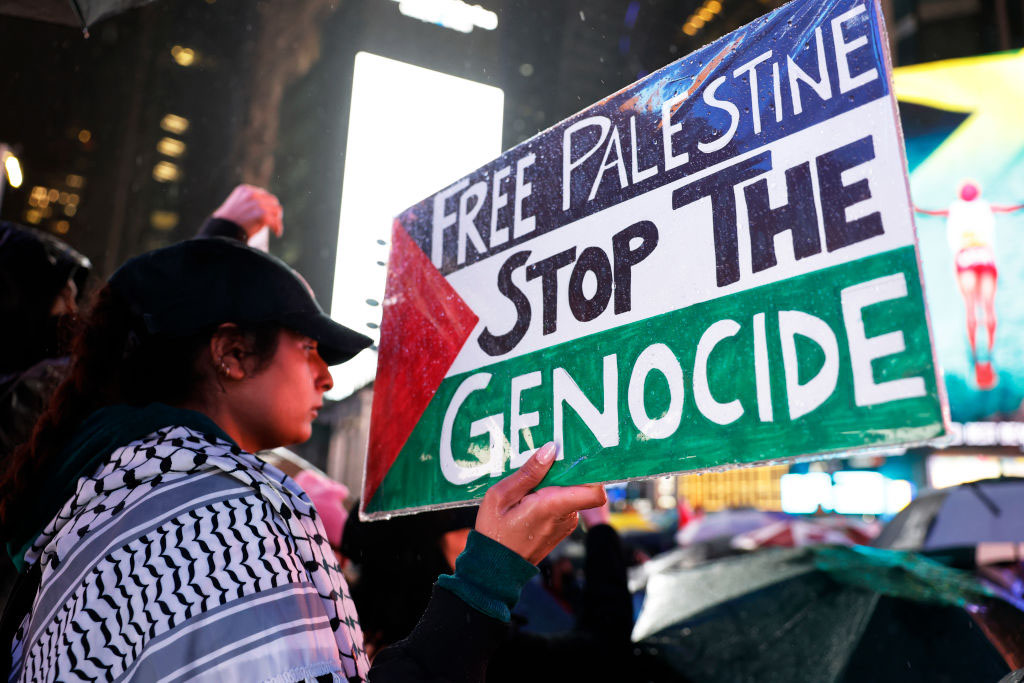
From the start, something has annoyed me about the Occupy Wall Street movement. I’m not sure why it’s taken me so long to put my finger on it. Maybe, like much of the country, I’ve been caught up in the spontaneous fervor and social ideals of the movement. There’s something about people taking to the streets to protest injustice that seduces democracy lovers like myself — especially when you throw in colorful tents, clever slogans and drum circles.
The reports of anti-Jewish and violent elements among the demonstrators have bothered me, of course, but these are on the fringes. My concerns are with the mainstream of the movement.
And it’s not the general ideology of the movement that bothers me. I may not share many of the protesters’ political views, but I love that they can express their views loudly and freely. Even if the movement is somewhat scattered, many of the protesters’ demands — such as reducing the influence that corporations wield in politics, and generating more and better jobs — are eminently reasonable.
So, what is it that annoys me so much about the movement?
I found the answer, it turns out, in my favorite progressive magazine, The Nation, in a commentary written last week by Bill Moyers.
Moyers began his piece by harking back to the prairie revolt that swept the Great Plains in 1890, quoting a popular orator from that era, Mary Elizabeth Lease: “Wall Street owns the country. … Money rules. … Our laws are the output of a system which clothes rascals in robes and honesty in rags. The [political] parties lie to us and the political speakers mislead us.”
Moyers then came to the present: “She should see us now. John Boehner calls on the bankers, holds out his cup and offers them total obeisance from the House majority if only they fill it. Barack Obama criticizes bankers as ‘fat cats,’ then invites them to dine at a pricey New York restaurant where the tasting menu runs to $195 a person.”
Here’s the part that really got me: “The president has raised more money from employees of banks, hedge funds and private equity managers than any Republican candidate, including Mitt Romney. Inch by inch he has conceded ground to them while espousing populist rhetoric that his very actions betray.”
Yes, it is our very own “hope and change” president, Moyers reminded us, who has raised the most money from Wall Street, and whose actions have betrayed his populist rhetoric. You can attack greedy fat cats all you want, but at least they never promised us they’d become socially responsible skinny cats. Our president and many of our politicians, on the other hand, did promise us they’d take on those greedy fat cats and reform the system. That’s why we hired them.
The really guilty ones, in my view, are not the 1 percent “greedy class” who follow human nature, but the 1 percent political class who have the power to reform the system, but don’t.
This, then, is what annoys me about the Occupy Wall Street movement: It beats up the money class but ignores the political class — in particular, the leader of that class who is running our country. Remember, it was Obama himself who said, “I want you to hold me accountable,” and who promised, among other things, that “lobbyists won’t work in my White House.”
That promise didn’t last very long. According to a Nov. 15, 2008, report in The Washington Post: “Barack Obama campaigned on a pledge to change Washington, vowing to upend the K Street lobbying culture he encountered when he joined the U.S. Senate. But more than a dozen members of President-elect Obama’s fast-growing transition team have worked as federally registered lobbyists within the past four years.”
“Let’s name this for what it is,” Moyers writes, “hypocrisy made worse, the further perversion of democracy. Our politicians are little more than money launderers in the trafficking of power and policy — fewer than six degrees of separation from the spirit and tactics of Tony Soprano.”
And the primo power trafficker is our fundraiser-in-chief, President Obama, the one name glaringly missing from the protest movement sweeping the country.
Look, I understand all that anger toward greedy fat cats without a social conscience. But human greed has been around since Adam and Eve. It’s not going away. If you don’t regulate greedy bankers, they just go on being greedy bankers.
In their zeal to target those greedy big-business types who put profit ahead of social responsibility, the Occupy Wall Street movement has ignored the guiltiest target: those charming political types who buy our votes with cheap promises to fix the system and then head for the hills when the bill comes due.
The funny thing is, when progressives demonstrated against the Iraq War, they had no problem targeting President Bush. There were other guilty parties (like an easily fooled press and a greedy military-big oil lobby) but the protesters focused their venom on the person ultimately responsible, their president — a man we can assume most of them didn’t vote for.
Because we can assume most of today’s protesters voted for the man now in the White House, could that explain why they are so reluctant to target him and hold him accountable — because he’s “their man”?
Maybe their real anger comes from being fooled by a politician once again.