Dear President Ahmadinejad:
Allow me to introduce myself to you. My name is Robert Stevens, and I am a 27-year-old child of Holocaust survivors. The purpose of my letter is not to criticize you for being anti-Semitic or for wanting to wipe Israel off the face of the earth or for making an international statement defaming the legitimacy of the Holocaust by calling it a myth. Instead, I just wanted to share with you a little glimpse into my life and actually ask you for some advice.
This past Saturday evening, before I left my apartment with my fiancee to celebrate a friend’s birthday party in New York City, I remembered that it coincidentally was also my uncle’s birthday — my father’s brother. My uncle’s name is Boroch Jeszyja Miedzinski. Indeed, it is certainly a Jewish name. His first name, Boroch, means “blessed” in Hebrew, and Jeszyja, which is another form of the name Josiah, means “fire of God,” also in Hebrew.
I really wanted to reach out to my uncle to wish him a happy birthday, but I didn’t have his phone number or his address. If I did, I’d certainly call him or visit him, and certainly I would have mailed him a card. To be honest, I am embarrassed to admit this, but I actually don’t know where he really is now, and perhaps you could help me find him.
I tried looking up his address throughout the United States, Israel, Poland, Germany, Russia, France, England and other countries in Europe, but I just couldn’t find his address or phone number. Various organizations wrote me informing me that they never even heard of him. I used the Google search engine to try and find him or something about him but to no avail.
My father died 10 years ago and, unfortunately, he hadn’t seen his brother in many years, so he also didn’t leave me with any contact information for his brother.
Thankfully, because you have pointed out to the world that the Holocaust is a myth — that the Nazis could not have killed him because such killings were just Zionist propaganda to get world support for Israel — you have renewed my hope that he may still be alive, and that I can find him.
I guess I can admit that I feel a little silly, too. I mean, I used to think that perhaps the Nazis killed him, but if the Holocaust never happened, he must be alive, or he’s just a myth that existed to bring about sympathy for Jews. My father, however, was pretty darn convincing when he told me that I reminded him of his brother because we both had the same squint and intense look in our eyes.
Before I give up, though, I do have the following information, which perhaps a man of your power and influence could use to help me find him.
My uncle was born on Jan. 28, 1931, in Lodz, Poland, to my grandfather and grandmother, Pinkus and Tauba Miedzinski. He was the youngest of four children, with my father, David, the eldest.
I have a copy of a photograph of him that I can send to you, if you think it will aid your search. The photograph was taken presumably by the Germans or the Judenrat, and was affixed to a Lodz Ghetto ID card. I know this because you can see that the corner of the photo was stamped with “Litzmanstadt.” If you weren’t already aware, Litzmanstadt was the name Germans gave to Lodz when they took it over and formed a ghetto for the Jews.
The remaining information I have for you about my uncle is that sometime after his bar mitzvah, when he was 13 years old, he was presented with a train ticket — perhaps as a bar mitzvah present from nice German soldiers — to catch a ride out of the Lodz Ghetto.
His travel information, which is the only information I have about him, might be the missing link to help you locate him for me. The Germans, as you know, were great record keepers.
According to a chronicle kept by Jews of Lodz, June 26 was also apparently a popular day for travel for the youths of Lodz. Of the 912 total people who had the same train tickets as my uncle, the majority were teens and younger children.
The German records state that my uncle was last seen boarding the Cattle Car Express, Transport No. 867 under Record No. 611. One-way ticket, Lodz Ghetto to Gan Eden — or what historians whom you might consider misguided refer to as the Chelmno extermination camp.
President Ahmadinejad, any assistance you could offer in helping to locate my uncle would be appreciated. I would love to meet him. He just turned 75.
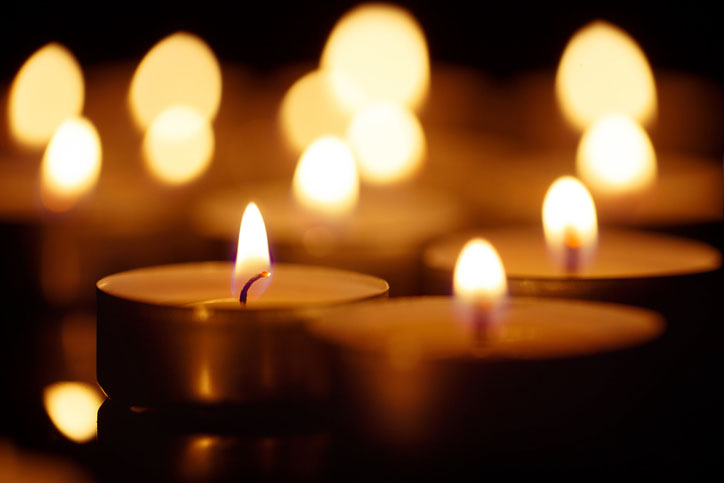
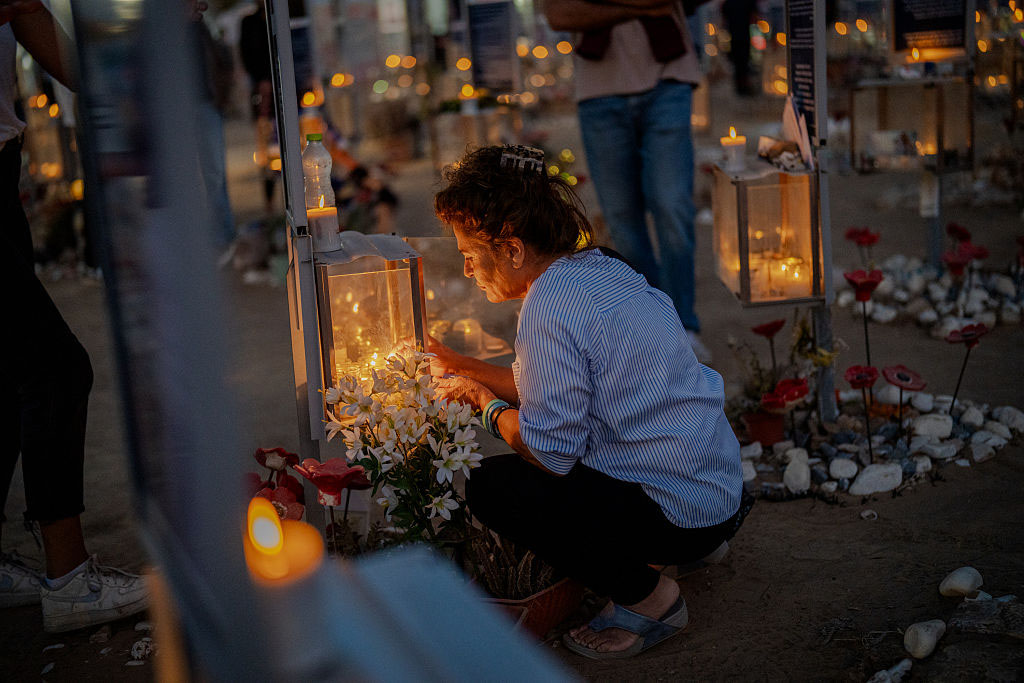
I’m definitely going to bust his chops for being an actor in this silly Holocaust charade. In the meantime, for his birthday, I will resort to lighting a candle for him next to the only photo I have of him, taken when he was just a little boy in the Lodz Ghetto. The birthday candle, which I lit this past Saturday night, on Jan. 28, is actually what Jews call a yahrtzeit candle.
And when the flame of the yahrtzeit candle glows brightly, it symbolizes an eternal fire from God that will always and forever burn, representing the sacred souls of my beloved uncle and all my other 6 million Jewish ancestors and declaring that despite any of your endeavors, their memory will be for a blessing, not a myth.
Kind Regards,
Robert Stevens
Courtesy New Jersey Jewish News.
Robert Stevens resides in New Jersey. He dedicates this letter in honor of his parents. He can be reached at: rstevens27@gmail.com