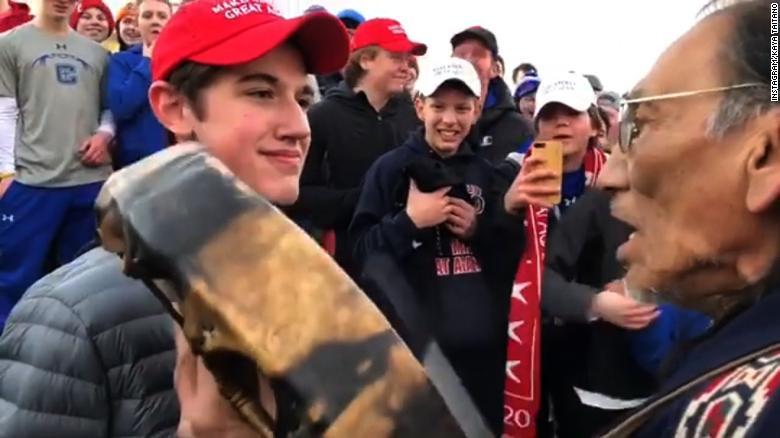
By now it is widely accepted that the mainstream media rushed to judgment and botched the Covington Catholic High School story. The real question is, Why? How could they blow it so badly?
It’s not enough to blame social media. Twitter is a tool, not a person. Journalists are human — they can’t help but be influenced by their own worldviews. We should stop pretending that reporters only seek facts, balance and fairness. There are certainly some who do, but the majority are fallible human beings attached to their worldviews. In the age of Trump, this attachment has been especially difficult to hide, both from the right and the left.
As Frank Bruni courageously wrote in The New York Times:
“We react to news by trying to fit it into the argument that we routinely make, the grievance that we usually raise, the fury or angst or sorrow that we typically peddle. We have our narrative, and we’re on the lookout for comments and developments that back it up. The response to the initial footage of the Covington boys — and, in particular, to the one who wore a red MAGA cap as he stood before and stared at the drumming veteran — adhered to this dynamic.”
In a blistering takedown in The Atlantic, Caitlin Flanagan asks:
“How could the elite media — The New York Times, let’s say — have protected themselves from this event, which has served to reinforce millions of Americans’ belief that traditional journalistic outlets are purveyors of ‘fake news’? They might have hewed to a concept that once went by the quaint term ‘journalistic ethics.’ Among other things, journalistic ethics held that if you didn’t have the reporting to support a story, and if that story had the potential to hurt its subjects, and if those subjects were private citizens, and if they were moreover minors, you didn’t run the story. You kept reporting it; you let yourself get scooped; and you accepted that speed is not the highest value. Otherwise, you were the trash press.”
This soul searching is useful and necessary, but will it prevent another Covington? Not likely. Not when you consider the built-in incentives to maintain the status quo, as Bruni wrote:
“With everything from Twitter followers to television bookings, we’re rewarded for fierce conviction, for utter certainty, for emphatically taking sides and staying unconditionally faithful to what we’ve pushed for and against in the past. We each have our brand, and the narrower and more unyielding it is, the more currency it has and the more loyal our consumers. Instead of bucking the political tribalism in America, we ride it.”
Media outlets from Fox to MSNBC and from Breitbart to The Washington Post also have their “brands.” To protect these brands, they offer ideological consistency. If they introduce too much ideological diversity, they risk diluting their brand. This marketing mentality may make sense for cake mix, but not for journalism.
As David French writes in National Review Online, “So long as our nation’s newsrooms are ideological monocultures, not even the best of intentions can block the formation of a partisan press.”
An ideal newsroom should include liberal, conservative and centrist reporters. An ideal media company should ensure that a broad ideological perspective is brought to its reporting. Of course, that’s not easy to do when the majority of your writers see things the same way.
You can argue that ideological diversity is probably more important than any other form of diversity. I would rather be defined by how I think and write and act than by my Jewish-Sephardic heritage. That ought to be true of every reporter or commentator.
As French wrote, modern newsrooms “diligently seek to hire reporters from historically marginalized communities. They do not, however, apply the same diligence to hiring people who come from the intellectual and religious communities on the other side of the great American divide. This creates yawning gaps of ignorance.”
Academia has led the way in shaping this limited definition of diversity. As Heather MacDonald wrote in her book, “The Diversity Delusion,” “The roots lie in a charged set of ideas that now dominate higher education: that human beings are defined by their skin color, sex, and sexual preference.”
But why can’t worldviews also define a person and be considered a crucial part of “diversity”?
News organizations have a special obligation to bring ideological diversity into their newsrooms. It may dilute their brands, but we’re selling truth and fairness, not Doritos.