The Comedians
“America is different.” Time and time again, when you hear experts discuss the state of the Jews in the world, you hear the same thing: America is different.
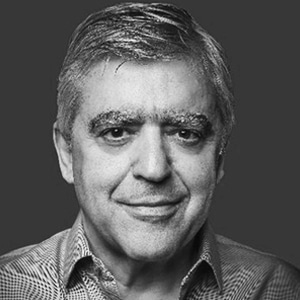
David Suissa is Publisher & Editor-in-Chief of Tribe Media/Jewish Journal, where he has been writing a weekly column on the Jewish world since 2006. In 2015, he was awarded first prize for "Editorial Excellence" by the American Jewish Press Association. Prior to Tribe Media, David was founder and CEO of Suissa Miller Advertising, a marketing firm named “Agency of the Year” by USA Today. He sold his company in 2006 to devote himself full time to his first passion: Israel and the Jewish world. David was born in Casablanca, Morocco, grew up in Montreal, and now lives in Los Angeles with his five children.
“America is different.” Time and time again, when you hear experts discuss the state of the Jews in the world, you hear the same thing: America is different.
This is a time of year that I dread, when I have to write about my three days at LimmudLA, a smorgasbord of everything Jewish. It’s like trying to squeeze 10 or 12 columns into one.
If you can tell a lot about a society by what it likes to watch, then something quite interesting must be happening in Israel, where one of the top-rated television shows is called “Srugim.” The show is an Israeli twist on the American hit “Friends,” and it follows the daily dramas of a group of single Jews living in modern-day Israel.
Yonatan Yagodovsky, director of the international desk at Magen David Adom (MDA) in Israel, remembers exactly where he was when he first heard about the earthquake in Haiti. It was 6 a.m., and he was in the bathroom of his home in Jerusalem, shaving. He immediately called Ohad Shaked, the MDA’s specialist in earthquake preparedness, who rushed to the Situation Room in the Ministry of Foreign Affairs, where, by 8 a.m., a group of experts from the humanitarian group ZAKA, El Al airlines, the MDA, the Israel Defense Forces, the Foreign Ministry and the Health Ministry were meeting to plan Israel’s response to the disaster.
If you want to depress an Orthodox parent raising Orthodox kids, just remind them about the dark side of secular teenage life, things like drugs, sex and vulgar music. It’s no wonder many Orthodox parents send their kids to non-coed high schools like YULA — it’s their way of offering some kind of protection from the unpredictable ills of modern life.
Albert Suissa loves coffee. In the 1930s, growing up in Casablanca, he would have his coffee with his buddies at the Café Pietine, where he would also play pool for money. Suissa (probably a distant relative — we think my great-grandmother was his father’s niece) was part of the cultural trifecta of being Jewish in Morocco in the middle of the 20th century: equal doses of Jewish, Arab and French influences.
“What’s wrong with Judaism?” “Why do so many Jews disconnect from their faith?” “Why is it so hard to get them to go to shul?” “If Judaism is now a choice, why do so few Jews choose it?”
Is there a PR idea that can reverse Israel’s deteriorating image? I’ve been thinking a lot about this, and I can’t say it’s been too much fun. For one thing, being in PR mode doesn’t bring out the best in me. I get linear and think only of “winning the war” — not engaging in complex and nuanced conversation.
Rabbi Joel Landau is sitting on a gold mine, and he’s not sure how to promote it. This gold mine is something he believes can change the face of Israel — a way of building bridges between the ultra-Orthodox Charedi community and the secular community.
Of the many quirks of the Orthodox tradition, there are two that are especially quirky to the average onlooker. One of them is well known: having a mechitzah that separates men from women during prayer services.

