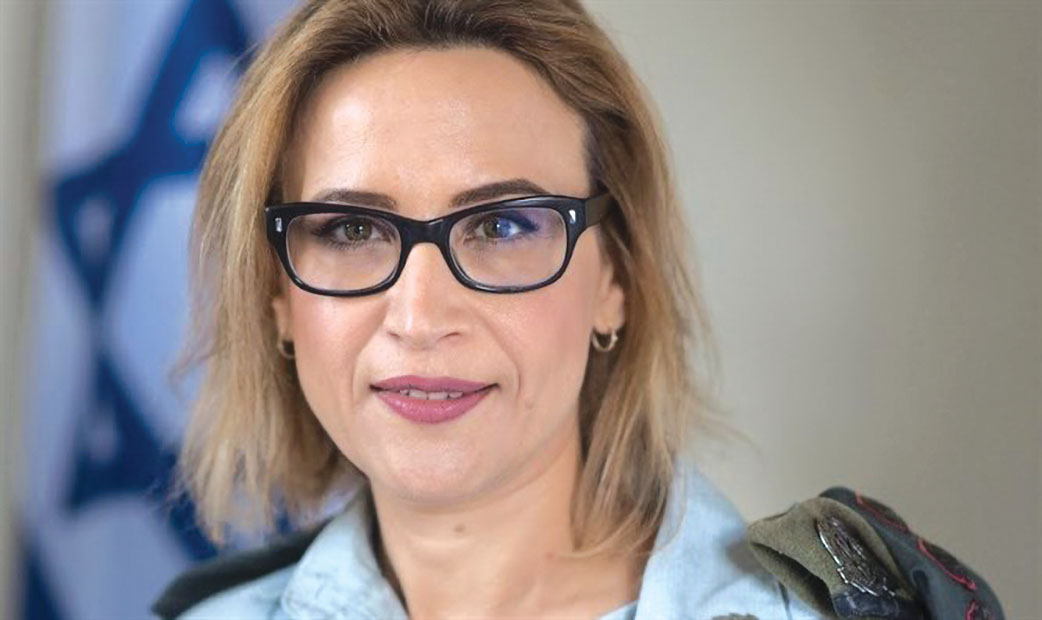
The story I’m about to tell isn’t easy to compress into an 800-word column. But it’s worth trying, because it distills many of Israel’s ills into a single narrative. It begins with allegations against IDF soldiers who abused Palestinian captives in a detention facility. IDF Military Advocate General Maj. Gen. Yifat Tomer-Yerushalmi was in charge of the investigation. This was no simple task: elected officials defended the soldiers, demanded the probe be halted and questioned the motivation, patriotism and professionalism of Tomer-Yerushalmi and her colleagues. Two ministers and four Knesset members even broke into the facility in protest.
In response to the outcry, the general made a problematic — yet explainable — decision: she ordered a subordinate to leak an incriminating video showing the soldiers handling a prisoner roughly, possibly criminally so. The video persuaded many Israelis that the investigation was justified, but it was also used by international critics as “proof” that the IDF commits war crimes. Politicians then demanded the leaker be identified — and that’s when a problematic move (a leak) slid into the criminal. As so often, it’s not the crime, it’s the cover-up. The general and some of her colleagues engaged in one, including, among other things, false statements to the High Court.
It all blew up last week. The general was outed as the leaker. She resigned as details of the cover-up emerged. An investigation was promptly launched, and right-wing politicians smelled blood in the water. The new scandal seemed to validate two of their sharpest claims: (A) that legal elites make their own rules; (B) that the indicted soldiers were victims of legal hacks lacking patriotism.
The affair morphed into a toxic blend of the fight over judicial reform and the fight over responsibility for the war. Attacks on the resigning general turned personal and vindictive: “Arrest her,” “put her in chains,” “make her pay a heavy price.” It was the Israeli version of the infamous 2016 “lock her up” chant at Trump rallies. Prime Minister Netanyahu declared the leak “the most serious PR attack” against Israel in the country’s history — a ridiculous claim. Then, on Sunday, Tomer-Yerushalmi left what looked like a farewell letter and disappeared. Israelis feared the worst, but after hours of frantic searching she was found alive — without her phone.
She hadn’t harmed herself. But she did manage to lose the phone somewhere in the Mediterranean — hardly a detail that evokes sympathy or concern for her well-being. It was the phone the police needed to search, the phone that might have held more incriminating data. On Monday morning, she was arrested.
This story matters because it compresses Israel’s external and internal battles into one episode. Israel’s controversies are all here.
There’s the war against a vicious, murderous, cruel enemy — and the way such a war inevitably erodes any sympathy for enemy detainees. The general insisted on investigating a possible crime that many Israelis would not consider a crime, certainly not one warranting the indictment of soldiers. If some soldiers were overly cruel to a Palestinian detainee — the soldiers’ advocates would assume — the detainee probably deserved it. Remember: these soldiers acted while Israeli hostages were still trapped in Gaza tunnels, in dire conditions. No wonder the public found the indictment hard to accept, or struggled to sympathize with the general’s legal and moral logic.
There’s also the ongoing effort to erode the power of the legal establishment and limit its ability to define the permissible bounds of behavior for politicians, officials and soldiers. The main targets in this socio-political struggle are the High Court justices and the attorney general, but the Military Advocate General is a prime target too. She is part of the elite, a member of the “legal gang” that insists on rules many Israelis see as unnecessary, harmful, excessive — or all of the above.
Tomer-Yerushalmi handed the system’s critics a costly gift. She went after soldiers — exposing herself to accusations of unpatriotic behavior. She did so in wartime — exposing herself to claims of aiding the enemy. She covered it up with the help of peers — affirming “deep state” charges. She lied — exposing the hypocrisy of legal bureaucrats who present themselves as guardians of morality while pursuing their preferred policies.
And she made life harder for Israelis who still want Israel to keep its high moral standards—not out of concern for the enemy, but out of concern for Israel’s character. When her transgressions became public, those Israelis were mostly embarrassed. More than a criminal, Tomer-Yerushalmi — and her collaborators — are an embarrassment.
Something I wrote in Hebrew
Explaining Jewish-Americans to Israelis isn’t always easy:
The “Jews for Mamdani” are very loud. They have a prominent presence in several media outlets. They have a powerful megaphone, held by a few public figures and rabbis. They also have a few vocal supporters in Israel who echo their messages as if they were those of a large community. They can create the impression that they are far more numerous than they really are. I’ve already encountered several Israeli politicians who asked me, in shock, “How can it be that the Jews support the anti-Israel Mamdani?” Well — they don’t. They do not support him.
A week’s numbers
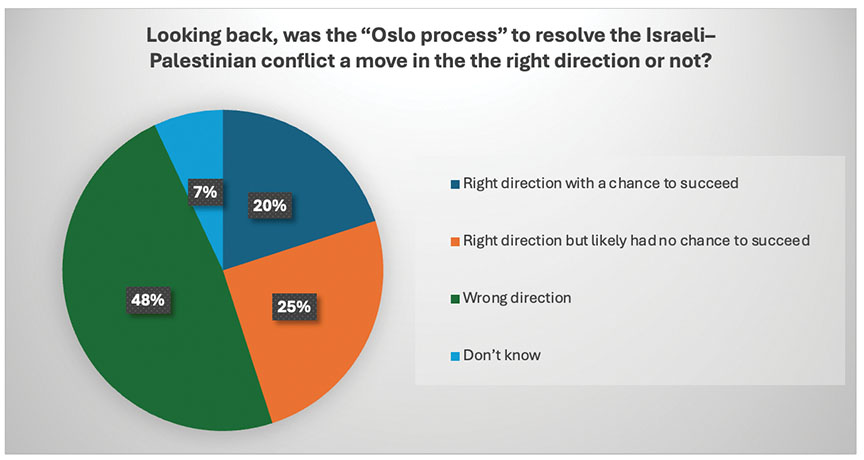
In a week of marking the 30-year anniversary of the Rabin assassination, Israelis see the Oslo Accords mostly unfavorable (JPPI numbers).
A reader’s response
David Ezra writes: “Shmuel, you should write something about what’s happening in Lebanon.” My response: Right. Maybe next week. (In the meantime, read the WSJ report under the headline: ‘Hezbollah Is Rearming, Putting Cease-Fire at Risk’.)
Shmuel Rosner is senior political editor. For more analysis of Israeli and international politics, visit Rosner’s Domain at jewishjournal.com/rosnersdomain.