fbpx

November 10, 2021

The Conflict of Critical Race Theory

According to the great blue-check-marked accounts of Twitter, Terry McAuliffe sunk his chances against rival Glenn Youngkin for Governor of Virginia when he said in a September debate, “I don’t think parents should be telling schools what they should teach.” This was offensive enough to the parents of Virginia that even some Democratic voters pulled the lever for the Republican candidate, ensuring him an underdog victory. The issue of parental involvement in school curriculums has indeed been contentious in Virginia, where parents are being labeled domestic terrorists for airing their concerns at school board meetings. But one phrase is shouted again and again, whipping up bitter partisan tensions: critical race theory. The question of whether critical race theory, or “CRT’’ as it’s known, should be taught in schools is one of great academic and political importance.  Unfortunately, both Democrats and Republicans have abused and toxified the use of the phrase beyond any realm of sensibility. This behavior stops us from having any real conversation about what is being taught in the classroom, giving us nothing but further polarization.

Unfortunately, both Democrats and Republicans have abused and toxified the use of the phrase beyond any realm of sensibility.

To understand CRT, we first have to understand what it is not. Many on the left would like us to believe that CRT is:

A. A useful idea to teach in schools 

B. So complicated and esoteric that it is not taught in schools

C. Simply curriculum that teaches about the United States’ history of racism and discrimination

D. As Nicole Wallace put it bluntly on MSNBC on Election Night, not real at all

E. All of the above

None of these definitions, which progressive commentators like to flip between during any given time slot, are correct. In contrast, many on the right would like to have you believe that CRT is:

    A. Teachers telling their students to hate the United States

    B. Teachers telling their students to hate white people

    C. Toni Morrison’s “Beloved”

    D.  A Jewish conspiracy 

    E. All of the above

None of these definitions, which parents like to scream about during school board meetings, are correct. So what is CRT?

As noted a number of months ago in the Journal, “CRT was defined by legal scholar Kimberlé Crenshaw in the late 1980s to describe the intellectual movements that begin to emerge in the 1970s in the circles of activists and academics who felt that the work of the civil rights era was incomplete. By the early 1990s, CRT had become a full-fledged school of literary criticism—a way of reading not just literature and film in classrooms but also everything that we come into contact with in the world.”  What is understood as CRT has continued to evolve even to this day. In 1995, Scholars Gloria Ladson Billings and William F. Date described critical race theory as a  program for “making race the central construct for understanding inequality.” In other words, inequality exists, and racism, the ordinary state of affairs, is what causes it.   

Racism is everywhere, even when it is not evident. In Ibram X. Kendi’s  “How To Be An Antiracist,” Kendi argues that any policy in the United States that produces inequitable racial outcomes is racist, and legislation is needed desperately to reverse this evil. For example, if white students are more likely to score well on an SAT test because of their socioeconomic background, the SAT test must be racist, and therefore should be banned from college applications, lowering the standards of academia and sidelining the issues that created the socioeconomic differences in the first place. The theoretical texts of CRT are not typically taught in elementary or high school classrooms, but the ideas of CRT manifest in many ways, such as schools removing high-level and “gifted” courses because they’re not diverse enough (making sure nobody is granted access to them at all). Once the most extreme tenets of CRT are applied to curriculum, the result is often race essentialism, where characteristics of racial groups are weighed heavier than the character and capabilities of the individual. This has led to parent protest, with many suggesting that their children are being given different messages based on the amount of melanin in their skin.

The reactionary right is using CRT to sabotage teaching young people about slavery, Jim Crow, or massacres of Native Americans. The revolutionary left, if not outright endorsing CRT, is gaslighting the American public by telling us it isn’t being taught at all.

For the average American, this is a lot of information. So why sink into the weeds of academic legal and critical theory when it feels so much better to hear your favorite CNN anchor call all Youngkin voters agents of white supremacy, or to hear your favorite State Senator say the local second grade teacher’s lesson on the Harlem Renaissance is communist indoctrination? The reactionary right is using CRT to sabotage teaching young people about slavery, Jim Crow, or massacres of Native Americans. The revolutionary left, if not outright endorsing CRT, is gaslighting the American public by telling us it isn’t being taught at all. 

And it is being taught. Christopher Rufo, a conservative writer who many credit with starting the mainstream CRT debate, points to the website of the Virginia Department of Education, which recommends “Foundations of Critical Race Theory in Education” for teachers. In 2015, public school teachers were encouraged by the McAuliffe administration to “embrace critical race theory,” with the goal of “re-engineering attitudes and belief systems,” and the Loudoun County School District (the epicenter of the CRT war) recently hired a consulting firm to “implement critical race theory.” Beyond this verifiable data, parents speak to their children at home, and are made aware of the fixation on race in the classroom by just glancing at their first or sixth grader’s homework. 

The evidence does nothing but further incense parents against Democrats, on account of being called bigoted and delusional for simply telling the truth. Editor of Newsweek Opinion Batya Ungar-Sargon recently wrote in “Common Sense with Bari Weiss” that “the ‘Critical Race Theory isn’t real’ meme is not about race. It’s not about politics. It’s not even a culture war, really. It’s about class. It’s about one class—a highly-educated chattering class—using highly specialized language to tell normal parents that they lack sufficient intellectual capacity and are imagining things because they’ve been brainwashed.” 

Consequently, these normal parents, many of whom consider themselves to be liberal and open-minded or have historically found themselves on the left of the center, have been persuaded into electing Republican candidates, some of whom will no doubt use parents’ legitimate grievances to launch a book-burning crusade on important curriculum (i.e. crucial works that teach about slavery and the history of racism) and secure their own positions of power. And therein lies the conflict of critical race theory—trapping those who actually know what it is in an endless state of frustration.


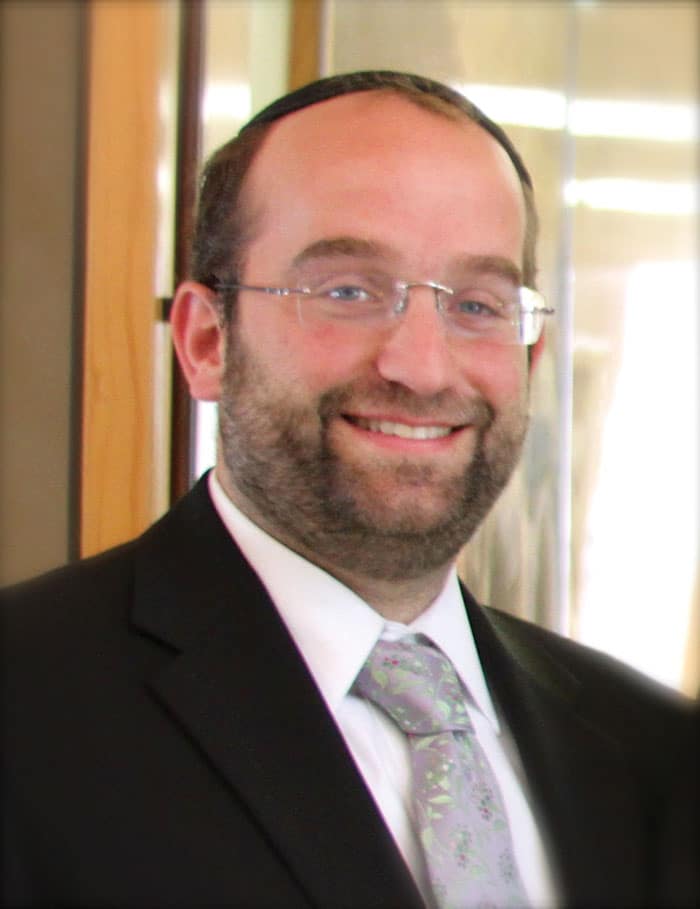
Blake Flayton is New Media Director and columnist at the Jewish Journal.

The Conflict of Critical Race Theory Read More »

Willful Blindness on the Palestinian NGO Terror Connection

Apparently, the Israeli Ministry of Defense (MoD)’s designation of six Palestinian NGOs (non-governmental organizations) as terror fronts is among the most pressing dangers to international security and stability, at least according the European members of the UN Security Council. Iran’s illicit nuclear program, China’s threats to invade Taiwan, and Putin’s threat to Ukraine are nothing in comparison to the Israeli findings that NGOs, exploiting the facades of human rights and civil society, have links to terror. In the UN, diplomats from France, Ireland and Norway, among others, made criticism of this Israeli policy a top priority—in part reflecting their own (unstated) roles as key donors to some of these groups.

This and similar moves are part of the general panic within the NGO industry, which has a great deal to lose if the Israeli government convinces officials and the wider public in these countries to take the links to terror seriously. The Palestinian NGOs are at core of a powerful and unregulated lobby that receives tens of millions of euros from European governments annually to vilify Israel, and the allegations regarding the role of the Popular Front for the Liberation of Palestine (PFLP) have repercussions for the entire network. (The PFLP is listed as a terror organization by Israel, the U.S., European Union, Canada and Australia.) If the U.S. and key European governments agree that Al Haq, Defense for Children International-Palestine (DCIP), and the others are fronts for murderers, the credibility and financial support for NGO allies with whom they work on their campaigns of demonization (particularly the New Israel Fund network of NGOs) would also feel the heat.

As a result, representatives from the NGOs are doing round-the-clock interviews with sympathetic journalists, writing opinion essays in major media platforms, and pumping out a social media barrage to prevent the links between NGOs and terror from gaining a foothold. Their claims are familiar and predictable—the Israeli move is dismissed as yet another attempt to prevent criticism of human rights violations and to close the “space in which Palestinian civil societyis able to function.” These slogans are repeated at every opportunity, while none of the NGO spokespeople, journalists-fans and ardent supporters among European and UN officials, and Members of Congress mention the core issue of PFLP terror.

In this crucial political and public relations battlefield, the Israeli government was again revealed as unprepared, and is being hammered again. The critics ask why the MoD has produced no evidence, or, more accurately, no “new evidence.” Key allies in the U.S. and around the world, including those sympathetic to Israeli security concerns, were also taken by surprise by the October 22 designation announcement. They blame Israeli decision-makers and their senior staff members for not anticipating and preparing for the full-scale counter-attack in the NGO wars.

In this crucial political and public relations battlefield, the Israeli government was again revealed as unprepared, and is being hammered again.

In part, this is another example of the compartmentalization that still dominates Israeli policy-making on such issues. The PFLP’s NGO network is viewed primarily through the lens of security and terrorism, and for many months, the Israeli Security Agency (Shabak) gathered evidence and made arrests, followed by indictments and trials. This was accompanied by a number of legal reviews, including by the Attorney General, ending with the formal designation by the MoD. And the classified Israeli intelligence was shared with counterparts in the U.S. and among some Europeans.

But, as both critics and allies point out, the absence of publicly available evidence to accompany and justify the designation left the propaganda arena undefended. Instead, the government pointed to information from earlier investigations of a number of NGO officials charged with leading the PFLP cell that murdered 17-year-old Rina Shnerb in August 2019. In addition, in May 2021, the ISA indicted and released detailed information regarding the PFLP terror-supporting activities involving officials of another NGO, the Health Workers Committees, including forging of receipts, salary reports, and bank documents to inflate project costs in order to divert large sums of European funding. These were immediately dismissed by NGO supporters, including the European officials that fund them, as “unconvincing,” or “a few bad apples” in otherwise entirely reliable civil society organizations. Reinforcing the push-back, the NGO support industry, including many journalists, went to work to shift the focus away from the terror links and toward the usual anti-Israel conspiracy theories.

As part of this willful blindness, they also erased and ignored the extensive and systematic research on the PFLP terror links published by NGO Monitor, the independent research institute that I founded and lead. Based entirely on open sources, such as websites, YouTube videos and social media posts from the NGOs and the PFLP themselves (mostly in Arabic), researchers have identified 74 PFLP officials that hold positions in 13 NGOs, seven of which have been designated by the Israeli government. All of this carefully documented information is posted on numerous sites, and has been cited by members of parliaments, analysts and others.

When governments, such as the European UN Security Council members, and their NGO clients repeat the mantra that no evidence has been presented, they are being willfully misleading and worse. There is an abundance of readily verifiable information, even without the classified intelligence material, available to government officials and journalists who are interested in going beyond the simplistic slogans about NGOs.

As the Biden Administration begins spending millions of dollars in taxpayer funds on Israeli and Palestinian groups, these events highlight the importance of detailed and open investigations before any funds are allocated, to prevent diversion to terror.


Gerald Steinberg is emeritus professor of political science at Bar-Ilan University and heads the Institute for NGO Research in Jerusalem.

Willful Blindness on the Palestinian NGO Terror Connection Read More »

Biden Admin Attempting to Form Palestinian Unity Gov’t, Report Says

A November 9 report from i24NEWS stated that the Biden administration is attempting to form a Palestinian unity government between Hamas and the Palestinian Authority (PA).

According to the report, the government would feature representatives from Hamas, Fatah (the ruling party in the PA) as well as nonpartisan economic experts.

“The idea there is to promote calm in the region, particularly when it comes to Gaza and the ongoing armed conflicts with Israel,” Guy Azriel, a correspondent for i24NEWS, said during a broadcast. “The idea is that a unity government like this would be a basis for a long-term truce with Israel.” He added that the unity government is aimed at ending the longstanding conflict between Fatah and Hamas and “to rebuild the Palestinian economy.”

But Dr. Ahmad al-Majdalani, the PA Minister for Social Development, told i24NEWS that until the Biden administration agrees to reopen a Palestinian consulate in Jerusalem, they will not respond to overtures from the U.S. The administration has promised to reopen the consulate, which was closed during the Trump administration, but the current Israeli government opposes such a move. Prime Minister Naftali Bennett has argued that “there’s no room” for the consulate. The Palestinians argue that the consulate is necessary to show that they have a claim to Jerusalem.

Azriel also pointed out that a unity government could complicate Israel’s relations with the PA because the two governments coordinate on security measures, including arresting Hamas terrorists. “How is that going to happen when Hamas is a part of that unity government?” he asked.

Fatah and Hamas briefly shared a unity government in 2006 in the Gaza Strip when Israel withdrew from the area until Hamas seized power from Fatah in a 2007 coup. Subsequent efforts to form a unity government between the two have failed.

“This administration has no understanding of Palestinian politics,” writer and activist Yoni Michanie tweeted.

Joel M. Petlin, Superintendent of the Kiryas Joel School District, also tweeted: “Pushing for a Palestinian unity government with Hamas & the PA reminds me of the story of when there was a push to reunite East and West Germany. A comedian commented that it didn’t work out too well the last time they were united, so why do we think it will be any better today.”

Biden Admin Attempting to Form Palestinian Unity Gov’t, Report Says Read More »

Rabbis of LA | Shlomo Einhorn: Orthodox Rabbi Who Loves to Innovate

When you speak with Rabbi Shlomo Einhorn, dean of Yavneh Hebrew Academy and rabbi of its congregation, you’re going to hear all about his love of Torah and his strong belief in the Jewish way of life. But you’re also going to get some tidbits you wouldn’t expect from an Orthodox rabbi – like a story about that time he got thrown into the trunk of a car in Abu Dhabi.

“I went to set up important meetings, and the people there wanted to make sure I didn’t see where I was going,” he said. “I didn’t know it was going to happen. I knew it was going to be clandestine, but I didn’t expect it to be that clandestine.” 

Einhorn, who received smicha from Yeshiva University and moved back to his native Los Angeles in 2012 to work at Yavneh, is used to trying “crazy things,” as he calls them. He currently holds the world record for the longest ever Torah class given; he taught for 19 hours straight on Lag B’Omer in 2018, touching on out-of-the-box topics like “Was There Ever a Female Chassidic Rebbe?” and “The Grassy Knoll: Great Jewish Conspiracies.”

“Within an Orthodox setting, I try to make my teachings as colorful and inclusive as possible,” he said. “I don’t want anybody feeling that there is one way to do things or one way to live. I want people to find their space easily within what we do in our community.”

“I don’t want anybody feeling that there is one way to do things or one way to live. I want people to find their space easily within what we do in our community.”

Growing up in the Fairfax-Hancock Park area, Einhorn comes from a Modern Orthodox and Hasidic background. His parents were the children of Holocaust survivors, with his mother’s family belonging to the Satmar community. His father’s family emmigrated to France right after the war, settling in St. Louis because, Einhorn said, “It was the most French-sounding city in America.” 

In high school, the rabbi, a YULA grad, held leadership positions and wanted to combine that work with his love for Torah. Still, it took him some time to decide to become ordained.

“I was about to become a lawyer,” he said. “I took the LSAT and was ready to go to law school, and my in-laws talked me out of it. They said to follow my passion.”

Along with working at Yavneh, Einhorn was an intern rabbi in Manhattan’s Lincoln Square Synagogue and head rabbi of New York’s West Side Institutional Synagogue, and he helped out at-risk teens one-on-one. These days, he is busy heading the school and congregation, but he still seeks out opportunities to serve the teen population. 

Recently, he released the first ever Jewish bible for teens called “The Koren Lev Ladaat Humash,” and he worked on it with Rabbi Lord Jonathan Sacks before he passed away. The book contains Sacks’ translation of the chumash and includes Einhorn’s commentary specifically for teens. 

“The end of each section raises questions that teens ask like, ‘How do you prove the existence of God?’” he said. “The types of things that inspire teens are much different than what would inspire someone who has been learning this for 20 years.”

The Jewish teaching Einhorn most resonates with and influences what he does appears in the Torah portion Ki Tavo, where the core and holy notions of trust in God and following God’s commandments and statutes are elucidated. 

“Everything we’re doing is because of this notion that God wants us to be filled with joy and kindheartedness,” he said. “God said, I’m not giving you these rules to oppress you or throwing things at you to break you down. I want you to find your bliss.” 

The rabbi wants to help others find their bliss as well. 

“I try to enable people to see that Judaism is in many ways a lot of fun,” he said. “It’s an enjoyable way of life, and I try to have fun with it.”

Fast Takes with Shlomo Einhorn

JEWISH JOURNAL: Is there a rabbi whose teachings really influence you? 

SHLOMO EINHORN: It’s a combination of Rav Hershel Schachter, Rebbe Nachman of Breslov, Rav Abraham Isaac Kook and Rabbi Chaim Kanievsky. I tried this crazy experiment to see if I could live like Rabbi Kanievsky, like sleeping for an hour and a half a night. I was sick within a couple of weeks.

JJ: What do you do for fun? 

SE: I study Torah. And I write music.

JJ: What book are you reading right now? 

SE: Aside from the Torah books, anything Neil Gaiman.

JJ: What’s your favorite Jewish dish? 

SE: Cholent. My wife won the award for best cholent from Chef Katsuji Tanabe from Mexikosher.

JJ: Who is your favorite band? 

SE: Queen. They are so over the top. That’s how I give shiurim.

Rabbis of LA | Shlomo Einhorn: Orthodox Rabbi Who Loves to Innovate Read More »

The Synagogue As Our Second Home

Last week’s cover story in the Jewish Journal asking how synagogues will reinvent themselves hit home for me personally and professionally. I believe we’re at a crossroads where shul life can either thrive or decline. And the outcome is not in the hands of a few powerful rabbinic leaders. It’s up to each of us, which we can view as daunting and anxiety-provoking or invigorating and life-giving. I choose the latter. 

The process was already happening pre-pandemic, as those of us in the pulpit encountered young professionals asking, “Why join a shul? What do I get from synagogue membership?” As a young professional myself, I heard these questions not as a sign of rejection of community, but as an honest outcry about how we can be better. It was a plea, a challenge, to  envision the synagogue as a central part of our daily lives.  

The pandemic fast-tracked the need to answer this question, since we all had to create alternative spiritual experiences, whether online or offline in our homes and backyards. Perhaps not surprisingly, many of us have come to prefer those experiences, which has only accentuated the challenge of the communal synagogue.

What do we want this synagogue life to be? Let me give voice to what many have confessed to me through whispers: There are things we don’t miss at all. And yet, we may have personalized our experience so much that we are finding ourselves on a spiritual island. 

The time has come to be bold. Why do YOU think synagogue life matters? What do you miss most about it and what do you want to change? How do you think we can move from pandemic isolation into deeper relationships and spiritual connection? Recognizing what doesn’t work will be just as essential as lifting up what does. 

In my wildest dream, shul is a place that feels like home. We’re working from home now — why not at shul? Let’s have a nice lounge area, a place to hang with friends. And while I’m in the building, why not pop in for a tefillah or a class? I grew up with my mom as a cantor and rabbi and so shul was truly my second home. Shul can be the place where we want to socialize, bond, learn, pray, and be inspired whenever we are feeling drained. It can be what it was always meant to be: our touchstone for everyday holiness.

The antidote to isolation is stepping outside of ourselves in service of something greater… For only in shul do we support each other across generations in our celebrations and in our losses.

Seeing shul as our second home may mean expanding upon an earlier model— that of the European shtetl or Biblical Temple where life was rooted in where we worship. The antidote to isolation is stepping outside of ourselves in service of something greater, and intergenerational synagogue life gives us that space as a larger family. For only in shul do we support each other across generations in our celebrations and in our losses. This past Shabbat, at the end of our kids’ Torah service, a little girl cried because she wanted to spend more time looking at the Sefer Torah. As we reopened the Torah, her face lit up with joy. I believe that this yearning for holiness exists in all of us. The question is how our shul communities can actualize and nurture it.

The traditional will always be at the core, especially for those of us committed to halacha. Let’s learn from these past two years, and take our observance to the next level in a way that is creative and innovative. We should seize what helped us connect  during the pandemic—God and mitzvot and learning—and let go of the stuff that was getting in the way. 

As both pulpit clergy and a mom who wants her toddler to have a vibrant life of Torah, prayer, and gemilut chasadim (acts of loving kindness), I am with you in this and would love to hear your thoughts. 

This can be a moment of immense opportunity and excitement. Because when we answer the core question “Why join a shul?,” we will uncover what matters most and reveal a new horizon of spiritual innovation and revival.


Rabbanit Alissa Thomas-Newborn is a member of the spiritual leadership at B’nai David-Judea Congregation in Los Angeles, and she is a Board Certified Chaplain with Neshama: Association of Jewish Chaplains.

The Synagogue As Our Second Home Read More »

Parents Pushing Back

Parents matter. 

In the aftermath of a stunning Republican victory in Virginia last week, that seemingly uncontroversial statement now seems poised to represent the key rhetorical battleground for next year’s midterm elections. While Republican Glenn Youngkin’s narrow victory can also be attributed to several additional factors – most notably Democrat Terry McAuliffe’s focus on Donald Trump in an election in which Trump was not on the ballot –  Youngkin was able to take control of the education  issue by framing it in the context of parental involvement in the schools.

Within hours after the race was called for Youngkin, national GOP leaders were already trumpeting the power of the parental rights discussion in next year’s campaigns. 

National GOP leaders are already trumpeting the power of the parental rights discussion in next year’s campaigns. Democrats, of course, do not hate parents, but McAuliffe never found a way to satisfactorily explain a tremendous gaffe he made in the final candidate debate, when he stated that “I don’t think parents should be telling schools what they should teach.” More challenging for Democrats than one highly visible misstatement from a defeated candidate, though, is a growing resentment among many parents as to how decisions are made in their children’s schools — and a belief that Democratic leaders are much more likely to be involved in those decisions.

The most high-profile aspect of this debate is the controversy over Critical Race Theory (CRT), an academic movement forwarded by civil rights scholars and activists as a way to describe the systemic racism in American society. Despite what many conservatives say, CRT is not taught in elementary or secondary schools. Despite what many liberals say, it does influence the way many public schools discuss race-based issues with their students. But if this was the sole basis of disagreement in public education, it’s more likely than not that the argument would be confined mainly to the most passionate partisan advocates on both sides of the aisle.

In addition to the disagreement over Critical Race Theory, Youngkin’s campaign was harshly criticized for using acclaimed African-American author Toni Morrison’s Pulitzer Prize-winning novel “Beloved” as an example of objectionable content in public school curriculum. While there is unquestionably deeply disturbing content in the book that some parents believe is not appropriate for their teenagers, the selection of a story told by such a celebrated minority voice to illustrate the point undoubtedly added to an already tension-filled debate.

But Youngkin’s campaign recognized that questions of parental involvement cut much deeper. The fact that Virginia public schools remained closed and relied on distance learning while other aspects of society (and most charter and private schools) were reopening seems to have been their primary source of dissatisfaction. Even as schools have largely returned to in-person instruction, the frequent reminders of last year’s difficulties and the ongoing debates over mask and vaccine mandates have kept these memories alive for them.

Another aspect of the parents’ rights discussion which received much less attention is the growing movement away from advanced and accelerated learning for students who demonstrate unusually high aptitude in certain subjects. While terms like “gifted and talented” may be counter-productive, large numbers of suburban parents became greatly upset that their children would not be given these additional opportunities, especially in this “Varsity Blues” era of heightened competition for college admissions. The argument against these types of classes is that they undermine efforts toward educational and economic equity, and the commitment to help students from underrepresented communities and other disadvantaged circumstances, which complicates the topic even further for Democratic candidates.

There are also some echoes here of California’s recent efforts to navigate the combustible topic of ethnic studies. While the one-party nature of California politics kept this from becoming a partisan issue, it did force different factions within the Democratic party to seek common ground rather than attempting to leverage the issue for political benefit. But in a battle for control of Congress next year, neither party will be nearly so restrained.


Dan Schnur is a Professor at the University of California – Berkeley, USC and Pepperdine. Join Dan for his weekly webinar “Politics in the Time of Coronavirus” (www/lawac.org) on Tuesdays at 5 PM.

Parents Pushing Back Read More »

How Social Activists Came to Gang Up On Israel

I should have seen it coming, but I didn’t. 

As an undergraduate (2001-2005) and former leader of a campus pro-Israel group, I witnessed sporadic alliances between anti-Israel students and members of other student groups. At my alma mater, UC San Diego, one anti-Israel event was co-sponsored by a group representing Chicano students, but I didn’t pay much attention to it. 

In fact, I was hard pressed to believe that anyone who didn’t belong to UCSD’s Students for Justice in Palestine or the Muslim Student Association, the two organizations that always held anti-Israel events on campus, would jump on the Israel-bashing bandwagon. But that was a different time, before Jews were categorized as white and privileged, and before proposed ethnic studies programs in California put us even more on the defensive. Still, how dangerously misguided I was. 

But as early as 2006, when I was serving as Director of Academic Affairs at the Consulate General of Israel in Los Angeles, I realized something was amiss. One morning, a Jewish professor emailed me a flyer for a vehemently anti-Israel event that was planned at a local campus. Its co-sponsors? Students for Justice in Palestine and an LGBTQ student organization. I was dumbfounded.

Today, I am completely resigned to intersectional Israel bashing. I even expect it, which is why I wasn’t surprised to read that the 2018 Chicago Dyke March included many Palestinian flags, after banning flags depicting the Star of David the prior year. Marchers also waived Mexican and Puerto Rican flags and chanted “No pride in occupation, no pride in deportation.” In 2019, the DC Dyke March also banned flags with the Star of David, calling it a symbol of “violent nationalism.” 

I’ll never forgive myself for not taking the signs more seriously—specifically, how so many communities now band together in social justice spheres to vilify Israel. And now, it might be too late.

Israel is being squeezed out of every cause that’s deemed good and right, and this is only the beginning. 

Israel is being squeezed out of every cause that’s deemed good and right, and this is only the beginning. A few weeks ago, I ran into another former pro-Israel student leader from UC San Diego who told me, “We really should have seen it coming.”

To be fair, the Jewish and pro-Israel community has been trying to invest in relationships with other communities for decades. It has also worked tirelessly not to allow Israel to become a partisan matter. 

I remember a time as an undergraduate when it was a no-brainer to ask the College Democrats to condemn an anti-Israel student government resolution. Most members of that student group not only supported Israel, but also they understood that the College Republicans would also be condemning such anti-Israel resolutions, and they didn’t want to be left out. 

It’s clear that those days, and the ease with which pro-Israel students were able work closely with College Democrats, are no longer a guarantee. This is partly due to the far-Left’s overrepresented and unchecked voice within the Democratic Party these past few years. Yes, I’m including the poisonous ways in which some Democratic congresswomen have incessantly singled out and condemned Israel. 

When I was an undergraduate, it was an embarrassment if College Democrats didn’t support Israel on campus. Today, it might be a liability if they do show such support. Is this the case across all campuses? Of course not. But I now see that former pro-Israel students like myself may have taken their relationships with College Democrats for granted, because we didn’t anticipate such openly anti-Israel voices would arise within the party. 

Why has so much changed since I graduated college in 2005? For one thing, social media is an antisemite’s dream, especially for those who manage to cloak themselves as anti-Zionists (it’s getting harder and harder to distinguish the two). Social media not only allows them to magnify their insidious claims quickly, but also it turns someone whose arguments would have been questioned a decade ago into a geopolitical expert, armed with something none of us can argue against: his or her own truth.  

And there’s something else. A new generation of 72 million young people (called Gen Z) that was born between 1997 and 2012—in other words, too young to recall Sept. 11, 2001—is entering campuses and workplaces with not only a preference, but also a perfectly normalized (in their minds) demand to turn everything political. 

Last month, The New York Times featured a story titled “The 37-Year-Olds Are Afraid of the 23-Year-Olds Who Work for Them,” which highlighted a seemingly unbridgeable gap between millennials (my generation) and Gen Z.

“Subtly yet undeniably, as generational shifts tend to go, there’s a new crop of employees determining the norms and styles of the workplace,” wrote the Times’ Emma Goldberg. “And they have no qualms about questioning … all the antiquated ways of their slightly older managers, from their views on politics in the office to their very obsession with work.”

Today, I am completely resigned to intersectional Israel bashing. I even expect it.

Gen Z expects everyone, from its professors to its co-workers and bosses, to take political sides. “The youngest members of the work force,” Goldberg wrote, “have demanded what they see as a long overdue shift away from corporate neutrality toward a more open expression of values, whether through executives displaying their pronouns on Slack or putting out statements in support of the protests for Black Lives Matter.”

You know what that means? The next time Israel defends itself against Hamas terror rockets, as it did this past May, a 22-year-old at a Santa Monica start-up that has nothing to do with politics will demand that her employer release a statement claiming Israel is committing genocide against Palestinians, using talking points readily available on Twitter. 

Don’t believe me? The New York Times story cited a telling example: One Saturday morning in June 2020, a young worker at a vibrator company demanded to know how the company was going to respond to Black Lives Matter protests. According to the article, the company’s co-founder “knew that for her employees this signified a state of emergency.”

The article also featured reflections by a co-founder of a company that sells plant and mushroom supplements. His observation was spot-on: “You talk to older people and they’re like, ‘Dude we sell tomato sauce, we don’t sell politics.’ Then you have younger people being like, ‘These are political tomatoes. This is political tomato sauce.’”

I may not have seen it coming, but I now know what Israel’s detractors are doing, and they’re not going to let up until they’ve pushed Jews out of every space and made “Zionist” synonymous with bigot. 

Maybe it’s too late to undo this libelous assault, but we shouldn’t concede defeat. Giving up is not the Jewish way. And I know at least one member of Gen Z who has no plans to give up, and, in fact, is throwing himself into the lion’s den of antisemites: activist and social media influencer Rudy Rochman, whose unbelievable experience in a Nigerian prison this past July I recount in this week’s cover story. “Jews,” Rochman told me, “aren’t pro-Israel; we are Israel.”

So how do we make sure Jews aren’t squeezed out and that “Zionist” doesn’t become synonymous with all things evil and ugly? That’s for a separate column. But it involves confronting a whole lot of rotten tomatoes.


Tabby Refael is a Los Angeles-based writer, speaker, and civic action activist. Follow her on Twitter @RefaelTabby

How Social Activists Came to Gang Up On Israel Read More »

Why Vaxxers and Anti-Vaxxers Can’t Talk

When you perceive an issue as life or death, it’s hard to be civil and reasonable.

That’s my best explanation for the sheer absence of civility between those who passionately believe in taking the COVID vaccine and those who passionately don’t.

Let’s put aside the political polarization and conspiracy theories and focus only on the most reasonable arguments on both sides.

Both anti-vaxxers and the “vaccine hesitant”  cite the absence of testing for any long-term side effects of COVID vaccines, along with the inherent risks associated with the mRNA technology. I’ve spoken to pro-vaccine medical experts who acknowledge there is some merit in that position.

The Pharmaceutical Technology website, while firmly endorsing the vaccine, adds: “There are potential risks from mRNA vaccines that include local and systemic inflammatory responses, which could lead to autoimmune conditions, and the toxic effects of any synthetic nucleosides or vaccine delivery components.”

The pro-vaccine crowd, meanwhile, cites the much higher risks associated with not taking the vaccine. Among other arguments, they cite a recent CDC study that found that 92 percent of positive cases, 92 percent of hospitalizations, and 91 percent of COVID-19-related deaths were reported among those not fully vaccinated.

So, one side is afraid it may kill or harm them if they take it, while the other side is afraid it may kill or harm them if they don’t.

Normally, we would just stop there and go have coffee. Everyone has freedom of choice; you do what you want with your body, I’ll do what I want with mine.

If only it were that simple!

The reason so many people are at each other’s throats is that we’re dealing with a highly contagious virus, which means that whoever carries the virus can be a threat to anyone they encounter. One’s freedom of choice clashes with one’s right to stay alive.

If someone is fully vaccinated, there may be a much lower chance they’ll get infected and be hospitalized, but for many people, even that lower chance is not worth taking.

What further complicates things is that we’re dealing with probabilities, not certitudes. If someone is fully vaccinated, there may be a much lower chance they’ll get infected and be hospitalized, but for many people, even that lower chance is not worth taking.

If someone is not vaccinated, there may be a much higher chance they’ll get infected and be hospitalized, but for many people, it’s better than risking what they believe is possible long-term health damage.

What further complicates matters is that there is a collective interest in achieving herd immunity, which happens when so many people are immune to the virus that the outbreak sputters out. Even if you’re an anti-vaxxer, it’s in your interest to see that happen.  

In wise guy mode, I once asked an anti-vaxxer friend: “Let me get this straight. You refuse to risk your life by taking the vaccine, but you want me to risk mine so we can all lick this thing?” (We’re still friends.)

Is there a reasonable way forward so that both sides don’t have to kill each other? With the stakes so high, I’m not sure.

I do know that vaccine mandates are blunt weapons that only magnify emotions. The thing with regulations is that they mean nothing unless they are enforced. But enforcement is precisely when acrimony peaks—when people feel coerced into doing something in order to keep their job or walk into a theater or send their kid to school.

The thing with regulations is that they mean nothing unless they are enforced. But enforcement is precisely when acrimony peaks—when people feel coerced into doing something in order to keep their job or walk into a theater or send their kid to school.

We’re learning now that mandates may even be on shaky legal ground. On Nov. 6, a federal appeals court in Louisiana put a temporary hold on President Joe Biden’s mandate that companies with more than 100 employees must ensure they are vaccinated by early January, citing possible “grave statutory and constitutional” issues. 

Personally, I’m in a bind. I’m a diehard believer in freedom of choice, but I’m also pro-vaccine. I recognize the possible long-term risks, but I’ve chosen those risks over the risk of getting COVID. As a rule, however, I’m not fond of the government telling me what I can or cannot do with my body.

Did the government have an alternative to the heavy-handed mandates?

Yup. They could have called me.

For many years, I ran an advertising agency and saw firsthand the power of persuasion.

“This is drugs,” an announcer famously intoned over a shot of a frying pan. As two eggs start frying on the pan, he adds, “This is your brain on drugs.  Any questions?”

Decades later, people still remember that anti-drug campaign. The advertising community has been doing this for years—using the magic of creativity to take on social issues like smoking and protecting our environment. 

If our government is so eager to get more people vaccinated, they ought to take a fraction of that trillion-dollar infrastructure budget and quadruple the spending on their current media campaign. They might also ask their creative team to punch up the present campaign—“It’s Up To You”— which is reasonable but hardly memorable. 

The point is this: Persuasion is more powerful and less acrimonious than coercion.

There may be just enough vaccine hesitant people out there who will be swayed by a compelling message, which would get us all over the hump and into the promised land of herd immunity.

In the meantime, vaxxers and anti-vaxxers are better off talking about Ted Lasso or climate change.

Why Vaxxers and Anti-Vaxxers Can’t Talk Read More »

DIY Chinese Takeout Floral Arrangement

I grew up working in my family’s Chinese restaurant so I know firsthand the love affair between Jews and Chinese food. For everyone who likes to serve Cantonese cuisine at home, here’s a festive floral arrangement in a takeout container that’s a “wok” in the park to make. I’ve made these for birthday presents, hostess gifts, and even centerpieces. The only problem with this arrangement is that half an hour after creating it, you’ll be hungry to make another one.

What you’ll need:

1 quart takeout container
1 pint plastic deli container
Floral foam
Knife
Flowers
Chopsticks

1. Purchase a one-quart takeout container. You can find them at party supply stores, or just ask your local Chinese restaurant for one.

2. Next you’ll need a plastic deli container. (I recommend getting a pint of potato salad at the deli and washing out the tub afterwards.) Purchase a brick of floral foam at the crafts store, and carve it with a knife to fit in the deli container. Make sure you select floral foam that is made especially for fresh flowers rather than the kind for artificial flowers.

3. Immerse the floral foam in water for about a minute, so the foam will absorb the water. Put the wet foam into the plastic deli container, and then place both into the Chinese takeout container. You’re now ready to insert flowers into the foam.

4. Cut the flowers’ stems and insert the stems into the wet floral foam.

5. The finishing element that really makes the arrangement is a pair of chopsticks inserted amid the flowers, right into the floral foam. 


Jonathan Fong is the author of “Flowers That Wow” and “Parties That Wow,” and host of “Style With a Smile” on YouTube. You can see more of his do-it-yourself projects at jonathanfongstyle.com.

DIY Chinese Takeout Floral Arrangement Read More »